Software
Houzz Logo Print
rprescot

Unsolvable problem with dimmer switch and bad circuit. Help!

19 years ago

We've got a problem that a professional electrician can't diagnose or solve.

Our house was built in the late 1920s and has, I'm told, a two wire system; the electricians refer to it as a Carter system.

We have two sconces over the fireplace that are attached to (I hope I have this terminology correct) a three-way switch. One end of the switch is upstairs at the top of the stairs, the other end is downstairs at the bottom. The upstairs switch has been either a toggle or a sliding bar. The downstairs switch has, until now, been a dimmer. For years the dimmer worked. It was a circular style knob that turned left or right to work the lights. Pushing it in turned the light off.

Several months ago, out of the blue, everytime we pushed in the downstairs dimmer switch to turn the lights OFF, it blew the circuit breaker. Turning the dimmer switch ON worked - but turning it OFF blew the circuit. Additionally, the upstairs switch worked fine: ON or OFF from the upstairs location worked.

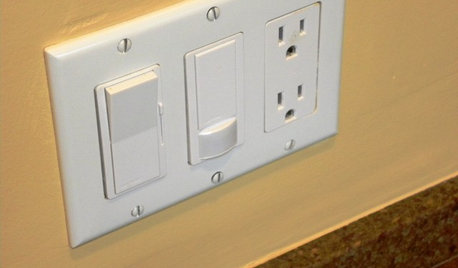
I had a well-reviewed electrical firm do a service call. When they took the downstairs dimmer switch out of the wall cut-out it worked. It didn't blow the circuit. They couldn't get the dimmer to fail. I had them replace the dimmer just in case. It was replaced with an "off the truck" part. This style of dimmer switch was a toggle with a thin little sliding bar next to it.

This worked for a little over two weeks, and then, when I again turned the dimmer switch off (using the toggle), there was a big POP and spark and the circuit blew. This time the dimmer switch was ruined.

I just had the same electrical crew out who were here the last time. They could find no signs of sparking that would give them a clue as to which wire might be shorted. This time they took each of the sconces off the wall and tested the wiring. No problem was found there. They checked the 3-way circuit with a little gizmo that buzzed when they held it near the wires, and they tried all sorts of switching combinations to get the sconces to fail. They couldn't get it to fail.

Basically at that point they just gave up. They put a regular toggle switch in to replace the dimmer thinking that the problem might be related to the dimmer technology's interaction with the Carter system wiring. They said that unless they got the switch to consistently fail so they could find the wire that had the short, they couldn't do anything, and that the problem might be "in the wall".

The two lights use halogen bulbs that are rated to 300W. I'm using Westinghouse 150W bulbs, according the packaging they came in - the watts rating is not on the bulb itself. The sconces were brought back from Spain 6-7 years ago, but the electricians said their wiring was "normal".

Does anyone have any experience with this sort of problem, or a recommendation? We're in a dilemma. At this point, if the downstairs toggle switch doesn't fail, that would be "OK" but we want to have a dimmer there. Again, we had one for years without any problem, and we can't remember any electrical change that occurred around the time the dimmer started blowing the circuit. On the other hand, if the toggle switch fails, it may not do so consistently and the electricians say they can't fix the problem if it is random and intermittent.

Thanks, Rick

Comments (4)

  • 19 years ago
    last modified: 11 years ago

    no, they can fix the problem. the question is, are you willing to pay to rewire to do it?

  • 19 years ago
    last modified: 11 years ago

    I'm guessing that the insulation on the traveler (a Carter system uses only one) has deteriorated. When you push the device back into the box, it contacts a neutral wire which also probably has bad insulation. It could also be contacting something metallic and grounded. Probably not the box which (if you even have one) most likely isn't grounded, but it could be an old gas or water pipe in the wall.

    The traveler may be not quite contacting the other wire or the ground at first when you push the dimmer into the wall, but then something disturbs it. It could happen with expansion and contraction of the wire from heat and cold, or with the vibration of a passing truck, or the kids jumping in the bedroom upstairs. You never know.

    Here's what I think is going on. In the Carter system, the traveler is either hot or neutral, depending on the position of the switch. When your downstairs switch is in the "safe" position, it's neutral; so when it contacts a neutral wire or ground, the breaker doesn't trip. When it's in the "unsafe" position, it's hot, so the contact with a neutral wire or ground trips the breaker.

    If I'm right, you have an extremely hazardous situation.

    The sad thing is that if nobody had ever installed that dimmer or replaced the switch, the system might have continued working for another 20 years. But probably the insulation was old and hardened already, and when somebody pulled out the wires to fit the dimmer, some of it flaked off.

    At this point all you can do is, as D&K says, rewire that part of the circuit. Isolate it and feed it with a new homerun, or at least a run tied in to a nearby modernized circuit.

    I just hope you don't find more bad news when you have the job opened up.

  • 19 years ago
    last modified: 11 years ago

    Davidr, thanks for the helpful response. It makes sense. I have some follow up questions if you have the time.

    1. I forgot to mention in my original response that right next to the 3-way circuit that has the dimmer on it, there's another 3-way circuit that controls the light at the top of the stairs. So there's two "switches" at the top and the bottom of the stairs, respectively. There is a box in the wall and the wiring for the two circuits is separated by the box. From what you said in your post, if frayed wiring from the dimmer switch touched frayed wiring for the switch that controls the top of the stairs light, there would be a short, right? What if frayed wiring from one switch touched the box and frayed wiring from the other switch also touched the box? That would cause a short too, wouldn't it, if the box is a conductor?

    2. Our house is plaster and metal lath construction. Would the metal lath in the plaster be grounded? Perhaps a frayed wire is touching that.

    3. Is a homerun a circuit that runs all the way back to the breaker panel?

    4. You said >If I'm right, you have an extremely hazardous situation5. Finally (I apologize for taking so much of your time) you said > In the Carter system, the traveler is either hot or neutral, depending on the position of the switch. When your downstairs switch is in the "safe" position, it's neutral; so when it contacts a neutral wire or ground, the breaker doesn't trip. When it's in the "unsafe" position, it's hot, so the contact with a neutral wire or ground trips the breaker.Thanks again for any help I can give you.

  • 19 years ago
    last modified: 11 years ago

    In a "normal" or modern 3 way switch circuit, the neutral is wired to the shell of the lamp holders. Through various combinations of wiring that varies depending on where switches and fixtures are in relation to each other, the hot line is switched between two travelers and the hot to the lamp holder is switched between the same two travelers. When the two "hots" are switched to the same traveler you get light.

    The Carter system, Arkansas 3 way, California 3 way (bunches of names) runs a hot and neutral to each switch. The common is one wire to the light fixture from each switch. Depending on switch positions you have two hots, two neutrals, or one of each to the fixture. The one of each gets you a lit light.

    The 3 way dimmer at the bottom is only switching one wire to the light from hot to neutral. It will depend on the position of the switch at the top of the stairs whether changing the wire to hot rather than neutral turns the light on or off - - but, if the wire from the switch to the light is shorted to ground anywhere (metal lath would be a good candidate)it will trip the breaker when it becomes hot. The right switch combination results in the dimmer switching the wire to "hot" to turn off the light, that's why the breaker trips when turning the light off

    So, you probably have 80 year old wiring going bad - could be from a number of things. Unfortunately, the only correct fix is probably to pull a new cable and rewire the circuit. (once new wire is involved they can't put the Carter system back - has to be to existing code rules). That would likely include a home run (to the panel) to accomplish the required grounding. Probably not going to be cheap or easy and will likely require professional wall/ceiling repairs to match existing. If the diagnosis is deteriorating insulation on the wire, you may want to be budgeting for more work soon.

Sponsored
AIS Renovations
Average rating: 4.5 out of 5 stars15 Reviews
Custom Craftsmanship & Construction Solutions in Franklin County, Ohio