Software
Houzz Logo Print
treeguy_ny

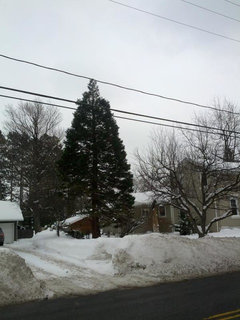
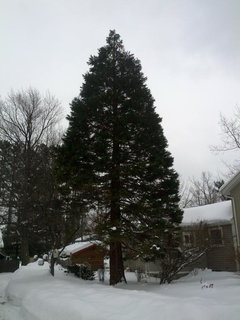
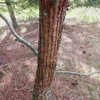
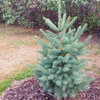
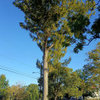
Found a giant!

Found this guy while driving through town! Looks pretty healthy so far though it is a youngster.

<img src="http://img.photobucket.com/albums/v380/fishmanejr/Plants%20and%20Trees/Trees/IMG_20150218_125919_zpsh04itkks.jpg"; border="0" alt=" photo IMG_20150218_125919_zpsh04itkks.jpg"/>


Comments (20)

  • 11 years ago
    last modified: 11 years ago

    Wow I can order a framed print for $45! And of course, Houzz won't let you embed html because they wouldn't want users being shaken down by another site*...it's official, the WWW has jumped the shark. But anyhow, nice find, yes sequoiadendron seems to do well in parts of upstate NY. OTOH, even on Long Island which is certainly not scorching hot in most summers, most of the ones at Planting Fields are not something you'd want in your garden.


    * probably not their only reason, and some might be justified; but photobucket in particular has found a clever way to hack html such that attempts to view any embedded picture force you to redirect to their site...so they can try to hawk framed pictures and show you even more ads. In other words, breaking the way the web is supposed to work to generate revenue.

  • 11 years ago
    last modified: 11 years ago

    I was working off my smartphone earlier and couldn't get houzz's photo insert button to work. Let's try this again with the pictures now that I'm on a laptop. I'll have to go back and ask the property owner if they know the history of the tree. This one looks pretty healthy so far, though it is a youngster.


  • 11 years ago

    Very cool. I guess it can happen!

    +oM

  • 11 years ago

    I'm in the far western end of the state with our climate moderated by the great lakes. I also know of two trees in the finger lakes region that are older/larger than the one I found today. The finger lakes have a similar moderating effect on the local climate.

  • 11 years ago

    Impressive. That one doesn't show any reason to stop going either.

    Dax

  • 11 years ago

    what is it

    ken


  • 11 years ago

    Do you think it might be worth trying to propagate from this plant, in hope that it possesses some sort of genetic adaptations/fitness for your part of the country? Or just chance and the right set of variables that led to this success. I've often noticed plants that are "too close to the house" surviving in areas they shouldn't. Can't tell for sure from the photo but it looks like this one might fall into that bucket.

  • 11 years ago

    Certainly not the whole story, but deep snow in the Sierra Mtns. homeland/deep snow as a rule in upstate NY. It must get hotter in that area of NY though (in the summer of course) than does it up in the Cali mountains though....hmmmm?

    +oM

  • 11 years ago
    last modified: 11 years ago

    This tree may very well be in a small microclimate as it is planted between houses in the middle of a small town northeast of Buffalo, NY.

    Tom, my climate records are at home, I will answer your question on summer temps when I get home from work this evening. I found public access to the past 65 years of climate records from our local weather station just 5-6 miles from my house. The lakes temper us a little in the summer too.

  • 11 years ago

    Wonderful! And like Dax said, that one doesn't look like it's done.

    +oM

  • 11 years ago
    last modified: 11 years ago

    I don't think buildings that size make much of a microclimate difference when you are talking about a place with several feet of snow each winter. That would have protected it quite a bit when it was young. Ellen Hornig in Oswego used to keep zn 7 bulbs and forbs from South Africa alive under her 6-10 feet of seasonal snowcover. What I could never figure out was why they didn't drown in spring from all that snow melting...but it might have been porous, weathered moraine soil there for all I know.

    And beside they grow in other zn 6 places; I wouldn't really have expected it to need extra protection to get that established.

  • 11 years ago

    what is it

    ken


  • 11 years ago

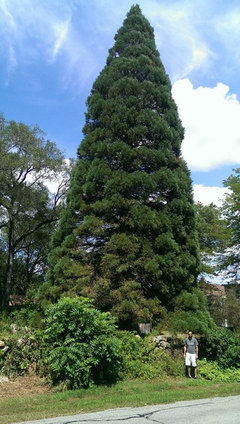
    Here is one located in Connecticut. Good health. About 70 feet tall.

    J


  • 11 years ago
    last modified: 11 years ago

    That's a nice one J!

    Sorry Ken, missed your question earlier. You probably figured out we're talking giant sequoias.

    Sam
    - out of popularity as far as folks planting them, or just coming to
    realize they won't live long normal sequoiadendron lifespans here in the
    east?

    Tom,
    here are a few climate statistics I've calculated from looking at the past 65 years' records. Not a true
    long term analysis, but gives me an idea of what should or shouldn't do well here:

    Average maximum annual temperature: 91.4F

    Average minimum annual temperature: -4.3F

    Average number of days per year that reach 90F or above: 3.7

    Average number of days per year that reach 0F or below: 3.5

    Average summer temperature (Jun-Aug): 69.4F (midpoint between the mean minimum and mean maximum temp for those three months)
    Averate winter temperature (Dec-Feb): 27.5F (calculated same as summer temps)

    Two more calculations I'm working on are the mean minimum and mean maximum summer (and winter) temperatures. Those will be more useful than the total average summer vs. winter temperatures listed above.

  • 11 years ago

    Yes, and just to juxtapose the obvious-that area of NY and the area where I live are roughly same latitude. But WAY different net climate. We're even close enough to L. Michigan to derive some modification from it, but the aspect is wrong, we being to the big lake's west. Sometimes, albeit rarely, big lake-effect snows can and do set up along Wisconsin's east coast. But not in the same league as lakeside NY, Finger Lakes region, etc.

    I console myself by remembering that we still have no hemlock wooly adelgid (And up by my land hemlock is extremely common), and heck, with the winter we're having, which is the kind I hate-dry and cold- even EAB might be getting shook up a bit. Thanks Treeguy for taking the time and trouble to dig this stuff up.

    +oM


  • 11 years ago

    Lakes mostly frozen over now except Ontario, so not much moderation. But the heavy snowcover downwind of them is already in place.

  • 11 years ago
    last modified: 11 years ago

    " Don't want to be depressing but I think that Sequoiadendron is on its way out in eastern US"

    I don't think they were ever in. There was a big push to cultivate plants from the new and exciting western frontier around the turn of the 20th century. If they had done well in the east or been easy to grow, I think they'd be more common. I suspect they've been plagued by foliar issues in unsuitable areas since they were brought here. But, I could be wrong so if you have source material to the contrary, let me know. I can't find my Wymans Encyclopedia but I have the vaguest memory of it saying the species had difficulty back east.

  • 11 years ago

    Agree with davidrt28; the eastern USA climate isn't suited to them, too hot and humid in summer, or if not that, then too cold and dry in winter. From previous threads, the one exception is the shores of the Great Lakes where they get maximum 'lake effect' snow.


    By contrast, grows very well in Britain


  • 11 years ago

    Yes, the snowcover helps once the lakes freeze over. This winter has been particularly cold with a greater than usual number of evenings below 0F. We even had one day with a high of 2F. Niagara Falls even froze over this year. I am very ready for spring to come soon. The beginning of next week is forecasted to be the first time we go above freezing in about 4 or 5 weeks now.


    Like many of you said, the giant sequoias won't be long term survivors here in the east. Too many summer humidity problems. It's still fun to grow them or stumble upon a healthy looking one though!

Sponsored
AIS Renovations
Average rating: 4.5 out of 5 stars15 Reviews
Custom Craftsmanship & Construction Solutions in Franklin County, Ohio