Software
Houzz Logo Print
neiljcard

Propagation from inflorescence

11 years ago

Hello Everyone!

I've heard about others who've propagated from an infloresence and decided to try it with my echeveria perle von Nurnberg.

Here's what I was instructed to do:

1) cut the inflorescence as close to the main plant as possible.

2) Remove the actual flowers.

3) Cut the stem of the inflorescence making sure that 2 petals or leaves remain on each of the cut pieces.

4) Lay the pieces on dry soil or pebbles and do not water. (of course kept in a dry, shaded area)

5) be patient and wait.

It's been about 5 weeks and all the pieces are dry and some starting to shrivel. I've not been able to find any resources online for this specific propagation method.

If anyone could advise me further, i'd surely appreciate it. Thanks.

-Neil-


Comments (36)

  • 11 years ago

    Laurent - thanks for sharing with your experience and having success out of it.

    We don't have much resources on the success of propagating Echeveria through other methods beside leaves cuttings. I'm going to test this out with my Lauii Bloom spike.

    Do you remove all the flowers from the spike as well?

    Bernard

  • 11 years ago
    last modified: 11 years ago

    I use the part of the inflorescence between the plant and the flowers.

  • 11 years ago

    Laurent- thanks, I will try your approach on my next attempt.

  • 11 years ago
    last modified: 11 years ago

    The frequency of watering depends on the season. It's more risky to propagate and water a cutting during a dormancy season. It also depends on the type of soil. But watering a cutting makes it root faster (in general). In order to avoid fungal disease I always water my cuttings with water + special systemic fungicide. And when I receive a cutting I bath it between 2 and 6 hours (until it's hydrated again) in the same solution. I also do it before shipping a cutting.

  • 11 years ago

    Laurent- Thank you for this very valuable information. Sometimes I don't get any offsets from some of my echeveria but, I always seem to get many of their flower spikes. I have only one e. perle von Nurnberg left and I really wanted to propagate. I tried with the lower leaves with no success. I wish I knew of a website that listed which echeverias/hybrids will not propagate from leaves.

    I like your system with the fungicide. I do almost the same thing. I always quarantine and spray new plants/cuttings also. A lot of other growers here use warm water and mild dish-soap. I use just warm water as if to lightly bathe then, I will do a spray of 7 (insecticide) and Neem oil. I also take the precaution to prep my soil by Microwaving the soil mix first, then with a little of the sprays and small amount of tomato fertilizer (very little) I mix it into the soil well and then finally I place the plants.

    This system seems to work for me as I have had Scale and Mealy Bug problems in the past. Both of those seem to be infesting many areas in southern California.

    Also I still sometimes get the fungus gnat as it is known here. They are very small, black, flying insects which, don't do any real damage to the garden but are very annoying as their numbers can grow alarmingly fast. However, they must be eliminated quickly otherwise their presence would attract other insects.

    At my last count several months ago, I have approximately 300 plants and at least 100 varieties of which, most are succulents. That is not inclusive of my indoor plants, lol.

    So you see, I could not afford to have any type of insect/fungal infestation. Can you tell me the systemic that works for you or something I could use as a back-up plan?

    I would value the advice from someone who grows such exquisite, variegated echeverias!

    Have a great evening,

    Neil


  • 11 years ago
    last modified: 11 years ago

    Thank you ! The fungicide I use is Aliette Express (Fosetyl-al 80%) a systemic spore germination inhibitor against several fungus and especially Phytophthora (root-rot). I find it in supermarkets or garden centers.

    In France it is sold to treat the conifers but it is very much used here for all the plants that root-rot easily (Hibiscus rosa sinensis, succulents,...). After being treated the plants are protected for 2 weeks. It's very effective but it doesn't work if the soil is not draining enough.

    https://www.google.fr/search?q=aliette+express&source=lnms&tbm=isch&sa=X&ei=tEFwVZj1Dem67gb42YP4Cg&ved=0CAcQ_AUoAQ&biw=1079&bih=865

  • 11 years ago

    Thanks Laurent!!! I will try to find it.

  • 11 years ago

    Laurent

    I find your 'prevention' system (am I right that you do it as a prevention?) of bathing plants in solution containing fungicide very interesting.
    How strong is the solution - as per package recommendations?

    Neil
    You said: - then with a little of the sprays and small amount of tomato fertilizer
    (very little) I mix it into the soil well and then finally I place the
    plants.

    I see you said very little fert - I always thought that it is better to wait a little until plant gets established to start fertilizing. I actually never fertilized my succulents, but started very recently with a week dose.

    Rina


  • 11 years ago

    Rina, not just preventive, it's curative too (if the plants are correctly cultivated).
    I also do it every time I transplant a succulent from one pot to another (stressed plants are easy targets for fungi).
    The package recommandations are for conifers. I put 2 coffee spoon of powder in 1 liter of water.


  • 11 years ago
    last modified: 11 years ago

    Neil I've had excellent results with imidacloprid, applied as a soil drench once a year. I used to have constant mealie problems but since I started this regimen I haven't had a single issue. Since it's a long-lasting systemic I don't worry about pests coming in from new plants either because as soon as they try chewing on the protected plants, they're toast.

    I know not everyone is keen on neo-nicotinoids but for this number of plants I don't see it as a problem. I always apply after flowering to minimize the possible impact on bees and other pollinators.

  • 11 years ago

    Laurent

    Thank you for the answer. Rina


  • 11 years ago

    Andy, what brand/product would you recommend? I would also do it after flowering, as I know the importance of the bees. thanks.

  • 11 years ago

    Rina- Andy- Laurent...I just came back in. I was taking some pics to show what I use. I'll post thm in a few minutes.

  • 11 years ago

    Neil I use Bayer Tree & Shrub. It's ~$20 at Home Depot. I dilute at 1 tbsp/gallon.

    Neil thanked andy_e
  • 11 years ago

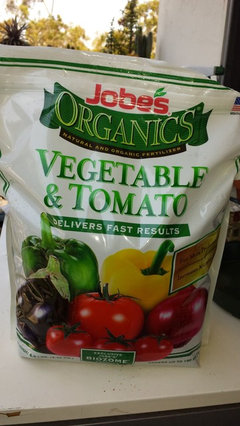
    Rina- this is the fertilizer I use. A tablespoon mixed in

    for every 8-10 lbs of my mix.

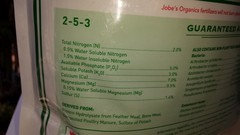
    This pic shows the reason I chose this particular product.

    See the total Nitrogen? From what I've been told and other research, you need to use a fertilizer with 4% or lower to not be harmful to succulents and to of course be beneficial.

    This was the only one that had 2%. All the others had 4%, 6% and some higher percentage.

    When I'm not prepping my mix for planting I just use a "pinch" around the plant. If the package says to use a teaspoon for example, I use half of that recommended amount or less.

    Others have informed me that too much of any fertilizer and be damaging and "burn" the roots of plants so, better to under-fertilize.


  • 11 years ago

    Andy- I've seen that. I didn't know that would be safe for succulents!

  • 11 years ago

    Andy- just to clarify...you use that after flowering and then...every time when watering regularly?

  • 11 years ago
    last modified: 11 years ago

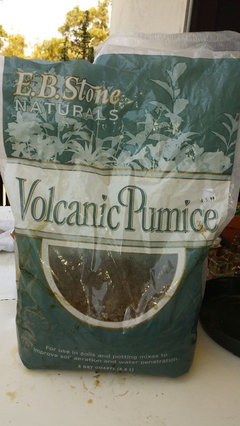
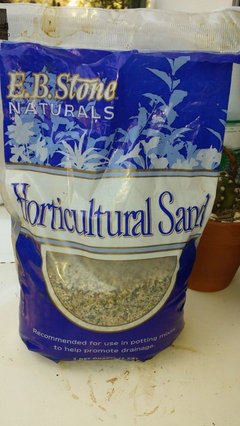
    Here are my other two additives that I use when I amend the soil mix.

    I've lost some plants using plain old sand. The Horticultural sand seems to work the best for my plants. The grains are larger than common beach sand. The larger grains help with better aeration for the roots.

  • 11 years ago

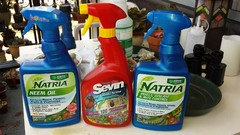
    ok, here's my arsenal of pesticides.

    My gripes with these products is how long their effectiveness lasts.

    They seem to work for 7-10 days. With one spray session I can go through

    these three bottles in one week; running about $100 per month. I've gotta find a better way for my plants and my wallet!

    I use these as a prevention. I don't ever want scale or mealy bugs again. When I see fungus gnats I know it's time to spray again which is about every 7-10 days lol.

    So, i'm hoping what Andy suggested will work on them.

    Oh, another issue I had was finding products that would be okay to use on herbs and fruits and vegetables as well. It was a bit challenging.
    Thanks everyone!

    Neil

  • 11 years ago

    Neil
    -You are in different zone/climate than me - some bugs&diseases probably like it much better where you are.
    -I believe you have many more plants.
    My arsenal of pesticides/fungicides:
    1.rubbing alcohol
    2.peroxide
    3.cinnamon powder
    4.home-made cinnamon spray
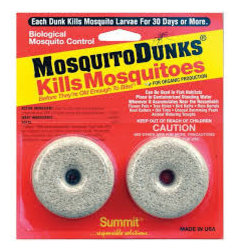
    5.few mosquito doughnuts
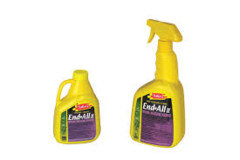
    6.1 small bottle of Safer's End All 2
    I bought EndAll 2when I bought couple of plants & I noticed some 'white stuff', possibly mealies - so I sprayed with that solution. I used it - so far - maybe 4-5 times. I don't want to see them just like anyone else & will use whatewer necessary to get rid of them.
    Scale is more common on some of my plants - seldom on succulents, but hey seem to like few of my kalanchoe. I have other plants they like (ficus Benjamina, bay leaf, found them even on spider plant). I use rubbing alcohol - luckily, so far it was enough - but I try to get them early.
    Fungus gnats - if there is too much organic matter in soil and/or too wet, they are around. On succulents too, but seldom since most are in gritty mix without bark & peat. I use mosquito doughnuts - just sprinkle broken-up over the soil just before watering. It's the larvae one needs to get rid of. Not sure if you need to spray flies. I believe there is granulated available, I didn't find it yet.
    Fungus - I used cinnamon spray on some phalaenopsis. I have aloe (not sure on ID) that seem to suffer from some kind of fungus. I sprayed it with this spray and it looks like it is working - but not enough time to be 100% sure. I am watching it. I have used this spray on some cuttings - seems to be working, but not enough data/experiments to be 100% sure.
    I dust ground cinnamon on some large cuts, especially jades. I do have good experience with it - could have been just luck they healed well? Maybe.
    So far, I never nuked soil to sterilize, but I believe it works. I think I would for some sensitive and rare plants.

    If you see that the products you use works for short time, maybe the 'bugs' you are fighting are getting used to them? Just like us to penicillin...
    Maybe it would be good to change to different product after using for a week or so?

    I am not trying to prove anything here. I have way too much to learn, and I like to read about experience of others, what works, what didn't. Like what Laurent is doing ('bathing').

    And just because I didn't have huge infestation so far, there is no guarantee. As I accumulate more plants, probability is bigger...so I am open to ideas.

    I apologize for such a long post...Thanx.

    Rina

  • 11 years ago
    last modified: 11 years ago

    Neil no I only apply it once a year. That's the beauty of it. I no longer need anything else either - no insecticidal soaps, oils or anything. In fact I'm kind of shocked to see all the stuff you guys are using.

  • 11 years ago
    last modified: 11 years ago

    Regarding nitrogen, it's not as simple as "don't go over 4%". First of all it depends on where the nitrogen is coming from. Nitrogen from urea isn't usable by C&S, so that counts as zero. Second, it depends on how much of the product you use. 4% of 10 tbsp is more than 4% of 1 tbsp but they're both 4% right?

    I highly recommend reading the first post in this thread, and the articles linked within. It totally changed how I water and fertilize. I now acidify all my water down to the 5-6 range and I fertilize with 20-20-20, supplemented with ammonium sulfate (21-0-0). To learn why, read the articles...

    :-)

  • 11 years ago

    Andy- Rina- This information is very valuable to me and I will take heed. I don't have any infestation now, because I keep up with the routine. And Rina, you're right the fungus gnats came back after I used some soil with a high manure content. No matter how much I amended it, it seemed every fungus gnat in California was attracted to it.

    Rina- I know about most of the items you mention except for two; the mosquito doughnuts (?) and Safer's End All 2. I'll be "googling" them. Thanks. and Rina, I gotta admit Andy's way sure sounds like the easiest and least expensive. I looked up the product that Laurent mentioned to me but, I can't find it here. I haven't been to France in a long time but, if I have to go just to protect my plants then, that's what i'll do! Who's with me!? lol.


    Andy - Laurent- I swear you guys sound like "mad scientists!" : ) Thanks to all of you for the info, and I will read the link you posted.

  • 11 years ago
    last modified: 11 years ago

    Neil

    ugh...officially DUNKS (not doughnuts)


    Safer's:

    Laurent's stuff - maybe sold under different name (if available/allowed in US?). Trip to France sounds great!!!

    I just googled what Laurent mentioned - Fosetyl-al 80; here is just one of the links to a factsheet (saw it on eBay-$140...):

    Fosetyl-al 80

  • 11 years ago

    Rina- Thanks, i'm reading about the mosquito dunks now. Home Depot has a 6-pack for $9.99. for fungus gnats too I hope.

  • 11 years ago
    last modified: 11 years ago

    Neil
    That's half price of what i have to pay.
    But get the granulated, I know Howard (bikerdoc) had mentioned it few times. As long as you get Bti (israelensis strain) which controls larvae {not Bt kurstaki strain that is for caterpillars}.

  • 11 years ago

    I've been using organicare PURE blooming formula (well, for my vegetable garden) that's 5-4-6.

    I'll have to look for that stuff you posted. My succulents still get Schultz's cacti and succulent with micronutrients. I'm trying to get away from the synthetic fertilizers though.

  • 11 years ago

    I love how this post on propagation from inflorescence became sharing preventive measures and pesticides.

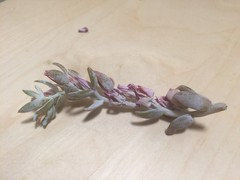
    Back into topic - Laurent can you share more about 'bathing the cutting for 2-6 hours?' Do you soak the callous ends of the spike in water and systemic?

    I'm going to try stuffing this guy in the gritty mix and start watering it every 2 days.

    Thoughts?

  • 11 years ago

    Bernard, your cutting is not good. I'm going to answer you but I'm too busy to do it now. I will post photos to show you. Please be patient ;)


  • 11 years ago

    Thanks Laurent! Will wait for your pictures. (:

  • 11 years ago
    last modified: 11 years ago

    Laurent
    very good illustration. Rina

  • 11 years ago

    Awesome! Sometimes nothing beats a hand-drawn diagram.

  • 11 years ago

    Laurent, thanks so much for the sketch. I'm gonna study it to the teeth!

  • 11 years ago

    Thank you Rina and Andy.

    Good luck Bernard !