Software
Houzz Logo Print
stephanisoorenko2

Help w/ dying Dahlia?!?

11 years ago
last modified: 11 years ago
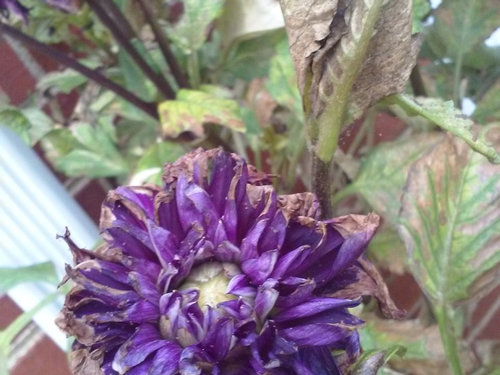

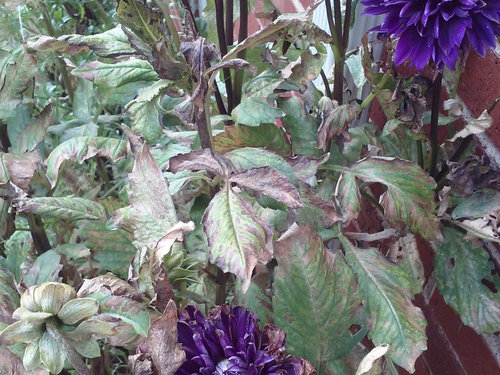
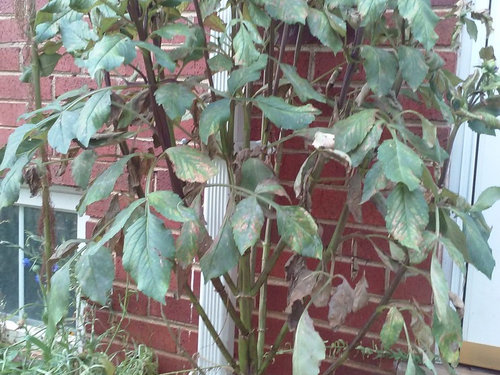
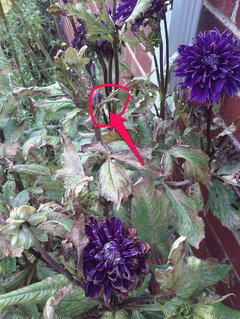
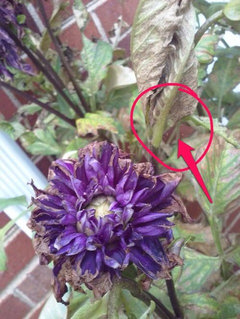
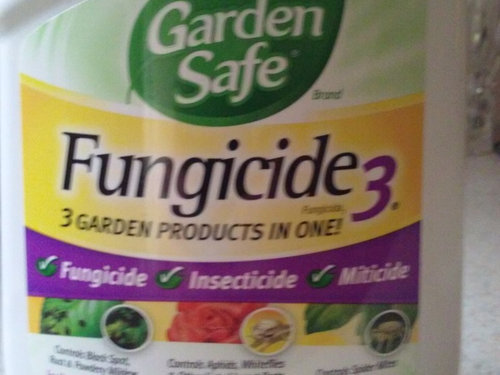
My Dahlia started dying at the very bottom and then moving up the middle inside. I sprayed it w fungacide for what i thought was PM and it seemed like the white was gone (except for a spot here and there)

Then 3-4 days later it just lookes even worse. Now even the flowers in the middle of blooming are starting to die.They have crisp, brown at the edges of the petals.

I have posted some pics. Any help is truly appreciated.

I water every night when the sun goes down. I even poured some of my compost tea around it yesterday. It just looks like its on its way out. This is my first Dahlia. Help please??


Comments (19)

  • 11 years ago

    Cicivacation

    Thank you so much for your help!

    I havent noticed any webs but i will look for that tomorrow when it is light out.

    Originally i sprayed the plant w the fungacide in early morning. I will try what you said w the soapy water.

    Instead of early morning do you think i should wait until mid evening when the sun is getting off the plant and start w the soapy water then fungacide?

    Thanks again!

  • 11 years ago
    last modified: 11 years ago
    This is what I saw...

    I could be wrong, but it sure looks like spider mite webbing. You can google other images of it so you have a better idea of what you're looking for.

    Personally, I'd do the soapy water in the evening and spray in the AM before the sun hits the leaves. That would allow the soapy residue to dry and stick to the leaves/stems. Some might say that could hurt the plant, but it's dying right now anyways, so think of soap as the chemotherapy of plants. What is the worse evil?

    Please don't feel like you have to follow what I suggested... Educate yourself with what else is online, and make your own plan of action if you'd like.

  • 11 years ago

    Also, soap is a contact treatment. Once dried it has no impact on your insect or mite target. You might want to consider these three suggestions:

    1) Use a neem product. It has fungicidal/insecticidal/miticidal properties. I prefer using an azadirachtin product such as Azatrol or AzaMax over Neem Oil.

    2) Feeding with a complete fertilizer. A complete fertilizer contains the micronutrients. Mites seem to thrive in micronutrient challenged plantings. This, however, is purely anecdotal. For myself, I rely upon a liquid feed and a control-release fertilizer to support my potted plants. Substituting an organic based, slow-release fertilizer in lieu of the CR is okay too, as long as you are getting the chelated forms of micronutrients from your liquid feed. Always thoroughly read your label.

    3) Be proactive. A proactive approach to plant culture ultimately thwarts problems such as these in the long run. Therefore, relying upon preventative treatments will help you accomplish a proactive approach. In this situation, you are in the reactionary level of care which too often is a waste of time and resources. However, do not let this sharing dissuade you from doing some smart things to bring your plant back into wellness. As CiCi concluded, your education is essential. For me, it's part of the fun.

    stephanisoorenko2 thanked Gary Figueroa [Zone 8B]
  • 10 years ago

    I have another question unrelated to dahlias but you both seem to know what your talking about, so hopefully you can help.

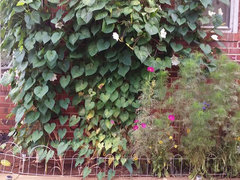
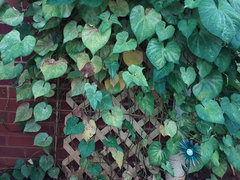
    I have beautiful Moon Flower Vines. They are starting to die from the bottom and after googling i think its white flies...maybe.

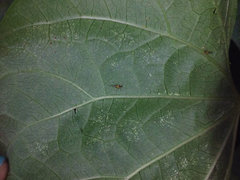
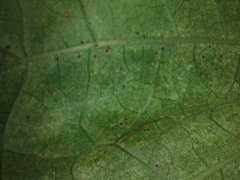
    I see what looks like white flies on the underside of the leaves but i also see lots of microscopic brown dots that smear when i run my finger over them. Could this be related to the white flies or is it something else?

    I was going to try a mixture of rubbing alcohol, water and soap i read on farmers almanac for white flies but i want to make sure the brown things are related.

    Also they are so thick i have no idea how to make sure to spray the underside of all the leaves. Any suggestions on that?

    Any info helpful! Thank you so much!

  • 10 years ago

  • 10 years ago

    this is the one doing the worst

  • 10 years ago

    Or maybe aphids? Just found these spider looking things when taking this picture??

  • 10 years ago
    last modified: 10 years ago

    While taking this picture of the "brown dots" that smear. I noticed in the zoom of the camers that they were moving and they kinda remind me of chiggers. They were definitly different then those ones that looked like spiders but maybe theyre babies i dont know.

    Just noticed that the ones that look like spiders actually have wings.

    Im starting to think that these might just be a lost cause. I have 3 sets that produce beautiful flowers every night that im not ready to let go.

    I have a friend thats an externinater and hr sprayed in latr spring for me, cuz i had a really bad earwig problem and it killed every single bug imaginable. I mean i had a water bug graveyard the next morning. Do you think maybe him spraying again could help, cuz i just dont see how i could even reach every leaf let alone the undersides.

  • 10 years ago

    One of the signs for spider mites is brown smearing on the reverse of the leaf. Sounds like you have an epidemic spanning multiple plant species. I bet your cosmos has a healthy colony, too.

    A full-out kill-everything assault you did this spring is the nuclear bomb for insects, killing the good and bad, leaving the survivors (or first invaders) a fresh field to settle on. I prefer to allow a natural balance in my garden, as best as I'm able. So, if earwigs are the problem, I'd use sluggo plus or something similar in the spring, that doesn't bother the majority of bugs, is short-term distributed and is targeted to the pests needing dealt with.

    Sounds like at this point you desperately need a systemic miticide to clean this up, but I would first invest in a gallon sprayer and use neem oil to bring the population under control first.

    As Gary said, prevention with appropriate nutrients and horticultural oil BEFORE problems start is the best way to handle things going forward. The investment in a good sprayer that you can use fertilizer and horticultural oil in is a good step in that direction.

    stephanisoorenko2 thanked cicivacation
  • 10 years ago
    last modified: 10 years ago

    This is my first year gardening really. Ive bought plants here and there already blooming. But this year i did ALOT and from seed. So i am still learning and i really appreciate all the advice. I had such good luck with pretty much everything and my yard looked amazing (until now) i am hooked.

    So what i have learned for next year is PREVENTION ☺!

    So i will definitly invest in a sprayer. But my question is..is there a fertilizer and horticultural oil that i can just spray on everything around my garden?

    I also completely understand what your saying about when i got my friend to spray. But do you think at this point since ive already done that once, summers coming to an end and i have such a huge problem that it would help to do it one more time just so i can salvage what i have left for now?

  • 10 years ago

    Perhaps Gary can speak to that...

    Personally, I would stick to specifically focused poisons instead of compounding the nuclear blast. I know that not all pesticides effect all critters, and that Sevin products actually encourage spider mites while wiping out it's predators. Perhaps the poison your friend used is similar. Bottle labels don't always tell all.

    stephanisoorenko2 thanked cicivacation
  • 10 years ago

    In my experience, to elect to use a pesticide to combat pest problems, I have learned to know as much as I can about the affected plant before I start choosing my treatment. Secondly, before I bring anything home from the garden shop, plant stand, yard sale, nursery/greenhouse, box store I am very carefully inspecting the plant for unwanted tag-alongs. So, I'm in the foliage, in the rays, in the pot, sniffing the roots. Why? Because the last thing I want to introduce to my lush surroundings is any unwanted disease, insect or mite problem. It's important to share here that I am a highly trained horticulturist. So, how I view the plant world is far different from your ordinary, everyday shopper. Doesn't mean I know it all... Because clearly, I do not! However, once bitten twice shy and I think you can understand why I am so hypercautious. And, yes. Stuff gets past me a little too often. Early on in my career, I bought in some New Guinea Impatiens from a reputable grower. The liners came to me looking fabulous and so I set them out to await up potting in a day or so. Well, in that couple of days I was treated to a mite explosion the likes I had never seen. And, it wasn't one specie but two species that I had to figure out how to contain. I immediately called the supplier and related my experience. "Oh, gee. I'm sorry to hear that, Gary" was his reply. He went on the say, "I guess we have a mite issue even though we've been treating for mites for the past couple of years!" With his final remark being, "Well, good luck cleaning them up. I guess they are resistant." Flummoxed, I couldn't bring myself to yell, scream or cry. To shorten this anecdote a bit, I was able to effectively rid my plants of mites at considerable expense and never received compensation from the grower which resulted in my never again buying anything from him ever again. My point is, sometimes we inherit these problems due to shoddy management, elsewhere. Just because it comes from Monrovia doesn't mean it will be free of problems.

    Regardless, you are now handling plants that appear to be under siege. CiCi has offered spot on advice that I'd pay close attention to, because she is covering the spectrum of consequences in relation to chemical application.

    Here are my rules.

    1) Avoid Pyrethroid, Carbamate, and Organophosphate/Organochlorine class insecticides. They do more damage than they ever do good.

    2) Don't be fooled by "Organic". Poison is poison.

    3) Choose, if you must, biopesticide/bio-rational pesticide looking for products that are effective and of significantly low environmental impact.

    4) Consider your water, light and nutrition as the three primary areas of concern in maintaining the wellness of your plants.

    5) Choose to be consistent. Water the same time, every time. Same with fertilizer. Keep up the litter. The right plant in the right place will certainly result in better success than trying to adapt a plant to an environment unsuited for its growth.

    6) Educate yourself. Read. read. read. And, above all else, apply your critical thinking so as to avoid falling prey to misguided, poorly informed but well intended garden shop employees.

    Your choices now consist of dumping the plants. Spraying the plants. Or, grooming the plants, feeding the plants and then spraying the plants to rid them of their unwelcome pests.

    Here's what I'm fond of this season.

    Azatrol or AzaMax [azadirachtin product] - Derived from the oil of the Neem tree. Hugely effective against a broad array of pests.

    Monterrey Garden Insect Spray - Contains spinosad in two forms. Hugely effective.

    Serenade Biofungicide and/or Actinovate for fungal disease issues. Hugely effective if used according to label instructions.

    I recommend you combine the Monterrey product with the azadirachtin product. FOLLOW THE LABEL DIRECTIONS TO THE LETTER. BECAUSE... THE LABEL IS THE LAW!

    Lastly, here's my editorial on all these essential oil spray products bombarding the market. Most of them are mildly effective. Too many of them are "snake oil". Home remedies are noble but essentially end up being used too late in the game. Or, against pests that are hugely resistant and are too often meant only as contact treatments. That means if you miss the bug, you have done little more than spray to spray.

    Gosh, I'm on a rant here today.

    Please don't let me confuse you. Ask questions like you have and determine those that present logical solutions or observations over extremist viewpoints that amount tolittle more than vitriol.

    Enjoy your day!

    stephanisoorenko2 thanked Gary Figueroa [Zone 8B]
  • 10 years ago

    It seems like spider mites are coming out of the woodwork right now, all across the country. Lots of growers are struggling currently with this same problem.

    We are discussing mites in another forum as well, and I'd like to paraphrase a comment from one of my dahlia mentors... I'm sure he will not mind, as he has contributed here countless times.


    "(Edited) An article in the ADS bulletin a few years ago on spider mite control talks about using the chemicals called miticides. His point was that they are really expensive and you must buy 100 years worth at a time(enough to spray 100 acres!). He said that no miticide works for more than one spraying and must be rotated with another and preferably 3 different products. If you use insecticides, you are inviting spider mites to feast on your dahlias as the insecticide kills the spider miter predators and the mites go crazy. Yes, you can control mites with miticides but you must invest a lot of money. "

    Gary, I'd like to share your previous post over there, slightly condensed, if I may... Do you mind?

    stephanisoorenko2 thanked cicivacation
  • 10 years ago

    I should clarify... A pesticide is NOT automatically a miticide. 'Pesticide' is a catch-all phrase that refers only to a poison that kills pests, but does not refer to which pests they effect. It should also be recognized that there are different species of spider mites, which exhibit different types of plant damage and behavior. I am vaguely aware of three types that feed on dahlias, but I'm sure there are more.

    These little spider mites adapt and become resist so fast because their life cycle is very quick, allowing the mites in the next generation that are tolerant to a particular poison to survive and breed.

    Another alternative is bio-control, which is introducing nematodes, bacteria or natural predators to the garden. This would function more as a preventive then a rescue attempt, however.

  • 10 years ago

    No, cici, go ahead. Mites are active the year round. Problematic in gardens or landscapes that are passively maintained. Too often think because they've sprayed an insecticide, they should have killed off the mite. News flash... Mites are Arachnids. Akin to spiders. Possessing 8 legs vs. the insects 6. Very few insecticides have any affect on them. The ones that do can be very problematic in terms of their efficacious impact upon non-target organisms. Although I do enjoy terrific success using azadirachtin, I am also very specialized in plant healthcare and make choices to rely upon exotic chemistries only after I have focused on nutritional and environmental factors relevant to the mite outbreak. Like I told one of my more arrogant neighbors the other day... Do you really think what I do is really that simple?

    Think hard before you squirt!

  • 10 years ago

    I think mites took out my yellow dahlia. It has been super dry and hot here in WNC. I tried neem but I think it was too late. It is my first year as well. I sucessfully got every tuber I planted to produce a bloom. Even though I battled mother nature, I'd say I was successful. :) I am still debating on trying to winter my tubers. If I suspect mites do I need to toss and try again mext year? We are planning a garden so hopefully pest control will be easier than in containers.

  • PRO
    10 years ago

    I think all this is because of pests and termites under plant roots. So I highly suggest you to hire professional pest and Termite inspection Port Macquarie services. I am sure after using their services your problem would get solved!

  • 10 years ago

    Termite problem, eh? This wouldn't be a blatant advertising ploy, right? (chortle)