Software
Houzz Logo Print
nena_hunt

Questions about renovating garage for long-term storage

10 years ago
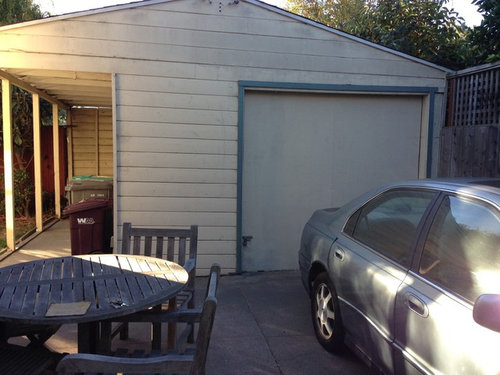
I have a ramshackle, unfinished detached garage, probably built in the 1920’s. I’m trying to renovate it, so that I can use it for long-term (10 months) storage while I’m in Europe. I’m getting a new foundation, concrete floor, and shingle roof. I’ll also have the framing with dry rot repaired/replaced. I live in the SF Bay Area. I had the electrical wiring inspected, and it checked out ok. I'll also replace the existing overhead door, probably with french doors.

There is no heat or insulation.


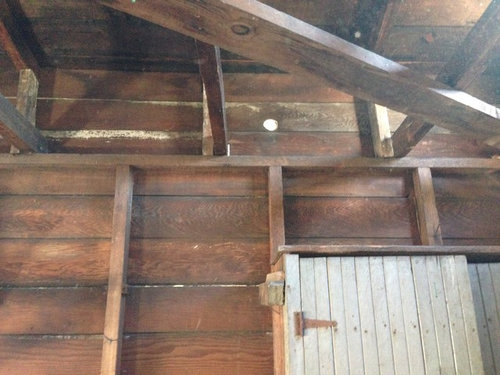
My question is - are there other things that I should do to ensure that it will be a safe and dry for storing papers, clothing, and other personal items for a longish period of time? For example, should I have the interior finished with sheetrock? It currently has redwood siding, with no interior sheathing on the walls or ceiling. The ventilation consists of 2 funky squares cut out of the back wall with quarter-inch screens.

At this point, I just need it to be serviceable for storage and don’t care much about appearance. When I return next year, I may do further renovations to make it more attractive.


Attached are a few photos of its current condition.


Thanks in advance for any advice.

Comments (4)

  • 10 years ago

    What's the climate like in your area? Somethings just don't do well in the heat or cold and should be stored in temperature controlled circumstances. I see from your picture that to the left side (where the trash cans are) you could actually enclose that entire area and perhaps make that a temperature controlled space instead of the entire garage?

  • 10 years ago
    last modified: 10 years ago

    If you want long-term dry storage you may need to reduce moisture infiltration into your storage items. Small amounts of moisture will be continually rising up through the concrete floor, and you don't want that wicking up into anything you have stored on the floor. Also, if you leave the walls exposed like they are you will also get moisture coming in through the cracks between boards and through the vents.

    High end solution - If you want the most comprehensive solution and you are willing to spend some money, you could have a company spray foam the wall cavities and then enclose them with drywall (for an ignition barrier). Then drywall the ceiling and spray foam it from the attic side, or as an alternative you can close up all vents, and spray foam the bottom of the roof (with drywall for an ignition barrier) to seal the full envelope instead. On the floor you can put thin foam sheeting or thick plastic as a moisture barrier, and then determine how you want to keep all boxes and furniture off the floor. The easiest way may be to lay several strips of pressure treated 2x4's on top of the plastic or foam, and stack the boxes and furniture on it.

    Once you have a full moisture barrier around the storage area, then you should determine how much air you want to let infiltrate, and whether you need to heat it, cool it, or just dry it out. It sounds like keeping it dry is your highest priority, since most of the Bay area does not have extreme heat or cold. Maybe all you need is a dehumidifier with a drain running to the outside.

    Much simpler solution - If you put all the storage items up off the floor (use 2x4 pressure treated wood strips), and make sure there are no leaks in the roof or walls, most of your stuff will probably be fine. I would also seal papers and other important items in plastic bags or use plastic storage containers. You can get plastic storage containers in all shapes and sizes, which should work for everything except furniture. You might still want to run a dehumidifier in the storage area, but it will be fighting a losing battle if there is no vapor barrier on the walls or ceiling.

    Bruce

  • 10 years ago

    If you want secure storage and you will not be onsite, I don't know that french doors are the way to go. Those look pretty but are vulnerable, and the glass window on them would allow someone to look in and check out what all they can get. I would eliminate any window, and probably install an alarm and definitely motion lights.

  • 10 years ago

    Hi old_house_owner,

    I faced a somewhat similar situation a couple of years ago when I moved to Africa for a year and put all my stuff in storage.

    The first thing I noticed in looking at your pictures is that your garage is most definitely not rodent proof, nor cockroach proof, and the gaps may be wide enough that other critters could get in with a little effort--raccoons, for example. Rodents and roaches in particular love nothing more than paper and fabric. I would suggest that you both eliminate any way for rodents to get in AND make sure every box is air-tight, waterproof, and impossible to chew through, which, of course, eliminates cardboard as an option.

    Additionally, I would suggest that anything important to you that is in boxes, of whatever material, be wrapped really well in air-tight and waterproof bags or other containers. This should also help keep that SF fog and other moisture away from your valuables. And if, heaven forbid, a pipe bursts, or heavy rains bring flash flooding, your things are protected. No boxes directly on the floor. Invest in some shelving. It doesn't have to be expensive, it just has to hold your boxes.

    Wrap everything. Your garage will get dusty while you're gone. Dust on/in electronics, including TVs, can ruin them. Use heavy plastic and try to make everything as air-tight and waterproof as possible. Wrap any furniture in heavy, thick plastic, like people did back in the day when they didn't want their furniture to get dirty.

    I would also suggest that you scan all important paperwork into your computer and store it in the cloud or somewhere on the www, so if everything got ruined by fire or water while you're gone, you will still have access to all the documents.

    Make sure your homeowner's insurance will cover everything while it's in storage on your property. When you do the actual moving of your things, take a photo or video of the contents of every box and of everything else, so if something goes wrong and you have to file an insurance claim, you will have proof of what was in there. Obviously, store the pictures or video off-site, preferably in the cloud. If, for some reason, your homeowner's insurance won't cover your things while they're in storage, consider an inexpensive renter's insurance policy to cover it. I've found Geico to be particularly good in these types of situations.

    I'll leave the suggestions for the renovation of the garage itself to others with more expertise. Due to your location and condition of your garage, I see potential threats to your property in this order:

    1. Moisture (Depending where you are in the Bay Area, you could add flood to this list.)

    2. Pest infestation

    3. Dust/dirt

    4. Theft

    5. Fire (I suggest installing a fire alarm/smoke detector that is connected to the fire department or a private security company, and having a security system/burglar alarm also connected to a private security company.)

    6. Earthquake (Arrange boxes, etc., with this in mind to help mitigate any earthquake damage.)

    One final suggestion. When you get home, you will be eager and so happy to see your stuff! LABEL EVERYTHING!! No matter what you think now, you will NOT remember what's where. :-)

    I hope Europe is wonderful! With a little care now, you can rest easy in Europe, knowing your possessions are safe back home. :-)

    Sincerely,

    Debbie


Sponsored
NME Builders LLC
Average rating: 5 out of 5 stars2 Reviews
Remodeling Company in New Albany, Ohio