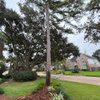
Software
Houzz Logo Print
svtterminator

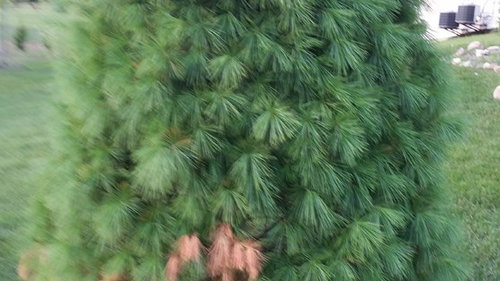
Pinus Strobus dying needles

10 years ago
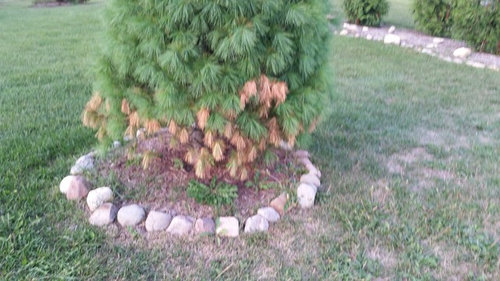
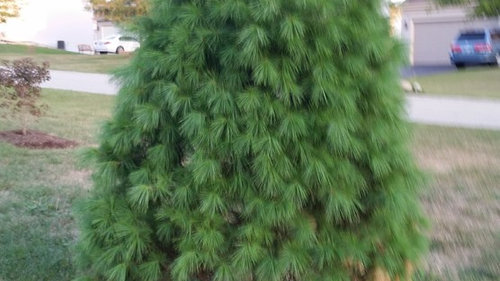
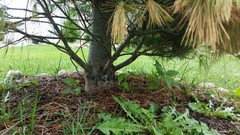
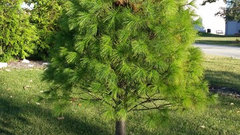
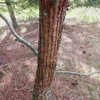
Sorry if the pics are slightly blurry. This tree was planted last Spring and has been fine until I noticed this browing of the needles on the lower portion. Any idea what's going on?

Comments (23)

  • 10 years ago

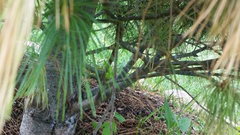
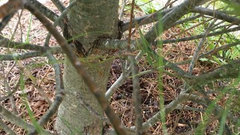
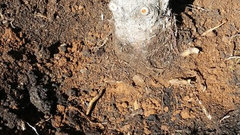
    Can you get in real close and show the trunk where the affected branches are attached?

  • 10 years ago

    sorta classic dog spot .... with no scale ... a really big dog.. lol ..


    on the other hand.. could be planting or transplant damage ...


    the rest looks fine ... sure not going to stay with that sheared look...


    tell us a story about how it got home.. and was planted .. you or pro install ...


    if pro.. i would be talking with them...


    if you .. ive done worse.. lol ...


    just as an aside.. tell us how you have been watering.. the rest looks fine .. so its probably not that ... have you had the same long drought adrian MI has had.. 200 miles east of you?


    ken

  • 10 years ago

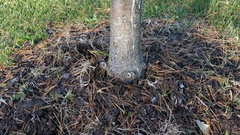
    Some close up photos

  • 10 years ago

    Planted last year during the spring by myself and the help of another guy. I do have to point out this was a Home Depot tree. They were the ones who sheared it but I prefer the natural look.

    Watered weekly during the drought and here and there when it rained. This death came out of no where!


  • 10 years ago

    get under there and find the root flare .. looks a bit deep ... first set of branches should not be that close to the ground.. imo

    https://www.google.com/search?q=root+flare&ie=utf-8&oe=utf-8

    ken

  • 10 years ago

    The white sap on the trunk at the dead branches CAN be a tell-tale sign of white pine root decline. No cure, always fatal. Unusual to see it in such a young tree. IF it is wprd the tree was diseased when you bought it and will be dead in a year or so.

  • 10 years ago

    Ahhh that's awful! Tree has shown some growth this year. Can it decline yet have growth at the top? Ken I'll have to look for the root flare tomorrow and excellent point.

  • 10 years ago

    What I have observed with young trees is that growth can be normal, but as the year progresses the foliage begins to lighten in color and wilt. As spring approaches and the weather warms the foliage goes completely brown and the tree is dead. In larger, older trees the bleeding of sap on the lower trunk becomes noticeable, but that years growth is pretty much normal. The following year the new growth is much stunted, and during the summer the disease continues as in the young tree. Old trees can take 2-3 years to die.

    I've planted lots of white pine on my place, and the first sign of the disease I noticed when it first arrived was the complete browning of several of the lowest branches, usually on one side. I now have seen it enough that I look for sap low down on the trunk, that usually shows before any dead foliage. Of course all sap is not wprd, sapsuckers, broken branches, bark splits due to rapid growth will mimic the symptoms. But I've seen enough to know when a tree is infected.

    As far as your tree, the pictures look exactly like my trees that are infected, but I'm not there and can't be absolutely positive.


    svtterminator thanked kentrees12
  • 10 years ago

    Thanks kentrees12. Good Intel and I'll monitor this closely.

  • 9 years ago

    Updates on this tree. I pruned the lower branches in the spring. Is it diseased still? Seems like slow growth for a white pine. I was hoping it would die or lose the white sapping but it's showed some growth.

  • 9 years ago

    See Kens' suggestion above. "get under there and find the root flare .. looks a bit deep"

  • 9 years ago

    Yes, that mound of mulch suggests 'mulch volcano' where mulch is piled up against the trunk. Trees can do poorly just from this one thing.

    svtterminator thanked User
  • 9 years ago

    I definitely will move the dirt and mulch ASAP to find the root flare. I had help planting this tree and can't recall if it was planted too deep. For some reason my landscaping guy is taking a rake and shuffling the mulch around before he cuts the grass. At first I thought it was a racoon looking for voles. So the mulch usually is not next to the trunk but I'll spread it away.

  • 9 years ago

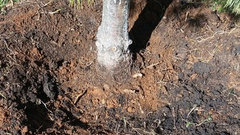
    I dug it up a bit but not sure if I found the root flare. Should I keep going further down?

  • 9 years ago

    Those fine roots on the side of the trunk are called adventitious roots. The are worthless to the tree and are above the true root flare. The root flare is where the trunk widens where the main lateral roots meet the trunk.

    You need to dig down until you find the true root flare. If it's too deeply in the ground, the tree will have to be dug up and set higher in the ground.

    Those adventitious roots should be snipped off.

    Here's a link that shows more about proper height of the root flare, notice about 2:30 in the video. https://www.youtube.com/watch?v=fI12XNNqldA

    svtterminator thanked User
  • 9 years ago

    Wow very helpful video! I'll need to raise this tree soon. Thank you!

  • 9 years ago

    It's a job doing so but the long term investment is certainly worth it.

  • 9 years ago

    I'll need to raise this tree soon.


    ==>>. crikey dude.. this tree aint worth that kind of labor ...


    with some selective pruning.. use it as an indoor xmas tree .. and go buy a new one ... its a species white pine.. not some rare foo foo one of a kind specimen tree ...


    are you really willing to put a couple hundred dollars of your labor into a tree that can replaced for 20 bucks???


    besides .. riddle me this batman ...... after you spend a few hours digging the appropriate 3 foot ball of soil ... how in the heck are you going to lift it straight up a few feet.. to get more soil underneath???


    work smart not hard ... its too big to be lifting without real equipment ...


    orrrr .. just ignore it.. it will die.. when it dies ...


    ken


    ps: i bought some strobus at wallyworld.. in sand in one gal pots .. one foot tall .... in early spring .. within 5 years ...they were about 15 feet tall .. and i had to cut them all down.. who knew pines grew so fast ... not the nimrod who planted them where he did.. lol ... and i had to cut them down.. because within another year or two. i would have had to pay to have them taken out ... as they were growing 3 to 5 feet per year .... i mean really.. look at what your leader did last year ... and the year before ...


    svtterminator thanked ken_adrian Adrian MI cold Z5
  • 9 years ago

    Haha I see your point Ken. I kind of enjoy this kind of work but not alone. I'll call it project 3 guys and some shovels plus plenty of beer. If it dies no big deal it's in an area I actually don't want to replant anything. But worth saving and the advice on here has been extremely helpful for future plantings.

  • 9 years ago
    last modified: 9 years ago

    how in the heck are you going to lift it straight up a few feet.. to get more soil underneath???

    I keep asking myself, why would a tree guy like ken even suggest a method such as that! Certainly impossible without a tree spade.

    work smart not hard

    There you go, now let's put some thought into that suggestion. :-)

    If I were to do it. First determining how much it needed to be raised by digging carefully down to the root flare.

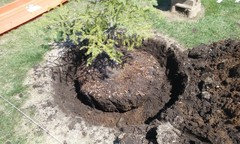
    Then, I would dig a trench around the tree (similar to picture below).

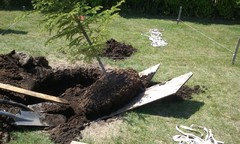
    Next (using my 2 or 3 friends help)(and 2 or 3, 8ft. 2x8's) tip the tree up and over in the hole, then shovel enough dirt underneath so when you tip it back up, it will be the height desired.

    Just to give an idea, Here's a pic of a tree, not as big as yours, but I moved it to another location all by myself. First the trench is dug outside the root ball.

    Now I pulled it out of the hole, using an ATV but If I only wanted to raise the tree, I would've simply tipped it over in the hole and then added dirt under it.

    With help, it shouldn't be that big of a deal. For those of us that don't mind working. ;-)

    svtterminator thanked User
  • 9 years ago

    Thanks Bill I'm sure I'll have to minimize the root ball in order to manually lift it. I'm not definitely not using any machinery. All this tree will cost me is beer and some time. Excellent tips and neat job digging that tree up.

  • 9 years ago

    Do it only when the tree is dormant. Spring would be the best time, before bud break and right after the frost is out.

    You could get by using close to the original root ball size.

    It's surprising how much leverage you can get with a 2x6 or 2x8, wedged under the root ball. Holding down on the 2by's was my problem but with friends to help hold them down, much better.

    Let us know how it turns out. :)

    Good Luck!

Sponsored
Peabody Landscape Group
Average rating: 3.5 out of 5 stars8 Reviews
Columbus' Reliable Landscape Design & Contracting