Software
Houzz Logo Print
ontario_canada5a_usda4b

Buying ugly ducklings

It is often suggested around here to buy small with 50% roots rather
than big with 5% roots or even less. Big means instant gratification, small
means you are buying ugly ducklings.

When buying small, what do you do to make (reasonably) sure that the
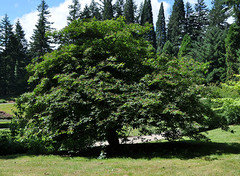
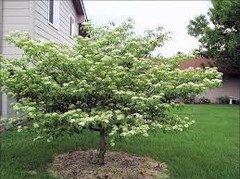
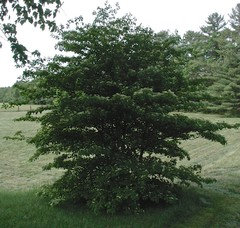
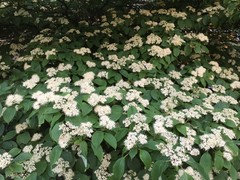
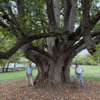
tree will turn out like pic #1 and not like pic #2? After x years?


Comments (33)

  • 9 years ago

    What's wrong in pic 2, is it multiple leaders/shrublike appearance you don't like? If you want a single leader you might have to train it from the start.

  • 9 years ago

    You're comparing apples and oranges. I'll repeat what huggorm says, what's wrong with number 2?

  • 9 years ago
    last modified: 9 years ago

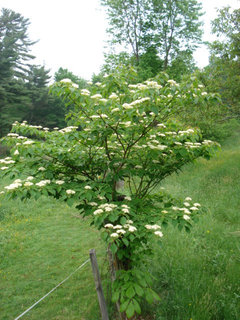
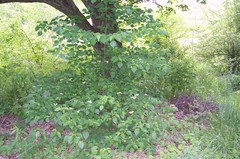
    Ah, pic #2 was (perhaps?) a bad example. Here are pics #2a and #2b. They are beautiful single-trunk trees, but not wedding cakes. Or are they the wrong cultivars? Or the wrong species altogether? Or does the species lose the wedding cake after several decades? Honest questions, BTW, I am not much of a gardener, I am just thinking of an option for next spring.


  • 9 years ago

    Well the first thing I would do, if I have never pruned a tree before, is get a good book on pruning or find a good website on the subject. I don't think there is any thing you can do Original 2 make it a single leader. I would would remove some of the inner limbs and maybe some of the lower branches, Depends on what I saw when standing there with the pruners.

    Same with 2b, with proper pruning this may be encouraged to gain some height.

    2a definitely needs some trimming, Again depending what I saw when I was standing there with the prunners, I would remove many of the bottom branches and trim the inner branches from the tree. This looks like it will give you a more vertical tree.

    One of my first rule of trimming do it in tree time not mine. Second rule is that I must be able to mow around the tree with out being knocked of by limbs.

  • 9 years ago

    Those #2 pics aren't all Cornus controversa are they?

    Proper pruning makes some difference.

    Also, proper expectations for your location makes a difference. If you have shade on one side of your new tree it will grow to the sun for example.

  • 9 years ago

    #1 is a dogwood, mostly likely Cornus controversa or Cornus alternifolia, and they tend to grow in layers like that IME which is why the common name of C. alternifolia is pagoda dogwood. Can't see the others (all the #2s) well enough to know why they have the growth pattern shown (can't even tell if they are dogwoods), but my Cornus kousa don't have the same layered look as the pagodas. So choosing the right species is important, probably more significant to my mind than pruning.

  • 9 years ago

    I have been googling Cornus alternifolia as it is native to my area, so I hope that's what the pics are, but like anything on the Internet I can't be positive.

    So, is this my best bet for growing a wedding cake? Find a single trunk specimen of the Cornus alternifolia ? I don't mind doing minor corrective pruning, but I would shy away from doing structural pruning, I like to rely on the plant itself to grow into a wedding cake (or pagoda).

  • 9 years ago

    The difference in bloom suggests pic 1 is cornus controversia and pic 2/2b are cornus alternifolia. Structural pruning helps to improve the stability of your tree, therefore prolonging it's life. You could find a single trunk specimen of either, perform crown raising, and get the desired look.

  • 9 years ago

    All young trees tend to be "ugly ducklings"........they just need time and maturity to develop into what they should be. And patience on the part of the gardener :-)

    Dogwood trees really do not require much in the way of pruning and often do not respond to heavy pruning well, reacting to many pruning cuts by producing excessive shoots at that point. Both C. alternifolia and controversa are often multistemmed or very low branched trees, appearing to have more than a single trunk. If that's a look you prefer, then look for one that starts out with that single feature, regardless of its size. And neither of these are necessarily good candidates for "crown raising" (despite what Logan may suggest), as the low, layered branching structure is a major part of their appeal.

  • 9 years ago

    The first one is more layered because it is Cornus controversa 'Variegata'. C. alternifolia 'Argentea' - although it has been known to grow 20 ft. tall - is usually more dense, asymmetric and shrubby.

  • 9 years ago

    I am aiming for the straight native species Cornus alternifolia as it would
    have the best chances for surviving my tender loving but hopefully not
    misguided care :-)

    The look I like is a single trunk and branch flares at 2', 4', 6',
    etc. How do the most promising ugly ducklings look like, that will grow like
    that? Hopefully, I won't have to transplant a 7' specimen?

  • 9 years ago
    last modified: 9 years ago

    I know next to nothing about Cornus but I did a Google image search and found this. It's the same image as picture one and is labelled C. alternifolia.

  • 9 years ago

    If you want a single trunk, find a small one that has a single trunk. With mail order, you never know what you are going to get so best to locate one in person. And the tree will start the layered branching where it wants to, although IME, that distinctly layered look develops over time, not necessarily something you would obviously see in a small, quite young tree.

    btw, "wedding cake tree" is the common name usually associated with C. controversa, not alternifolia. C. alternifolia is commonly referred to as "pagoda dogwood".

  • 9 years ago

    As GG48 said, find a small tree that has the form you want. IME here in my part of the US, it isn't a common nursery tree, but if you can't find it, they grow readily from seed if you can find a fruiting tree (early August here, but quickly eaten by birds). I had a couple bird-planted in the veggie garden that I didn't get ripped out due to an injury limiting my ability to dig and they grew more than a foot a year after the seedling year.

  • 9 years ago

    The look I like is a single trunk and branch flares at 2', 4', 6',
    etc. How do the most promising ugly ducklings look like, that will grow like
    that?


    ==>>>


    this was answered pretty far up ... i will sum it it... maybe .. lol ..


    buy smallish ... insure singe leader ... and singe trunk ...


    then as it grows ... up ... prune out every two feet ...


    maybe i can sum it up this way ... the one you like.. is a high maintenance girlfriend... lots of work ...


    the others you see.. are the ever reliable farm girl you should marry .. lol ...


    pruning one or a couple trees .. is not hard.. nor time or labor intensive ...


    first .. let it grow free to about 5 feet .... then start removing intermediate branches to your spacing GOAL ..... not all at once.. just over the years.. one or two.. here or there ....


    the only limit that usually happens.. is you cant go any higher than your ladder .. or you get old and arent trusted with sharp tools anymore ... lol ...


    does it always work out.. no ... can you have fun.. sure.. why not ...


    ken


  • 9 years ago
    last modified: 9 years ago

    Well, like anywhere else on the net, there is always conflicting info. You say to prune it, but most others say the species doesn't take pruning well. Frankly, the latter info appears to me to be the more substantiated one.

    On the other hand, I googled 'young cornus alternifolia tree' and from the looks of the specimen below - which may already be 7' or 8' tall - it is hard to imagine that it will grow naturally to the magnificent specimen of pic #1.

    I guess, I will have to look for a single-trunk specimen AND have BIG faith that the plant will follow its genes and will in due time look like mommy.

  • 9 years ago
    last modified: 9 years ago

    The first picture is absolutely C. controversa 'Variegata' (or another white variegated C. controversa). C. alternifolia 'Argentea' never produces those same long, ~level, Cedrus-like branches.

    Ontario_Canada5a_USDA4b thanked Embothrium
  • 9 years ago
    last modified: 9 years ago

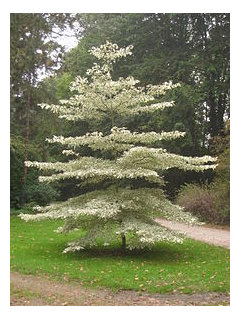
    Embothrium appears to be correct. This Wikipedia article on the Cornus controversa has the picture below which has a striking similarity to pic #1. The Wikipedia article attributes the picture below to the National Botanic Garden of Belgium, so that's a quite credible source.

    However, that's bad news for me as the Cornus controversa isn't hardy in my area :-( It appears that I would have to be content with the more bushy appearance of the Cornus alternifolia of pic #2 (multi-trunk) or pic #2b (single trunk).

    And it was exactly the airy nature of the pic below (and of pic #1) that attracted me to this tree :-( OK, then, I'll look for another option for spring :-)

    Thanks to all who responded!

  • 9 years ago
    last modified: 9 years ago

    When I look closely at that last photo that Ontario_Canada posted, it looks like it has several stems, so that would lead to the bushier look. It's also growing out in the middle of a field, and based on the ones on my property, they tend to grow with a more layered look with at least part shade rather than in full sun.

    Ontario_Canada5a_USDA4b thanked NHBabs z4b-5a NH
  • 9 years ago

    Hey, that's useful info! My neighbor in the back has a large crabapple tree just 3' behind the fence. I could plant a Cornus alternifolia say 10' from the fence for part shade with enough room to grow. It is an understory tree after all.

    Perhaps I should sleep over it for a couple of weeks and not make quick decisions right away. I was so disappointed yesterday. In my mind, the airy tree is THE tree in fairyland. I see 1' fairies flying around happily between the layers :-)

  • 9 years ago

    Here's one of mine that was pre-existing when we bought the house and had about 5-6 main stems. It was growing in almost full sun - I had to time the photo carefully so it was in the shade of a huge maple to its NE and not too washed out. You can see that it was quite densely branched, partly due to the sun and partly due to multiple stems, but still had some of that layered look, most visible in the winter.

  • 9 years ago

    Cornus alternifolia has the open structure when it is growing under larger trees, because it is naturally and understory tree.

  • 9 years ago

    Thanks for posting the photo, NHBabs, it provides a good point of reference. If it were mine, I would take down all but one trunk to get the unique airy look :-)

  • 9 years ago

    C. alternifolia 'Argentea' does not have the same habit as the typical species.

  • 9 years ago

    I believe NHBabs posted a photo of her Cornus alternifolia (species) as she wrote further above that she has no experience with the 'Argentea' cultivar.

    Do the Cornus alternifolia species and the Cornus alternifolia 'Argentea' cultivar have different structural characteristics? I appreciate if the variegated cultivar would grow slower, etc.

    I checked the websites of nurseries in reasonable driving distance and found 3 that carry the Cornus alternifolia species. 2 nurseries carry it under the category 'shrubs' (not 'trees') presumably implying multi-trunk, the third nursery did not categorize. Wikipedia uses the word 'tree': "It is a small deciduous tree growing to 25 feet (8 m) (rarely 30 feet (9 m)) tall, with a trunk up to 6 inches (152 mm) in diameter." What this tells me is that I may need some luck to find (locally) a single-trunk specimen of the Cornus alternifolia species.

  • 9 years ago

    For that particular tree, the trunks were several inches thick, and had grown that way for a number of years, so had we trimmed it down to one trunk it would have had a truly awkward shape as well as a lot of open wood available for rot organisms. We just enjoyed it as was for a number of years before the voles at too many roots one winter. Dogwood seems to be a favorite for them.

  • 9 years ago

    Pardon if this has already been explained, but the well-defined layered look of Pagoda Dogwood is going to be most influenced by the amount of sun vs. shade it gets. In sun it will be a fuller, but still quite nice small tree. In a moist woodland setting, it will showcase the the horizontal tiered branching. The one below is somewhere in the middle.

  • 9 years ago
    last modified: 9 years ago

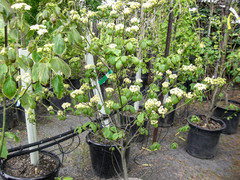
    Hah, here are single-trunk Cornus alternifolia in nursery pots :-) I don't have a woodland type of planting site with a canopy, though :-( The best planting site I can offer is part shade from the side. So, it could grow there like in the photo that maakia posted, hopefully less dense.

    @maakia, is that a single or multi-trunk specimen in your photo? It may be single trunk, but I can't see clearly. Beautiful flowers!

  • 9 years ago
    last modified: 9 years ago

    Sorry, but I can't recall if it was single stemmed. C. alternifolia will likely be short-lived on an open, full sun site unless you are fortunate to have consistently moist soils. They do not like hot and they abhor dry. If you can provide afternoon shade that would be best.

    BTW, pic 2a looks like Hawthorn to me, but almost impossible to tell without a closeup.

  • 9 years ago
    last modified: 9 years ago

    Maackia, it may depend on soils and growing conditions. Mine posted several postings above was in sun more than 10 hours a day - the photo looks SW. My soil is acid, fine sandy loam, well-drained, and it was fine there for more than 20 years and would probably still be there had we not had a population explosion of voles that killed virtually every dogwood I have by eating the roots. I have or have had at least 6 others that lived for more than 5 years in full sun but all but a couple either succumbed to the voles or I removed since they had volunteered in unsuitable places.

    I certainly wouldn't recommend full sun if one wants it really layered as Ontario does or farther south, but it survives well here in full sun.

  • 9 years ago

    Here's my volunteer pagoda -- it shows some of the layering in fairly deep shade of a sugar maple:

  • 9 years ago

    NHBabs, I agree that soils are critical. It also helps to be in a cool zone...and I think you are. My soils are a loamy sand and not very productive. Is it possible the nearby trees kept the root zone cool, even though the tree was in sun?