Software
Houzz Logo Print
rmanbike

Help with gas cooktop replacement

9 years ago
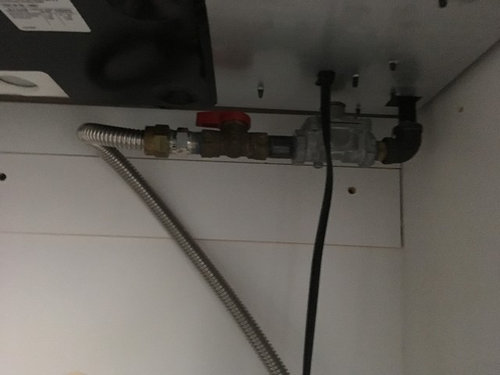
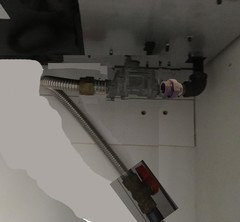
I was the GC when I built the house 15 years ago, thus the HVAC contractor installed all the gas appliances. Now I'm need to replace the cooktop. When they installed they never put in a gas coupling. So I'm trying to figure out how, if possible to use the shutoff valve at the cooktop and unscrew the piping from that point. But I'm not sure I can do that, because of such limited amount room or even if the flexible gas line will spin enough to unscrew. I prefer not to have to cutoff at the main value. Because I will need to call the gas company to turn back on.

BTW I have some experience in this, installed a 2nd gas tankless water heater in my basement.

Comments (11)

  • PRO
    9 years ago

    Your shutoff valve is attached to a flex hose? It should be attached to standard black iron, somewhere in the back of the cabinet, with a flex hose between it and the cooktop. He did run all of your gas in black iron?? You need a plumber with a gas endorsement to correct this.

  • 9 years ago
    last modified: 9 years ago

    No matter what, you're going to have to shut off the gas at the meter in order to install the shutoff valve where it was supposed to have been installed in the first place, which is right after where the gas supply enters the cabinet, not right at the stove! Then you'll, of course, need to use the proper flexible connector for your appliance.

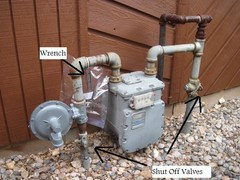
    Just curious: why does the gas company need to turn the gas back on if you're able to turn it off? Does your meter look different than this?


    http://www.usinspect.com/site/residential?page=12

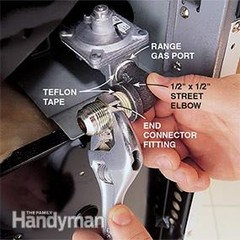
    I know you said you have experience with installing gas appliances, but here's a handy little guide with good pictures for anyone who might be reading this.


    http://www.familyhandyman.com/plumbing/how-to-install-a-gas-stove-without-dangerous-leaks/view-all

  • PRO
    9 years ago

    I understand once you shut off the main valve, then disconnect any part of a gas line, air is entered into your gas line, and its best to bleed the air out at the main. I watched the gas company guy turn back on before and he bleed the air out of the line by the couplings going in and out of the meter. As shown in your picture. As gas is lighter than air. That was the issue I have is not knowing exactly the proper technique for this.

  • PRO
    9 years ago

    90% of the gas line is flexible. So that may be the reason why the shutoff valve is where it is. btw

  • 9 years ago
    last modified: 9 years ago

    No, it's like it is because an idiot installed it. If he didn't use code required black iron, then a BIG idiot installed your stuff. Flex lines are only approved for the last few feet between the required shut off valve and the appliance. Flex lines flex, and eventually develop holes. If 90% of your gas is run in flex lines, which I don't even see how is possible, you have an absolute roman candle disaster level work in your home.

    You have a MUCH bigger issue than wanting to replace an appliance. You better get that tankless DIY kludge fixed too while you are at it. Your words betray you. You need a plumber in there Like YESTERDAY. This is gonna be spendy.

  • 9 years ago

    Stop it ! If you want to tempt disaster for your self,go run back and forth across the freeway,but don't put your loved ones at risk. Get someone to help you that know's what they are doing and we will help you save money by telling you how to cut your own hair. Wake up before it's too late.

  • PRO
    9 years ago

    Maybe you misunderstood that by flexible I meant CSST.

    CSST was introduced in the U.S. in the 1990s as the safer alternative to rigid iron pipe. CSST was developed in Japan to address the high failure rates of black iron pipe in earthquakes. Since then, CSST has been widely used and recognized for its outstanding safety and ease of installation.

    Its approved by all building codes in just about every state I know of.

    Sure the guy who made the mess under my cooktop should had at least the work turned down by the building inspector! Anyway its up to me to fix it.

    Now can you please stop the fear mongering.

  • PRO
    9 years ago

    I should add in the photo, thats not CSST. And your right about what you see in the photo, flexible tubing. This I think is how it should be; with the cutoff connected to the floor flange. Flexible tubing to the regulator, a union to the elbow.

  • 9 years ago
    last modified: 9 years ago

    If 90% of your gas is run in flex lines, which I don't even see how is
    possible, you have an absolute roman candle disaster level work in your
    home.

    People have been using it for years, but there are a few potentials for failure. One risk is lightning strike, and proper bonding of the gas lines should mitigate that. The other risk is physical damage (dog chewing on it or it being hit by something). For that reason it is best installed indoors behind the walls or not visible, similar to electric wires. Outdoor installation it is best to use painted black pipe. Paint for metal use, usually oil based, whatever color you want.

    https://www.angieslist.com/articles/flexible-gas-lines-possible-fire-hazard.htm

    https://www.we-energies.com/outages_safety/using_energy_safely/CSST_policyreq.pdf

    Sofa, there should be a solid stub out through the floor (or wall) that the incoming gas connects to, then the shut off valve goes on the stub out (or on an elbow then the stub out), then the CSST between the appliance and the shut off valve.

  • 9 years ago

    Hey y'all,the weather was beautiful this week so I went out fishing. I saw two men dragging lures about 150 feet behind their boat and catching fish like I've never seen before. I've tried fly fishing,jug lining and working the birds but never this. What is that style fishing called?