Software
Houzz Logo Print
editoria

Can I do something to help this apple tree?

9 years ago
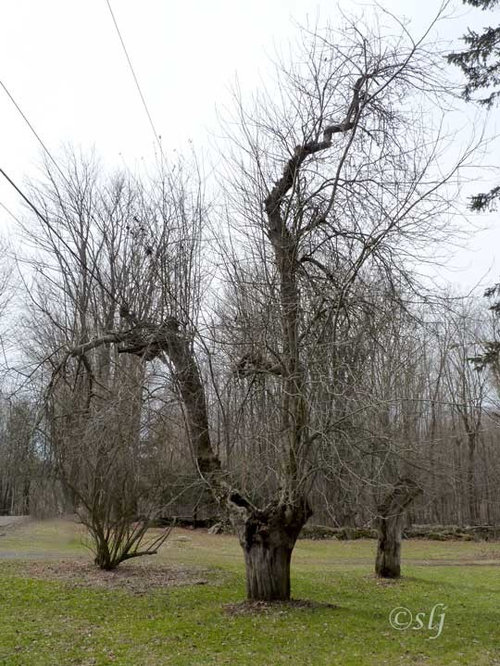
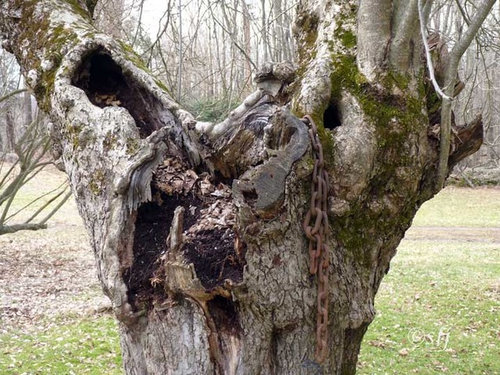
This King apple tree is one of the oldest on our property and a big favorite of mine. When we moved here in 1975 it had four massive limbs growing from the trunk. Over the years, two of them have come down on their own.

Our theory is that when someone on this old farm installed a chain (visible in one of the photos) in the trunk, this introduced moisture into the tree, which led to rotting. In a particularly violent t-storm last week, chunks of wood fell from the rotten area, exposing more of it.

The sections of the tree that remain are are so big and heavy, it's wonder they haven't broken away too. I'm hoping there's something I can do (on a very limited budget) to help ensure their longevity. They measure 48-50" at their base. The property used to have two King apple trees, but one of the literally fell apart years ago.

Your input is appreciated!

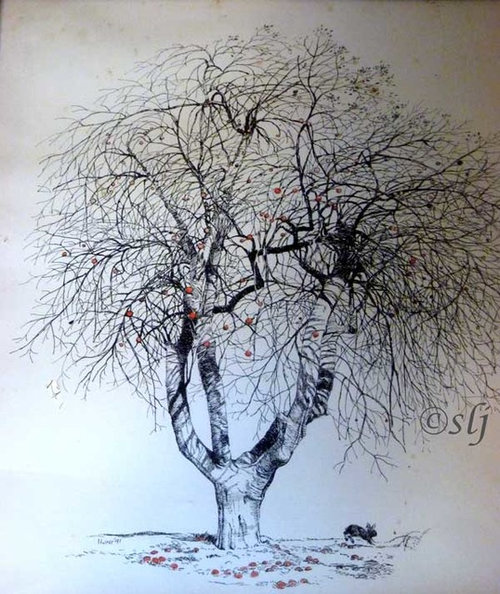
This is what the tree looked like in 1991:

Comments (30)

  • 9 years ago

    the chain is independent of the rot. a branch of some size was pruned off at some point, leaving a large wound which eventually lead to where the tree is today. Independent of that, the chain was placed on the crotch of the tree, either to get it off the ground and forgotten, or was used at one point to try to hold a failing branch in place. While not the best, it's also not the cause of the problems.

    I'd be looking at getting some rootstock and grafting. It's possible you can do some bridge grafting...visit a library, get some books on plant propagation, older ones might be better for this...but ultimately, i'd be putting a plan into place for life after this tree falls apart.

    learn to identify water sprouts. i'd prune them off...yeah, you're gonna get different opinions on that.

  • 9 years ago
    last modified: 9 years ago

    I'd shop for a new tree and watch that one fall apart.

    King is one of my favorite apples. I've rehabbed a few over the years, but not that far along.

  • 9 years ago

    You can cut it down

  • 9 years ago

    I appreciate the advice, though of course it was not what I'd hoped for. (That was harsh, Logan.) I'm very attached to this tree--which is probably obvious, since I took the time to photograph it and post here.

    It may be on its last legs, but it sure can produce. Our "Year of the Apple" was 2015, in which all the apple trees were laden, and the King was no exception. We filled our freezers, kept our neighbors and friends in apples, and donated bushels of drops to a farm animal rescue. The deer took care of the rest.

    Over the years we've planted many trees, but I don't remember seeing a King in any of the catalogs we used. Can someone recommend a reliable source of heirloom fruit trees? Thanks!

  • 9 years ago

    Your tree is a real character in your landscape and I too would keep it. Eventually it will fail but there is plenty of room around it so it won't hurt anyone. Meanwhile you could start finding out about perpetuating this old stager through grafting. Personally I like gnarly old trees.

  • 9 years ago
    last modified: 9 years ago

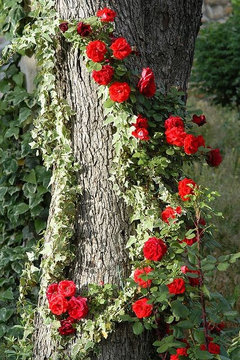
    Grow something up it - a rambler such as Kiftsgate or Bobbie James...or one of the wichurana roses with flexible canes and small glossy foliage. This is a classic treatment of old apple trees...and yep, getting hold of stockwood and either side grafting in summer would keep the cultivar going.If hardiness is an issue, a climber such as Lilian Gibson, from the Morden breeding station would also fit the bill...or any of the hardier species roses (r.helenae for example).

  • 9 years ago

    Susan, I'm afraid that I agree that there might be little that can be done to improve the form of your wonderful old tree. However, I will add that one of the single most beneficial things anyone can do for a tree is to add a two to three inch layer of mixed wood chip mulch in a very generous circumference around the tree. I'm talking about a radius of several feet out from the trunk, staying away from the trunk itself.

    What this does is create a great environment for the hugely beneficial microorganisms that live in the soil. A mulch layer also buffers the soil/root system against extremes of heat, cold, and drought. The essential fine (feeder) roots may be stimulated to develop anew under the mulch, resulting in a healthier support system for the above ground parts of the tree.

    Mind you, the mulch may prolong your tree, not save it. I have a local tree company drop off a couple of loads or more of chips per year for our trees and gardens. It decomposes and melts into the soil over time and will need refurbishment. I do not recommend pine bark nuggets.

    I hate to suggest that you hire an arborist to prune this tree.....very few know how to tend to fruit trees in general, and old ones, in particular.

    If this were my tree, I'd track down the owners of an orchard in your vicinity...I know your state (and the one nearby) is a big apple producer. An orchardist will know which rootstock to use for your area and how to bud or graft scion wood from your tree to brand new stock.

    I'm sorry that Logan felt the need to participate. Please know that he is a thorn in this forum's side and not representative of the many knowledgeable people that you will meet here.


  • 9 years ago

    Wayne, Ken, Floral, Campanula, and Rhizo all have excellent advice. Mike also said to just leave it and look for a new one. Yes, please get some starts from this wonderful tree. Enjoy it for as long as it lasts. You never know how long it could keep on going! DO NOT CUT IT DOWN!

  • 9 years ago

    Thanks, everyone! Rhizo, nice to see you here. I'm sure I can get some wood chip mulch. Happy to have a way to make my tree (and others) happy.

    Don't worry, Sherry--no way am I cutting the tree down!

  • 9 years ago

    You could read up on and practice grafting. Grow a few apple seeds and graft branches from the large tree onto the small one (rootstock).

    ==>>>http://www.extension.umn.edu/garden/yard-garden/fruit/grafting-and-budding-fruit-trees/

    When grafting, I have personally performed t-budding and cleft grafting, but you may need to use whip grafting.

  • 9 years ago

    I meant to add that I actually took a community ed grafting class at one of our high schools a couple of years ago. It was a two-class course, and I missed the second one because I was sick. They haven't scheduled any more since, but I remember the man who taught the class and might be able to get in contact with him.

  • 9 years ago

    Lol, I learned basically everything I know from reading online and trial/error. Read up on it a bit, read old posts on gw, practice, etc. You'll eventually get the hang of it.

  • 9 years ago
    last modified: 9 years ago

    Seek out a grafter in your area, Go see him. Let him show you how.

    Alisande thanked Mike McGarvey
  • 9 years ago
    last modified: 9 years ago

    You could also hire
    the grafter to make for example 6 grafts, for 3 or more survivors.

    The tree appears to
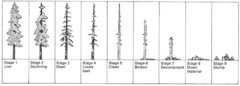
    be in stage 2 of the graphic below, and it still has a role to play in nature for decades to come if
    you allow it to. (click on the graphic to enlarge it) My neighbor in the back has a tree anywhere between stage 3
    and 4, I love watching woodpeckers foraging in the tree.

    You could also plant one or more of the descendants around the old tree for a generation exhibit, there seems to be enough space.

    Alisande thanked Ontario_Canada5a_USDA4b
  • 9 years ago
    last modified: 9 years ago

    Unless a tree was in danger of falling on people or property, I never chop them down because as far as I can see, they still have wildlife and amenity value. Even the complete deaders in my woods provide sounding boards for the woodpeckers (I have anthills underneath so all three native woodies have been seen...and heard) or perches and feeding posts for the buzzards and kestrels.

    I am happy for the climbing ivy to colonise dead or dying trees (they provide great shelter for long-tailed tits and wrens) as I enthusiastically remove it from the trunks of thriving trees, leaving a lack of mid-height cover for songbirds.

  • 9 years ago

    Tree asked about is probably being rotted out by Apple Anthracnose.

  • 9 years ago

    "The tree appears to be in stage 2 of the graphic below, and it still has a role to play in nature for decades to come if you allow it to. (click on the graphic to enlarge it) My neighbor in the back has a tree anywhere between stage 3 and 4, I love watching woodpeckers foraging in the tree."

    Looking at a tree past stage two in my yard for any long period of time would drive me insane. I would probably end up walking outside with an ax and other destructive tools and utterly destroying it. I'm sure that there will be other people here that agree.

  • 9 years ago

    You are already insane, but that's OK, you can ax your forsythias...

  • 9 years ago

    If they die, I'll be sure to.

  • 9 years ago
    last modified: 9 years ago

    BTW, the OP can graft on various apple rootstocks, e.g. select an appropriate size for the descendant tree for the front yard.

    Edit: Anthracnose, if so, is a serious issue.

  • 9 years ago

    I looked up Anthracnose, and there's no sign of it on the tree nor the apples.

  • 9 years ago

    Well, then, you could make a plan for the grafted trees of the various (10 year) sizes. It would provide a sense of continuity.

  • 9 years ago

    I suspect I'm too old for continuity. LOL

  • 9 years ago

    I love the pencil?, pen and ink?, drawing from 1991. It would be neat to do one as it looks now and frame both and hang together. The climbing rose idea sounds beautiful also.

  • 9 years ago

    Yes, pen and ink. Nice idea, Sherry, but not possible as the artist moved away a long time ago. I like the climbing rose idea too. I once had a rose addiction--Austins, Bucks, and hardy shrubs and climbers--but had to get practical and give them up, along with most of my perennials. I don't suppose it would hurt to get just one teensy (haha) rambler....

  • 9 years ago

    Like this?

  • 9 years ago

    Oh, my! That would certainly cheer things up.

  • 9 years ago

    Did it leaf out yet?

  • 9 years ago

    Yes. It's early yet, so the leaves are small. But prolific!