Software
Houzz Logo Print
emerogork2

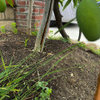
The planted Tootsie Pop Test.

9 years ago

I was listening to a talk show this morning where they discussed that improperly planted trees will not develop proper root spread and roots will remain all bunched up. It is called the "Tip Test" when if you push on the tree, it will tip over.

Six years ago, I planted a Summer Crisp Pear tree. It is very healthy in that it produces good pears, the leaves look great even at the far top of the branches. I went out to do the test: It tipped!

Now, is the fix as easy as pulling it out, spreading the roots, digging a better hole, and replanting it properly?
If so, is there a best time of the year to do this?
Is there anything I need to know before, during, and after I do this?
I do know not to augment the soil and to plant it in the soil that is already there.

Oh, BTW: This is the second time I am writing this message because the HOUZZ software totally trashed my original and this is not the first time it happened. It Is the only web site that does this. How Bizarre is that!

Comments (17)

  • 9 years ago

    I'm having trouble envisaging what a 6+ year old pear tree looks like that can be pushed over easily. Can you show pictures?

  • 9 years ago

    A picture won't show much but I will go out later today to see if I can capture the phenomenon. Picture a huge tootsie roll pop stuck in the ground stick up. Now move the tree as if it is a joy stick. I would not have believed this had I not seen it myself since the tree is 6+ years old and very healthy.

    I am sure that I will have interesting pics once I extract and repair the root system.


  • 9 years ago

    Hard to believe ...especially on pear since they grow tap roots. I've put in root bound trees and never had a problem. You might have pampered that thing ...too much TLC? lol

  • 9 years ago

    It was as much the general condition of the pear which I was hoping to see from a picture as the tipping phenomenon. You say it is it is very healthy 'in that it produces good pears.' Does that mean there is something about the tree itself, apart from the fruit, that you think is not right? What prompted you to try the pushing over technique?


  • 9 years ago
    last modified: 9 years ago

    There is no apparent damage or less than excellent growth. The leaves are healthy right out to the tips of the branches and the pears are developing very nicely. No discoloration or dropping of leaves.

    It tipped when I was passing through a squeeze near the tree. I am sure that I can go right out there and pluck it from the ground.

    I just want to know if there is anything, other than what I mentioned, that I should know first.

    Hmmm, Tap root? What if that is intact but the rest are balled up? I wonder if I might interfere with it when I go to fix the roots.

  • 9 years ago

    Could be...one tap root and the rest is still balled up..perhaps just dig around and open up...after harvest.

  • 9 years ago

    It's always worth the effort to remove 100% of the dirt in the new plants roots. I don't care if the soil is the same as what it's going into. Still remove it.


    there is no substitute for having the native soil throughout the roots up to the trunk. Sure you will lose some roots barerooting it. Sure the plant will be extra sad the first couple weeks. But the long term health will be so much better and once it recovers it will take off so much better than just digging a hold and plopping it in.

  • 9 years ago

    Good idea, I had never heard that before and I have been doing this stuff for 50 years.....

  • 9 years ago

    I saw this once on Paul James' HGTV show. Full size tree but the roots had grown round and round like a old lollipop.

    Anyway, if you are going to mess with a trees roots do it while it is dormant. Late fall after leaf fall, or early spring before bud break.

  • 9 years ago

    It is surprising how well it is producing fruit and shows no sign of stress.

  • 8 years ago
    last modified: 8 years ago

    Ok, just seeking some reassurance: The tree is doing very well, leaves at the tips of branches look very good, it produced a fair number of pears, and as usual, it is starting to shed leaves. It remains easy to tip and I have it propped up with tall garden hooks. The tree is about 12' tall and the trunk is probably 12" in diameter.

    Is it a good time to pull it out and replant it now or wait further into later in the fall or winter, maybe until spring to do the rework?

    As I see it, it should not be so difficult to extract, spread the roots as they should have been in the first place, dig the hole larger and reset the tree.

    Really, I believe it is going to come out that easily....
    I will know then if my theory is valid in that it was improperly planted so many years ago.

  • 8 years ago

    First, let's make it clear that pears (and virtually all other fruit trees) do NOT have tap roots. Very few trees develop tap roots and many of those that do, lose the tap root once they become well established and begin to mature. For the most part, tap roots are a myth rather than a reality.

    You want to dig up the tree when it is fully dormant (winter) and inspect for circling or girdling roots and make any corrections. It may be impossible to straighten or spread the roots - they firm up and become unbendable over time - but you can cut the worst offenders and that should encourage them to grow outward.

  • 8 years ago

    Interesting information about the tap root, or disappearance of it. For one or two perennials I might debate it as I find them impossible to transplant with any kind of success but I hope your theory is valid for my pear tree.

    So, you suggest I continue to wait.
    It is so easy to put things off until tomorrow....


  • 8 years ago

    I was taking about trees, not perennials. Very different situation.

    With something as severe as potential root realignment or pruning tends to be, you want the tree to be fully dormant. And that means waiting until all leaves are off and temperatures have dropped.

  • 8 years ago
    last modified: 8 years ago

    >>let's make it clear that pears (and virtually all other fruit trees) do NOT have tap roots<<

    Looks like you don't talk by experience...I've transplanted many pears and most have tap roots, makes transplants allot harder to establish, some die!

  • 8 years ago
    last modified: 8 years ago

    Backed up by the Russians...this a translation.

    Look at the root

    The thing is that the pear develops a deep root root. He got it from a wild relative. Possessing such an enviable root, a pear can carelessly live in a semi-arid and even arid climate. However, it does not always survive. And the gardener is guilty in this.

    Even in his youth, the pear tree is damaged three times. First time, when the seedlings in the nursery are diving. The second is when they are seated in school. The third time when they change the garden to a permanent place. Apple trees and quince is not terrible, but the pear is hard.

    Saves the vaccine on the quince, these seedlings grow and bear fruit much better.

    You can do without a nursery, growing pears immediately where you take their place. This experience was carried out by Ukrainian gardeners, planting a pear on wild seedlings (and the pear is planted on wild seedlings very easily). Four years later, the non-stop pears gave the first fruits, while the usual pears did not intend to blossom and the first fruits were given only after seven years. By that time the non-transplantations were already in full swing.

    I think that the Ukrainian experience deserves that we have such a method adopted.