Software
Houzz Logo Print
juddjonas

Cabbage woes

9 years ago

Hello,

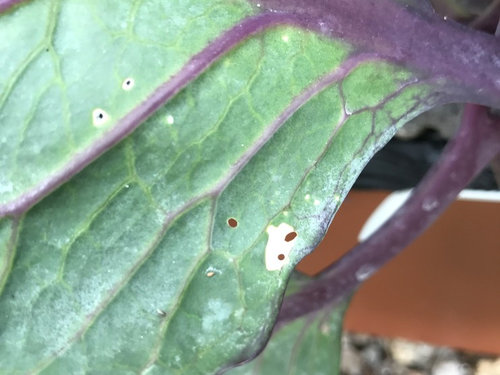
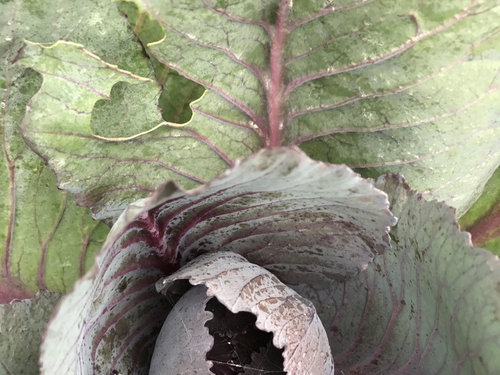
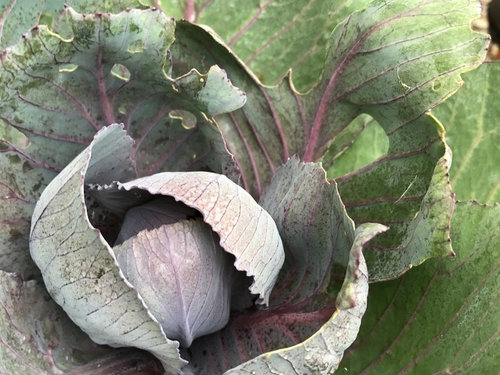
This is my first time growing cabbage. It's a purple variety but it hasn't stopped the cabbage worms. I first tried picking them off by hand but I just couldn't keep up. I'd look for them in the morning and afternoon and would find some every time. I finally broke down and sprayed BT. I believe that did the trick but now I'm stuck with some chewed up leaves and these white spots that seemed to grow overnight.

My questions:

1) Do I remove the damaged leaves or just let them keep growing?

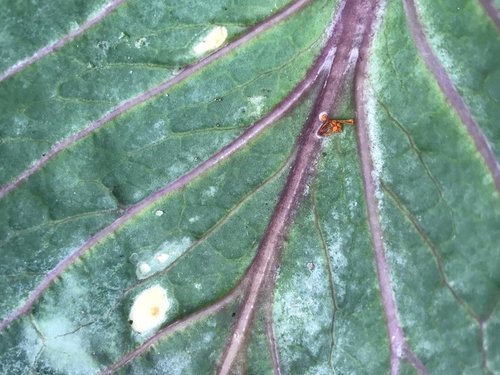
2) These white spots seem to appear overnight. Any idea what they could be? I haven't seen any aphids or other insects.

I'm a new gardener (2nd year) and it's been tough this year with almost everything. Help me salvage these cabbages.

Appreciate the help.

Comments (13)

  • 9 years ago
    last modified: 9 years ago


    Cabbage Worms: How to Identify and Get Rid of Cabbageworms | The Old Farmer's Almanac - Old folk advice from The 1963 Old Farmer’s Almanac states: Years ago, people sprinkled rye flour over cabbage plants in the early morning. The flour dehydrated the cabbage worms.


    I don't believe this, do you?

  • 9 years ago

    They're wrap leaves which will be discarded when you harvest the cabbage head.


  • 9 years ago

    Agree with Jean there is no issue with holes or damage on the outer wrap leaves as most of them get tossed anyway. The damage showing in your photos is relatively minor and head leaves showing such minor damage are often salvageable in part or whole.

    Dave

  • 9 years ago

    Ok, thanks for the input on the damaged leaves. Any ideas about the white patches on the wrap leaves? I'm concerned it's going to spread.

  • 9 years ago

    The white patches are just dead tissue around insect damage and more of it may show up as the season progresses. It isn't any disease that would spread in any way. Keep in mind that plant get holes in their leaves for all sorts of reasons, most of them simple environmental damage and no threat to the plants. So a plant with perfect leaves is a very rare bird indeed. ;-)

    Next time just start with the Bt much earlier because cabbage worms and loopers, regardless of the color of the cabbage (or broccoli or cauliflower etc. ), are a given in the garden.

    Dave

  • 9 years ago

    Or place row covers over the plants the day you put them out. I use row covers for all my brassicas. They work perfectly. I've been gardening for 50 years and I remember before row covers--a nightmare.

  • 9 years ago

    Good point lacey. Row covers are the best, most effective, solution to the problem. Just be sure it is the right row cover used as they come in several different weight/thicknesses. The one rated as "insect barrier" is very light-weight so heat doesn't get trapped inside. Heavier ones will keep out the moths but can also cook the cabbage. ;-)

    Dave

  • 9 years ago
    last modified: 9 years ago

    I'll have to try the row covers next year.

    I know BT is organic and naturally occurring but when it's sprayed on cabbage leaves, in some situations not all of the cabbage can be washed, like if i decide to cut the cabbage into wedges and roast it in the oven. Is the BT safe for consumption or does it just dissipate over a period of time? I'm guessing those cabbage heads will not be ready to harvest for a couple months. Will there still be traces of BT on the cabbage at that point?

  • 9 years ago

    Well you will probably want to do some more research on your own about exactly what bacillius so I'll suggest this resource

    http://www.bt.ucsd.edu/

    As you'll see other than some possible minor eye irritation Bt poses no risks and it breaks down readily in the environment. Indeed it is a normal component of the general environment. And of course good harvest hygiene is expected and proper cooking methods should cover the rest. Using your example of cabbage wedges, a common recommendation is not just washing but a long soaking in lightly salted water just as one does for broccoli, cauliflower, kale, and all the brassicas.

    But something to consider for future reference given your original post. We, as organic gardeners, need to be far more tolerant of plant imperfections and of pest damage such as in your original photos. Even gardeners that regularly use synthetic chemicals don't expect to get plant perfection and no pest issues so one tears off and cuts around or cuts out those imperfections. Organic gardening has a small price we have to pay - realistic expectations for nature's role in our gardens - both the good and the bad. ;-)

    Dave

  • 9 years ago

    DT is great stuff and organic. I tried hand picking for years, twice a day - cant keep up! Likely they will recover

  • 9 years ago

    If you do plan on using row covers next year, remember to protect your young seedlings as they are hardening off. I have found eggs and little caterpillars on my brassicas that were on the deck awaiting planting out!

  • 9 years ago

    <But something to consider for future reference given your original post. We, as organic gardeners, need to be far more tolerant of plant imperfections and of pest damage such as in your original photos. Even gardeners that regularly use synthetic chemicals don't expect to get plant perfection and no pest issues so one tears off and cuts around or cuts out those imperfections. Organic gardening has a small price we have to pay - realistic expectations for nature's role in our gardens - both the good and the bad. ;-) >


    That's a really good point. I'll keep that in mind. This is only my 2nd year growing anything and I'm learning so much. I will have to come to terms with imperfection.


    This is off the cabbage topic but while I'm here, do you think I should prune this off of my Early Girl tomato plant? I've already posted this question in the Tomato plant disease thread last week but wanted to get other opinions. One side of my early girl is getting bad leaf curl, branches pointing straight to the ground but the main stem is still growing upward and fruit looks like it's growing everyday. The person who responded in the tomato thread seems to think this happens with Early Girls and is not Fusarium wilt, just leaf curl due to environmental stress. I'm growing in an Earthbox and the soil is wicking fine. Any thoughts?


  • 9 years ago

    Well it is obviously severely damaged for some reason - and multiple causes are possible - so there is no point in leaving it on the plant as it only causes stress for the rest of the plant. I never grow Early Girl so can't comment on it but I wouldn't expect that to be common for any variety.

    Container gardening, even with Earthboxes, is a whole different ballpark of needs and problems from in ground gardening. It has its own steep learning curve for plant health. But when a plant looks like what is in your photo there is clearly something going wrong and water wicking properly is only one of many possible explanations.

    Dave

Sponsored
Peabody Landscape Group
Average rating: 3.5 out of 5 stars8 Reviews
Franklin County's Reliable Landscape Design & Contracting