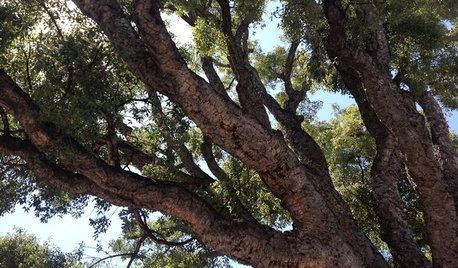
Software
Houzz Logo Print
parker27mv

Cork Oak from Acorns

8 years ago
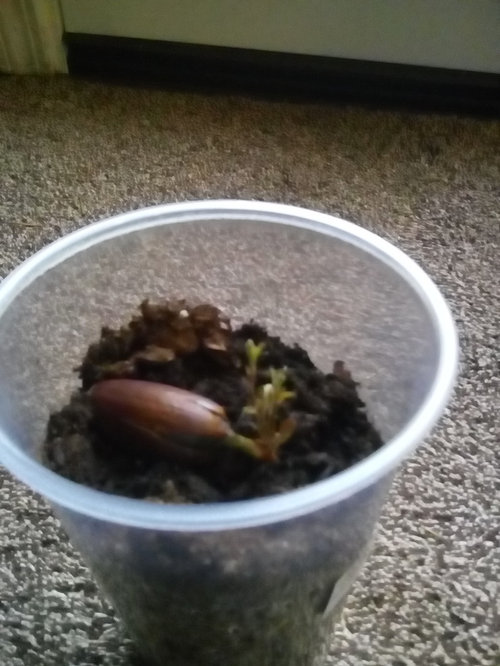
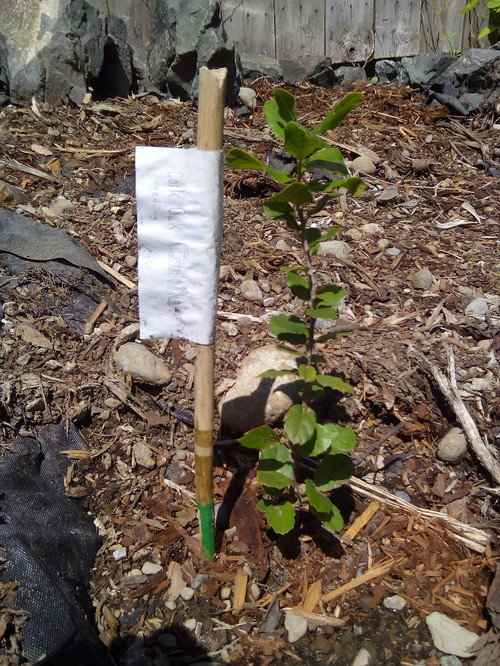
Here's a cork oak sprouting from an acorn.


Here's a picture of a little cork oak seedling, to give you some idea what it will look like:

What's so special about cork oak?

Well, it is the source of the cork in wine bottles. And it has squishy bark, interesting texture. It's evergreen too. Although it's Mediterranean in origin it can survive down to zone 8, though it's very happy in zone 10, which can't be said for some other oaks.

Comments (19)

  • 8 years ago

    There are several large, older specimens of Quercus suber in the Seattle (z8) area, including the Washington Park Arboretum, the UofW campus and the Chittenden Locks. But then, this is a modified Mediterranean climate so not completely surprising.

  • 8 years ago
    last modified: 8 years ago

    Although classed in the book as rare there, 10 locations for the species are nevertheless listed in Trees of Seattle. The tallest specimen being one on an alley in W Seattle.

    http://www.arthurleej.com/tos2.html

  • 8 years ago
    last modified: 8 years ago

    "Although it's Mediterranean in origin it can survive down to zone 8,
    though it's very happy in zone 10, which can't be said for some other
    oaks."

    Really a case where you'd have to further qualify zone 10. The zone 10 of LA or Melbourne or Cape Town...sure. The zone 10 of Miami, FL? Not so much!

    Anyhow good luck with your seedlings, it's nice to have reasonably quick growing ones. My Larix and Abies seedlings, OTOH, have only doubled from 1" to 2" this year!

  • 8 years ago

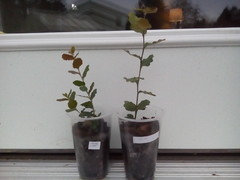
    my Q. suber seedlings getting taller

  • 8 years ago
    last modified: 8 years ago

    Where did you get your Cork Oak acorns?

  • 7 years ago

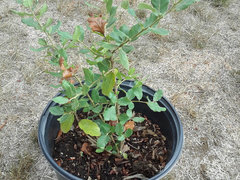
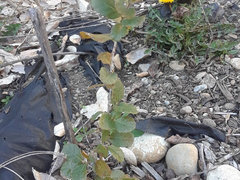
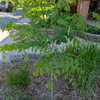
    Here's one of the cork seedlings now:


    They had no problem surviving the Winter (zone 8a). And of course this oak species is evergreen.


    (same person in the first post, under different username)

  • 7 years ago
    last modified: 7 years ago

    Cork oak


    in ground, still has all of its leaves which are still green even though it's the middle of Winter

    picture taken Jan 17

    Olympia, WA, zone 8a

  • 7 years ago

    There's one on my local golf course. They're evergreen so winter foliage is normal.

  • 7 years ago

    get rid of the plastic/landscape fabric .... its interfering with natural air and water movement ... and probably unnaturally heating the soil ...... and besides the fact.. it appears there are weeds on top of it anyway ...


    ken


  • 7 years ago

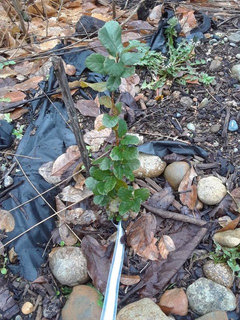
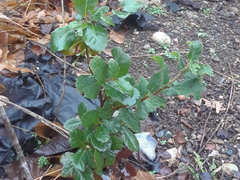
    Here's the seedling again. It survived through the Winter, even being completely burried under the snow in February, keeping its leaves the whole time. It made it through just fine.


    Also have another seedling, a bit bigger in a medium container that has also done just fine.


    They have done much better than my hardy citrus (Yuzu, Keraji).


    Pacific Northwest, zone 8a


    It seems Cork Oak can definitely handle zone 8.

  • 6 years ago
    last modified: 6 years ago

    Here's the cork oak seedling in the ground, December 22, 2019


    Notice how lush and green the leaves still look, even though all the other trees have shed all their leaves by this time.

    If the last Winter is any indication, the leaves will continue to remain green throughout Winter.

  • 6 years ago
    last modified: 6 years ago

    The leaves will remain green because it is an evergreen species of oak. There are a number of well established specimens in the Seattle area - at the Arboretum (5 at last count, the oldest planted in 1956 and the youngest in 2015), on the UofW campus and at the Carl S. English Botanical Garden at the Ballard Locks. There are also a few in area gardens. They do quite well here, provided they have well drained soil and a lot of sun.

  • 6 years ago

    socal....you do understand that cork oaks are an evergreen species, right? A broad leaf evergreen such as holly, camellia, and many others.

    Why is that black plastic in the bed? Just curious.

    When I lived in South Carolina (8-8b), I came across several Quercus suber in my travels around the Lowcountry, including a couple of quite large individuals.

  • last month

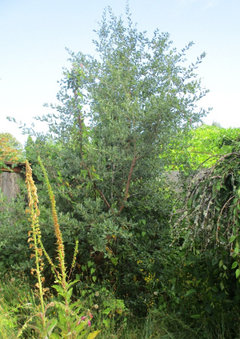
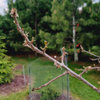
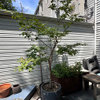
    An update: Here's a picture of that same oak seedling. It's now 10 feet tall (as of July 9, 2026).


    The cork oak, in this climate, usually begins dropping its leaves around the very last days of May to the very first days of June. But this year it barely dropped any leaves, appearing to behave more as an evergreen than "semi-deciduous". Though the preceding winter was mild with virtually no leaf damage and that probably had something to do with it.


  • last month

    It's doing well.


    Dropping leaves in spring doesn't mean the tree is semi evergreen or semi deciduous. It's still a true evergreen. Even evergreens lose old leaves. Have you ever tried weeding below a holly tree? There's a carpet of dropped leaves. Ouch.

  • last month

    I find that the Escarpment Live Oaks in Central Texas will loose ALL theirleaves in early spring. It makes them truely vulnerable to a February icestorm. The leafless time is very short. It is more like the new buds are pushing off the old leaves. I guess they are concidered semi evergreen

  • last month
    last modified: last month

    wantonamara - haven't seen you in a while. Nice to see you again.

    socal - glad your cork oak is growing so well!

    I'll chime in with my take on evergreen oaks, or large evergreen trees generally...even if they could survive with partial defoliation, you would not want to have a plant that looked like that remotely often. No more than 1/4 of winters. There really is nothing like the ugliness of parched oak foliage all winter. So in one of the only discussions I had with the people who bought my parent's house, the guy said he cut down the cork oak, even though it had gotten well over his head, because it 'looked ugly after winter' LOL.

    Funny enough my seedling (therefore suspect) 'Turner Oak', acorns imported by Woodlanders in the early 2000s, presumably from England...tried to hold its leaves all winter until it was about 6' tall. Looked horrid, was close to getting removed. Then through some ontogenetic adaptation, it just gave up and drops its leaves entirely in late fall. Even after that, I still thought of cutting it down a couple times! Now in spite of the ugliness of an oak that has practically no fall color, I'm keeping it, simply for the novelty of being a very slow growing, dense oak. I don't know if Turner Oaks are slow growing in maritime climates - perhaps not - but the Turner Oak at the old Hill's Camellia Garden in Arlington, VA, I can now say, looked very similar to mine. Or rather mine has now matched my memory of that one. His was a little taller but the same overall aspect, very dense, very dark green. Old Mr. Hill said he imported a scion from Belgium, so that was the real thing. I don't recall what he said about its evergreen-ness.

  • last month
    last modified: last month

    Fortunately, here in this zone 8 climate, the cork oak leaves do not get very damaged most winters, and still look a reasonable green color hue during late February and March. (although just a little bit of a dark green or olive green, of course not quite as bright lush green as normal deciduous oaks look in late spring)