Software
Houzz Logo Print
corkball1

Why are live oaks dominant?

8 years ago

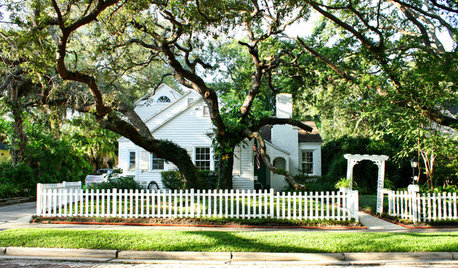
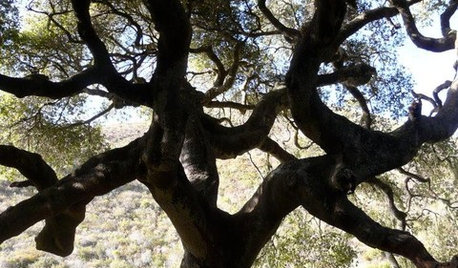
So I am going to horribly overgeneralize here, but here in Citrus Co (zone 9a/b), by FAR the most common canopy species is live oak. Yes there are other oaks and the occasional palm, but there does not seem to be a lot of diversity. Can someone explain why this is? Drought resistance? Rot? Other?

PS: I am speaking only of central FL - S FL is a different beast, and N FL seems to pick up more common SE US species and some of the pine belt. Also, if I go down into the river bottoms, I pick up LOTS of species like bald cypress, ash, willow, red maple, gums, elm, hackberry, and a bunch of stuff I don't recognize.

Comments (17)

  • 8 years ago
    last modified: 8 years ago

    They are native to Florida, therefore have adapted for survival in its climate In addition they provide wonderful shade and are very wind resistant (as in hurricanes).

    According to the master arborist we hired recently, many people who lose oaks during hurricanes think they lose live oaks but the majority of them are not live oaks, they are water oaks which look gery much like live oaks but are not as hurticane-resistant.

    https://www.south-florida-plant-guide.com/live-oak-tree.html

  • 8 years ago

    so you would say storm resistance is the dominant trait here?

  • 8 years ago

    No, it's more about the habitat. There is good information online about Florida's habitats and ecosystems, which are diverse - coastal, pine flatwoods, hardwood hammocks, wetlands, scrub, rocklands, etc. The soil characteristics are likely a much greater influence. I'm surprised you didn't mention pines - I thought they were everywhere in Florida!

  • 8 years ago

    Maybe there just aren't other large trees that compete here... I see some sycamore and sweet gum occasionally, but they usually look ratty. There ARE pines around here, but a HUGE % of those are in straight rows in plantations or ex-plantations, so it is unclear how well pine would compete in the wild.

    Bummer - I am not a huge oak fan, although I prefer them to conifers. Thanks guys!

  • 8 years ago

    Not sure what has piqued your interest, but the Citrus County Board of Commissioners has an interesting pamphlet online about the habitats of Citrus County. Basically, these "tree deprived" areas are harsh, arid environments, in which only the strong survive! Development, too, whether it's ex-plantations or the local strip mall - takes it's toll on the tree population.


  • 8 years ago

    found it - https://www.citrusbocc.com/plandev/landdev/community/citrus-county-public-lands.pdf

    Seems to indicate that live oak is drought tolerant in dry areas and co-dominant in mesic areas.

    Thanks sonni

  • 8 years ago

    I can't imagine someone not liking an oak, the shade alone makes me love them.

  • 8 years ago

    I agree, gotta love an oak, but....it takes some getting used to - the southern oaks - if you're used to the lush, large leaved oaks of the north!

  • 8 years ago

    Totally agree. I live in a forested area of mostly live oaks. Love them!

  • 8 years ago

    Hmm, one thing nobody seems to have mentioned is that much of the higher ground in inland FL was native oak hammock to begin with, so in many cases the oaks were there first, although they may have been moved around and many cut down altogether. It's faster just to bulldoze the primeval ones and replant little spindly ones when you're done.

  • 8 years ago

    I was AMAZED how fast they grow! I lost a number to Irma, and I had a 55' tree that I only counted about 25 rings. I had a MUCH bigger tree my wife though was 'hundreds of years' old turn out to only have about 50.

  • 8 years ago

    There are many things, of course, that determine how fast trees will grow, the two most important are probably the amount of water they get and the amount of sun they receive. I also have a live oak that is about 25 years old that is about fifty feet high and wide. It gets lots of water and sun. It is a "male" tree. It doesn't produce acorns. I have another live oak that produces lots of acorns that also gets lots of water and sun and it is quite a bit smaller--perhaps 35ft by 35ft. There are a number of somewhat different varieties of southern live oaks, I believe.

  • 8 years ago

    Live oaks are the dominant in mature to mostly mature habitats, minus pine savanna (areas with frequent fires). If you're in a disturbed site you might see other hardwoods an equal amount, especially Red maple, but you never really see that in a mature site at least not in peninsular Florida. The broadleaf forests in North+Central FL actually have the greatest diversity of tree species in the continental US. I feel that live oaks got their niche down and then the others all compete with each other. I also see a lot of sweetbay and hickories but hickory is deciduous and sweetbay spreads less quickly.

    I think less of a dormancy helps live oaks in addition to their general longevity, adaptability, storm+wind resistance, and great heat tolerance. Even Florida ecotype Red maples in somewhat moist environments can show heat stress in summer but the smaller, thicker leaves of live oak protects them from water loss and burn.


    Also Live Oaks are in the top three most hurricane resistant trees of FL as someone said. Live Oaks + palms are good trees to have in the middle of a non-forested front yard due to this feature. My Sand live oak basically got 0 damage from Irma, it just shed its young twigs and some leaves. It had far less debris than any other tree on my street.

  • 8 years ago
    last modified: 8 years ago

    I like live oaks myself but I can't stand a large monoculture of any kind. The trees acorns sprout everywhere in my yard and they become very hard to pull up. I'm constantly in a battle with them. I even find them sprouting in my orchid pots that contain no soil. I found one sprouting only recently in an orchid I have mounted to a piece of slab that hangs high up on a door. It's under a very large awning the expanse of the whole deck. I can't even imagine how an acorn would have found it's way there. Certainly it took some sort of acrobatic feat..ping ponging itself all over the place

  • 8 years ago

    As noted before, when one has oaks one has squirrels--and they are acrobats. They carry the acorns all over and bury them in places. Often they remember and come back and get them, but many times they seem to forget.

    Little oak trees are a major problem. By the time one notices them they have often thrown down some serious roots and digging them out is quite a chore.

  • 8 years ago
    last modified: 8 years ago

    Live oaks attain a large enough size to become canopy trees
    and tend to be one of the only trees that are left during typical construction.
    Live oaks are one of the ‘canopy’ oak species
    in hardwood hammocks. Plant communities are made
    up of large (canopy) trees, smaller understory trees, shrubs, wildflowers,
    groundcovers, etc. Each plant fills a
    niche in its specific plant community. Florida
    has a huge amount of plant diversity and there are many different types of
    plant communities in Florida … hardwood hammocks being just one of them. http://www.fnps.org/natives/native-plant-communities

    In central Florida the only oaks that get tall enough to
    become canopy trees are laurel, turkey, swamp chestnut, water, and live oak …
    the rest are understory trees or shrubs. http://sharonsflorida.com/oaks-native-to-central-florida.htm.

Sponsored
NME Builders LLC
Average rating: 5 out of 5 stars2 Reviews
Remodeling Company in New Albany, Ohio