Software
Houzz Logo Print
irricca

Starting from scratch with no idea where to start

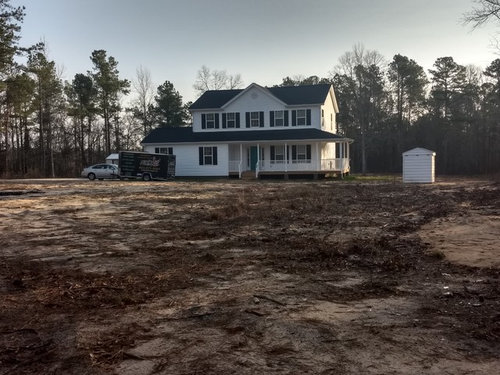
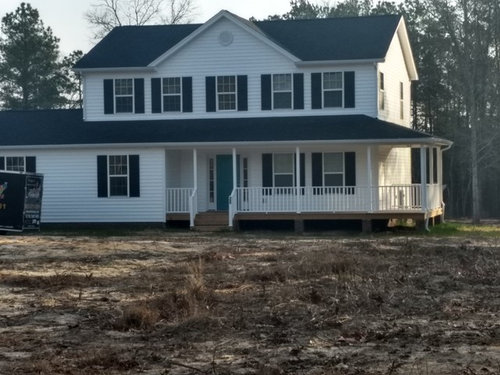
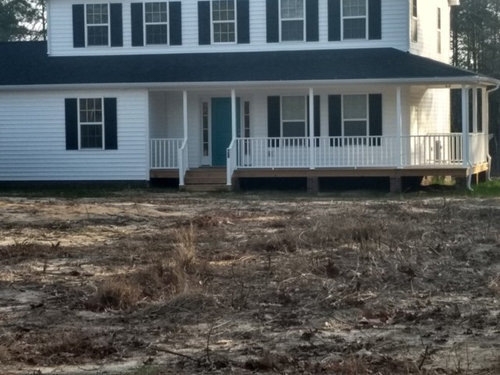
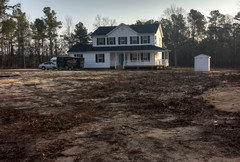
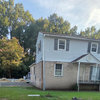
We cleared land and built our house this fall and both our front and back yards are a literally NOTHING. I need advice about everything. The builder planted a ridiculously small amount of Winter Rye around the house. I'd like some plants/bushes something around the house and at the very least GRASS! Help!! I don't even know where to begin!

Comments (23)

  • 8 years ago

    Well, you could hire a landscape designer. If you don't enjoy gardening, it would probably be worth the money. However, if gardening is fun for you, this is the advice I got from a long established landscape professional: create zones or areas - groupings of plants. Build from there and have groundcover/grass between them. There are probably online resources for you. Look for (google) cooperative extension and native plant societies in the area in which you live.

  • 8 years ago

    You begin with a PLAN........the same as you did when planning your new house.

    You determine how you want to use the area surrounding the house: how to access the entry and/or garage or carport; guest or additional parking areas; outdoor entertaining areas; kids' play area/sports court; vegetable or cutting garden; utility shed/storage; the placement and layout of any planting beds surrounding the house; placement of any peripheral planting areas, areas to be covered by lawn or groundcover, etc.

    Once you have a layout or plan for the property firmly in mind, you can start fine tuning it with plant choices and material choices (any necessary paving or hardscaping, fence construction, etc). Consider placement of larger growing trees - always an asset to any property - and if they need to screen or provide privacy or just shade or soften an area.

    Some folks like to do this first step themselves and then get assistance with plant choices. Many avid or more experienced gardeners will do the whole thing themselves. And yet others may feel the need to avail themselves of the services of a landscape professional to help right from the start. Regardless of which route you intend to pursue, the first step is always to start with a plan!!

  • 8 years ago

    i would start with a walkway from the front door to the driveway .... and i would stay away from creating some one or two foot garden bed along the foundation ... swing the walkway out far enough to plant between the walkway and the house.. if that is what you wish ...


    i would probably also do something out the back door ...


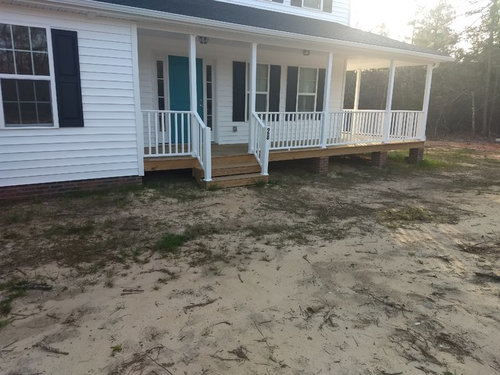
    thats some nice looking sand ...if you want to grow grass ... i am going to guess that you are going to have to add a couple inches of good soil ...


    btw.. it would help to know where you are ... big city name close enough ..


    one of the most common errors made .. is that peeps plant nice little plants.. with no concept of the plants future potential .... e.g. planting a common lilac 3 feet from the house .. because that is perfect siting for the plant in the pot ... only to find out.. 5 or 10 years later .... that lilacs get HUGE ....


    ken

  • 8 years ago

    I'd caution you not to be swayed by pretty pictures at this point of the process. With a large and completely undeveloped, blank slate property, the pretty pictures of flowering plants, etc. are well on down the road!! You need a plan for the property first and only after that is properly formulated should you think about any details :-))

    There is a very well developed hierarchy of concerns and priorities when planning a landscape and many have a tendency to put the cart - the plants and flowers - well before the horse - the plan and layout.

  • 8 years ago

    Start with the lawn. Either post in the Lawn Forum or talk to a local landscaper. Once you have taken steps on that, then sit back and breathe for a bit. Think about how you want to use the space, and work on a plan like Gardengal said. If you end up removing grass for a patio, it happens.

  • 8 years ago
    I am located on the SC/GA border. The closest recognizable city would be Augusta GA.

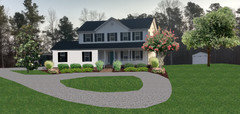
    That rendering is gorgeous!! Thanks so much!!
  • PRO
    8 years ago
    last modified: 8 years ago

    I don't think anyone is being swayed by pretty pictures. They are merely the by product of good planning & execution.


  • 8 years ago

    I would guess that there are some very beautiful gardens/landscapes near you that you could borrow ideas from. Plant crepe myrtles, azaleas and dogwoods everywhere! Oh, and about 100 peach trees!

  • 8 years ago
    I'm going to have to pass on the peach trees. They are gorgeous, but the gnats will kill you! LOL
  • 8 years ago
    last modified: 8 years ago

    Nice house!

    The general sequence for landscape design is plan, hardscape (including paths, irrigation, patios, power and lighting, etc.) then plants, starting with slow-growing plants such as trees since they need the time, and then smaller plants.

    Since you currently have bare ground, I think getting grass down to prevent erosion may also be a priority while you make plans, as Mad Gallica suggested. Topsoil (did the builder stockpile any as they did dirtwork?) and then either thickly sown seed with a light straw (not hay) coating would be least expensive, with hydroseeding and sod increasing in price and speed of establishment of a lawn.

    In order to make a plan, either on your own or with a designer, you need to think about uses and functions needed, ranging from kids' activities if appropriate (play structure, pool, place to play field sports, basketball hoop, hiding spots, etc.) to things that may interest adults (some of which may overlap with the kids' areas and visa versa - patio, veggie garden, flower cutting beds, curb appeal gardens, shade areas, sun areas, etc. to the purely mundane (storage for lawn mower and garbage cans, hoses, bikes, etc,). Look at views that you might want to hide or borrow from outside your own property to help you place trees and/or outbuildings.

    With an idea of how you want to use the yard, then you can make a to-scale plot map and use tracing paper overlays to try out different arrangements if you are doing you own planning, or have a list of ideas to take to a landscape designer. You may already have access to a plot plan from Google maps, or the plot plan submitted to the town for your building permit, or from the plans used for the build. One comment is that most front walkways are too narrow. Your house is good-sized, so you want a generous walkway leading to the front door with (as Ken mentioned and Doug sketched) enough room for an appealing bed between the front walk and the building. These two things will help with making the house look welcoming.

    Once places for those things on your wish list have been added to the plan, then you can figure out where paths and drive need to go to reflect human and vehicular traffic patterns around the property.

    Having a plan to follow before you start work will help prevent such things as having to dig up the patio to add a water line to the veggie garden or ending up with one of those awkward spaces a foot wide between the front walk and the front of the house. You don't need to actually install the plan all at once, but can add as time and finances allow, and you may want to change things some as you go, but having the plan will help make it a less overwhelming task and turn it into a job more like building the house where you had architectural drawings to work from.

    Looking at gardens you find appealing in your neighborhood and as you travel around is one source for ideas as will be the photo section of Houzz and landscaping books at the library. Think about what you find appealing - lots of flowers, garden of shades of green and gold foliage, ornamental grasses or other spiky plants, more of a cottage look, a classical, structured garden, or a more sparse, "modern" look or . . . ?

  • 8 years ago

    My point was, Doug, that folks new to landscaping often get wrapped up in appearances first rather than the function of the design overall. And that just opens them up to a lot of expensive trial and error and misplaced plantings, too skinny pathways and foundation beds, poor spacing and other common design errors. So rather than offering 'renderings' at this stage of the process, it would be much more beneficial and helpful to the OP to describe how to get to those rendered results rather than what they could/should look like. Which is what I and Babs above and a couple of others tried to do. Form follows function.

  • 8 years ago
    last modified: 8 years ago

    You can't do a plan unless you consider your zone, your soil (moisture, pH, amount of topsoil, texture, water flow, etc.) and grade. Get a handle on that. I agree that just laying down grass will be a good start to control weeds and erosion. A lawn can be created and now is the time for starting to execute that. Then, start with hardscape - where will you be walking? Do you need borders or fences? A patio? A play area? Etc.

  • 8 years ago
    last modified: 8 years ago

    I'll make one small point here. Find out what kind of grass you'll have to plant. Southern grasses (my gardening bane!) aren't all that easy to tear out once they're established. So maybe don't go "all out" on the sod. (Well, I guess with motorized equipment, it would be easy.) I think there is a Georgia Gardening Forum here. You may get advice from seasoned gardeners on that forum who are more familiar with your situation.

  • 8 years ago

    back in the day ... i used my mortgage map as a starting point .. i suppose they dont provide those anymore.. of course.. your house wasnt pre-existing ...


    what about a map from the architect?? .. showing the house on the lot ...???


    after functional walkways ... and some semblance of lawn ... i would work on what i call.. the heritage plants ... the trees that could be there for a century or two .. in tree time.. they grow so slow.. that you are best off getting those moving asap ... and trust me.. you dont want anything that claims to be fast growing ... its a false dichotomy ...


    if all you got done this season is lawn and trees .. personally.. i would call it a success .... unless you do big time checkbook gardening.. and hire it all out for instant gratification ...


    i may have missed it.. do you have a budget for this [dont need specifics..] ... .. or do you plan on doing it yourself??? ...


    ken


  • 8 years ago
    We are planning to do it ourselves. The budget is dismal. Hopefully we can pay someone to get the ground ready, after that its all us.
  • 8 years ago

    well then i would focus simply on grass this year ...


    paying for ground prep ... is a great idea on that size lot .... its a great way to save a lot of money ... after that.. spreading seed and straw is probably something within you ability ...


    but then ... watering new seed becomes the next issue ... you will need a lot of hose ... i presume there is no pre-existing irrigation ???? ...


    btw ... does your outdoor water go thru a water softener ... or preferably .. it skips that ... no real need to 'treat' outdoor water .... to drinking water levels ....


    whatever you do ... try to NEVER allow water to hit the house ... no need to find out if the water will stain the siding .....


    you need to get a bunch of quotes on the lawn ... ken


  • 8 years ago

    Given the size and condition of your current landscaping, your limited budget AND if you are not experienced with plants or design then I agree with Ken, spend whatever funds you have getting your ground in good shape. That is the foundation of everything. Next put in grass, sod where you can afford it, grass seed where you can't. Live with it for at least a year to get a good understanding of your land. Next develop a plan. I highly recommend you pay for a good landscape designer to create a master plan you can implement over time as money allows. It is an investment that will save you from making costly mistakes. Good luck.

  • 8 years ago

    For that size lawn, I'd consider hydroseeding before hand seeding or laying sod. FWIW, sod is 2-3 times the cost of the other methods. But all require the same amount of soil prep.

  • 8 years ago
    last modified: 8 years ago

    Yes, what GG said. I much prefer a seeded lawn. I have not had much luck with sod and it is expensive although you need to know what you are doing for a seeded lawn and also have a good plan for watering. Sod is great for a big impact in a small area, but you really need to know what you are doing to install it correctly. It's not like laying carpet! I also second what Ken said. That's what I did with my new home. Lawn, trees, hardscape. The rest you can get really cheap, so spend the money where you get biggest bang for buck. That's hardscape. You can get trees cheap if you know what to look for. Little trees grow fast at first and catch up with their more expensive competition if you plant the right tree in the right spot.

  • 8 years ago

    That soil looks pretty sandy. Whatever you plant make sure it can tolerate that kind of soil. Also, we can't give recommendations until we know what hardiness zone you're in. Knowing the pH of the soil also helps. If you have a college/university near you most of them are willing to test your soil for free or for a small fee. You can also buy pH test kits at most garden centers or hardware stores.


    Try typing in your zip code on this page. It will tell you what hardiness zone you're in.

    https://garden.org/nga/zipzone/

  • 8 years ago

    Hope my post isn't late, and that it's a little helpful. I used to live in Augusta, GA, but I wasn't an extensive gardener. If I had to start with what you have, I would first reference all of Walter Reeves' advice on The Georgia Gardener. He'll have great grass recommendations, especially for grass. I know you'll want to start soon because you're entering the spring rainy period when the grass can establish.

    Then, I'd figure out what others above have asked: How do I want to live in this house? For example, we have four kids. That means we spend significant time just driving in and out of our driveway. So, the driveway area gets attention because we see it all the time. It makes little sense in my opinion to put a garden bed in a place that "looks like a bed would go there" if it's in a spot you will rarely enjoy. We inherited a bed like that in this house, and it provides little pleasure, so it is being turned into a 100% pollinator bed (at least they'll enjoy it!). Do you use the front door or back/garage door? If you only use the back, the front door might not be an early priority for planting.

    Next, consider what you see from inside the house. Any place near Augusta means summer is spent mostly indoors in the air conditioning. Why have summer flowers if you never see them from your windows? Think about your views out the window during the hottest days of summer when planning. (We have the opposite problem. Summer is nearly perfect for being outdoors, but I have to think about my winter viewing.)

    One issue with lawn is getting rid of grass if you want to replace it with gardening beds. Certainly it's done all the time, but it's a pain, in my opinion. If you can decide how you want to live in your yard and where some future beds might be enjoyed, instead of planting grass there now, just turn them into a simple mulched area. No grass will grow to become a head ache to remove, and the beds wait for you whenever you're ready to plant. I have had some areas of my yard just mulched for over a year while i was waiting to plant things there. One reason mine were just plain mulch for so long was because I was killing grass and weeds, but I would have done just mulch to preserve the area for future planting just as readily. This technique also allows you to spread out the cost. You can put plants in slowly over time as you can afford, and as you decide what you want there.

    Lastly, if I lived in the south again, I'd plant these things in a heartbeat:

    Rosemary as a hedge: Why plant boxwoods when you can have a row of fragrant Rosemary? It is so beautiful with the fine blue-grey foliage.

    Camelias: So nice to have them blooming in January, which is when they bloomed for us in Augusta. Such a great color during the brown time of year. (Now, per my comment above, if only the blooming Camelia had been placed so we could see if from the house!)

    Gardenias: Oooo. Such an amazing smell. I miss the fragrances you can get from gardenias, wisteria, and honeysuckle. (But wisteria and honeysuckle are supposed to be invasive, I think, which makes me sad!)

    Lantana: Lantana is so nice they sell it as an annual up here. It's perennial for you, and the color variations are beautiful. I especially like 'Miss Huff,' a variety that Miss Huff herself discovered in Athens, GA.

    Butterfly bushes: Place them where you can see from a window and you'll get the pleasure of watching scads of butterflies feed.

    Southern Magnolia: Talk about beauty, fragrance, and structural interest. Such a winner!

    Crape Myrtle: Another beautiful small tree that produces flowers when the color is very welcome.

    Dogwoods: I know I'm in the south when I see dogwoods blooming everywhere!


  • 8 years ago

    A lot of good advice so far.


    my 2 cents


    do go to a professional designer, some do a kind of on site consulting,

    and the result should be a scetch but thought through concept.


    dont buy a single plant until you know what should go where

    (seen enough gardens that were worked over 3times...)


    make a list: what do you want do do/ have in your garden (terrace, veggies, playground....)


    how good a gardener are you, do you have the time/ knowledge to mantaine the garden yourself...


    those two first steps are vital in my mind: a list of your wishes, time, budget... whittle it down,

    get someone to fit it nicely onto your great area


    till then

    use green manure over the growing season, twice if need be


    could you get some of your relatives to "donate" the equivalent of some houres of hired help/ landscaper/ farm worker


    every scrap of your soil should be covered by green manure,

    or mowed,


    don't have any untended areas, they will come back to bite you


    what about the soil in general, was there "heavy traffic" of machines on it? If so, do use green manure because a traumatized soil is a bad base to start with


    and I hope your soil is clean with no permanent weeds in it, those would need treatment as well.


    and you could use sunflowers or Cosmos for summer green manure which are cheery

    best of luck,

    bye, Lin