Software
Houzz Logo Print
emnuts4u

Lightening a paint color - good or bad idea?

8 years ago
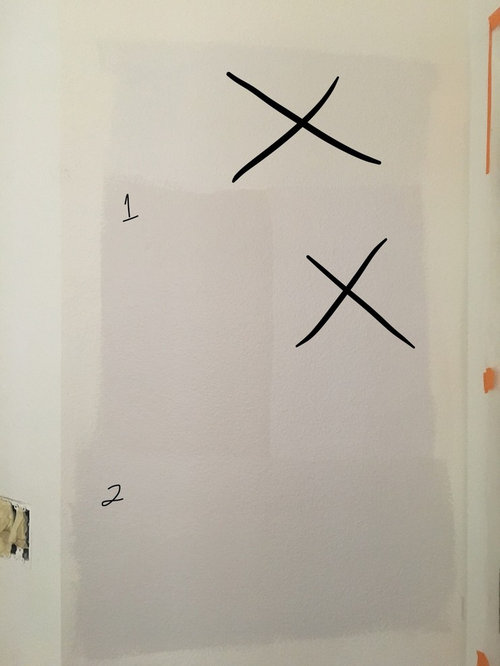
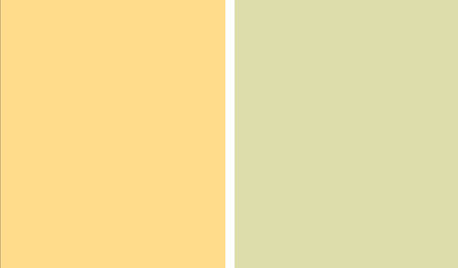
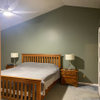
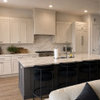
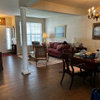
Any experience/advice lightening a paint color? #1 is Benjamin Moore Pale Oak, and #2 is the same color just 25% lighter. I’m wondering if this technique upsets the formula & if it’s best to just stick with an original color. Please help!

Comments (11)

  • 8 years ago
    They just add white paint to it to lighten it
  • 8 years ago
    last modified: 8 years ago

    A family member has lightened paint with some lovely results. We did that in another house and had no problems at all with it. Just be sure to keep the formula in case you need more.

  • 8 years ago

    Just make sure you keep any extra paint safe in a conditioned space and the top on tight so it stays fresh in case you ever need to do any touchups.

  • 8 years ago

    I mix paint all the time. As long as it is the same type of paint and the sheen is the same, one below, or one above it is no problem. If you couldn't mix paint colors then artists would have multitudes of different colored paints. Artists paints are basically the same thing just concentrated. In fact I have also used artist paint to alter a color in a household paint.

  • 8 years ago
    Lori, that info is very helpful. Just based on the my picture alone, I feel like the 25% lighter color looks like a different color altogether (plus not particularly brighter.) I wasn’t sure if it was just my eyes though.
  • PRO
    8 years ago
    last modified: 8 years ago

    Shell White SW8917 is *just like* Pale Oak only lighter. You don't have to understand these numbers in order to compare them and see how well Pale Oak and Shell White align. I highlighted all the categories that have to do with luminance or lightness. And you can see that's where they differ the most --- as they should because you wanted a color just like Pale Oak only lighter.


    I wasn’t sure if it was just my eyes though.

    Almost every day I get emails asking about cut formulas.

    Because I'm obnoxious about telling people the facts and warning them about how mixing architectural color works.

    People mistakenly believe when they cut a formula only the part, or element of the color that they don't like is going to change.

    Logically, intellectually they have an expectation of what the cut color is going to look like.

    Because they think cutting a paint color formula is like cutting a cookie recipe. A regular batch of cookies yields 2 dozen cookies. If you only want 12 cookies, you just cut the recipe in half.

    Color doesn't work like that - it's not similar at all.

    When the resulting color doesn't align with what they logically imagined it would look like, then they question what they see.

    Because it literally does not add up.

    For example, you had Pale Oak cut 25% because you wanted a lighter color.

    Again, architectural colorants/bases don't work that way.

    There are 3 dimensions to color: hue, value (light/dark) and chroma (clean/dirty).

    When you adjust a formula all three dimensions are affected - not just the part or attribute that you wanted to change, like lightness.

    And there is no way to predict to what degree each dimension will change.

    In this example, cutting the Pale Oak formula resulted in a different color that wasn't necessarily lighter than the original Pale Oak color formula.

    Adding white to a can of architectural paint is also a bad plan. How effective it is lightening the color depends on the strength of the colorants, In some cases you can add an entire gallon of white paint and barely change the color, barely affect the lightness value.

    Despite what you read on the blogs, in every instance it is absolutely a bad idea to play the tweaking the paint color formula game because 98% of the time you're going to lose.

    You don't know what the color is going to look like until you have it mixed. And as you've learned, you have to buy the sample/quart/gallon whether you like the color or not.

    Color experts use color measurements to figure out lighter/darker versions of paint colors. Has absolutely nothing to do with the formula.

  • 7 years ago

    I've had paint tinted at 75% of original color. If you decide to do this remember to buy all the paint at once and if you have multiple cans mix them together. Going back to get more may not yield the same results.

  • PRO
    7 years ago

    Lori A. Sawaya! Re:

    "There are 3 dimensions to color: hue, value (light/dark) and chroma (clean/dirty).

    When you adjust a formula all three dimensions are affected - not just the part or attribute that you wanted to change, like lightness.

    And there is no way to predict to what degree each dimension will change."


    I had no idea! Wow! WoW and Wow! ...It makes so much sense now! I had no idea! Thanks so much sharing your knowledge!!! This is awesome information to have. Selecting paint is the most time consuming aspect of decorating for me. I thought adding 'white' would 'lighten' too. Thanks so much!!!! I get it now and I understand it!!! Thank you! ♥

  • PRO
    7 years ago

    @The Village Country Store, you are most welcome. :)


    All the pieces to the puzzle of how color really works always fit together logically.


    There are no gaps or gray areas (pun intended).


    It is always organized, simple and efficient. The terminology is well-defined, precise, consistent and straight forward in order to ensure there is zero confusion.


    Just have to take the time to learn it.


  • 7 years ago

    Emma - Was wondering if you have the color formula for Pale Oak. I would like to compare the formula with a similar custom color I had mixed. (Please include volume (Sample / Pint / Gallon) base and colorant amounts.)


    Thank you!