Software
Houzz Logo Print
jamie_z7bhz8

Fall and Winter Garden

8 years ago

After a lot of reading (Eliot Coleman's books among others) and a little experimentation over the last couple of years, I have decided to have a true "fall and winter" garden this year. I live in the transition area between USDA Zones 7b and 8a and we have generally mild winters, compared to other parts of the country. We do get snow or ice once or so every winter and do experience some cold weather.


Regarding sunlight hours, my area will drop below 10 hours of Daylight on November 30, 2018 and remain there through January 12, 2019. The shortest days are from December 17 through December 25 at 9 hours 47 minutes of daylight.

http://aa.usno.navy.mil/cgi-bin/aa_durtablew.pl?form=1&year=2018&task=-1&state=TN&place=Oakland

http://aa.usno.navy.mil/cgi-bin/aa_durtablew.pl?form=1&year=2019&task=-1&state=TN&place=Oakland

We experience the same daylight hours as the southern part of Crete and the Southern Mediterranean. So, we should get plenty of light throughout the winter.


I am only planning to use AG-30 row covers over my beds, with plastic on the coldest days. I have 7 raised beds that are all 4' x 8' and about 16" deep. They are in a typical suburban back yard and get sun all day long. They are oriented east-west. We do not have any large trees that would block the more southern winter sun. The beds will also be surrounded by a layer of gravel (we have some drainage issues and are getting a landscaping company to come in and address them) so they will get some additional warmth from that.


My plans are to grow fava beans (an experiment for me), chard, mustard greens, collard greens, turnip greens, lettuce, radishes, arugula, claytonia, mache, sorrel, and spinach. I also have micro-tomatoes growing inside under grow lights (I do not want to have a greenhouse or another structure that requires heating outside of the house).


Many of the greens I've selected are very cold-tolerant and so I do not think it will be too challenging for me to keep them going through the winter- and it won't be as big of an accomplishment for me as it would be for someone to the north of me.

Comments (41)

  • 8 years ago

    Re sunlight, don't go nuts about winter hours. In the summer, when it's cloudy, you don't get much sun at all. Some summers are cloudier than other summers. The things you're growing don't care much about full sunlight. In the summer, my chard lives happily, and permanently, under shadecloth.

    The greens you've selected are largely frost tolerant, but many are not very hard freeze tolerant. A hard freeze will certainly damage lettuce and chard. My collards can survive temps in the 20s, but they don't like it much. But it sounds like you'll have some protection.

  • 8 years ago

    Concur: Growth rates are low in December - January. But most of the brassicas will keep trucking through low twenties. Collards and kale take lower temps than have occurred here (7b/8a) I also grow English peas and onions overwinter. Winter radishes stand up much better than salad radishes.

  • 8 years ago

    Re response of collards to very low temps - low 20sF and teens, they will wilt seriously, and you'll think they are killed. Aaack! But when it warms up above freezing, a few days later, they perk right back up. I've heard most collards can survive down to 10F or so. I am told that collards move water and sugars around to make the leaves less susceptible to ice crystal formation. That's what causes the wilting. When it warms up, everything gets back to normal.

  • 8 years ago
    last modified: 8 years ago

    Here on the border of zone 6a and 6b, I’m hoping to overwinter some lettuces, spinach, and onions. Onions are for bulbing next summer, hopefully. We get similar day length to you, only a little shorter, not being too much farther north in latitude. I’m hoping to use plastic permenantly, venting if needed, and I’ll double up with fabric lain over the plants inside on subzero nights. I have AG30 fabric and 6 mil poly plastic. Cold frames will be glass lids. I’m also putting insulation foam in my cold frames (that seems to be water resistant).

    In regards to onions, things grow slower in cold frames based on natural light, so I’m hoping it’ll give my plants a kickstart when the daylight lengthens next spring. I start all my spring seedlings in a cold frame/low tunnel. I’m not starting these until Nov. so that they are not too big going into winter, which would cause spring bolting.

    I am curious as to how the plants will handle hard freezes. I’m under the impression that winds affects the plants more than the freeze itself. Plants can handle a freeze, but when one has a hard, hard freeze combined with a chilling wind (often wind chills down to -20 to -30 F in cold spells here), it can dry out the plant cells and cause permenant damage, or death. Cover should in effect solve this. I guess I could be completely wrong.

    I experience a fair bit of winter shade from a fir tree, but I’m positioning my plants in the absolute sunniest locations to hopefully have success. Last winter I successfully overwintered spinach without any cover, so I suppose under cover it could do quite well.

    Snow cover would certainly help.

    Good luck. Hopefully our plants will pull through! If I could overwinter greens, I‘d be a very happy man.

  • 8 years ago
    last modified: 8 years ago

    Regarding sunlight hours, my area will drop below 10 hours of Daylight on November 30, 2018 and remain there through January 12, 2019. The shortest days are from December 17 through December 25 at 9 hours 47 minutes of daylight.

    Keep in mind (perhaps you have) that it's the hours of direct sunlight exposure on your plants that matters the most. Take into account the increasing dip of the low angle of the sun as winter approaches and if it's blocked by nearby trees & buildings. In my case about 1/2 of my summer gardening area is in shade during the winter months due to my neighbor's pine trees located on the southern side of my property. This leaves only the other 1/2 of the garden open to full sun for the better part of the day from Nov-Feb for my fall crops to flourish.

  • 8 years ago

    I don't think wind has a lot to do with it, except that wind adds some extra cooling by increasing evaporation, and sweeps away the warmer layer close to the ground (which is what your cover protects). The damage is from ice crystals forming in the plant cells, and you don't need any wind to have that happen. You can make ice cubes in your freezer without any wind. Wind chill is the temperature of surface water, which you won't have any of on your plant.

  • 8 years ago

    Following along Jamie - I don't have anything to add right now.

  • 8 years ago

    I was a little worried about the seeds after I planted them- we got a heavier than expected rain that night. However, it looks like they didn't get washed out. The lettuce, arugula and radishes had sprouted by Wednesday. I'm still waiting on the other greens and the favas, though, they can take somewhat longer.

    Regarding sunlight- my garden is in my back yard and there are no large trees or other structures (even on neighboring properties) that will block any significant amount of sunlight so it will still get good exposure throughout the winter.


  • 8 years ago
    last modified: 8 years ago

    Most of the bunching onions are up and the rest of the seedlings are doing well. The orach is up and doing better than the seedlings I started in the spring. I’m still waiting on the claytonia and mache to sprout. There is also still no sign of the fava beans.

  • 8 years ago

    I have a high tunnel type of structure (wood framed) here in NH. The angle of the sun is different in winter. Here in the colder side of zone 5, the ground never freezes in my high tunnel. Adding Agribon 19 (I think) around variegated sages and rosemary protected them thru winter. I lost the rosemary after two winters. It's usually only hardy to about 18 deg. What worked when I gave it best protect was to put a tomato cage over the herb plants and wrap with several layers of Agribon.

    Spinach could take a freeze and defrost to act like nothing had happened. Local market farmers with high tunnels might have swiss chard during the winter if it's not too cold. Boy, it sweetens up with the cold and is best tasting. When I kept tomato plants going as it gets colder, the tomatoes have lost their flavor. It's like putting them in a refrigerator. Kills the taste. Some lettuces have been killed by cold and then start growing again in early spring. Cilantro, claytonia and kale self sow.


    I don't think I'm going to grow anything this winter in the high tunnel since it has a big tear and due to vole problems, I'm taking a year of from winter gardening. Right now it is a jungle of tomatoes, pole beans and peppers because it's perfect for summer growing with the sides rolled up. Last fall I had a late crop of broccoli heading up nicely and covered with Agribon. I went to check figuring I could pick a head but brazen furry critters had already gotten all of it. This year in New England, chipmunks and squirrels are terrible due to population explosion. Friends have lost all pears and peaches to squirrels.

    Jamie thanked defrost49
  • 8 years ago

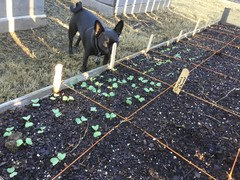
    Jamie, I see the "inspector" is out there!

  • 8 years ago

    haha, Yes, he is good at that. hahaha

  • 8 years ago

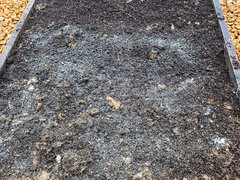
    About half of the fava beans I planted have sprouted. I’m hoping A few more will appear


  • 8 years ago
    last modified: 8 years ago

    It’s going to be a little cooler and rainy this week since Fall has started. I’m also out of town this week so I went ahead and set out the collards and spinach I stared a few weeks ago. The plants are a bit small but I think they will be ok given that it’s not going to be hot. Also, I’ll be less for my better half to take care of inside the house while I’m gone hahaha

    i also sowed half a bed of mustard greens (Southern Giant Curled) and some turnip greens (All Top and Seven Top). I had a few seeds for a bulbing variety that I mixed in also but I only like the greens.

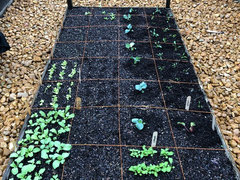
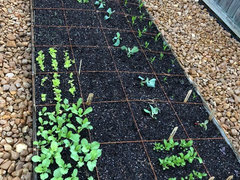
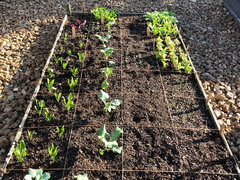
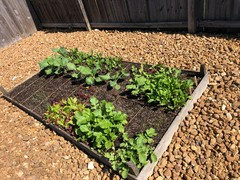
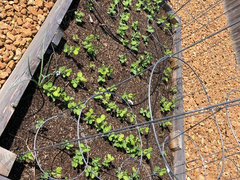
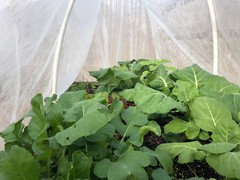
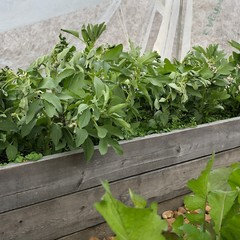
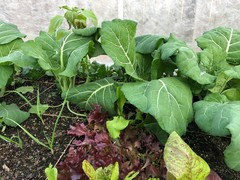
    mustard and turnip bed with a few favas

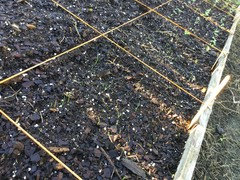
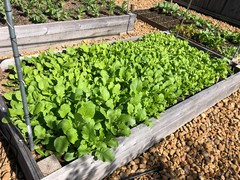
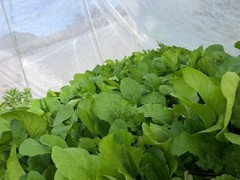
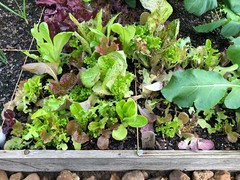
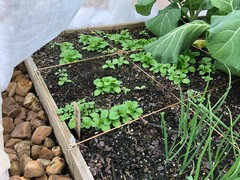
    The other greens. This bed also had radishes, arugula, lettuce, claytonia and mache. I will put in some chard soon .

  • 8 years ago

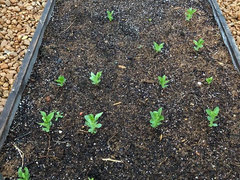
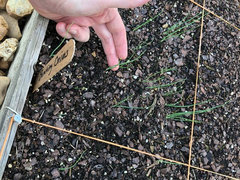
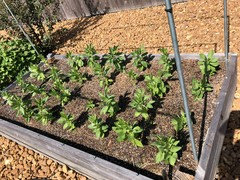
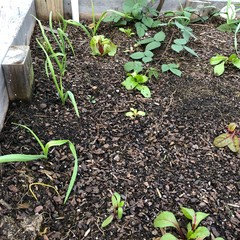
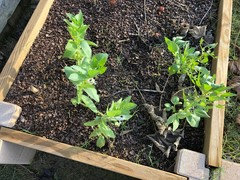
    A few more fava bean plants had popped up, you can just barely see them in this photo.

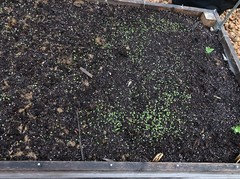
    The mustard and turnip greens have sprouted

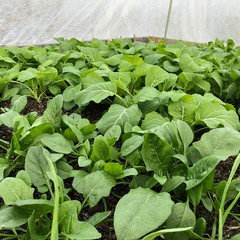
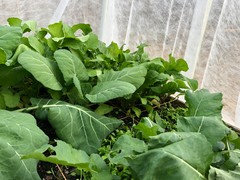
    The other plants are doing well also. The collars and spinach transplants look Really good. We have had plenty of rain and overcast days lately.

  • 8 years ago

    Jamie (or anyone else with experience), I'm curious about orach. Have you grown it before? I'm curious about heat tolerance. I understand it is more heat tolerant than spinach, but still doesn't like a lot of heat. With extra shade and water, I can sorta get swiss chard to survive in my summers, whose heat tolerance is described in that way. Is it more or less heat tolerant than chard? I'm always on the lookout for summer greens. (In that respect, Malabar spinach rocks!)

  • 8 years ago
    last modified: 8 years ago

    Dan I tried it in the spring and it was a failure. It started off ok but as soon as it got hot, it died. I watered it and took care of it but just wasn’t able to keep it alive. I only gave it a second chance because I had the seed available. I really like greens also and was hoping it would be the solution.

  • 8 years ago

    Thanks. I see it advertised as BOTH heat tolerant (Johnny's, in Maine) and heat intolerant (Baker Creek, in Missouri). That phrase needs to be measured by who is saying it. To Mainers, just about everything is heat-tolerant!

  • 8 years ago
    last modified: 8 years ago

    I planted some more spinach, collards, and lettuce today. I also planted some sorrel (my first time growing it) and a few more radishes. I also had some extra sugar snap peas and went ahead and planted them. It’s a little late but I’ll cover them if it gets too cold. I mainly wanted to see how they do.

    All of the other plants I set out are doing well.

  • 8 years ago
    last modified: 8 years ago

    I got my last bed cleaned out and planted it with chard. I think I’ll dig my sweet potatoes next weekend and that’ll be the last of my summer crops for this year.

    i also started a tray of micro greens inside this afternoon.

    I resowed claytonia and mache also. The first round didn't sprout so I thought I would give them another opportunity now that the weather has cooled a little.

  • 8 years ago

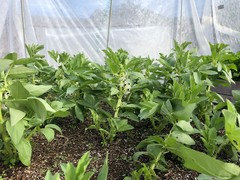
    It looks like some of the fava beans were slow to germinate. I planted 32 in one bed and 4 in an adjacent bed (12” spacing) Initially only about half of them sprouted but over the last couple of weeks most of the rest of them have come up. At last count, only 3 have not sprouted which suits me. They are growing well at the moment.

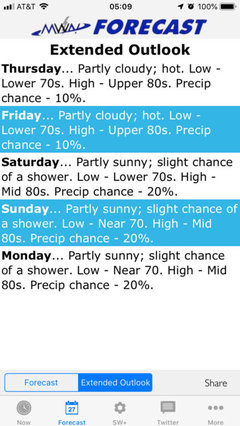
    We are having temperatures that are climbing back into the mid to upper 80s with mid to low 70s at night. It will be about 90 tomorrow also and I hope this doesn’t impact the plants too much.

  • 8 years ago
    last modified: 8 years ago

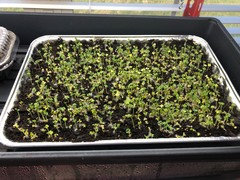
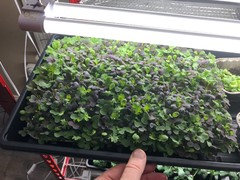
    Most of the microgreens (a blend of brassicas- Johnny's "Spicy Greens Mix") I started on Sunday have germinated. I was surprised at how quickly they came up. I started a couple of smaller containers of mixed lettuce which have not quite germinated yet.

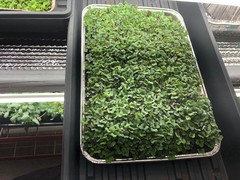
    I'm not using anything fancy as a growing container- I got some "disposable" aluminium 1/4 sheet pans and poked some holes in the bottom for watering. They came with clear plastic covers that I am using as a humidity dome for germination. I've used these types of pans instead of traditional flats several times and have always had good luck.

    I will sow the seeds a little more densely in the next batch this weekend.

  • 8 years ago
    last modified: 8 years ago

    Today’s update:

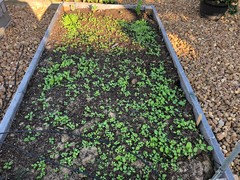
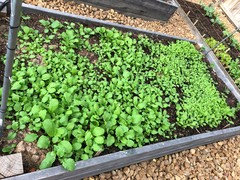
    the turnip and mustard greens are doing well as are the collards, spinach, lettuce , radishes and arugula I planted a few weeks ago. I’m also starting to finally see some claytonia and mache seedlings.

    The favas are growing well and I see a couple of flower buds in two of the plants. It seems a little early for that but I’m not sure how large they need to be before they start flowering.

    I have 2 more beds with chard, collard, spinach and arugula seedlings and a bed of sugar snap peas.

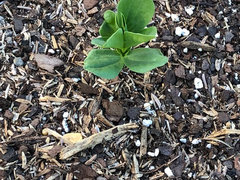
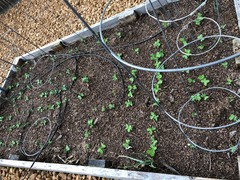
    The peas are just breaking through

    We have temperatures in the low 90s and it doesn’t quite feel like fall yet but I think cooler weather is coming next week.

    I will probably dig my sweet potatoes this weekend

  • 8 years ago

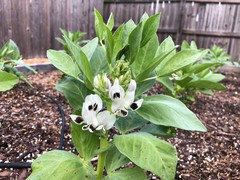
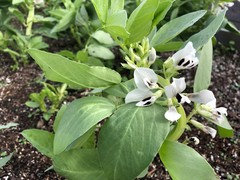
    The favas are blooming

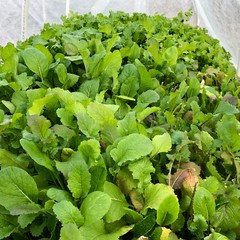
    The first round of greens are growing well

    And so are the peas

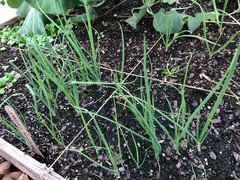
    And the bunching onions are growing fairly well

    These micro greens will be ready in a few more days. I’m planning to cut them after about 2 weeks of growth.

    This is a second batch that I started this past Saturday.

  • 8 years ago

    We had half a container of micro greens last night and they were good. My better half liked them, which was a bit of a surprise. I’ll start another flat today.

    I got some garlic planted this morning. I had not originally planned on it, but I had an empty bed and I figured I’d put it to use. It’s a softneck variety called Early Italian.

  • 8 years ago
    last modified: 8 years ago

    We have had rain for several days and the garden has appreciated it. It looks like the next several days are going to be somewhat mild with no signs of frost yet- I’m not expecting any until after Halloween

  • 8 years ago

  • 8 years ago

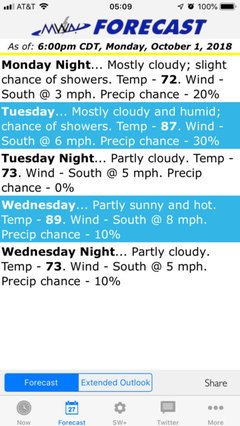
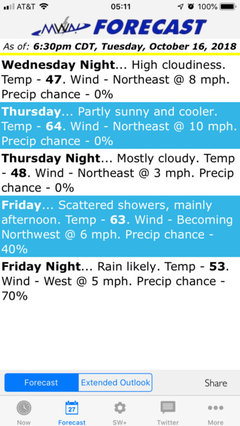
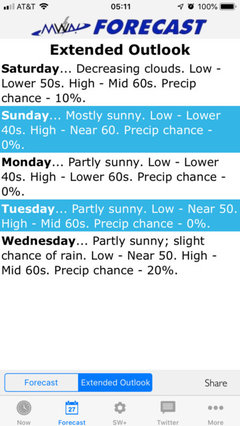
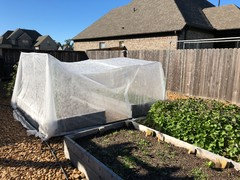
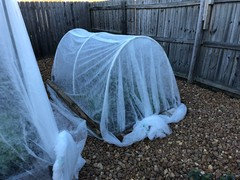
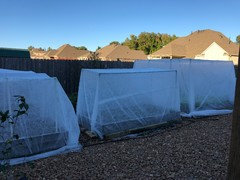
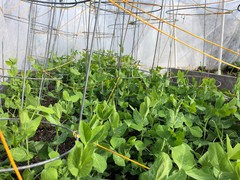
    We have a few lower-than-average temperature nights in the forecast with chances of scattered frost. So we decided to take advantage of the nice day today and get the row covers in place for the coming winter. Most everything we are growing is frost resistant to some degree but I do have some seedlings that might not make it.

    I already had supports in place in most of the beds for tomatoes and cucumbers so I am re-using them as supports for the row covers.

  • 8 years ago

  • 8 years ago

    Everything is growing well. We still haven’t had a killing frost yet and the lows are beginning to settle into the low 40s.

    We have been getting salad greens for a few weeks and I’m going to cut some mustard and turnip greens along with some spinach tomorrow.

    The favas are covered in flowers. I wish you could smell them. They have a really nice fragrance.

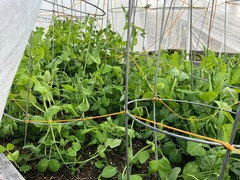
    And the peas are growing well

  • 8 years ago

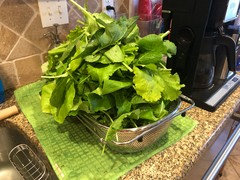
    I picked 2 pounds of greens today to make a hortopita tonight - a mix of turnip, mustard and spinach and a few radish tops.


  • 8 years ago

    Remember the favas and peas need pollinating. If they’re covered the bees can’t get in. I’d uncover them unless you’re expecting a freeze.

  • 7 years ago

    So far, everything has made it through our cold spell without any issues. The next two days and nights will be cold, but we will be warmer over the weekend.

  • 7 years ago
    last modified: 7 years ago
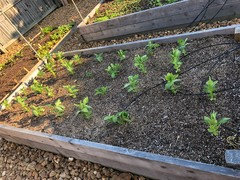
    Similar here, finally had a killing freeze 3 nites ago, all summer flowers are shot, they lasted much longer than usual.. The fall veggies are doing well, collards, carrots, beets, lettuce, spinach, cabbages, and brocs all at picking stage. Planted pansies for some color now. Picking persimmons too while the nite temps remain above 30F. A good fall growing season so far. Around +12" for the year in rain with 6 weeks to go.

  • 7 years ago

    We had out first real cold spell the last few days but today was back near 60. It looks like everything made it through reasonably well, but I had a little damage on a few plants near the edges of the beds closest to the row covers.

  • 7 years ago

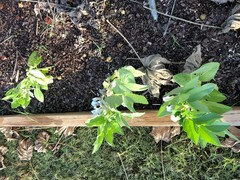
    5ese favas were out in the open with no cover


  • 7 years ago

    Rainy but mild today

    We got a couple of pounds of greens for supper last night. I think it will be a couple of more weeke before the lettuce is ready for another cutting.

    Im starting another flat of micrigreens this afternoon as well as some indoor mesclun mix.

  • 7 years ago
    last modified: 7 years ago
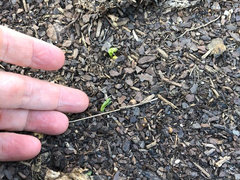
    Ok, I was wrong about the pollination. I was going by the bee activity I see on mine. I knew Phaseolus were perfect but thought Viccia was not.

    Just wish they didn’t get eaten by mice the minute they germinate. I have to lay small size chicken wire over the ground or use transplants to get them going. i only sowed them in November. Kales, lettuce and chard are producing a lot. Brassicas were sown in May and planted out in July.

  • 7 years ago

    So, how many pea plants do you need for a meal or 2? I remember as a kid sitting on the back patio shucking peas for a family of 5!

    We have gone from 7 4x8 beds to one an an in ground area.Is it worth it?

    I haven't seen peas in the grocery store or even at the farmers market for years (we're in a very ag area)!

  • 7 years ago
    last modified: 7 years ago
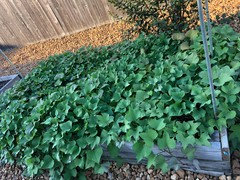
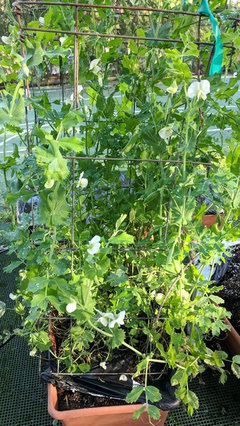
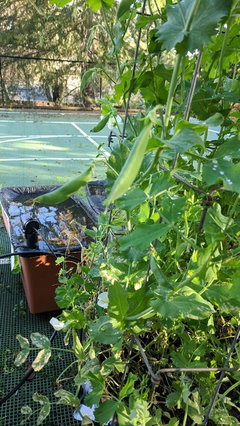
    With Sugar Snaps, you serve the peas in the pod, so you don't need as many plants. I grow about 10 "bush" Sugar Snap plants in each Earthbox, for a family of two. Never enough, but still worth it, as they don't require much care in the winter/spring season, and they are supposedly one of those things that really benefit from being eaten ASAP after harvest.
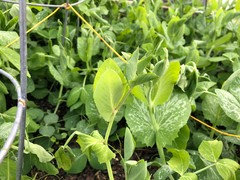

    These are mine right now.