Software
Houzz Logo Print
alan_maynard

Safe/ Cheap Outlet Spacers

7 years ago
I know this is probably not the best solution to the problem but, we are finishing the basement and i need guidance. The outlet boxes were set and wired prior to the drywall install and finishing, obviously. Most of them are fine but there are a few outlets/ switches that are “deep set” in the wall and the covers won’t reach. Is there a good and/ or cheap way of adding a spacer to the outlet/ switches to bring it forward but still be safe? I had considered washers to fill the space and bring the outlet forward but didn’t know if it was safe/ effective. Thanks for the help

Comments (19)

  • 7 years ago

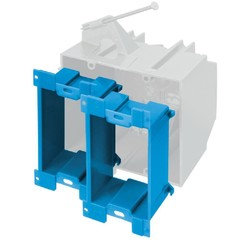
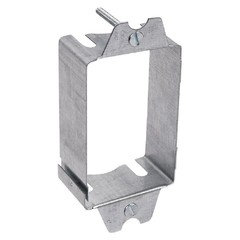
    As weedmeister said what you're looking for is called box extender. The come both plastic and steel versions. You should be able to find them at your local home center.


  • 7 years ago

    Using anything (like washers) to bring the receptacle forward means that you have live connections not contained in the box, and that puts you in a dangerous and code-prohibited situation. Box extenders are cheap and the legal solution to your problem.

  • 7 years ago

    You don't want a mile high stack of washers, so if the gap is big enough for a box extender, go ahead and put one in. That said, whether or not you need an extender, you might still need to tweak the gap a half inch or so. In that case, use outlet spacers. You can buy them at any electrical supply house, Lowe's or Home Depot.

  • 7 years ago

    Outlet spacers.

  • 7 years ago

    I still think box extenders are the safest approach, especially if you have side connections on receptacles. Outlet spacers are handy for smaller adjustments, but it's my understanding that box extenders are required by code if the box is recessed more than 1/4" from the surface.

  • 7 years ago
    last modified: 7 years ago

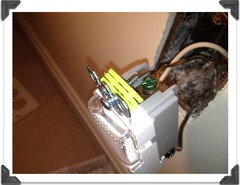
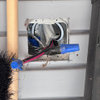
    Worthy's picture shows an illegal installation. The box (possibly with listed extenders) must be within 1/4" of the finished surface. That box shown looks entirely behind the drywall which is very bad. The point of the box is not just to give a place to screw the device to.

  • 7 years ago

    I've never seen a house where every outlet box was within 1/4" of the finished surface. I've never had an inspector object to outlet spacers. I have no idea why a gap of more than 1/4" would be dangerous.

  • 7 years ago

    Regardless of what you think about it, or your experiences with inspectors, box extenders are still a code requirement if the box isn't within 1/4" of the wall surface. It protects against arcing to flammable surfaces and helps stabilize the device, among other things.

    My experience is different: I've never owned a house that didn't comply with this...and I've re-done, changed-out, and upgraded a lot of devices.

  • 7 years ago

    Kudzu, you give nothing but rock-solid advice, so I'm sure you're right about the code requirement, but would you please explain? Let's say I've got a "flammable surface" like wood paneling and some of the boxes are 3/8s inch below the surface, so I use spacers to bring the outlets out even with the wall. Why would that make the paneling attract electricity?

  • 7 years ago

    The covers on the box provide a function as well. What you don't want is a gap between the box and the cover. As Kudzu and I have said, you must set the box within 1/4" of the finished surface either by moving the box forward or by using extenders.

  • 7 years ago

    Skil, in the old knob and tube wiring days, some devices didn't have boxes -- they were installed right in or on the wall or ceiling. Boxes for receptacles and switches were introduced and added to the code because they contain any arcs that may happen if the device fails or has a bad connection. That way they're less likely to catch the wood around the device on fire. If you have a gap, any arcs or flames that might happen can escape more easily, and quite possibly without you knowing about it until you smell smoke.

    As Ron said, it's not so much about the device fitting the box, it's more about the way the cover plate fits.

  • 7 years ago

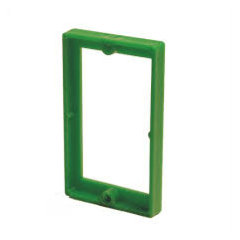
    When I had similar problems, I purchased spacers like those here:

    They are available in several thicknesses, from 1/4" to 3/4" (and maybe more). Are these as good as those shown by Mike Kaiser in the first comment?.

  • 7 years ago

    I spent an hour this morning looking for information. On one hand, I feel better knowing I'm not the only hillbilly who didn't know code requires boxes to be within 1/4" of the wall surface. On the other, I got another surprise when I found out gaps greater than 1/8" around the sides of outlet boxes are also against code. That means every outlet and switch box cut out with a roto-zip is illegal, which means almost every house built in the last twenty years. The fix is to mud and tape around the boxes, which could increase the gap between the box and the wall surface to more than 1/4 inch, which means ... it's Miller time.


  • 7 years ago

    You need to practice more with the rotozip. You should be able to leave an 1/8" or less with some practice.

  • 7 years ago

    > The fix is to mud and tape around the boxes

    I've used spackle. It doesn't hold up though.

    Maybe firestop caulking? RTV sealant? Other ideas?

  • 7 years ago

    Ron, are we on the same page? A rotozip bit is 1/8 inch in diameter. If you have a pulse or breathe, the gap will be more than 1/8. Every crew I've seen screws the top edge of the rock to the wall, lets it lie against the switch or outlet and makes a rough mark indicating the center. At that point, they plunge the rotozip in, move it until they hit the inside of the box, then hop it out and over to the exterior, then whip it around. The gap is always ragged and 3/16" at best.

    I hope I'm not coming across as a jerk. I appreciate everyone's comments and want to know the best, safest, legal way to work.

  • 7 years ago

    2008 the NEC mandated the 1/8" max gap law around certain combustible material.

    2011 a revision was made to change the wording from certain named combustibles to state the gap around all combustibles shall be no larger than 1/8".


    Our inspectors look more at how far the box is recessed into the wall. Any box recessed more than 1/8" from the outside surface of the wall must have spacers added to correct it..

    Gaps around the outsides of the box they do not pick on as much. If they get picky and it's to much for their liking. Then Fire Barrier Caulking is used to fill it . Spackling and drywall mud will work but I would much rather use Fire Barrier Caulking.


  • 7 years ago

    The rotozip pilot is 1/8" but the cut is actually a bit smaller. Believe me, I rotozip boxes all the time. You get a legal cut if you do it neatly.

    Otherwise, you'll need to have the drywall guys throw a little mud at the edges.