Software
Houzz Logo Print
webuser_661574374

Not sure if my False Aralia is healthy

7 years ago
last modified: 7 years ago
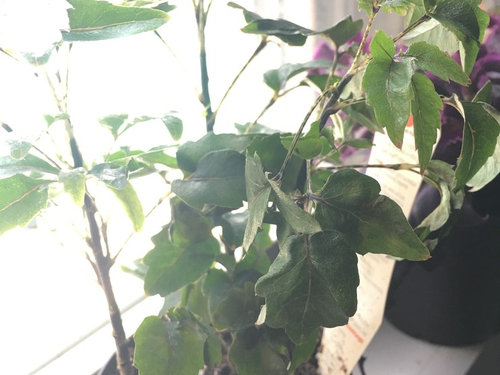
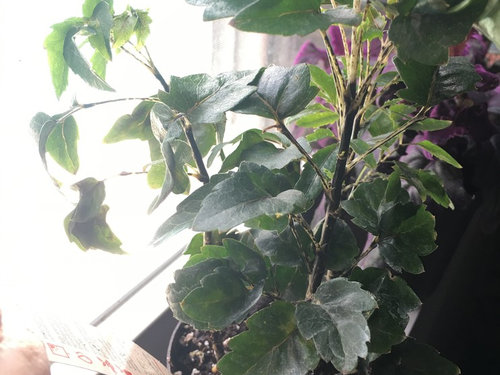
Hello, I got a false aralia from Walmart about two months ago. It dropped some leaves due it acclimating to its new home and looked completely healthy until yesterday when I watered it. It is growing new leaves and there are three stems in the pot however one of the stems has thin leaves not necessarily thin but the leaves have an unhealthy texture compared to the other two stems in the pot. The leaves are also dropping on this stem and im not sure if it’s normal or if it’s dying and if so how to prevent it from dying. It started looking like this yesterday when I watered it. I keep it on my window sill and don’t water thoroughly water until the soil is dry. I do mist it daily since I heard they like humidity. Any good care guides on this plant would be very helpful too. I have posted pictures. You can see how this stem in particular is drooping to the side compared to the other stems which are healthy. Also despite it looking unhealthy it is developing new leaves but the new leaves also are looking unhealthy.


Comments (8)

  • 7 years ago

    How often are you watering it? They don't like being wet. Let it dry out completely before you water it, and don't over-fertilize it. It is truly a plant that thrives on neglect.

  • 7 years ago
    I still have it in the soil it cane it since I’m not sure it should be reppotted since it’s still sort of new. I also heard they like tight pots so I haven’t changed the soil or pot it came in. I’m just confused as to why only one of the stems are unhealthy while the other two look healthy. At this point I think it’s because the sun only hit the two that are healthy and the unhealthy stem stayed in the back and didn’t get as much light. So I turned the pot around to see if it perks up with a bit of light? Any advice in relation to if this theory is correct. Thank you in advance. :)
  • 7 years ago
    Forgot to add that I water it when the soil starts getting dry so maybe once every two weeks? I don’t have a set schedule I just water when it feels and looks dry?
  • 7 years ago

    If the plant can be lifted from the pot with the root/soil mass intact, it will benefit from a repot, but that it needs a repot isn't reason enough to repot it out of season. Your plant has natural rhythms that play into the timing of doing heavy work, like repotting. It should bee higher in energy reserves in June than any other month except perhaps July, but it's ability to make food from the sun's light peaks in June at the summer solstice, which would be the best time to repot. If it needs it, that's when I'd plan on doing it. Tight roots can exact a heavy toll on your plant's ability to realize the potential Mother Nature endowed it with.

    Light is also a very significant factor, as are temperature and fertility levels. Soil choice is really about the most important factor in determining how well your plant does. It's not unusual for one root to be affected by poor soil conditions more than another. While it varies by plant, there is often a very direct relationship between individual roots and branches, or roots and one side of the tree such that if a main roots dies, the entire side of a tree or branches on that side of the tree can die.

    Al

  • 7 years ago

    Tapla, by "thrive on neglect," obviously, I don't mean extreme neglect, I mean not too much love, which includes overwatering, which as you know, is the cause of most houseplant deaths. Maybe I should say "benign neglect," because that's how I grow all my plants. They get water when they are nearly completely dry, and are stronger for it. That way, if for some reason they don't get watered in time, they are more likely to survive. Stress isn't a bad thing. Plants in the wild have a lot of stress, and they seem to survive it most of the time.


    k - let the soil get dry down to the second knuckle on your forefinger. Yes, that involves sticking your finger into the soil. It actually looks pretty healthy, and some plants will automatically drop leaves when you move them from one environment to another. Ficus trees are a good example of this.

  • 7 years ago
    Okay, here’s an update. I went ahead and checked on the roots thinking it was root rot. When I saw the roots the side of roots connected to the specific plant that was dying had soggy roots. They were soggy and came off easily so I ended up taking all the infected or dead roots off carefully to not damage the good roots. I noticed that fortunately the one stem that had rotten roots was starting to stem small thin white new roots despite the rot. I have now changed the soil to a cactus potting mix that is well draining and left it in the same pot it was in only changing the soil and cleaning up the roots. Do you think there is any chance that the plant will survive?
  • 7 years ago

    Dg - When in a hole - stop digging.

    Why not say what you mean instead of something that puts you in a position from which the only extraction is by back-pedaling? From the plant's perspective, stress is always a limitation, a bad thing, NOT a good thing; and, the idea plants might survive the limitations imposed by stressful conditions serves as no clarion call to the masses that plants thrive on stress or neglect, or that growers should begin making sure their plants have plenty of limitations to keep them happy. Neither does dressing up 'neglect' in its best finery by prefixing it with 'benign' shore up your position, but it does create an interesting oxymoron I hadn't yet heard. I like it better even than 'tough love'.

    Consider: If your plants "get water when they are nearly completely dry, and are stronger for it. That way, if for some reason they don't get watered in time, they are more likely to survive." If I understand this correctly, you believe in allowing plants to dry down to drought stress levels so when you forget to water them in time, they are more likely to survive than had you watered them on a timely basis and avoided the stress altogether? I can't count the number of logical fallacies in that circuitous reasoning sequence.

    Plants in the wild have a lot of stress, and they seem to survive it most of the time. I would simply counter with my own observation - plants not subject to stress, whether growing in situ or where they do not occur naturally, survive ALL of the time. W/o stress, there would be no limitation on how long perennials could live.

    Our job as growers, our ONLY job as growers, is to identify what is limiting the things we grow, and counter those limitations so plants can realize as much of their genetic potential as possible. No one wakes up in the morning and decides their plants are over-achievers and need a little more stress in their lives to put them in fine fettle ...... do they?


    K - There's always hope your plant will reverse course and prosper. I would suggest it might be a very good idea, if you suspect even marginally, your soil might be more water-retentive than you might wish for, you use something as ballast in the bottom of the pot to nearly eliminate all soil capable of holding perched (excess) water. You can easily eliminate nearly 100% of a mediums excess water-holding ability with ballast. It would be especially valuable in this set of circumstances.

    Another form of ballast use would be to buy a bag of poultry grit (not oyster or shellfish shells - use crushed granite or cherrystone) and mix it about 4:1 grit to your cactus soil, then fill the bottom of your pot with that mix only to the max ht of the perched water table. If this sparks any interest, we can talk about it.

    Al