Software
Houzz Logo Print
rnaval41

Fertilizer schedule

7 years ago

When should I fertilize? My first application was April 8th, I used Scott’s Starter with CG control and it worked wonders. I’ve read that I should NOT fertilize during the hot summer July / August, is that true? Just need some guidance for a schedule.

Comments (11)

  • 7 years ago

    What's your grass type? Most northern grasses follow the Memorial Day, Labor Day, October, Winterizer schedule.


    Southern grasses differ, and it does depend on what type of grass it is.

  • 7 years ago
    last modified: 7 years ago

    Kentucky Bluegrass, I’m in NY. So if I’ve already done one application in April, should I skip Memorial Day?

  • 7 years ago

    Personally, I'd go again on Memorial Day; that April fertilizer got used up tapping out the sugars in the roots to generate the rich growth you saw in April and May. Those have to be restored before summer hits full-force and you start having issues with summer stress.

    Next year, skip the April application. Yes, it accelerates the grass and it looks great. There's a price for that--and it's summer survivability of the lawn. Spring lawns usually look good anyway.

  • 7 years ago

    So next year April put down a pre-emergent for CG without the fertilizer? I’m also most likely going to seed again in April in addition to this year’s fall overseeding so what will I use? Tenacity? Wish someone would write a set of instructions which everyone can follow. Sort of a general practice document that applies to most scenarios. Maybe you could write one up? Hint, hint, ...

  • 7 years ago

    Pre-M, no fert, in April for you. Seed with Tenacity, no fertilizer (it's really not necessary for the first month of a grass plant's life anyway, the seed supplies everything the new plant needs, and you'll feed it in May).

    For extensive seeding, or for patches, I'd say Milorganite or the like on that, which won't set off the flush of growth that synthetics will. Or any other full organic like soybean meal at light amounts (7 pounds per thousand or less for soy, 20 per K or less for corn).

    There really isn't, per se, a good general practice document as there's an exception to every rule, although northern feeding is pretty hard and fast (Memorial Day, Labor Day, October 1, Winterizer). Unless you use organics. Or are in the transition zone. Or an early freeze area. Or are under a fungal attack. Or are adjusting nutrients. Or...

    See what I mean? :-)

  • 7 years ago

    Memorial day is a good time to fertilize. Normally, that would be a good 1st application of the year. I would seriously get out of the habit of seeding all the time. It is hard to do weed control while you are seeding--or for your lawn to flourish for that matter. Seeding conditions are NOT the same as normal growing conditions. Even now, you are at risk of CG since the mesotrione has likely worn off but regular CG preventer now will likely be a bad thing for your spring seeded grass.

  • 7 years ago

    Great writeup! This should be titled ‘The ABC of Lawn Care’ and placed at the top of this forum with a bold ‘Read This First’ highlight around it.

  • 7 years ago

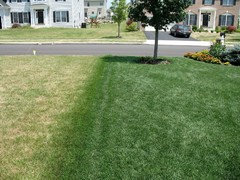
    ABC of Northern Lawn Care. Southern lawns have different grasses with different care in some cases. Note that I'm from San Antonio. I lived in Dayton for 18 months about 20 years prior to my learning about lawn care, so my experience with a northern lawn was done in complete ignorance. What I know about Northern lawn care comes from reading and consolidating stuff on this and other forums. For your situation (NY and KBG), you need to listen very closely to what morpheuspa has to say. He has KBG in Eastern PA that looks like this...on the right.

  • 7 years ago

    Normally in an ABC discussion I would discuss the benefits of using organic fertilizer, but it didn't fall naturally into that particular take on the ABC basics. So here it is. Organic fertilizer is not compost. For most of 60 years people thought compost was organic fertilizer, but in the late 1990s it came out what was really going on in the soil. There are microbes in the soil which create plant food. Who'da thought!! The only trick is they need to be well fed and watered. The deep and infrequent part of watering is fine for these beneficial little critters. Feeding them is done much better with...organic fertilizer. Now if you look at lots of bags of organic fertilizer you get the drift of what's in them. Basically it is grains like corn, wheat, soybean meal, and alfalfa. In other words, food. This stuff is food for people and all animals including microbes. You will also find animal byproducts in the bag. Products like feathers, poultry poop, and fish meals. What all these things have in common is a mix of protein, carbohydrates, vitamins, and minerals. Food. Protein consists of amino acids which contain nitrogen. When the microbes finish with the protein, the nitrogen gets released in the form of plant food. Mother Nature has been perfecting this process for billions of years. It works. By using organic fertilizers you are distributing the food relatively evenly across the soil so all the soil microbes get going at the same time. The application rate for the grain based fertilizers is 15-20 pounds per 1,000 square feet. Now here's a secret. Commercially bagged and branded organic fertilizers cost about $10 per 1,000 square feet to apply. But if you buy a bag of soybean meal at your local feed store, and apply at 15-20 pounds per 1,000 square feet, the cost drops to more like $3-5 per 1,000. For a comparison, commercially bagged chemical fertilizers can cost more like $2 per 1,000 square feet, so there is a cost associated with organic fertilizer. You'll have to decide if this lawn hobby is work a few bucks more. The cost of compost can be $45 to $75 per 1,000 depending on whether you have it delivered, so that is waaaay out of my hobby budget.

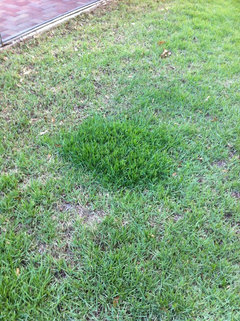
    Does it work? Here is a picture taken by mrmumbles many years ago (ca 2010). He tossed a handful of alfalfa pellets (rabbit chow) into a spot on the zoysia lawn. He did it in mid May. The picture was taken in mid June.


    You can easily see the improved density, color, and growth. I've been using this picture ever since to convince people that organics work. That pic has sold tons and tons of alfalfa pellets - so much that my feed store now asks me if I'm going to use the alfalfa pellets on my lawn or to feed rabbits. Feed stores have caught on. Anyway I get similar results on my lawn. In that picture of morph's lawn...his happens to be fertilized with organics, but he attributes the striking difference between his KBG and the neighboring lawns as being due to deep and infrequent watering (#1 on the list in the ABCs post).

    Organic fertilizer has other advantages. Without getting into the academic benefits of organic over synthetic chemicals, one advantage is that you cannot overdo them. Morph tried several years ago by applying a full dose of two different organic fertilizers every week for much of a season. I've done something similar with corn gluten meal. The only thing that happens is the fertilizer benefit lasts a lot longer in the soil after you stop using it. Another advantage is you don't have to water it down to prevent burning. Organics cannot burn like some chemical fertilizers. Something I have noticed sometimes you will get a bunch of birds flocking to your lawn after you apply. Some people want to chase them away, but they cannot eat it all, and they leave enough poop behind to make up the difference. I count birds as a benefit. I have also noticed the population of insects in my lawn is much more stable. Before starting with organic fertilizer I would get the occasional year of the pill bugs or even ladybugs. You do NOT want a thousand ladybugs getting into your walls. The use of organics seems to stabilize Nature in the garden.

    There are disadvantages too. Organics will get moldy and buggy sitting in the garage or shed. I use it anyway no matter how bad it gets. Organic food would eventually get moldy and buggy in the soil, so why not use it. If you have some left over at the end of the growing season, you may as well dump it on the lawn rather than store it until spring. Another diss, organics weigh more than synthetic fertilizers. More 'tonnage' needs to be applied to get the same benefit. Here's my observation: with synthetic fertilizer you might apply 3 pounds per 1,000. With organics it's 15-20 pounds. With compost it's 700 pounds (not joking). That's what is required to get a reasonable amount of fertility out of the materials. Another diss, organics take 3 full weeks (21 days) to see the benefits. Some synthetic fertilizers can show results almost overnight. But once you get in the groove, the grass should never really fall behind on appearance.

    Rohit Naval thanked dchall_san_antonio
  • 7 years ago

    Yeah, I remember the year (2009) I applied 1,200 pounds of organic food per thousand square feet, not including the gardens.


    Fortunately, most was very low nitrogen, but even so, I was close to 37 pounds of N per thousand square feet. The lawn exploded. Do that synthetically and you just sterilized the soil and rendered it salted for at least a year. Organically, it maintained that rate of growth for a solid year...