Software
Houzz Logo Print
webuser_352205432

Smart solution for too many light switches

7 years ago

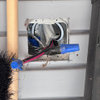
Currently building a home and due to my lighting needs I have 9 switches in my entry hallway (3 rows of 3 on top of each other). As you can imagine, it looks cluttered. Anyone have ideas? I was wondering if I could install a screen (iPad-like) with the controls on there instead of the switches. It would look cleaner

Comments (18)

  • 7 years ago

    The first step would be to re-examine why you have all of those switches. Can any of them be combined?

  • 7 years ago

    They all control different devices.. soffit lights, outdoor lights in three different places, entry hallway lights, mudroom light etc..

  • 7 years ago

    Do your outdoor lights need to be controlled separately?

    Could you put some of them on scheduled timers that are located in another place?

    Regardless of how it looks (ie. tons of switches vs some kind of smart screen), that is too many switches in one area. Imagine being a guest (or a house-sitter or whatever) and you have to figure out how to turn on the over head light. Having that many switches would be annoying.

    I think any more than 4 switches in one place is probably too much. It's just bad design.

  • 7 years ago

    This is becoming a more common problem in modern houses, as people start installing LED light fixtures that serve more specific lighting needs, rather than having a single large fixture in the center of the room.


    If it's just a handful of fixtures, if you don't need to individually dim all of them, and if you don't need the ability to select different "scenes", then a triple-rocker-switch or two will help. Also, if you need unusual switch plates, then I can't say enough good things about Kyle Switch Plates.


    But if things get more complicated, then you really need a home automation system to manage your switches. Unfortunately, all these systems are still relatively new, there is not a single standard that everybody agrees on, and electricians aren't super familiar with them. I have had (mostly) good luck with Lutron's RadioRA2 system. But it isn't cheap, and it requires professional installation. Once done, it should meet all your requirements though and really simplify the user interface (until you start buying DMX controlled fixtures and realize that Lutron doesn't support those; but that's a different problem).

  • PRO
    7 years ago

    So if your home is small you can do Lutron Caseta which uses the same wireless protocol as the more expensive Lutron RA2 Select and RA2 do. Caseta systems are designed for DIY programming so you can program them yourself. There is still the issue of the dimmer/switch installation-- if you don't know what you are doing on that call in a licensed electrician to help you out. My personal recommendation would be RA2 with a Hybrid Keypad in 1-gang of the 9 gangs you have there. You could then have the Hybrid Keypad programmed to control the other 8 dimmers/switches that are there in whatever lighting scenes you like. You could add a second Lutron keypad at another location if you wanted to create multi-way switching to make the activation of each lighting scene even easier for you. They also have a pretty easy to use app if you don't mind controlling your lights that way.

  • 7 years ago

    I'd actually recommend moving those extra ~8 switches to a different (possibly hidden) location. The keypad(s) can still control them, but they won't overwhelm unsuspecting users. 9 gang is a lot.

  • 6 years ago

    Thank you all. So is there no ipad-like solution to have one screen on the wall instead of 9 switches? I can't eliminate any of them.

  • 6 years ago

    Lutron publishes the API for their products. It's pretty easy to talk to. They also have a "internet gateway" product that allows you to control the switches from an app. So, I am pretty sure you can either use their solution, you can find a third-party solution, or you can roll your own.


    Of course, then you have an iPad mounted to the wall, which might be fun for a while, but will look quite dated in awkward in a couple of years. I personally prefer good old buttons. That's a time-proven user interface that everybody can figure out and that doesn't require me to install monthly security updates.

  • 6 years ago

    Have you looked at this system: https://noonhome.com/products

  • 6 years ago

    I had a similar situation in my kitchen, where I had three groups of ceiling lights, each with it's own switch. I put in another switch in series with the three, so now I usually just turn them all on, but can turn any one (or more) off. Yes, it's possible they could all be turned off individually, and that could create a confusing situation, but, after 15 years, the last three being rented out, it's never been a problem.

  • 6 years ago

    I can't eliminate any of them.

    Yes you can (or move them to different locations)

    Put some outdoor ones on timers in an out of the way location.

    Put the accent lighting ones elsewhere. Get some smart switches that you can control through an app on your phone for those if you'd like.

    Keep only the necessary ones in this location. Mudroom, entry, immediate outdoor light. That's it.

    No home needs a bank of 9 switches in one place. That's just poor design.

  • 6 years ago

    If you really want an ipad to control your lights, it can be a supplemental device. Use smart switches throughout your house. They'll basically look like normal switches. Have those switches placed properly (ie. no banks of 9 switches).

    Then you can control them all from an ipad app from where ever you are in the world. Place that ipad at the front door it you'd like. You can use the ipad. Guests can still use the regular light switches and not be confused about how to turn on a light. Win-win.

  • 6 years ago

    Stax, thank you for your unhelpful comment. The solution I am inquiring about is clearly delineated above....the ability to control 9 switched with the aesthetics of a screen instead of 9 rocker switches.


    Feel free not to waste time commenting on my posts in the future.


    To everyone else who has offered constructive advice, thank you.

  • 6 years ago
    last modified: 6 years ago

    Come on, Stax. Can we please stick to a more polite tone. Ad hominem attacks are really unwarranted.

    As ridiculous as it might sound, this situation isn't really that uncommon with modern open floor plans.

    For instance, on our main floor, we have a good dozen different light fixtures (and that's after combining some fixtures onto the same switched circuit). And since this is an open floor with almost no walls, you can see these lights from almost everywhere.

    That can make it challenging to find good placement for light switches. In practice, we find, there are two different needs that have to be addressed:

    1. individual lights need to be turned on/off or dimmed. This usually happens in close physical proximity to the light fixture. So, as long as there is available wall space, that dictates the placement of the switch(es).
    2. it is frequently necessary to switch a combination of lights all at the same time. A noteworthy special case is at the end of the day, when all lights on the same floor need to be turned off.

    The solution is readily available with modern home automation systems. Instead of having dozens of individual light switches next to each other, you end up with one or in rare cases two keypads each in a handful of convenient locations throughout the floor. These keypads usually have six switch positions, and they also allow for dimming. You can program each of the buttons to either operate an individual fixture, or to activate a pre-programmed "scene". And that includes a "turn everything off" scene. You can also program automated timers, including timers that depend on sunset/sunrise times.

    Physically, when you are running wires, the keypad doesn't actually control all of these lights. Instead, in most scenarios, you install actual conventional light switches for all your fixtures; and these light switches are remote controlled from the keypad. In practice, some of these light switches might function as just that: a normal wall switch. But sometimes your physical light switches would now get mounted in some inaccessible and unobtrusive location. They could even be in a wiring closet in the garage. They are there to facilitate wiring, but they never get operated other than through the remote keypads.

    There are a few more technical details and variations (e.g. some lights come with built-in drivers that require low-voltage control signals instead of traditional dimmer switches), but your electrician would be able to sort that out for you.

    Things have progressed a lot from a time when people had small individual rooms with one or two fixtures only. These days, you often find large rooms with different fixtures in different areas, with changing lighting needs during the day, and with customized lighting fixtures that no longer have just a single light bulb at the center of it. LEDs give a lot more flexibility, but also complicate the work of the architected, interior designer and/or electrician.

    Tankless Tommy thanked M
  • 4 years ago

    This is such a helpful post and I’d love to hear how you ended up solving your dilema!


    We are building a very open home so theres not a lot of walls to actually put switches on. Its looking like most of the lights for our Great Room, Kitchen, Morning Room, Stairway (with hall) and Foyer will all be on one wall (with a second 3-way set near the Mudroom with many of the same lights). We would like to use a smart lighting system with programable scenes but will have to upgrade the switches over time (cost of building now is killing our dreams of a home automation system at move-in) so are trying to plan for future upgrading.


    So what did you end up using? If anyone else has recommendations, I’m all ears (unless you just want to be critical of our floorplan design ;P )!

  • 4 years ago

    I recommend you find an electrician who has installed a couple of Lutron RadioRA2 or RadioRA3 systems. That's currently the gold standard for that size system.


    It has a bunch of idiosyncracies, and it helps to hire somebody experienced, even if you will retrofit things later. If you plan now, you won't have to open up walls later because some of the wiring needs adjustment.


    In the long run, I hope that a good competitor will establish itself and put pressure on Lutron to improve things more. But for now, none of the competition in this market segment is a real threat to them.


    Maybe Matter/Thread will change that in the long run. It looks promising, but it's still years out

  • 3 years ago

    Interested in this issue too. I have about 25 electric light/blind fittings in one open plan room. Wife wants physical switches but I hope to install home automation wireless relays behind the switches - zigbee etc
    Anyone done this, any tips ?

Sponsored
Kuhns Contracting, Inc.
Average rating: 5 out of 5 stars26 Reviews
Central Ohio's Trusted Home Remodeler Specializing in Kitchens & Baths