Software
Houzz Logo Print
grapefruit1_ar

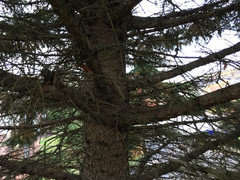
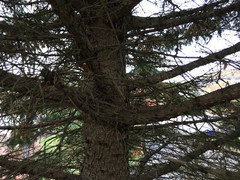
Is this a blue spruce?

7 years ago

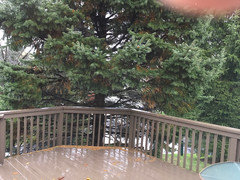
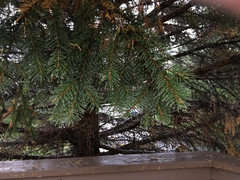
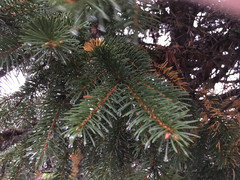
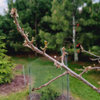
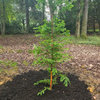
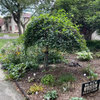
First of all, it is a rainy day so please excuse the poor lighting/pictures. We just were told by our HOA that all blue spruces must be cut down due to disease, This very large tree provides privacy and shade for our deck ( front of condo). We did not know that it was a blue spruce. I can clearly see that there are many blue spruces in the community, but is this one?


Thank you!


Comments (20)

  • 7 years ago

    Trying again for pics!

  • 7 years ago

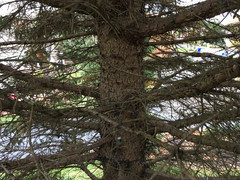
    Looks like it to me. A shot of the bark would confirm it. Are you in one of the following states: MD, PA, NJ, NY?

    grapefruit1_ar thanked HU-435404624
  • 7 years ago

    Yes, I am in PA. I will get a bark shot tomorrow. Thank you!

  • 7 years ago

    That's a pretty heavy handed approach...why not condition based removal orders that apply to all species (the approach a reasonable person would take).

  • 7 years ago

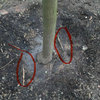
    Here is the bark. We do not have to remove it immediately, so we might ride it out for a while.

  • 7 years ago

    Have the Christmas lights now grown into the trunk? Should remove those.

    grapefruit1_ar thanked Smivies (Ontario - 5b)
  • 7 years ago

    It is safe to say that Picea pungens will be subject to needlecast in areas with climates not precisely to its liking........which is a vast portion of North America.

    "A popular landscape tree in the ’60s and ’70s and still in great favor, the Colorado Blue Spruce (Picea pungens “Glauca”) is happier in a cooler location/elevation, like the Rocky Mountains. Pair that with the warmer Pennsylvania summers and other stressors and their decline has been dramatic.

    A big part of the problem is several different fungal diseases with very limited treatment. Many spread freely by wind, so containment is impossible."

    IME, once contracting whatever form of needlecast may be present, they never look 'better' or the disease become less noticeable. They just continue to decline.

    grapefruit1_ar thanked gardengal48 (PNW Z8/9)
  • 7 years ago

    You are going to be looking into more and more of a dead zone as time goes by. And this "very large" example isn't actually a big one at all, for a full sized species reaching over 60' tall - if it is left in place (and remains alive and growing) the time will come where it is starting to conflict markedly with the deck.


    grapefruit1_ar thanked Embothrium
  • 7 years ago

    Thank you all for your knowledge/advice! We intend to monitor it, and will remove it eventually. This is a second home near our grandchildren.

    We are not new to tree removal. Our main home is on several wooded acres. We had 18 trees removed two weeks ago because after being there 33 years they were starting to fall/snap off ever closer to our house. There were between 30-40 white ash removed within the past 3-4 years.

    We never new that we should have had a tree removal budget!

  • 7 years ago

    The ash probably got hit by emerald ash borer.

    grapefruit1_ar thanked Embothrium
  • 7 years ago

    Correct!

  • 7 years ago

    It amazes me that some people with no experience growing this tree in the East would make statements like "It will never look better", when I have witnessed several bouts and a somewhat recovery on a single tree. In some wet summers, the needlecast is visible, but not noted by most people. These are the years when the limbs get trimmed up, and in some neighborhoods, the piles of branches along the curb are the only sign of the disease.


    Last year, (and one year in the mid-90s) were apocalyptic for Blue Spruce in SCen PA. Smaller trees seem less affected, so trees around from early 1990s (20-30yr old trees) were prime fodder for the explosion of the fungi the cause needle loss. The smaller bouts occurring in the intervening years were less noticed because needlecast first affects older needles, with the newest ones being the last ones to fall. If conditions are less favorable for needle diseases, then the tree holds most of the new needles, and the tree appears better. Since needles live for about 3 years, after 3 years the tree is remarkably better looking if the weather is not conducive to pathogens.

    On the minus side, the larger the tree is, the more it seems affected. It also seems to affect the bluer ones and the ones with the longer, stiffer needles more. While a 15 year old Blue Spruce might still look good after a confrontation with the various fungi that eventually kill it, a 30 yr. old tree looks terrible.

    My one remaining P. pungens took quite a beating last year, it was literally see-through. This year, with much improved conditions, seen from 200ft. it is still handsome. Close up, it shows the struggle. However, nobody who saw it last year and again this year would say it couldn't ever look better than it did last year.

    grapefruit1_ar thanked HU-435404624
  • 7 years ago

    Hmmmm.......then I wonder why 9 out of 10 articles discussing growing blue spruce in most areas out of their native environment, especially along much of the East Coast with its summer humidity and plentiful rainfall, go on and on about "blue spruce decline". We suffer the same thing here, not due to humidity but because our temps are too mild and we get plentiful spring rainfall.

    My personal observation as a consulting horticulturist - and confirmed by the local extension services - is that these trees do not recover well from any needlecast. They may grow tufts of new foliage on branch tips but the bare inner branching stays permanently bare. It doesn't take long for them to start looking thin and ratty. It is difficult to find an established blue spruce that doesn't show some sign of the disease and the visual image only gets worse over time, never better.

    grapefruit1_ar thanked gardengal48 (PNW Z8/9)
  • 7 years ago

    All the books, without fail, cannot possibly account for all conditions. All the trees, without fail, are not affected the same way. I never said the affected branches recover, only that the continued growth on branches with good buds can mask the disease some years, and that given several years where conditions are bad for the fungus and good for tree growth, the tree regains decent looks. 'Blue Spruce decline' does not cover the disaster that befell the Blue Spruce in the MD/PA/NJ area in 2018. A decline is gradual, and that describes normal wear and tear. We also have Sorbus decline, and some years a disaster (fireblight) with the almost complete disappearance of Mountain Ash. But people keep planting them. What happened last year was slaughter of Blue Spruce, some Firs, and a couple other evergreen species.


    My personal observations, growing these trees for over 30 years in a climate not really suited for them to achieve what they do in their montane homeland, is that given 2 bad years, you cut them down. However, if only one year out of 10 is horrific, the tree will get to about 40 years before other things kill it completely.

    grapefruit1_ar thanked HU-435404624
  • 7 years ago

    However, if only one year out of 10 is horrific, the tree will get to about 40 years

    Many people nowadays in particular want their garden specimens to be as unchanging and dependable as the furnishings they have inside the house. With noticeable blights, bugs, winter injury or other bothers possibly cropping up just not being on the radar - "no maintenance" has become a mantra among the residential landscape customer base.

    grapefruit1_ar thanked Embothrium
  • 7 years ago

    Thank you so very much for the information...none which I have any knowledge of! Our tree in question is about 40 feet tall and 15-18 years old. Yes, some needles are dropping, and yes, there are some bare areas. Do you think it is wise or foolish to try to let it stand for a few more years?

  • 7 years ago

    Isn't the HOA undertaking action now?

  • 7 years ago

    The HOA has not said that we HAVE to take it down , so far. They said that we could get a " group rate" of $500 per tree or we would have to pay $650 when we do it later,. I just simply said that we decided to wait for a while.

    About 2 months ago the " landscape Nazi" came by to say that the HOA was having some common area retaining walls power-washed, and that if we wanted other things done we should get them done at the " group rate". She said that she would take a look and determine what needed to be done....at our expense. The guys did a very small retaining wall and a short run of paved walkway for $110. It was way overpriced. We just paid it and said nothing,

    We are not confrontational in the least, but we hope to buy some time with this tree. I'll let you know if we get arrested!

  • 7 years ago

    Despite what others may report, once these trees develop any form of needlecast.....which they are highly inclined to do......they will never look "better". They will continue to decline and become more and more bare on the interior with just little tufts of apparently healthy new growth on the tips.

    If the HOA offers to remove now at a group rate of only $500 per tree, I'd take advantage of that deal. And it IS a deal - tree removal is expensive!! Not only is the tree diseased but it is also very poorly sited - way too close to the deck.

    grapefruit1_ar thanked gardengal48 (PNW Z8/9)