Software
Houzz Logo Print
madplanter1

Bacterial soft rot - another gift from 2020

It started with one plant, then two, now it's in several. The first one I noticed was Journey's End. One leaf collapsed. The middle of the petiole was mush. Daylilies occasionally have a similar problem, and the treatment is a bucketful of 10% bleach. So I dumped a bucketful on JE and thought that would be the end of it. Then it showed up in Goodness Gracious and Humpback Whale, and JE didn't get any better. So I removed any leaves with signs of disease on GG and HW, dug up JE, washed off every bit of soil, and soaked the whole thing in a 20% bleach solution for an hour, then put it in a pot of Miracle Grow potting soil.


We were gone for three days over the 4th, and I worked on daylilies yesterday. Today I went through the hosta beds and saw more damaged plants. Shade Fanfare is the worst, with the edges of leaves turning to slime. The plants aren't anywhere near each other. There are 3 beds, and infected plants in every one of them. After some research, I discovered they have Bacterial Soft Rot.


Apparently the hard freeze in April left everything a little damaged. We had rain, heat, and high humidity - perfect conditions for Bacterial soft rot. I'd never heard of it before, and assume it's not common. So for the rest of you - if you find parts of your hostas turning to slime and smelling like dead fish, treat it like you would HVX. Everything I've read says there's no treatment. Destroy affected plants and disinfect anything you use with 10% bleach. The Journey's End I bleached seems to be doing OK. It did have one more slimy bit. I moved it into half sun and nothing since. Washing off the soil was probably a mistake. I cleaned it 6 ft. away from the hosta bed, but the water may have spread the bacteria. Until every bit is removed, I can't water, either. The dead fish smell is a sure sign, so look for that.


Anyhow, it looks like somewhere between 10 and 50 are going to have to be destroyed. I'm leaving JE in the pot to see what happens, but putting it in isolation. It seems to be hitting the leaves of the white edged hostas hardest, but attacks the petioles of all of them. Will try to get photos tomorrow.

Comments (17)

  • 6 years ago

    I just found a site that says you might be able to save plants if the infection hasn't gotten to the roots. "At the first sign of trouble dig and clean any remaining parts that seem healthy and dry them well in the sun. The bacteria need moisture to survive. Dipping or spraying with Phyton will also help the plant, but nothing can be done about it in the soil."


    So maybe it's not hopeless.

  • 6 years ago
    last modified: 6 years ago

    MadPlanter1..I'm sorry..I wondered if Southern blight is the same as what you're talking about..so I looked it up and the answer was yes..years ago I had one small plain green hosta (NOID) with this disease..research was discouraging so I removed the little bit left and tossed it..the viburnum next to it is a lot bigger and that spot is now under the viburnum..and is unplanted to this day..I never did understand why this hosta developed this problem..thankfully none since..I'm a light waterer and I don't bury the crowns..I think that's helped me keep rot away..

    MadPlanter1 zone 5 thanked nicholsworth Z6 Indianapolis
  • 6 years ago

    Madplanter, so sorry to hear about the disease that has affected your garden. What a disappointment.

    If Southern Blight is what you have, the Hosta Library has good information. This section will take you to what seems like an informative article.

    http://www.hostalibrary.org/Disease/PestSB.htm

    MadPlanter1 zone 5 thanked newhostalady Z6 ON, Canada
  • 6 years ago

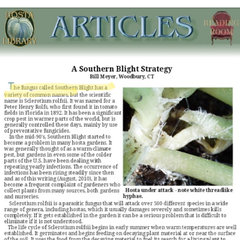
    According to the hostalibrary, it's not the same. Here's what they have to say about bacterial soft rot: Hosta library

    Do discard any affected plants. I'm not sure it would have helped when I got the rhhozoctonia root rot, but I didn't do it and it killed about 90% of my potted hosta.

    bkay


    MadPlanter1 zone 5 thanked bkay2000
  • 6 years ago

    From what I've read, the bacteria usually get into the roots, and then it's hopeless. So far all mine has been in leaves and petioles. It's caused by Erwinia bacteria. They basically excrete enzymes and digest the plant. There's not as much as I thought, and the plants, except for Journey's End and Goodness Gracious, are nowhere near each other. Maybe it was in the mulch?


    Phyton 35 is expensive, about $90.00 a liter, but that makes 100 to 200 gallons. It's going to take a week to get it. So I'm using a bleach spray for now.


    Today I dug up Shade Fanfare. I was going to dump it, but the roots looked fine. All the damage was in the leaves. It got the same bleach soak as JE plus any affected leaves removed. They're both potted up and isolated in a fairly sunny spot. Photos taken but not downloaded yet.


    So, now it's wait and see. I limbed up couple trees to get more sun on the shadier bed . Since it isn't spreading from plant to plant, I'll wait and see what happens.


    Bkay, so sad about your hostas. So you had to trash almost everything?

  • 6 years ago
    last modified: 6 years ago

    today when I did a search I saw several edu references with disease names in parentheses as if they're equivalent..even the first sentence in this hosta library article confuses me Lol..the bacteria mentioned here is different..it seems all of these "common names" are bad news..this pic doesn't have the brownish orange beads? seeds? I've seen on other Southern blight pics..

    MadPlanter1 zone 5 thanked nicholsworth Z6 Indianapolis
  • 6 years ago

    Oh, I tried everything. I did the 10% bleach treatment on lots of them. I sprayed, I dunked and I sprayed again. I didn't dump them as soon as I should. By the end of the first season, I'd given up. I just watered them and waited for them to die.

    I had somewhere between 85 and 95 potted hosta, some I'd had for 15 or 20 years My only survivors were 2 So Sweets, Irish Luck, Squash Casserole, Blue Cadet, Blue Angel, Krossa Regal and Honey bells - 8 total survivors.

    That year, we had a warm January, so the hosta started coming up early. We had two weeks of freezing and cold rains in late February, so I put the hosta in the garage. All this time I've assumed it was because of them being in the dark, cold garage for two weeks.

    I just started buying hosta again last spring. I started with 3 common plants. They did fine, so I bought a couple when Hallson's closed last fall. This spring, the two I got from Chris and one of the ones I bought last spring looked terrible, as if they needed fertilizer. I tried everything, but it didn't change. We discussed it here when I supposed the problem might be the potting soil I had made four years ago. I finally dumped one of the hosta I bought last spring. The roots looked weird, but it had some white ones, so I repotted it in commercial potting soil.

    Then a few days later I looked on Hallson's forum where I posted photos when I was trying to figure out what was wrong the first time I had the rot. They looked exactly the same.

    Now, I think it must have been the homemade potting soil.

    It's interesting what happened with the rest of the potting soil. Before I thought it was a problem, I decided to use it up on potted annuals. The Impatiens look great, as do the begonias, but the petunias had to be tossed, pots and all.

    bkay

    MadPlanter1 zone 5 thanked bkay2000
  • 6 years ago
    last modified: 6 years ago

    Nicholsworth, they're two very different diseases. Southern Blight is a fungus. Bacterial soft rot is the hosta version of flesh eating bacteria. Both of them can kill a mature hosta in a week. I'm just lucky mine has (so far) stayed out of the roots.

    The Phyton 35 was $103.00 with shipping, but if it's as good at killing Erwinia as they claim worth every penny. Our weather isn't helping matters. Temps in the nineties, high humidity, and a chance of rain, perfect growing conditions for BSR. I noticed Earth Angel has quite a bit of damage. Dread digging up a giant hosta, but it's on the dig and bleach list tomorrow.


    Bkay, you must be devastated. My hostas are almost like pets. Losing one or two is bad enough. I can't imagine how it felt to lose almost everything.

  • 6 years ago

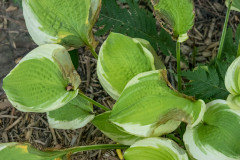
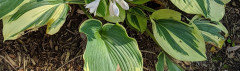
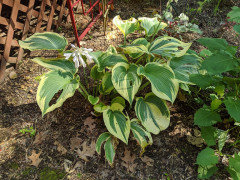
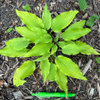
    Here's Shade Fanfare and BSR.


  • 6 years ago

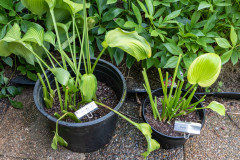
    Journey's End and Shade Fanfare after they spent an hour in a 20% bleach solution. I flipped them halfway through so the leaves got bleached, too. The bacteria seem to like white edged leaves. On Journey's End they went for the petioles.


  • 6 years ago

    What a freaking nightmare Madplanter! I think i would have thrown up my arms and just cried!! I hope your efforts save some of the affected plants.....what an unexpected situation to have to deal with in this awful heat!!! Good luck! Keep us posted!

    debra

    MadPlanter1 zone 5 thanked djacob Z6a SE WI
  • 6 years ago
    last modified: 6 years ago

    MadPlanter1..I hope your hostas recover..I don't have much experience with disease..one Southern blight (or crown rot or BSR? not sure)..and one HVX..both were ripped out and thrown away..a widespread problem would be so sad..

    MadPlanter1 zone 5 thanked nicholsworth Z6 Indianapolis
  • 6 years ago

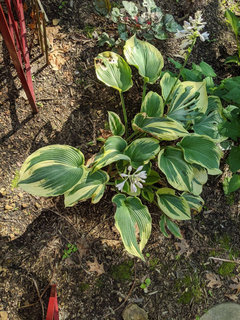
    I had something like that attack my Earth Angel last year. Parts of leaves and some petioles completely mush and smelled bad. Was it dead fish? Possibly. I removed affected parts and treated the whole area with Serenade. It's a strain of Bacillus subtilis and should be safe to use around everything. Erwinia is listed on the label (as is Sclerotinia). Will it work on this particular species? Possibly. The plant and then the disease came back this year but hasn't spread. Treated again with Serenade (early May?) and the plant didn't die but didn't seem completely cured either. Then I treated with Southern Ag Garden Friendly Fungicide - Bacillus amyloliquefaciens strain D747 (over a month ago). That seems to have done the trick, but the slugs really like this (and only this) plant in my garden this year. For now, I'm letting it be and sort of keeping it on the dry side. Only $26 a pint and you use 1 tsp/gallon.

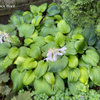
    I went out and took a closer look. There are some dried damaged leaves and a couple leaves showing fresh signs and one small petiole wilted. Probably after the day of thunderstorms three days ago. And yes it does smell like dead fish. I took a couple of pics. You can see the fresh rot at 8:30 and 4:00 from the lower flower.


    MadPlanter1 zone 5 thanked steve duggins(Z6a) - Central Ohio
  • 6 years ago

    It sure looks like the same stuff. My Earth Angel was full of it, so maybe EA is particularly susceptible to BSR. As I went through the hostas, there were a lot where it got started and then died. I just thought it was a bad year for melting edges. Between the freeze damage in April and the sudden change from cool and wet to very hot I expected to see damaged leaves.


    Thanks for the chemical advice. The Phyton 35 is on order, but if that doesn't work, it's nice to have a backup. If yours persists, maybe you could try the digging, washing, soaking in Erwinia killer, and moving routine. From what I've read, BSR is like HVX. Once it's in the soil you shouldn't plant another hosta there for several years. Almost everyone said to just get rid of an infected plant before it spreads. (sigh)

  • 6 years ago

    Um, soil is a live system. I would highly recommend looking into mycos, aerated compost teas and EM. Plants just like humans can get their immunity boosted. Also enzyme powder from kelp4less is good at cleaning soil and roots.

    https://www.emrojapan.com/

    Sorry to hear about your trouble. My hostas are like my family too so it hurts.

    MadPlanter1 zone 5 thanked lindalana 5b Chicago
  • 6 years ago

    Yes, I'll have to read up on those. The Bacillus strains I mentioned are microorganisms that feed on the pathogens. So they should stick around as long as they have something to eat. I take a probiotic with a strain of Bacillus subtilis daily.

    MadPlanter1 zone 5 thanked steve duggins(Z6a) - Central Ohio