Software
Houzz Logo Print
eah03

Advice for DIY sod project in CO

6 years ago
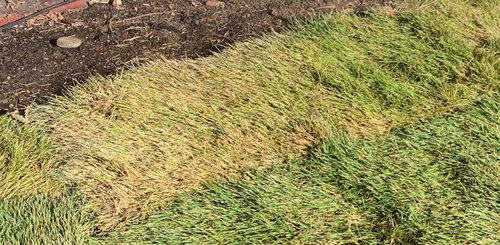
We just laid approx 250 sq ft of sod (a bluegrass mix) in Denver. Its terribly hot & dry (high 90s) and knew it would be a challenge, but weren’t able to tackle the project earlier.

One section of the sod gets full eastern sun until about 1pm, one section gets full western sun from 1pm til 5pm- and a small section gets full sun from 10am til 4pm.

I think our application was fairly well executed- heavy tilling & supplementing with peat and better soil, staggered pattern lay etc. But having never done this, l don’t know that I’d recognize the difference in not great mid-summer sod that should green up- and terrible sod that probably won’t make it.

About half of the strips were very dry and pale green/yellowing. We laid them anyway & have been watering like crazy at the nursery’s recommendation.

My questions are:

-will sod that looks like this when laid green up with proper care, or is it too far gone?

-if it can be revived, how soon should we expect to see improvement?

-what kind of watering regimen should we try for the next 2 weeks? weather looks to be dry & in the high 90s for the foreseeable future. any other efforts that might help give this sod a fighting chance?

I was told the grass should be damp 24/7 for the first 2 weeks (in 99 degree CO full sun, water evaporates almost immediately). Some folks have suggested multiple short watering sessions, others have said fewer long soak sessions.

Grateful for any feedback/advice!

Comments (4)

  • 6 years ago

    Yikes!

    I think our application was fairly well executed- heavy tilling & supplementing with peat and better soil,...

    Ummmm, that's not how we do it. You likely read that in a magazine or newspaper, or possibly at the Scott's website, but you should not have seen that in a lawn forum. Tilling was the worst thing you could have done. You might have already noticed that you sink into the fluffy tilled soil when you walk on it. When you do deep rototilling the tiller hits rocks, roots, pipes, dry spots, and dense spots as well as soft spots and damp spots. The tiller bucks up when the blades hit something hard and dig in when they hit something soft. Now picture the underground profile of the untilled ground. It's a rolling hill terrain with deep spots and high spots. Then you leveled the surface on top. What you have now is an uneven layer of fluffy soil and a rolling, dense subsurface. As the fluffy soil settles, it will settle to match the uneven profile of the uneven subsurface resulting in a bumpier and bumpier level at the surface. The fluffy soil can take 3 full years to finally settle into a permanent structure. Every time you mow you'll feel the impact of the original tilling.

    Peat was unnecessary, but since you mentioned it, you may have raised the ire of the anti-peat crowd.

    Better soil was also unnecessary unless you were working with the most horrible, slimy subsoil. Your old soil could have been revived fairly easily. Now this new soil will need to be revived, because no soil is perfect until you make it perfect with soil testing and apps of the nutrients and micronutrients needed in the new soil. Beyond whether the new soil was better or not, new soil changed your drainage...unless you removed some old soil first. The worst thing that happens from adding more soil is the drainage reverses flow and instead of draining water away from the house, water is dammed up and backs into the house or basement.

    Enough about that. As for watering new sod, light watering 3x per day, breakfast, lunch, and dinner, is much preferred to deep watering for new sod. All you have to do is moisten the sod and the top 1/8-inch of soil under the sod. If the soil ever gets mushy, that's waaaaaay too much water. You'll have to experiment a little but 5, 10, or at most 20 minutes would be all the water it needs now. The time range depends on your sprinkler type. Some are much higher flow than others. An oscillator might take 20 minutes while some inground systems would flood the area in that time. Once the sod is established, you can back off on the watering frequency and go up on the duration of the cycle. Eventually (next summer) you'll be watering deeply once a week with temps in the 90s.

  • 6 years ago

    aw, man- i hope we didnt ruin things with the soil prep. that method was recommended to us by the guy who sold us the sod, so we followed it best we could. more backstory- the areas we sodded were large dead zones that previously housed enormous old juniper bushes we removed a year ago. nothing has grown in their space since- not even weeds. tilling was the wrong word- we actually used shovels to deep
    turn & mix in top soil from other parts of my yard along with a little lime- as well as some peat. i guess time will tell.

    really appreciate the watering recs/strategy. that is a lot less than i am watering now (7-8 times daily for 8-12 mins) but the surface always feels dry in as few as 15 mins after a 10 minute watering session, so i’ve been concerned its not enough. sounds like i should pull way back from that routine!

    how soon will i know if this is not working- or how soon should i expect to see the grass color improve if it is? im expecting a mighty high water bill in CO where even normal watering costs a fortune & im happy to make the investment, but not keen to rack up several $500+ bills if its become a lost cause.

    Thanks again!

  • 6 years ago

    eah03, please message me. You can do so by clicking on my profile and then the "message" tab in the upper right corner. You have received some information of dubious value :-)

  • 6 years ago
    last modified: 6 years ago

    "You have received some information of dubious value :-)"

    You are about to receive information of dubious value from an untrained person who has no knowledge of soil chemistry and who admits this when pressed after making serious errors. She's unwilling and unable to face criticism in a public forum due to her lack of knowledge and simple inability to defend her own factual statements with so much as a basic reference. Buyer beware.


    Yeah, tilling, peat, and new soil were a bad move and it's going to be tough to recover from, and blindly mixing in lime was also not the best of ideas. It's wise to get a soil test.

    What's done is done and nothing can be done to change it, so it's really not up for discussion at this point, so it hardly matters.

    In your locale, the color is probably going to suffer a bit due to the liming reacting with the soil, and the new sod not having the root systems to deal wtih all this at once. However, good news, just keep watering.

    Lime doesn't do long-term damage to lawns and they really don't care about it. Low pH would be a more problematic situation, so that's good. But color will suffer for quite some time--months, potentially.

    Continue to water to keep the sod moist at all times for the first month (July not being a good time to add sod so let's extend the rooting time a bit and keep the soil a bit moister than usual). We're courting some fungal issues here, but we don't have too much choice.

    If the weather breaks and gets cooler, you can back off watering to "damp" and I'd suggest you do so.

    Once the sod roots and greens up fully and growth resumes in full--about a month--then back off to damp. That will probably be every other day watering for about 2 weeks or so, then every third day for the rest of the season.

Sponsored
Custom Home Works
Average rating: 4.6 out of 5 stars10 Reviews
Franklin County's Award-Winning Design, Build and Remodeling Expert