Software
Houzz Logo Print
lucienalta

Kitchen Backsplash, how hard can it be?

6 years ago
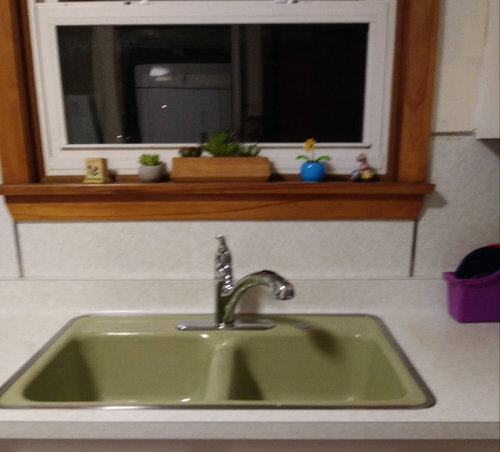
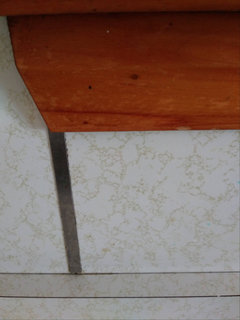
I've got this retro backsplash, complete with metal edging that I hate. Does anyone have any recommendations on how I can remove the backsplash along with the metal edging? And, what is behind it? I am female, 80, so you will have to talk real slow! Lucie


Comments (14)

  • 6 years ago

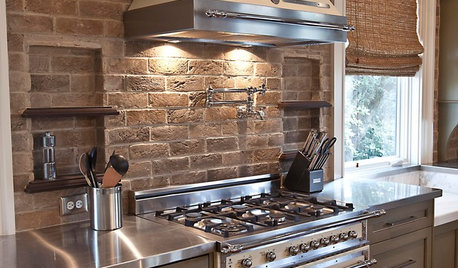
    Your second picture is of the counter. Are you wanting to remove the counter laminate and trim or the backsplash (the part on the wall)? Or both? The backsplash is probably glued to the sheetrock wall and removing it will probably leave old glue or remove sheetrock surface. The counter edge can be removed with prybar and hammer. The plastic laminate surface is glued on to either plywood or particle board and usually can be peeled up as the old glue has gotten brittle. However it may not. You'll have to remove the sink. Depending what you intend to do, the whole counter, including the wood, can be pulled up with hammer and prybar. It's probably nailed to the cabinets below.

    Some people would love to have 60s "boomerang" laminate counters like yours. Very in.

    lucienalta thanked Seabornman
  • 6 years ago

    Okay, I see what you are asking. There is laminate on the wall that matches your countertop. (Or maybe it is Masonite? Is it about 3/16” thick?) It has metal strips between the sections. Is there a triangular piece at the bottom? If there is then probably the backsplash material ends there. It may go below the countertop, though, which makes things more difficult. No matter which it is, it is probably glued to the wall.

    lucienalta thanked mainenell
  • 6 years ago

    What do you want to do when you get it off? Tile? Paint? Paint would be the easiest if it is Masonite. (Might even be able to do it on old laminate with the right primer.) I have painted the thin Masonite in a couple of my apartments with excellent results. Begin by scuffing the surface with 100 or 120 or so grit sandpaper. I then usually apply a very thin bead of caulking and smooth it on each side of the metal strip. Next, use an excellent bonding primer. An oil based primer (zinnzer?) or I think I used Gripper. Let cure for 24 hours before applying your top coat. I use a Satin finish, but a semi gloss would also look good. A 4” foam roller will be perfect for that small area.

    lucienalta thanked mainenell
  • 6 years ago

    To take the metal strips off I have shortened them to install new countertop using a chisel and file. The pieces are H and J shaped, going behind the material. If you were to take off just the front then there would be a sharp edge and a terrible looking seam. You really can’t take the metal out without also taking off the Masonite. If you take off the Masonite the glue will take part of the substrate with it. You will need to do drywall repair before you paint or tile.

    lucienalta thanked mainenell
  • 6 years ago
    last modified: 6 years ago

    Thanks everyone. The second picture was from an article I researched on this subject; it is not of my sink/counter. Mainenell, there is no triangular piece at the bottom. I think this is old laminate and not Masonite; what is the best primer?


  • 6 years ago

    Definitely matching laminate. For caulking use a better quality PAINTABLE. suggest one for window and door trim because it will bond well to all materials and maintain its flexibility for longer. As for primer, I think the zinnser (sp?) products bond well. Either the oil based or shellac based. A latex based I think is less likely to bond well.

  • 6 years ago
    last modified: 6 years ago

    Still Googling...would applying smart tile over laminate backsplash work? I think real slow so I need to see video that explains step by step instructions. Peel and Stick Smart Tiles for Backsplash: Interlocking Tiles

  • 6 years ago

    I will go with your painting suggestions. Is caulking on either side of metal strip to hide a bump?

  • 6 years ago

    No. The bump will be there still. It helps the paint not crack at the joint. The metal covers the joint between two pieces. But metal expands and contracts with cold and heat differently than the laminate (which probably doesn’t expand and contract at all) It also will fill any void that is between the metal and laminate. You will also want to make sure the caulk is water soluble.

  • 6 years ago

    That will make smoothing it easy and cleanup easy.

  • 6 years ago

    This would be a good caulk to use. https://www.homedepot.com/p/DAP-Dynaflex-Ultra-10-1-oz-White-Advanced-Exterior-Window-Door-and-Siding-Sealant-18211/302949855. If you could get it in a smaller tube it would be easier to use I think, but it might not come in a smaller tube. You can smooth it with your finger. You are just basically filling any space that is between the metal and laminate. You aren’t using it to try to hide the metal or eliminate that bump.

    lucienalta thanked mainenell
  • 6 years ago

    I am good with the size of the caulk and am ordering today, online. I think I will be needing that for around my windows (https://www.houzz.com/discussions/5984353/caulking-around-interior-windows). Keeping in mind...I am female, 80, and this is my DIY project. Do I paint over the caulk and metal?

  • 6 years ago

    Yes.

    lucienalta thanked mainenell
Sponsored
J.Holderby - Renovations
Average rating: 5 out of 5 stars4 Reviews
Franklin County's Leading General Contractors - 2X Best of Houzz!