Software
Houzz Logo Print
djacobz568sewi

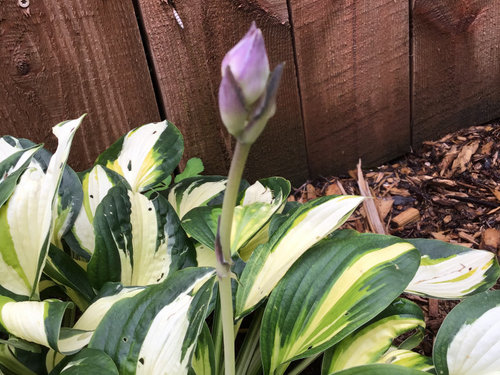
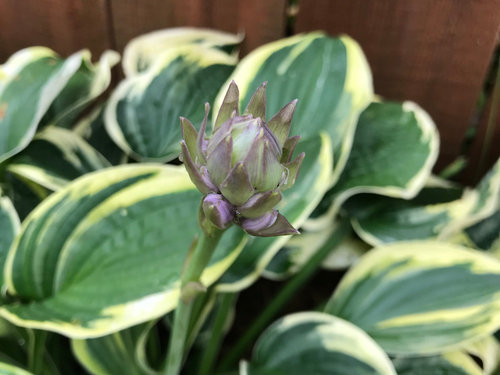
Now, Vulcan sends up a new flower stalk too!

5 years ago
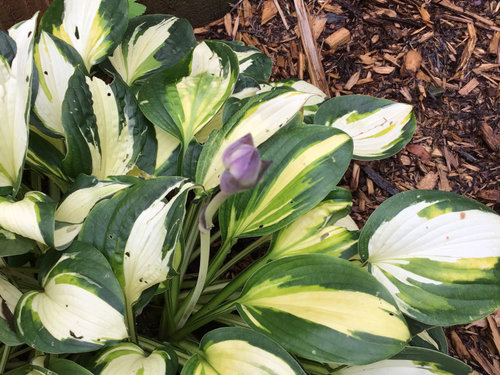
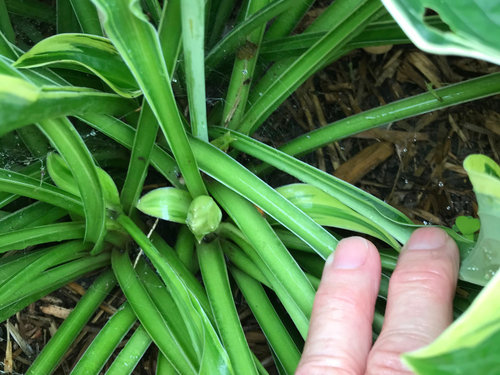
I decided to make this a new post rather than add onto my previous post about Wide Brim several days ago. I wanted to make sure the post would be seen. So in looking out my kitchen window this morning, I have direct eyesight of Vulcan. I could not believe this hosta was also sending up a new flower stalk as well as Wide Brim......they are located in the same bed along my neighbors fence and held in place by a small retaining wall of lannon stone due to the drop in the ground between our yards. Both hostas are in tight spaces and I wonder if this has something to do with this phenomenon. In addition, while checking Wide Brim, I saw another flower head coming up.

debra


Wide Brim


Comments (14)

  • 5 years ago

    There’s a possibility that the wall could be retaining heat. Even though the wall is never in sun, I know the stones heat up because I have seen a leaf burn where it touches the stone. I know the large stones in a pathway get warm, the cats love to lay on them in the late afternoon when they’re no longer in the sun. It’s a curiosity to me and it’s interesting to hear what others think. Thanks for your input.

    debra

  • 5 years ago

    Well, according to this, hostas can be rebloomers:

    http://www.hostalists.org/hosta_list_rebh.php

    As for shorter scapes, daylilies tend to rebloom on shorter scapes, so it doesn't seem unusual, except, you know, that it's a hosta instead of a daylily.

    djacob Z6a SE WI thanked BlueberryBundtcake - 6a/5b MA
  • 5 years ago

    Thanks, Blueberry. I think hostas are distantly related to lilies, so that is a cool observation you made.

    djacob Z6a SE WI thanked undertheoaksgardener7b
  • 5 years ago

    Yes, blueberry, I was aware of that Rawson list and checked it first. Neither Wide Brim nor Vulcan are listed. But he said he had never seen a true rebloom from the same scape and suggested repeat bloom would be a better term. I am interested in utog’s observations that hostas and day lilies are distantly related. I am going to read and see what I can discover. :-)

    debra

  • 5 years ago

    "I think hostas are distantly related to lilies"

    Very distantly related!!

    djacob Z6a SE WI thanked gardengal48 (PNW Z8/9)
  • 5 years ago

    Debra- George Schmid's book goes into that lily (or not) connection. At the HL, go to part 1 and scroll down to read:

    OBTW, "copy and paste" just jammed all the words together, so be sure to go to the HL to see it laid out where it makes more sense.

    -Babka


    "Below the rank of subclass Liliidae, two differing major viewpoints for classifications exist for the genus Hosta, one in the order of Liliales based on its classic position in the Lily Family and the other in the order of Asparagales based on more recent molecular investigations: [Hosta under Liliales] [Hosta under Asparagales] Order: Liliales Order: Asparagales Family: Hostaceae (Hosta Family)* Family: Hostaceae (Hosta Family) Genus: Hosta Genus: Hosta Hosta species Hosta species *) In the Order: Liliales some botanists still maintain the genus Hosta in the family Liliaceae (Lily Family); explanation: In the above, the order Liliales was once considered one of the largest groups of monocots that included the genus Hosta. However, based on both molecular and morphological evidence, the group has been redefined to exclude the order Asparagales (including agaves, aloes, onions, daylilies, hostas), Dioscorales (including bat flower, arrow root, air potatoes) and Iridales (including the iris family) so the order Liliales is now a much smaller group and Hosta has been shifted to Asparagales."

    djacob Z6a SE WI thanked Babka NorCal 9b
  • 5 years ago

    Babka, thanks! Funny how a fasciated scape and that type of growth can look so much like agave. I have a picture somewhere...

    djacob Z6a SE WI thanked undertheoaksgardener7b
  • 5 years ago

    I did notice that neither cultivar was on the list, but I took it more as a statement that hostas can be capable of blooming more than once in a season. Maybe it's just possible but not common in other cultivars? Get the perfect weather conditions and you get lucky?

    Rebloom vs. repeat bloom, to my non-botanist, non-horticulturist mind, are essentially the same thing. I've always referred to the second set of scapes from a Stella d'Oro daylily as reblooms, though I suppose they should also be called repeat blooms by Mr. Schmid's definition.

    In terms of taxonomy, I guess a lot of plants have gotten thrown out of the uber exclusive Liliales order ... and ended up in Asparagales. Plantain lilies (Hosta) and daylilies (Hemerocallis) both got kicked out ... they just got to keep their common names to confuse people into thinking they might still be lilies.

    djacob Z6a SE WI thanked BlueberryBundtcake - 6a/5b MA
  • 5 years ago

    Its all just a crazy 2020 thing.

    djacob Z6a SE WI thanked beverlymnz4
  • 5 years ago

    Babka, you have a wealth of information!!! I will check out the info you refer to in the HL.

    Blueberry, I think you are correct, maybe any hosta can send up a new flower given whatever conditions have made mine do it......as beverly said, it’s all just a crazy thing! :-)

    debra

  • 5 years ago

    Debra-

    I bought his $50 coffee table book, back when I thirsted for ANYTHING about hostas, and read some, and it was a bit (way!) overwhelming. Very detailed about EVERYTHING hosta, from flowers to roots. I donated it.

    But the HL has it right there and you can move around the chapters until your head spins.

    The man just died recently but he left us with a wealth of research and knowledge. Trying to understand it all comes next. Take your time. ;-)

    -Babka

    djacob Z6a SE WI thanked Babka NorCal 9b
  • 5 years ago
    last modified: 5 years ago

    It’s pretty common for some varieties to bloom out of its usual bloom period. Now even more so with sudden temperature fluctuations. A cool stretch in weather will often trigger growth. It has to do with vigor and stored energies the plant has accumulated.

    many first year seedlings will bloom when they have the energy. They have yet to experience dormancy, temperature and a photoperiod.

    a common technique in breeding is to force a plant to bloom early. Bring it indoors in early spring to break dormancy and thus encouraging it to bloom early. I’ve notice with some varieties this really takes a toll on their energy reserves. They look tired and want to sleep. Others will put out new eyes and start new growth.


    and likewise to force an early bloomer to bloom late one has to cut the scape fertilize heavily and give it lots of sun and water. Some varieties will ablige if they are vigorous.

    djacob Z6a SE WI thanked hosta_maker
  • 5 years ago

    Babka, I have already stumbled upon Schmid’s book on the HL. I printed out chapter 4 (?) on Petioles and Leaves which I find extremely helpful in study of my hostas and helping me possibly ID NOIDS, my or ID others NOIDS.

    I am really sad to hear that Schmid died recently...... I have seen his name in many places in the hosta world. We owe so much to him and others who were the “early” hosta people.

    hosta_maker you are also a wealth of information! When you make hostas, I suppose you must know these things. In my earlier post on Wide Brim, Ken mentioned about Eric Smith......is he the one that developed so many fragrant hostas?

    Thanks to all for your information!

    debra