Software
Houzz Logo Print
sywells25

Problems with Bay Laurel

5 years ago
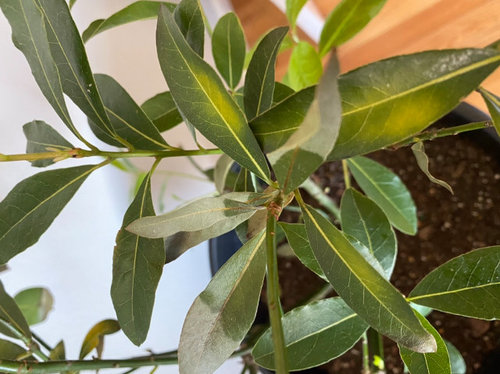
My bay laurel isn’t doing well. Late December I discovered that it was infested with scale. I began spraying it with a neem oil solution on a weekly basis and cleaning the leaves with alcohol in between. Most of the time I covered the soil with plastic prior to drenching the plant with the neem oil solution (neem oil, Castile soap and water). I believe I won the war about 2 weeks ago, despite a few small skirmishes erupting periodically.


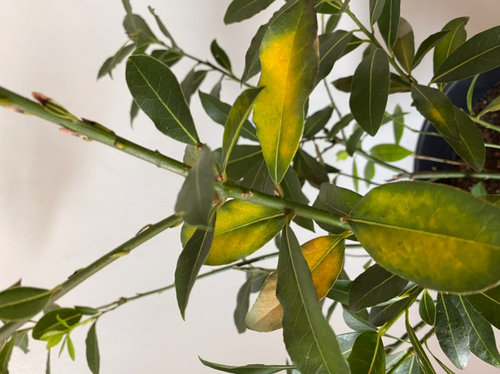
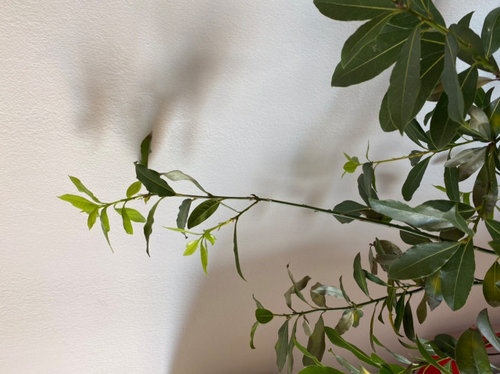
For the most part, the plant seemed to handle treatment well. During the process, I noticed that a few of the leaves were drying up completely, starting at the tip or side of the leaf, then falling off, but not enough to be concerning (at the time). That’s still happening as the pictures show. In addition to that, about a week ago, other leaves began turning yellow and falling off. I haven’t been overwatering (if anything, I’ve probably erred on the side of underwatering) and there’s no indication that the plant is root bound. Also, as you can see, there’s some amount of new growth. I don’t know much about bay laurel — is there any possibility that the bare stems will push out more leaves? If not, I’d like to prune it to improve its appearance. Also, whether I prune it or not, should I give it a weak dose of fertilizer since it’s actively growing? What do you think the problem(s) might be? Thanks!


Comments (22)

  • 5 years ago

    Nobody's really been along to help, so...

    Since you've reported systemic problems (scale) and a recent war (Neem oil and Castile soap solution in water), this may just be stressed leaves and a stressed plant. It's not looking like it's potbound (which tends to hit the lower leaves first) or any other disease at this time.


    (Side note: I'm actually not a fan of Castile soap in water; if actual Castile, the pH is close to 9. If the fake American castile, it's at least 8.5 or so. I actually lean toward use of tiny amounts of surfactants [a dishwashing liquid with minimal additives or fragrances; 1/2 to 1 tsp in 1 gallon water equivalent; 1-3 drops in most sprays] in this case to pull the pH toward neutral in solution to avoid stressing the leaf. We've had bitter arguments about this, but I stand my ground; no lye-based soaps on leaves, please, unless you're shifting the pH for a specific reason. Scale does not care about the pH particularly; it's killed by the action of the soap or surfactant on its spiracles. Source: I'm a soap maker and have been for decades, and use surfactants as part of this. While the accusation is that I don't understand the chemistry...yes. Yes, I do).


    If you're giving the plant enough light to continue growth, then by all means, feed it lightly. I have several I'm feeding moderately in January and February because they're under bright lights and growing like mad.

    Since there's obvious new growth there, a gentle (one quarter rate) feeding won't be taken amiss. I just had to dump some nitrogen and iron into two tropical hibiscus that are getting a little pale under their lights myself.

    sandy (z5b nys) thanked User
  • 5 years ago

    Thanks morpheus! I have to confess that I was beginning to feel a tiny bit abandoned.... I’m not certain it’s getting sufficient light so I will move it to a brighter spot which, unfortunately, given our north/east exposure, won’t be super bright. I moved the plant away from the windows during its quarantine/treatment period so it definitely wasn’t getting enough sun then.


    Interesting info about the Castile soap. It’s dr bonner’s baby soap. I assumed if it was gentle enough for babies it wouldn’t damage the plant. That’s an easy fix and good to know since I plan to use the neem oil solution as a prophylactic going forward (once the plant recovers, of course). Scale is insidious.


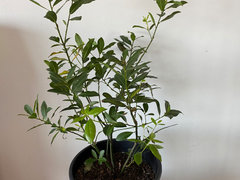
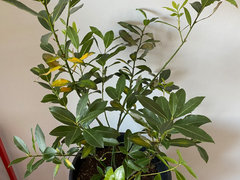
    Any advice on pruning? It has a lot of bare stems. I was so annoyed that my pics posted sideways I didn’t notice until now that the 4th photo, a full view of the plant, didn’t post at all. I’ve added some here. It’s about 2.5’ tall. Will new leaves develop on the stems? I think the answer might be “yes” based on the appearance of the little (now half dry) leaves that emerged along the stem. They’re visible in the middle picture in my initial post. I say “might”, because they’ve been there since December and except for the tips drying out recently, they haven’t changed much. Should I prune to achieve a fuller, more balanced shape and use the cuttings to try to propagate new plants (and for soups and stews)? Thanks again!


  • 5 years ago

    If it’s pushing out new growth in winter I’d suspect its being kept too warm. I also think it’s probably not getting enough light. As soon as possible in spring I’d try and get it back outdoors again. Once it’s outside it can take hard pruning. Btw Bay cuttings are not easy. I’d just cook with them.

    sandy (z5b nys) thanked floral_uk z.8/9 SW UK
  • 5 years ago

    Yeah, it looks a little light-starved and that can also cause yellowing leaves (and dropped leaves). Artificial light is also just fine, so if you drop an LED light on the thing, that will certainly help (I wouldn't bother with an incandescent as they're too inefficient, but a fluorescent would be fine, too).

    Hold off on pruning until that's back outside and it's at least spring. Right now, it's stressed. But yes, post-pruning, it should branch and fill in, and you can prune it pretty hard. Most sources online state up to about a third, but that's kind of leggy and could take a harder pruning than that.

    sandy (z5b nys) thanked User
  • 5 years ago

    Thanks so much. Seems counterintuitive that a Mediterranean plant would find a room that, on average, is about 72 degrees, too hot, but I guess it needs lower temps for dormancy. After all, it does get cold even in the South of France. I will move it to the sunniest/coolest location I can find and will supplement with artificial light.


    Yes Floral, I’ve read that Bay is difficult to propagate via cuttings. That said, I’m currently attempting to root cuttings taken from a cultivar called Little Ragu that I’d given to my brother. I had one as well, but it died last winter due to scale and some other pest. I really liked it, but have been unable to find a replacement so I thought I’d try. Wish me luck!


    One last question. Will adequate light enable the yellow leaves to revert? If not, and they’re going to fall of anyway, I’ll remove them so the plant can expend it’s energy elsewhere.

  • 5 years ago

    You can stall winter growth of Bay leaf by keeping it cool. You also do not need a lot of light if kept on the cool side. Weak winter growth also attracts various kinds of pests. Scale is one of them. A better, but a bit time consuming, way to deal with scales is to wipe the stems and leaves with tissue paper dipped in diluted alcohol (70% alcohol diluted with water 50-50). It removes and kills a lot of the eggs too. In general, go easy on watering Bay leaf. It likes to be on the dry side. Let the soil dry out a lot between watering. Young leaves will show signs of drooping - a good indication to water again.

    I would not worry about Castille soap being alkaline. In many places tap water has much alkalinity. Commercially available, OMRI listed Safer Insecticidal soap has a Ph of 10.6-10.8. So if that is approved as a pesticide you should have no problems. But at the end it is your choice.

    Some plants may be sensitive to soap. I have not found any except tender growths on plants can be sensitive. Obviously, dilute it well to specifications. Max for Safer is 5 tbsp per gallon. Dr. bronner is 3 tbsp per gallon. I limit Castille soap to between 1-2 tbsp per gallon. If you are using neem oil then soap is used to keep the oil emulsified. A few drops of soap should be sufficient. Use warm water and shake the container frequently keep the solution uniform.

    My bay leaf plant is at least 10 years old may be lot more - just do not remember. Gets a hard prune in summer and occasional pruning throughout the growing season. I prune one last time before bringing in.

    sandy (z5b nys) thanked tropicofcancer (6b SW-PA)
  • 5 years ago
    last modified: 5 years ago

    You can propagate by cuttings - it takes longer and not all will take. Use branches that hardened well but not yet woody. Bottom heat is beneficial especially if you are doing it in winter. Summer, I just do it outside under a humidity dome. I would say my success rate is a bit over 50-50. Bay grows suckers easily and often you can separate them with a bit of roots attached. Air layering is a near guaranteed method for propagating. I have done all three methods.

    I have been looking for Ragu - dwarf variety. May be I will be more serious this Summer and just get it.

    The yellow leaves will not revert. They will fall off or you prune them if you like.

    sandy (z5b nys) thanked tropicofcancer (6b SW-PA)
  • 5 years ago

    "One last question. Will adequate light enable the yellow leaves to revert? If not, and they’re going to fall of anyway, I’ll remove them so the plant can expend it’s energy elsewhere."


    No, and you can remove them or let them drop if you want. For now, while they're still green, they're still probably adding more energy than they're removing. The shift of energy balance never really turns against the plant, it has to cork off the damage regardless.


    "would not worry about Castille soap being alkaline. In many places tap water has much alkalinity. Commercially available, OMRI listed Safer Insecticidal soap has a Ph of 10.6-10.8."


    That's why I'm not very happy with and dislike recommending Safer soaps, actually. :-) Just because they sell it doesn't make it a good product (note I didn't say it didn't work, just that I can do equally as well while staying closer to the natural pH of rainwater, which is 5.0 to 5.5 unless you live in Pennsylvania where a thunderstorm can be 3.8 to start with).

    Drinking water arguments don't apply here and involve completely different cations.

    sandy (z5b nys) thanked User
  • 5 years ago

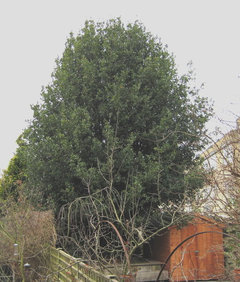
    Sandy, Bay grows all around my area and self seeds with abandon. Rest assured it isn’t fazed by cool winters. It will have a dormant period even in the Med. It isn’t a tropical plant and is evolved for distinct seasons. It’s currently very cold here (for us), below or around freezing for a few days. The Bays couldn't care less. This one was in my neighbour’s garden for many years but has been cut down now.


    For a small plant like yours it would be possible to remove scale by hand using baby wipes. It takes a while but it’s thorough and there’s no risk of harming the tree. It’s also helpful to put it under the shower and give it a good sloosh with your hands

  • 5 years ago

    Wow, floral, what a beauty.

    Tropicofcancer, why do you prune just before bringing your bay in for the winter? You should definitely get a Ragu if you can find one. It's a very attractive plant and the leaves are great for cooking.

    My takeaway, overall, is that the bay is a fairly resilient plant, that I haven't managed to kill it and that there are several reasonable options I could implement regarding its recovery and future health. Thanks all!

  • 5 years ago

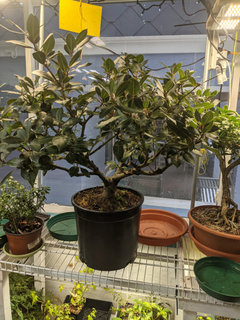
    Sandy: The reason for pruning before bringing in is simple - It is very dense and grows quite a bit each Summer. I want to keep it small and manageable indoors. I prune to keep it under about 2 ft - sort of like a bonsai. We get enough harvest for us and friends.Also I lightly prune most plants before bringing in so more light can penetrate the canopy and air circulation is better.

    Here is a pic taken today:

    sandy (z5b nys) thanked tropicofcancer (6b SW-PA)
  • 5 years ago

    Love it! What size is your pot? Do you root prune as well?

  • 5 years ago

    I'm amazed you can keep it indoors at all.
    The California bay laurel is currently budding and about to bloom in my area.


    Josh

  • 5 years ago

    The OP is growing Laurus nobilis in NYS, not Umbellularia californica in CA. Different plant. Different climate.


  • 5 years ago

    Thanks for clarifying on my behalf floral. I should have noted the botanical name at the outset. I must say, though, keeping these plants viable through winter has been a huge challenge (Sadly, this is the 4th over about 6 years). Now that I have a better understanding of what this plant needs, I'm confident that I'll be able to save this one.

  • 5 years ago

    I don’t know when you brought it indoors, Sandy, but possibly it could stay out longer than you think. They can take a light frost without harm. In the ground they can cope with -23f, less in a pot, of course. The less time they’re inside the better.

    sandy (z5b nys) thanked floral_uk z.8/9 SW UK
  • 5 years ago
    last modified: 5 years ago

    Floral are sure bay leaf can take -23F? That is zone 5 in US. Probably you meant +23F. Bay Laurel is listed as zone 8 plant in most places and that will be 10F minimum.

    I keep mine indoors on the cooler side < 60F, with less light and the soil on the dry side. But by March my plant porch will start being warmer and bay will start showing new growth.

    And I agree they can stay longer outdoors. They are also the last ones to be brought indoors in Fall and one the first ones to be outside in Spring. Along with olive, pomegranate, start jasmine, etc. It would have been nicer if I had a really cool porch at 35-50F for these plants.

    sandy (z5b nys) thanked tropicofcancer (6b SW-PA)
  • 5 years ago

    Floral, I was a little perplexed when I saw your comment because my recollection was that bay laurel's lowest hardiness zone was 8 as well. My bay laurel is in zone 7 and since we're on a high floor with a windy north-facing balcony, I assume it's more like zone 6. (Last year, I posted some questions about a larch I wanted to grow on the balcony. Within a month after placing the sapling there, virtually all of the branches had been stripped off by the wind.)


    Based on the info you and tropicofcancer have provided, it definitely seems that I've been taking it in too early. It goes inside when the temps reach the low 60s. Going forward, I will leave it outside until sometime in November/December depending on weather conditions. My brother keeps the Little Ragu he gave me cuttings from in his unheated basement -- I didn't see the plant, but the cuttings were very healthy so I assume the plant's happy.

    I've also been waiting too long to put it back outside. It can go back outside much, much earlier than I realized.


    Topicofcancer, does your pomegranate bear fruit? I'm jealous.


    Thanks so much. The bay is still dropping leaves, but the new growth seems healthy so I remain hopeful.

  • 5 years ago

    Yes. Sorry, -5c, +23f. It’s funny to hear it called ’bay leaf’. Makes it sound like a delicate little thing😉 They’re decent sized trees round here. I just hang a three foot branch in the kitchen for cooking. Once established they grow fast and can put on several feet in a season. The one on my allotment needs hard pruning every year to keep it within bounds. I once passed a giant bay tree being cut down and chipped. The smell was wonderful.

  • 5 years ago

    Sandy, I have two kinds of pomegranate: one is a dwarf mainly sought after for bonsai. Flowers and fruits well. Small fruits like ping-pong balls and very very tart. Looks pretty when it flowers. The other is an Angels something and produces large sweet fruits. Not many and not consistent either. Really it needs a cooler and not freezing location for the winter. Same with the olive. In last 10+ years I had it produced 4 olives one year. Thats it. But I am growing it as a bonsai and for that it serves well. I also have two dwarf olives that I acquired a few years back. They seem to doing well.

    I try to keep them outside well into Nov/Dec here. During snap freezes I just throw a plastic sheet to cover them.

  • 5 years ago

    Even I have a pomegranate. It doesn't fruit in PA, but does have very nice leaves. Of course, it's awfully young yet.