Software
Houzz Logo Print
khegrat

R19 Insulation vs R21 Insulation

5 years ago

Looking for information on insulation... in our building contract it has R 21 insulation on exterior walls but someone made a mistake and put in R 19. What is the difference? Will it make enough of a savings to have it replaced or just get a credit for the R 21? TIA

Comments (22)

  • PRO
    5 years ago

    What is someone's offer to rectify the situation? What does the local code require for where the R-21 insulation is suppose to be?

  • 5 years ago
    last modified: 5 years ago

    R-19 does not meet the energy code minimum for above-grade frame walls in all but the two warmest building climate zones in the US. So it is most likely that the home will not pass inspection if the error is pointed out to the authority having jurisdiction.


    There are on-line calculators, such as this one, that can calculate the differences in energy transfer. To translate those results into the differential costs of heating/cooling, you will need to know energy costs in your area. (And have a lot of patience to put it all together.)

  • 5 years ago

    We upgraded from R19 to R 21 based on another builders spec sheet and our builder was doing an apple to apples comparison. We know that it’s a condenser insulation and will be more energy efficient but I want to know if it’s worth ripping out and redoing? The company that installed it said they couldn’t get the R 21 for 5 weeks and I guess put in R 19. They want to give us 1500.00 for it but my husband is pushing for more then that.

  • 5 years ago
    last modified: 5 years ago

    The R value chart is just one of several ways to meet the building code energy conservation requirement. If the builder uses one of the other methods, it will be possible to upgrade the insulation elsewhere and achieve the same overall energy conservation goal.

    In other words, add a bit more insulation at the roof or the foundation.

    The reason to use the chart is if you intend to meet or exceed that higher standard anyway or for a partial renovation or addition.

    Another possibility is to substitute rock wool or cellulose if its available.

  • 5 years ago
    last modified: 5 years ago

    5 ways to comply with the energy conservation requirements of the 2015 IRC:

    1. N1102.1 (R402.1) General (Prescriptive) – Table N1102.1.2 (R402.1.2) “Insulation and Fenestration Requirements by Component”

    2. N1102.1.4 (R402.1.4) U-factor Alternative

    3. N1102.1.5 (R402.1.5) Total UA Alternative

    4. N1105 (R405) Simulated Performance Alternative (Performance) – performance software tools

    5. N1106 (R406) Energy Rating Index Compliance Alternative – Energy Rating Index (ERI) analysis (required in some locations and increasingly used as a marketing advantage)

    These provisions are sometimes amended by a state or municipality.

  • 5 years ago

    If the siding hasn't been installed on the exterior yet you can have them put 1/2 inch thick EPS foam over the house wrap as an option, but Require them to use TYPE 2 high density 20PSI foam and NOT Type 1 found at most big box home improvement stores, you want TYPE 2. This would give you an additional R2.25 for a total R value of 21.25.

    this would also cover studs and header and give you superior insulating performance. It may cost more than the $1500 they are offering you but they screwed up and they can eat the difference.

  • 5 years ago
    last modified: 5 years ago

    Exterior insulation is a great idea but the climate should be considered before making that decision. As usual, we don't know much about the house in question.

  • 5 years ago
    last modified: 5 years ago

    I rather doubt that the builder will run an independent energy performance analysis to justify increasing R values elsewhere.

    But, presuming that the R19 meets the prescriptive Code, that's a great approach to obtaining an overall better result by increasing the insulation elsewhere. The roof or attic is the most obvious place to up the RValue by adding insulation.

  • 5 years ago

    The difference in heat conductivity between R-19 and R-21 is about 1/2%, certainly not enough to justify a complete redo, IMO. If possible, add foam insulation, etc. as described above, take the $1500 offer, or negotiate for more, and focus on minimizing air leaks in the structure to let that insulation function at its best.

  • 5 years ago

    I had assumed that R-19 did not comply with the building code. That should be clarified.

  • 5 years ago

    The house is sided already and I know (what do I know really as this is all over my head) that they used a foam to seal the rooms (a fire stop foam I believe) haha my husband works for Hilti. We are not going to have them replace the insulation as the company they use said it is about a 4 week delay for it to come in and we are not willing to wait an extra month for our house to be done.

    Thanks for all you input!

  • 5 years ago

    Oh and house is in Ohio

  • 5 years ago

    Can you add some insulation at the roof?

  • 5 years ago

    Possibly...will talk to my builder.

  • 5 years ago

    "The roof or attic is the most obvious place to up the R Value by adding insulation." Why do people think this all the time? Yea I get it, because the ceiling temperature is higher so there is a higher temperature differential and more heat loss, but not with radiant floor heating. Anyway it doesn't matter, ceiling, walls or floor it's all about temp differential. Do you know why they put R19 in a 2 x 6 walls? Because that's all they can get in it! The only reason.

    Because the ceiling is warmer the differential will be higher. With R40 and a 60 degree temperature differential you would lose 1.5 btu's per square foot per hour, but if you increased insulation 50% to R60 you will lose 1 btu /sq.ft..

    A wall with R20 and a 50 degree differential as an average would lose 2.5 btu's/sq. ft. / hour but if increased it 50% to R30 in the walls the loss would be 1.67 btu's.

    You would save a little more energy adding an additional R10 to the walls as you did adding R20 to the ceiling for 1/2 the cost of the insulation.

    Now if we could only get windows that were R30, life would be better. The loss would jump from 16 btu's/sq. ft. to only 1.67 btu/sq.ft. and you could heat a home with a hair dryer. (almost).

  • 5 years ago

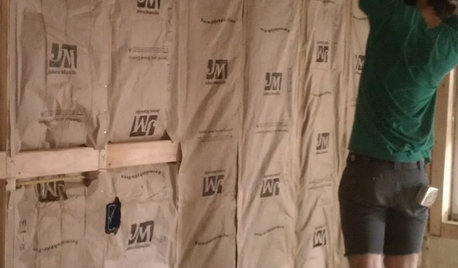
    R-21 is about 5-1/2" thick while R-19 is about 6-1/4" thick (yes, R-19 is thicker than R-21). Both are designed to go into a 2x6 framing. R21 is actually more like 15% more efficient than R19 because of the way it is manufactured. And I don't believe a word of "The company that installed it said they couldn’t get the R 21 for 5 weeks and put in R 19!" Your choice of how to handle it; I'd probably ask them to up their offer to cover both the difference in cost of materials plus the added energy costs over 20 years. But if R-19 doesn't meet code, they need to add some solid foam insulation somewhere to make up the difference.

  • 5 years ago

    "The roof or attic is the most obvious place to up the R Value by adding insulation." Why do people think this all the time?


    Perhaps as you go on to illustrate, it's hard to come up with any other place to do it practically in a house that's already, framed and sided.


  • PRO
    5 years ago

    In the municipalities in which we work, there is a mandatory insulation inspection prior to drywall. If the insulation R-value in the walls didn't meet code it would have been rejected and drywall work would not be allowed to commence. Not sure what inspections are like in the OP's locale.


    Insulation R-values are measured under controlled conditions in laboratory environments. Just like with cars, actual mileage may vary. In a real wall assembly installed by the typically insulation contractor, I don't think you'll see the calculated difference in thermal performance between R-19 and R-21.


    Air sealing and adding additional insulation in attics is a great way to improve performance and increase comfort.


    It may very well be the case that R-21 insulation won't be available in your market for 4+ weeks. Many construction materials in our area are available on an allocation basis and the price escalation keeps me up at night.

  • 5 years ago

    $1500 seems like a reasonable ask but hard to say without the square footage.

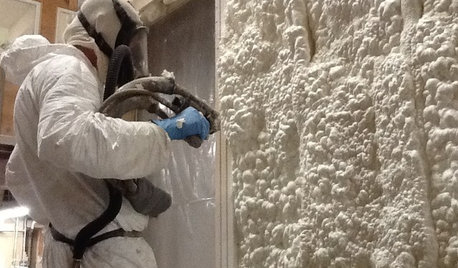
    The firestop foam is not a thermal insulating product. Probably works a little for air sealing.

    Another option besides money would be to ask for air sealing to help make up for the loss. This could be air tight drywall techniques that could probably still be done.

    Or , ask for energy rater to come in and recommend options. Perhaps a blower door test if not already prescribed. You can easily make up for the R-19/R-21 deficit with air sealing if not been addressed at this point.

    I am particularly OCD on this issue but I wouldn't rip out R-19 in this case. Heck, I think I might have just R-19 in my walls. It was a minor consideration in NC and with 1/2 inch foam to the exterior. And I have r-98 in my ceiling. My heating costs are about $150 a year with 3800 sqft in an inefficient layout - ie not rectangle - and with 10 ft ceilings. R-21 would probably have saved $5. The 15% difference is only in that one component of heat loss. Windows, air leaks, framing fraction, ceiling - all are large sources of heat loss. So overall 3% would be my guess.

  • PRO
    5 years ago

    R21 is better than R19. it is helpful on noise reductaion and energy efficient choice.

  • PRO
    3 years ago

    What should I do here R19 or, I'm leaning towards R21? Also wondering if building down the ceiling to create a flat 3-4' span at the top

    and just fill it with fiberglass would have any major advantages. Just added the gable vent, wasn't there for 45 years, same with a lot things in this house. It's an attached garage. No interior door to the house, so it's like an attached, detached garage lol, 23x21 interior dimension, left wall has shared wall and chimney to mudroom with pellet stove in the house. Thanks!

  • 3 years ago

    I always thought there was a reason Home Depot was better.....

    and I guess it doesn't take much to get a "PRO" label.