Software
Houzz Logo Print
yuvalvv

Dracaena Burley - questions & tips

5 years ago
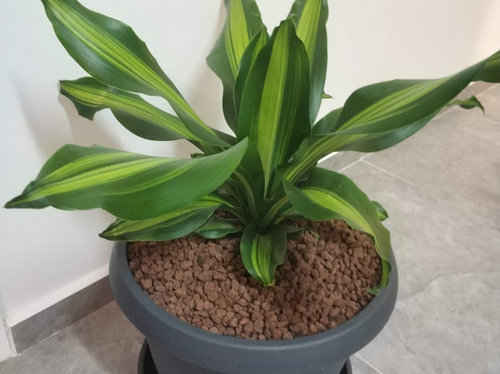
Hi everyone,
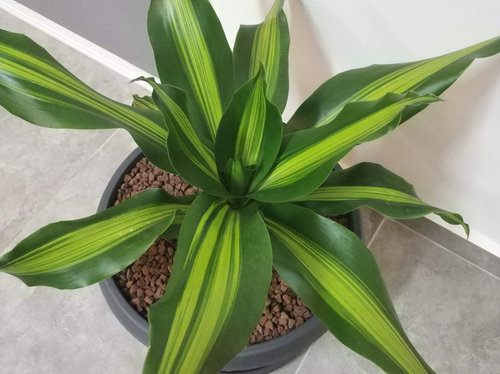
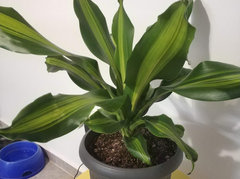
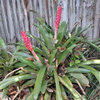
Got this Dracaena ("Burley"?) last week. The nursery I got it from advised on the (plastic) pot seen in the picture. Thing is, seeing pictures of similar Dracaenas, none of them are planted in such a large pot, and even the bigger ones are planted in much smaller pots? Plus, after realizing in retrospect the staff there were truly unprofessional (planted me a Sansevieria in a non-drainage pot, tried selling me heavy soil as a cactus soil), I'm starting to wonder if such a large pot is necessary for this Dracaena (not speaking of the room it takes).
I also see that in a lot of Dracaena Burley pictures, the leaves are more straight and not falling to the sides. What do you think?

And of course, any additional tips and guidance for a complete novice would be much appreciated!


Thanks!

Comments (10)

  • 5 years ago

    How large a pot can or should be depends in part on the size of the plantings root mass, but primarily on the physical characteristics of the grow medium. For example,

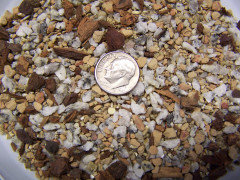
    if your plant was in this medium, planting it in a 55 gallon drum full of the medium wouldn't be a problem at all. On the other hand, if the medium being used tended toward remaining soggy for extended periods after a good watering, pot size becomes a critical choice; especially, as is the case with dracaena, the plant won't tolerate wet feet w/o serious complaint.

    There are also tricks that employ very simple science to allow growers to use passively (or actively) limit the amount of excess water a planting can hold, which can make a conspicuous difference in how much of its genetic potential your plant has opportunity to realize.

    Al

    Yuval thanked tapla (mid-Michigan, USDA z5b-6a)
  • 5 years ago
    last modified: 5 years ago

    I am no expert, but your plant looks very healthy and happy to me. I wouldn't worry about the leaves not being straight. Maybe your plant is just better.


    Are there drainage holes in the pot?

  • 5 years ago

    If you look on this page and scroll down, there are many links to some of the best posts by Tapla. Just as a spoiler, it is all about the soil mix and the drainage. Btw, what soil mix did you use? It looks very interesting.


    https://www.houzz.com/discussions/5570006/al-s-tapla-greatest-hits#n=16

    Yuval thanked Need2SeeGreen 10 (SoCal)
  • 5 years ago
    last modified: 5 years ago

    Thanks for all the replies!


    @tapla - very interesting, thank you. The soil (and this is for @need2seeGreen also) is a "regular" soil (I guess) from the nursery (with tuff on top) - I don't think it is a cactus/succulent or "light" soil. And yes, there are drainage holes in the pot. I'll read the posts by tapla, thanks!


    I'm still thinking getting it back to the nursery so they change the pot to a smaller (and perhaps more decorative) one. I have a cactus/succulent soil - should I also tell them to repot it with this soil, or leave it with the same soil?


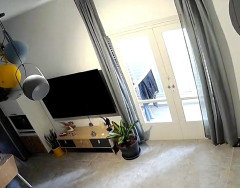
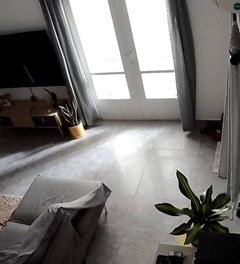
    Another question about light (this is a general question for all house plants) - the plant is getting light (not direct) from a north & east window (see picture below). Let's assume the light is not enough - will the plant benefit if I place it in the balcony for 3 days of the week so it gets much more light in these 3 days? Is this a good/bad practice?


  • 5 years ago
    last modified: 5 years ago

    Thank you for the detailed explanation!!


    I have another (hopefully) last question for this topic:

    I now see there's tuff on bottom of the pot (as well as on top). Is this something good/bad/doesn't matter?

  • 5 years ago

    If there's more than an inch or so, it will be detrimental.

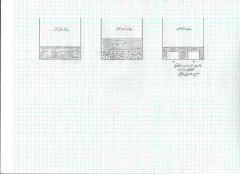
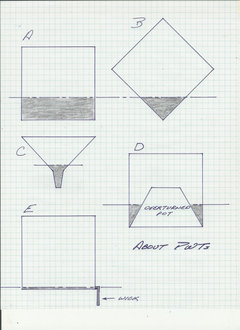
    The pots above are full of grow medium. The shaded area marked PWT (perched water table) is 3" tall in all 3 containers. A PWT is water that has an attraction to itself and to soil particles (cohesion + adhesion) greater than the force of gravity and won't drain; just like a sponge that might have stopped draining, but you can still wring out a couple of cups of water. That's the water that limits root function and sets the table for fungal root infections. Read about perched water here.

    If you shift attention to the middle image, you can see that a "drainage layer with particles more than 2.1x the size of the grow medium will cause the excess water to "perch" (like a bird on a wire) above the drainage layer. The first image shows a 3" deep PWT, leaving 7" of medium that's unsaturated at 'container capacity', which is a measure of water retention after a thorough soaking and the pot has just stopped draining. The middle image has a 2" "drainage layer" with 3" of grow medium 100% saturated with perched water sitting atop of the "drainage layer".

    If the tuff is mixed with soil so the soil column has continuity from top of column to bottom of pot, the tuff is technically ballast, which is a good thing (but there are much better choices than tuff as ballast). If continuity from top of soil column to bottom of pot is disrupted by the tuff as shown in the middle image above, it is a detriment.

    Turning attention to the image on the right with bricks serving as ballast, you can see that the bricks displace grow medium which would be filled with water at container capacity. Turn the bricks on edge and add 2 more, and you will have displaced almost ALL medium capable of holding perched water. The max ht of a PWT is constant for any given medium, so you can use ballast to displace up to 90% of the medium below the max ht of the PWT. Why this hasn't caught on with those struggling with muddy media amazes me because it represents a giant leap forward - next best thing to getting the grow medium right in the first place so there is no need to make special work-arounds to make it function acceptably. BTW - I used brick as an example, but empty plastic storage containers of an appropriate size and ht weigh nearly nothing and function exactly the same ..... unless you WANT the added weight to help prevent blow-overs for outdoor plants.

    Al

  • 5 years ago

    That is a truly great explanation. I doubt they put the tuff there properly, that's what they do to anyone taking the plant with a pot (plant the plant inside the pot, like a generic process). I will repot it and use cactus/succulent soil, w/o the tuff at the bottom.


    Thanks again!!

  • 5 years ago

    ..... still best to use ballast in the pot bottom to reduce the volume of of medium within the space that can potentially be occupied by perched water.

    An overturned plastic container about 4" tall and 2" less in diameter (so there is 1" or so between the wall of the ballast item and the pot wall) will confine all perched water to the reduced volume of medium between pot wall and ballast item. That will make a very large difference in how long the excess water remains in the medium after a thorough watering.

    It's good to consider what's printed on a bag of grow medium has little bearing on what's actually in the bag or how appropriate it is to the task the bag indicates it's intended for. The same holds true for fertilizers and a plethora of other tonics and magic solutions (think of all the "specialty" fertilizers out there, and Superthrive/SuperJive).

    Changing gears back to what I originally started on:

    Compare the amount of PW in D as opposed to A. Even just tipping your pot after watering as in B reduces the amount of PW a planting can hold ...... all the better if the drain hole is through the sidewall at the pot bottom so the hole is the lowest point on the pot when it's tipped.

    Best luck! Homework, if you're up for it (click link).

    Al

  • 5 years ago

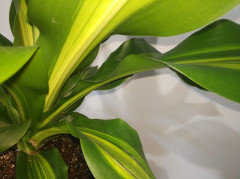
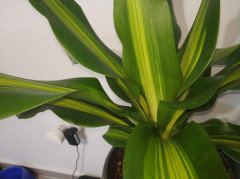
    Put all the great advice from this thread into action and repotted to a smaller pot with a cactus/succulent soil. I removed the old soil from the roots (lost some roots on the way obviously but I understand this is fine) and watered one day after repotting (soaked it until water came out of the holes and left it in the sink until it stopped draining). So far so good and the plant looks healthy, however, I notice the leaves seem to be REALLY curly? Looking at other Dracaena Burley pictures it seems ok, but I'm no expert - what do you think? It's been a week since I repotted (can use the pics from the OP as a reference):


    Also, if it matters, I moved it to a new location (this way the snake plant also gets some sun):