Software
Houzz Logo Print
maackia

Midsummer flowering trees?

5 years ago
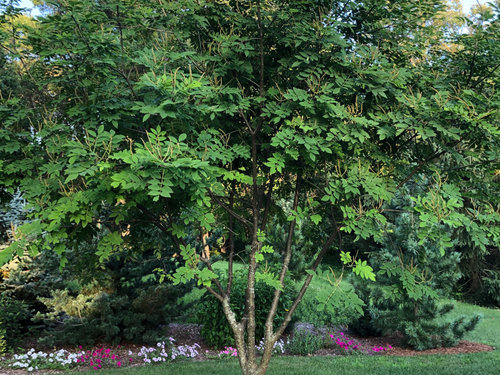
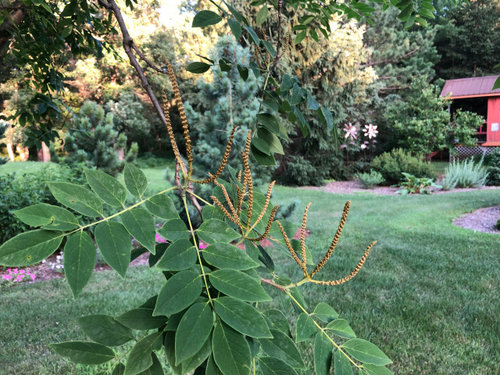
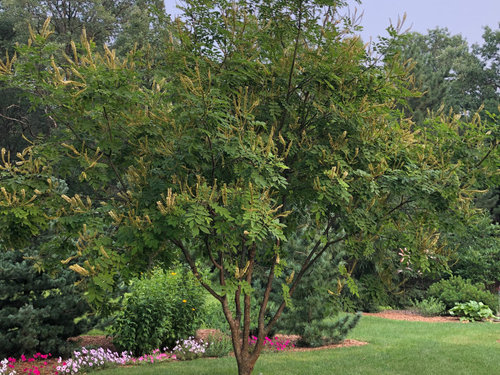
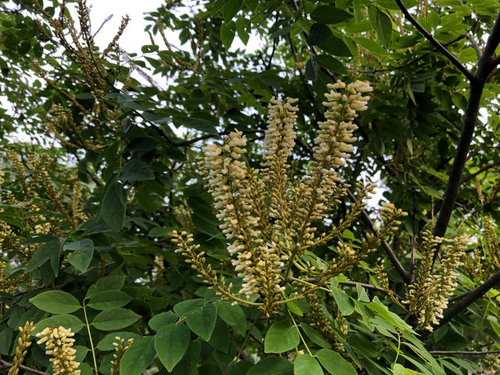
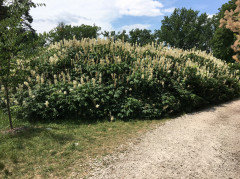
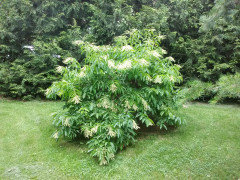
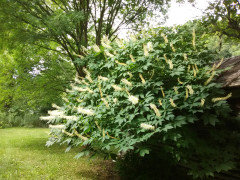
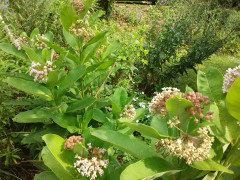
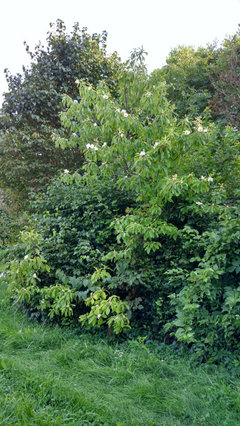
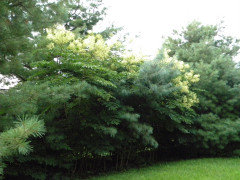
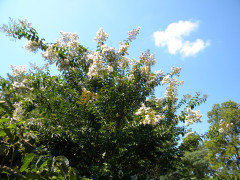
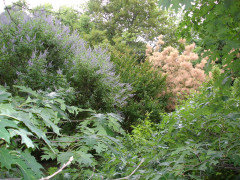
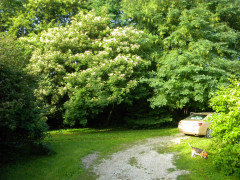
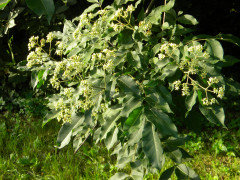
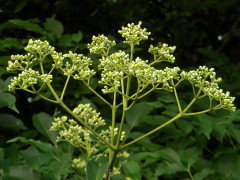
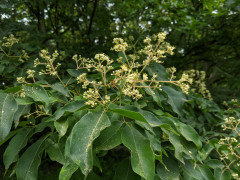
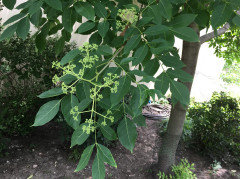
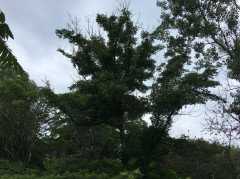
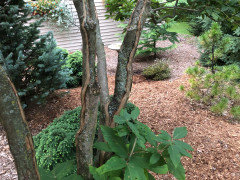
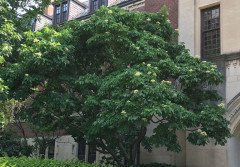
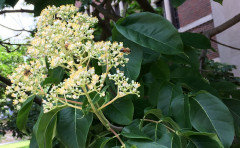
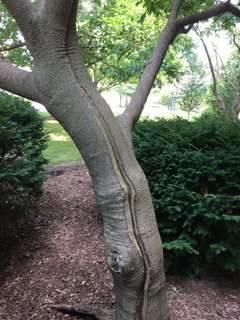
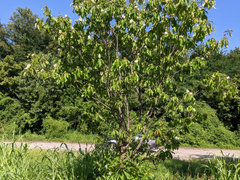
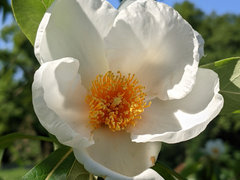
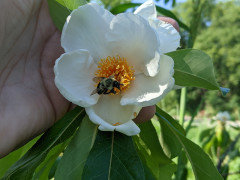
Do you have or know of any? My one and only is Maackia amurensis. Not spectacular in any one way, but the total package is nice. The photos cover the past 2-3 weeks. BTW, I do apologize for the petunias.


Comments (48)

  • 5 years ago
    Here linden is mid summer

  • 5 years ago
    last modified: 5 years ago
    Lindens were done flowering about a month ago in these parts, but they are definitely later than most trees. Is Tilia americana native to your area? I’ve got a couple of what I believe to be wild types. They’re smothered by Northern Pin Oaks, but they carry on.

  • 5 years ago
    Lindens are still blooming here. Chestnuts are also in flower. (Castanea not Aesculus). Also Liriodendron and Robinia pseudoacacia.)

  • 5 years ago

    Sourwood blooming today in local cemetery

  • 5 years ago
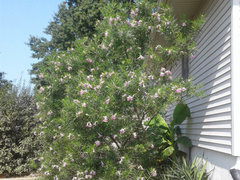
    Sourwood starting here right now, Bottlebrush buckeye too, which is a swallowtail magnet.

    maackia thanked bengz6westmd
  • 5 years ago
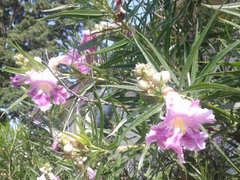
    Oh, how I wish I could grow Sourwood. I stayed at a place in Kentucky several years ago that had a gorgeous specimen on the grounds. I’ve been smitten ever since. I’ve got the perfect place, except for cold tolerance.
  • 5 years ago
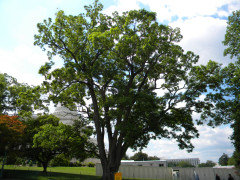
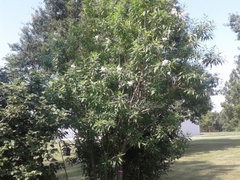
    Chitalpa.

  • 5 years ago
    maackia - wish I could add a sourwood to my yard too, but the ones I've seen in this region struggle even on the best of sites (irrigated, acidic soil). I remember admiring a native grove at a friend's property in southeast Ohio (near the northern limit of their natural range) - not really all that far from here, but the difference in performance is significant.

    floral - it's hard to believe (I think the term would be "gobsmacked") that black locust is still blooming there. Here they're typically flowering at the end of May into early June. Your spring/summer must be notably cooler than here.

    Some of the Koelreuteria are still blooming here. Sophora are showing buds but the flowers haven't opened yet.

    beng - it's a stretch to call bottlebrush buckeye a "tree", but since you mention it, here's the massive specimen at the Morton Arboretum (photo taken 7/9/21)


  • 5 years ago

    Bottlebrush buckeye is done here. I was parked under an enormous sophora yesterday, and ended up with a bouquet of flowers on my windshield.

    There are a couple of flowers on Betty, my Little Girl.

  • 5 years ago

    There are a few choices in my area. Stewartias are just finishing up, Eucryphias are in midbloom and the aforementioned sourwoods. And Magnolia grandiflora - not sure of cultivar; it's inherited - produces flowers intermittently all summer long.

  • 5 years ago

    Heptacodium miconoides? I planted a tiny one this spring, so too soon to know how it will actually work out.

  • 5 years ago
    last modified: 5 years ago

    Arbordave, that's some kinda bottlebrush -- pic saved. Here's some on my lot:

    Sourwood.


    Bottlebrush buckeye w/Chinese elm behind:


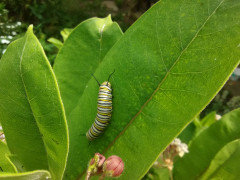
    Milkweeds w/a welcome diner:


  • 5 years ago

    Franklinia alatamaha are just starting to drop spent flowers here.


    Aesculus parviflora var. serotina is peaking...


    ...with Aesculus parviflora almost done.


    Aralia spinosa is the champ with large bloom structures (hat tip to samMD that each flower is small).


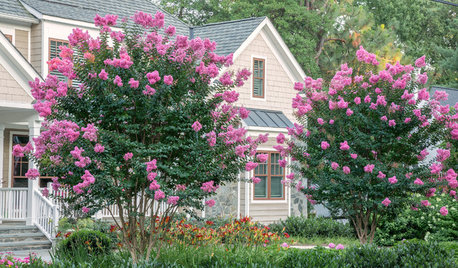
    All the Lagerstroemia clones continue to show off, with 'Sarah's Favorite' and 'Hopi' holding court at the Valley.


    Vitex agnus-castus is a great light blue reliable bloomer for hot dry spots.


    And then - there's this one a-buzz right now...


    These all smell good, too.

  • 5 years ago

    Thanks, VV. Aralia spinosa -- uncommon to see that grown. What is shown in the last pictures?

  • 5 years ago

    I really like all the ornamental facets of Devil's Walkingstick, and the fact it works very well as a crowd control device.


    It does want to colonize (suckering from roots) so the same care as you might employ for Sumac or a running Bamboo is proper for this species.


    The last pictures I included as a quiz, for all the geeks here. I grew it out from seed of trees that once graced the cloverleaf clay of the New Circle Road/Newtown Pike interchange in Lexington KY, from around 1972 - 2020.

  • 5 years ago
    last modified: 5 years ago

    Those last photos by VV look like Tetradium. Photo below of a tree in bud near the Lincoln Park Zoo in Chicago (a couple weeks ago).


    indianagardengirl - my Heptacodium generally starts flowering near the end of August, yours may start a little earlier.

  • 5 years ago

    Poliothyrsis sinensis is currently flowering at the University of Delaware garden; interestingly mine is taking the year off...maybe too much damage from cicadas? I didn't get a picture of it but might bump one of my old threads about that collection soon.


  • 5 years ago

    Yes, the Bee Tree lives up to its name, and is really easy to grow.

  • 5 years ago

    Has Tetradium shown any invasive tendency? Most web sites list it as z4, but I have not seen it in commerce or arboreta in WI, MN, and Iowa. I've seen only few of these trees during trips south and east, but they all looked quite nice. I guess I should track one down to satisfy my curiosity.

  • 5 years ago

    Have some itinerant plants people send you seed...

  • 5 years ago

    I'm too old for seed...and no wisecracks!

  • 5 years ago

    I'll only say you are wrong in that opinion, for this plant. Grow out seedlings, and if you find a large one you can give away the wee ones.

  • 5 years ago

    Regarding Tetradium I think long term hardiness in zone 4 would be questionable. I actually came across two trees in Chicago recently (see photos), the smaller was in good shape but a larger, older tree had some obvious dieback issues (sorry the photo is so dark, weather became overcast). The Dawes Arboretum (east of Columbus) says "May suffer branch dieback during severe winters". OTOH, I remember seeing a healthy specimen (relatively young) at the Toledo Botanical Gardens, and I know of at least one healthy (young) tree in Ann Arbor. My impression is that they are not happy in soils that can get very dry. I tried a couple seedlings in my backyard that survived their first winter but both were damaged by a late spring frost. I removed one, and the other was later killed by ambrosia beetles.


  • 5 years ago

    arbordave, did Tetradium come out relatively early and the new shoots get killed by the late frosts? If so, my frost-hollow lot has no chance for it.

  • 5 years ago

    Oh ye of little faith - should be thomasgz6westmd...


    Plant to a north aspect, with respect to slope or with respect to conifers, and you can perform botanical zone pushing miracles.

  • 5 years ago
    last modified: 5 years ago

    I'm pro miracle, but I'd rather eat lint than experience another tree be ravaged by winter.

    This is what the last brutal winter (2018 - '19) did to my Acer maximowiczianum. It's in recovery mode, but not sure it will ever come back from this damage.


  • 5 years ago
    last modified: 5 years ago

    beng - they weren't particularly early leafing out, the new leaves were just not frost tolerant (which is a real liability at my location). Provenance may also be a factor with Tetradium hardiness.

  • 5 years ago

    Tetradium flowering yesterday (7/31/21) with honeybees as expected. Shaded on two sides, so flowers weren't very numerous. Main stem has what appears to be an old frost crack.


  • 5 years ago

    Bark on Tetradium is remarkable.

  • 5 years ago

    Simply elephantine...

  • 5 years ago

    Blooming today in Shawnee Park, Louisville KY. We planted these in 2014.


  • 5 years ago

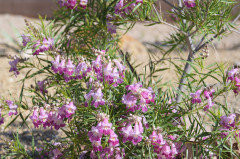
    Our desert willow ”Art’s Seedless” has been blooming profusely for about four months and doesn't look like it has any plans to stop!


  • 5 years ago
    last modified: 5 years ago

    mojavemaria - nice photo, and that's an exceptionally long bloom season. Nothing really comes close to that here. Rose of Sharon can keep flowering for a relatively long time. Also noticed a mimosa in bloom the other day (invasive farther south but they die back most winters here).

    ViburnumValley - is that Franklinia? Wish I could grow one here. That one looks like it may be a little drought stressed in the 1st photo?

  • 5 years ago

    Arbordave, have you tried Franklinia? It sounds like you have, but if not, the Arnold has/had a 100+ year tree. I won’t try it, but I think you should! BTW, does anyone know if the Arnold Franlinia is still going?

  • 5 years ago

    I have another variety of desert willow that is mostly a spring bloomer with occasional summer flowers. i think because this variety doesn't set pods it just keeps bloooming. Its still more a big bush than a tree because it puts so much energy to flowering so I’m doing some pruning to try to encourage it up but its hard to cut off branches full of flowers!

  • 5 years ago
    last modified: 5 years ago

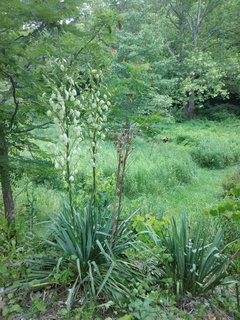
    OK, not a tree (but cousin Joshua Tree can be) and pic taken a bit earlier -- Yucca filamentosa. The flower stalks are over 6 ft tall. Interesting that these have become naturalized much further north and northeast in the US as they were originally. Can grow in the poorest and driest soils, even rocks as here. Little yucca moths can be found in a few of the flowers.


  • 5 years ago
    last modified: 5 years ago

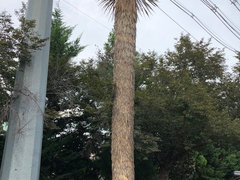
    beng - I'm not a huge fan of yucca, but they are certainly notable when blooming. There are a few yuccas on a old vacant farm property (with very well-drained soil) I pass on my commute - tough plants that seem like they could persist there forever. Saw this tree-like yucca(?) in TN a few years ago, I have no idea what species it is or if it ever blooms.


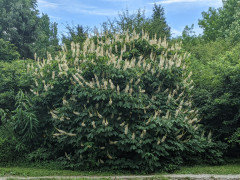
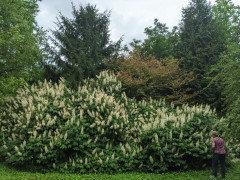
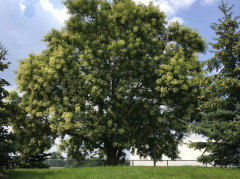
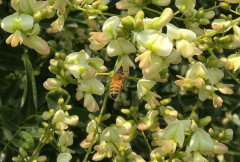
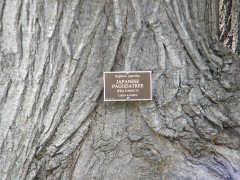
    Back to actual trees, this pagodatree was blooming today, with bees buzzing around the flowers.


  • 5 years ago
    last modified: 5 years ago

    arbordave, that's remarkable -- might be a Joshua Tree. I don't think Spanish bayonets get that tall. Rarely see Pagodatree - should be planted more, a couple nice specimens on the VA Tech campus. Kinda like a much cleaner and refined black locust. Good to see a number of pics w/European honeybees in them -- seem to have a good number of them here this year. Some yrs there's hardly any.

    An interesting thing about my yuccas is that they slowly move laterally over time as old growth dies after some yrs and new ones sprout adjacent to those from the same roots. They stay nicely green even in the cold and snow and give a desert-like look to a scene.


  • 5 years ago

    That's Yucca rostrata, very hardy. Zone 6 and maybe 5b.

    I like Desert willow here


    Also have Chitalpa. Both good in zone 6a.

  • 5 years ago

    Sophora/Styphnolobium performing in Washington DC...


  • 5 years ago

    "That's Yucca rostrata, very hardy. Zone 6 and maybe 5b."

    With the caveat they do better in drier climates. I lost a couple little Y. rostrata during the polar vortex winters...I had deep snow cover for most of the worst freezes during that period. That was good for things like Camellias, but the Yuccas just rotted from being completely covered in heavy, wet snow for several weeks. They might have survived if they had been tall enough to be above the snow line.


  • 5 years ago

    It's all about siting,microclimate. There are a few around the Kansas city area and I've heard of them grown in lower New England. Drainage, drainage, drainage and lots of sun. True winter moisture at the crown can cause rot. Brush heavy snow off and from around or cover crown with plastic trash bag. Remove when storm is over. I grow Yucca elata here and a friend has two 8 footers.

  • 5 years ago

    Yeah, what David said, these are very cold hard in arid climates, but they definitely have issues in wetter climate (even if MILDER). Raised beds, well-drained soils would surely help, I lost an established one in NJ/Zone 7a/b, where the winters, as the summers, are WET. Have since switched over to varieties of Yucca gloriosa and alofoilia.

  • 5 years ago
    last modified: 5 years ago

    I didn't even buy a mid-century modern rambler with wide eaves on _purpose_ but that feature has been incredibly useful for sheltered xerophytes. So now I grow things like Agave, Yucca 'Line Dance', a hybrid probably involving Yucca aloifolia, Dasiylirion, and Nolinas up against my house where they get some shelter from winter rain and snow and they are doing great. As it is, 'Line Dance' pretty much gives the effect of a variegated Yucca rostrata so I'm actually kinda glad I learned my lesson with the cheaper, easier to obtain rostratas!

    PS...LOL at Paul Spracklin's thoughts on the cultivar name here: https://society.bcss.org.uk/index.php/october-2020.html


  • 5 years ago

    Yeah, linearfolia is a bit different than rostrata in that it has longer, thinner leaves and grows only in Mexico. Less hardy to. Rostrata grows northward to sw Texas. I have both at my property in sw Missouri. Even hardier, try Yucca thompsoniana.

  • 5 years ago
    last modified: 5 years ago

    HU-5252, that yucca rostrata looks dangerous.... :)

  • 5 years ago

    Reminds me of an old hippie I used to know, rough but harmless.