Software
Houzz Logo Print
steve_metcalf90

Getting HVAC Quotes

4 years ago

I was wondering if anyone has run into this when getting a quote to replace a 19 year old HVAC.


Twice now I have had people from reputable businesses come out, walk around the outside to see what my current system is and then giving me a quote for the lowest level Trane gas/electric package of the same size Goodman that was the builder system. No effort to check to see if a 4 ton is actually the proper size for my house.


When I ask for more info on maybe going up a level of quality with a little higher SEER rating and two stage gas valve and variable fan, they pretty much brush me off as that being something I don't need "Everybody gets the one we quoted"


I did have a third person who measured all the rooms and windows and calculate that a 3 1/2 ton was the proper size and gave me estimates on three different levels of systems.

Comments (26)

  • 4 years ago
    last modified: 4 years ago

    You've answered your own question. Ditch the first two!

    (And yes, its pretty common that they walk around the house and try to sell you what they want, not what you want or need).

    Steve M thanked sktn77a
  • PRO
    4 years ago

    Hi, Steve,

    Unfortunately, the vast majority of work performed by HVAC replacement contractors consists of unboxing and installing components which are, well, replacements for what you already have. When you consider that most replacements are made on an emergency basis (i.e., when you have no heating or air conditioning) there is a strong incentive to get the HVAC system operational again. That time-is-of-the-essence driving force limits the ability to evaluate alternatives including alternative contractors.


    Most HVAC replacement contractors couldn't perform a heating/cooling load calculation if their life depended on it. Nor will they measure your existing duct system's leakage to see if the equipment size--and cost-- can be decreased by improving your duct sealing. And they won't take the time to walk you through alternative models, differences in performance and cost. Their time-is-of-the-essence driving force is to collect your check and get on to the next job.


    You've taken the time to interview three different HVAC replacement contractors and you've found one that appears to follow the right process. Meat Loaf opined that "two outta three ain't bad." It's not. It's terrible.

  • PRO
    4 years ago

    1/2 ton difference isn't going to matter as much as you think and may cost you some cooling on the hottest days you need it the most. The heat load is an educated guess based on argumentative figures. Don't like those figures, argue. That's the proverbial name of this game.


    The duct work? probably not much of an issue as CFM difference for 1/2 ton is about 200 cfm, but that 200 cfm? may cause a new problem you didn't have before on the hottest or coldest days. A room that is the furthest room from the equipment. 200 CFM could be the back breaker?


    Everyone that comes to your house is auditioning for a sale. Measuring and calculating is fraught with a whole lot of guess work. If you're replacing everything the whole system plus duct work? That changes things considerably.


    Why would you put a new system on a duct system that is too large or too small? Two story home? How you going to change the ducts in the walls?


    While it's true that running a heat load calculation is recommended you have to put into context as to why? Fully realizing that a heat load is a tool to size a system based on the hottest / coldest part of the climate in which the building resides. Which in laymen's terms means that system is over-sized 90% of the time. When you realize this the accuracy of such is brought into question is it not?


    The sun rises in the east, sets in the west. It's most hottest when it sets. The greatest heat load ever known to man, that constantly changes. Yet a heat load calc is trying to chase the elusive static figure that is said to be correct a mere 10% of the time at best?


    In the hands of someone who doesn't understand these things? it's a fools errand. Now if you don't like those words pick some you do like. I am as fair as I can be.


    ----------

    With all that said... there are supply issues to contend with. I suspect those companies probably only have what they have in stock (systems they bought and sitting in a dusty warehouse) now they are forced to sell what they already bought.


    I just recently did an inverter install a few weeks ago, that customer had been waiting for 6 months for the equipment to get back in stock. There is no indication currently that things will ever get back to how they were before... at least not in my area and we depend on AC here 10 months of the year most years.


    I service the Katy, Texas area.

  • 4 years ago

    Where are you located and what is the size of your house? Did the current 4 ton AC ever run in short cycles? How was the humidity control?

    I did have a third person who measured all the rooms and windows and calculate that a 3 1/2 ton was the proper size and gave me estimates on three different levels of systems.

    This is a good sign this contractor is serious about doing a proper installation of the HVAC you select. He is providing three options of equipment and giving you choices.

    There is a shortage of equipment. So I suspect the other two contractors are quoting sizes and models of equipment they know are available. They have enough customers who will hire them to do installations what measuring anything.

  • PRO
    4 years ago

    Whether it's a moon shot, structural calculations for a bridge or calculating residential heating/cooling loads, the calculations may not be exact, but a really good approximation is often enough to get the job done. To dismiss calculations on the basis they are not exact is not a fool's errand. It's a fool's fait accompli.

    Reducing duct leakage has the potential to both reduce equipment size, operating cost, and improve occupant comfort. Reducing duct leakage doesn't typically require duct replacement, but simply sealing which can be performed via a couple of alternative techniques. Duct leakage of 20% is typical of older systems. What better time to assess duct leakage for an existing system than when replacements are being evaluated?


    Provided a 3.5 ton unit meets the heating/cooling requirements, installing a 4 ton unit is 14% oversized. And, if equipment is oversized 90% of the time, that 14% oversizing will translate to a measurable difference in performance, and most likely occupant comfort as well.

  • 4 years ago

    Appreciate all the postings on this. Now I'd like to get any thoughts on this. I decided to try one last estimate. This one did the usual walk around, but was much more willing to talk about different systems. The one that piqued my interest was the Trane XL15C Gas/Electric package. It has a bit higher SEER , variable speed blower, two stage gas heat, and in a 4 ton unit has a two stage compressor. And the price difference from the basic Trane unit is not bad at all.


    Just wondering if anyone had any thoughts on that kind of a unit. Thanks.

  • 4 years ago

    A two stage system will be more comfortable (no full speed blasting of hot/cold air when it kicks in, and better dehumidification, if that's important to you). Where do you live?

  • 4 years ago

    We are in central Tennessee near Nashville

  • PRO
    4 years ago

    The one that piqued my interest was the Trane XL15C Gas/Electric package. It has a bit higher SEER , variable speed blower, two stage gas heat, and in a 4 ton unit has a two stage compressor. And the price difference from the basic Trane unit is not bad at all.


    two speed compressor: essentially these start up unloaded and run with about 70% capacity of the machine in question. So it's one way to alleviate sizing concerns. In addition to that, these two speed machines aren't made in half ton increments, but rather full ton increments. So you couldn't buy a 3.5 ton 2 speed machine if you wanted one.


    So while it's less likely to be oversized that often, it's still possible once seasons change.


    The problem with Trane in general is that ownership costs are higher, after the warranty runs out. If your time horizon is shy of the 10 year mark to live in this house, maybe you escape with out much fanfare.


    If you purchase the extended warranty that covers labor, typically annual maintenance costs will weigh you down further. If you don't do the maintenance, the extended warranty will most likely be void.


    This machine may also be communicating, which will require proprietary hardware to run it. This is yet another further down the road cost once the warranty runs out.


    The next step up from 2 speed is more or less inverter or many speeds. Depending on how the mfg implements it -- could be as few as 5 speeds (carrier brand) many speeds (Trane, Lennox etc)


    But all major MFG's will require proprietary controls to operate it (communicating). Except for one Bosch. That being said their are pros as well as cons with the Bosch as well. Nothing IMHO is absolutely perfect, just different shades of it.


    I chose the Bosch inverter for my house. The advantage of an Inverter (done properly) is that it's always sized right. It runs in 1% capacity increments up and down... always giving you the proper cooling amount you need any given time of the day or night. No heat load calc can do that on it's own.


    Because of how an inverter runs, it's can cut your electric bill in half, maybe more depending on list of variables that may or may not apply to you and your situation. But because you're borderline in Tennessee, an inverter AC may be overkill for your situation anyway. It's a choice at the end of the day.


    That being said... if you can find a Bosch dealer in your area --- it might be worth investigating. The Bosch doesn't require any proprietary controls so the leap to this level of equipment may be similar to the Trane 2 speed option you're being proposed with. --- with much better performance.


    If 2 speeds are good, 60 speeds are a whole nuther level.


    Note: Others reading this who live in or near Katy, Texas --- Bosch inverter units are currently available but in very tight supply. If you want one, you must act quickly or you could be waiting months until they become available again.


    I service the Katy, Texas area.

  • PRO
    4 years ago

    Hi, Steve,

    Based on climate data for Nashville, TN, you have 3,729 heating degree days and 1,616 cooling degree days annually. I'd be more concerned with the efficiency of whatever heating system you choose than bumping up the SEER rating by a point. The Trane XL15c has an efficiency of 81% AFUE which is just a whisker more than the 80% minimum required. If you can afford it, I suggest you consider the hybrid unit which utilizes a heat pump for heating and cooling and has a gas furnace as back-up heat when it's too cold to operate the heat pump efficiently.

  • 4 years ago

    After seeing how my price for natural gas has gone up 80% in the last year and my price for electricity has remained stable, I am now strongly considering the hybrid heat pump/gas unit. Looking at the Trane XR14c and the XL16c. Any thought on whether XL16c is worth the rather substantial price difference?

  • PRO
    4 years ago
    last modified: 4 years ago

    Steve I decided to look at the warranty to see if anything jumped out at me.

    The builder in a previous post yesterday called my refrigerant warnings a red herring. So because of that I've decided to nick name the up coming event (that know one knows now how it will pan out) only that you should know up front what you will be on the "hook for" so to speak. Red Herring is a fish tale and hooks are involved. ;-) lol.

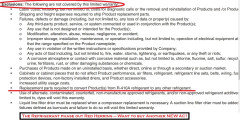
    The manufacturers are well prepared for what is about to happen. They know it's about to happen, nothing stopping it. We've gone thru a phase down / phase out / production ban before remember R22 Freon? However, this time is very very different. Because? R410a operates at much higher pressures than R22 Freon. Anyway read the exclusions on the warranty from the horse's mouth....

    Click to enlarge picture.


    It's coming to a hot house near you. Unfortunately it will be anything but a fish tale. Ask me how I know. LOL. (been there done that)

    After you read the red underlined disclaimer read the very next line after that in the warranty exclusions picture above.

  • 4 years ago

    Thank you very much. This puts a new spin on things. I know I have a leak in my current system which is why I was going to replace it. Now I wonder if the way to go would be to pay to get it charged again with R22 (if any is available) and then push out the new system another year when it would be made for R32. You have definitely given me much for thought

  • 4 years ago

    Don't waste your money on more R22. R410 isn't going away any time soon. Chances are your system will require replacement yet again before the need to worry about R410 is relevant.

  • PRO
    4 years ago
    last modified: 4 years ago

    It's certainly reasonable for a manufacturer of HVAC systems to exclude from their warranty the cost of any parts or labor to convert a system designed for one refrigerant to another. It's certainly unreasonable to suggest a major disruption as a consequence of the phase down of R410a--at least based on past history of refrigerant phase down in the U.S.

    The Montreal Protocol (an international agreement intended to reduce global ozone depletion) was agreed in 1987 and entered into force on 1/1/1989. R-22 was one of the regulated refrigerants under the agreement. R-22 was banned from use in new HVAC units manufactured in the U.S. beginning 1/1/2010. That was more than 20 years after the agreement entered into force. The ban didn't include R-22 used for maintenance of existing equipment. The production of R-22 in the U.S. wasn't banned until 2020. That's more than 30 years later. It is still available, but only from recycled sources. Since residential HVAC systems have a typical life expectancy of 15 years +/- R-22 systems manufactured in 2009 that require replacement refrigerant will require it to come from recycled sources from 2020 though the end of their useful service life (in year 2024 +/-) That's only another two years.

    Phase down of R410a under EPA regulations is a gradual reduction to 15% of baseline production by 2036. So R410a will still be available in the U.S. for quite some time. Canada hasn't yet determined their timetable for R410a phase down. I wouldn't have a meltdown over the phase down nor be overly concerned about purchasing R410a equipment for residential applications based on past history.

  • 4 years ago

    So now going back to my earlier question: After seeing how my price for natural gas has gone up 80% in the last year and my price for electricity has remained stable, I am now strongly considering the hybrid heat pump/gas unit. Looking at the Trane XR14c and the XL16c. Any thought on whether XL16c is worth the rather substantial price difference?

  • PRO
    4 years ago

    Increasing the efficiency of an HVAC system beyond a certain point produces diminishing returns. You can make a more informed choice if you have an energy audit of your home. Many utility companies will provide that service for their customers and often at no cost.


    For a home constructed 20 or more years ago, there's a good chance you'll achieve a similar improvement in comfort and efficiency at less cost by increasing the R-value of your attic insulation.

  • PRO
    4 years ago

    Thank you very much. This puts a new spin on things. I know I have a leak in my current system which is why I was going to replace it. Now I wonder if the way to go would be to pay to get it charged again with R22 (if any is available)


    None of this is currently about availability, certainly there are some distributors that may not have this or that... (world wide pandemic type problems) this refrigerant situation is primarily about cost. Buying a new piece of equipment? It's a gamble. Some machines leak in a very short time span, no different with Trane or any other manufacturer. It would take me all of 20 seconds to find a 1 year old Trane leaking R410a from the internet. This isn't to suggest you will have a problem, only to tell you -- that it's possible.


    Someone who does this for a living vs the opinions of people who don't do what I do. I have youtube channel showing you what I do. So I am not just here blabbing if you know what I mean.


    Ultimately it's your choice. It sounds like you will be forced to make one - one way or the other. My purpose isn't to scare you but to help you go into this with your eyes wide open.


    Supply vs demand.


    The R22 freon phase out / phase down / production ban was and will be entirely different than R410a. For one, there were huge stock piles of R22 Freon to work thru. It took considerable time for the price of R22 Freon to sky rocket to where it is now. When R22 freon leaks, it leaks at much slower rate than R410a because operating pressures are much lower.


    R22 is still available, but very costly. So if you decide to keep the R22 Freon system you have to fix those leaks. It will be the same story if you up grade to R410a system and develop leak. And probably any new refrigerant when they come out.


    While you can still gas n go on Residential side, this practice is going to drain your wallet. The situation isn't about availability. It's about cost.


    There was a refrigerant availability scare just this past summer, it wasn't R22 freon. Guess which one? You have to understand it's harder to make R410a than it was R22 Freon because R410a is a mix - 50% R125 and 50% R32 = R410a


    Now try and think where this stuff is typically made to get the cheapest prices? and viola there you have it.


    Currently I have no problem fixing R22 freon or R410a system. So what's all the roar about? Cost and to spell this out that new equipment will not protect you from those costs if something bad happens. Refrigerants are not covered by any mfg warranty.


    Read the fine print. The mfgs are well prepared for what is about to happen.


    What is about to happen? No one knows for sure *exactly*. My philosophy is to prepare for the worst.


    Because then when something bad does happen, I can tell you I warned you / others. You won't be able to blame me. That's the difference from someone who at least tries to convey the truth vs someone that just tells you what you want to hear all the time.


    But you said R410a was environmently friendly? TBC.

  • PRO
    4 years ago

    Steve,

    At 19 years old, your HVAC system has reached the end of its life expectancy. Go ahead and replace it. You'll get the benefits of improved efficiency versus what you have. If you replace it with a heat pump, you'll also have the flexibility of two different heat sources for much of your heating system.


    Just don't agonize over future maintenance needs of systems with R410a. As sktn771 noted, it will be around for a while.

  • 4 years ago
    last modified: 4 years ago

    A hybrid ("dual fuel") system is going to cost almost twice as much as an air-to-air heatpump alone. If you're pretty confident that NES/TVA electric rates won't increase dramatically (or as much as natural gas) in the foreseeable future, I'd just go with the straight heatpump. Just be prepared for sticker shock with the current supply issues and price gouging in this industry.

  • 4 years ago

    After seeing how my price for natural gas has gone up 80% in the last year and my price for electricity has remained stable, I am now strongly considering the hybrid heat pump/gas unit. Looking at the Trane XR14c and the XL16c. Any thought on whether XL16c is worth the rather substantial price difference?

    The XR14c is a single stage packaged gas heater and AC. The XL16c is a 2-stage dual fuel package system. If you want a dual fuel system comparison then you need to look at the XL14c single stage dual fuel system.


  • 4 years ago

    I've got my TVA home energy evaluation scheduled; I figure the more info the better. Pretty sure I'm going to go with a hybrid system as we do like the feel of the gas heat when it gets really cold but on days like today the heat pump should be just fine. Just not sure which unit.. There is a whopping difference in the price between the 14 seer single stage compressor and the 16 seer two stage compressor unit. I like the idea of the comfort of the two stage compressor but I'm not sure that the much larger price tag would be worth it to me

  • 4 years ago

    Steve,

    Can you provide the model numbers of the the equipment you are comparing? The Trane has several models. It is sometimes difficult to make proper comparisons based the the simple model names.

  • 4 years ago
    last modified: 4 years ago

    The two I am seriously considering are the XL16c packaged heat pump and the XL 14c packaged heat pump

  • 4 years ago

    Had my energy evaluation yesterday. It was pretty thorough; the rep was here over an hour. Even went under the house in the crawlspace to check the ductwork. My house actually scored pretty well; an 8 out of 10.

    Areas to improve were replacing the 19 year old HVAC system (which I am going to do next month); sealing some gaps where water pipes come into the house and some small leaks in the duct system (both of which can be done when the new system is installed).

    All in all, the rep was really nice and the report was informative. I am glad that I had this done