Software
Houzz Logo Print
kendrahhendra

INSANE WALLS - how many coats?

4 years ago
last modified: 4 years ago

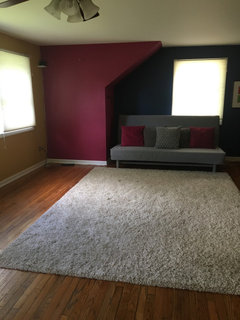
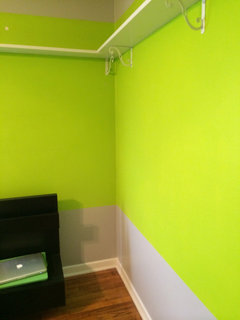
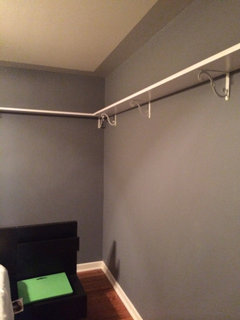
How many coats of primer and how many coats of paint are needed to cover these insane wall colors? Current paints is latex eggshell. We want to use a flat, light neutal color latex paint.

Three contractors have said three different things: One says 1 coat primer 2 coats paint, and on the other end of the spectrum 3 coats primer 2-3 coats paint.


Help me out. What needs to be done here so the color doesnt bleed through?


Comments (33)

  • 4 years ago
    last modified: 4 years ago
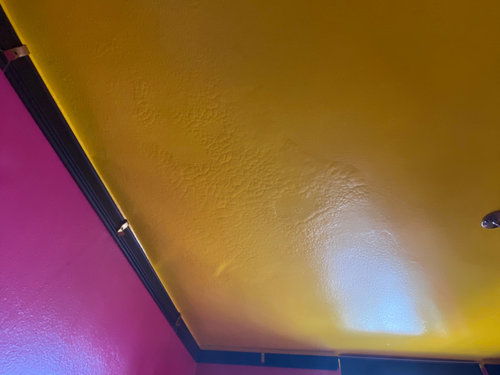
    That is one wild NYC apartment. We had painted our townhouse similar colors but more muted--red kitchen and yellow LR but without the "decor."

    I'm sure experts will chime in but I'm going to say you'll want Zinsser BIN primer. Hopefully 3-4 coats between the primer and paint. Would you consider a test patch?

    Kendrah thanked Anna (6B/7A in MD)
  • 4 years ago

    3 coats primer, 2 coats paint. If I were you, I'd take the photos to the best local paint store and have a talk with the staff at a time when they are not busy. Buy a quart of the primer they recommend, then test it out.

  • 4 years ago

    By the way, the painted hardware may have to be removed, then stripped of the paint, because a few coats of primer and paint could make it nonfunctional. It may be possible to restore the original hardware finish with polish and clear coat or you may investigate getting it replated. It's much harder to strip hardware when it is still installed.

    Kendrah thanked apple_pie_order
  • 4 years ago

    1 primer, 2 coats paint (white) covered VERY dark green and red in the house i just remodeled.

    Kendrah thanked stellarceline
  • 4 years ago

    For all of that, make sure the primer you select is a sealing type primer, and I would probably do 2 coats. Interesting looking room.

    Kendrah thanked cat_ky
  • 4 years ago

    Sellarceline - What brand primer and paint did you use?


    I'm hoping to use Benjamin Moore Eco Spec primer because it is low VOC and I have really quite severe asthma that gets kicked off by heavy duty paints. I suspect that would rule out the more heavy duty primers like the Zinnser.


    Great point about the hardware. I can't believe they painted the vintage hinges the bathroom doors and front door. Ugh.


    Yes, this is a hell of a crazy NYC apartment!

  • 4 years ago

    Paint was Benjamin Moore 'ben' paint in simply white eggshell. Primer was provided by our painters so I'm not sure.

    Kendrah thanked stellarceline
  • 4 years ago
    last modified: 4 years ago

    This must be an older building with the plaster walls and ceiling. Have you considered having them replastered? Though I know that would be a pretty penny...

  • 4 years ago

    First read this article: It explains why light colors and whites actually provide a greater hide than darker color paint. It will take more coats to paint a white wall red than to paint a red wall white.


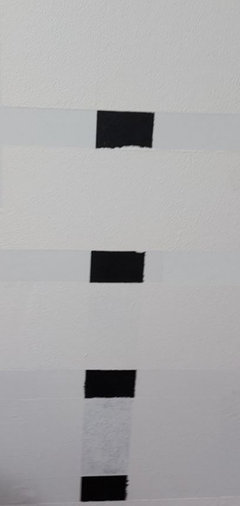
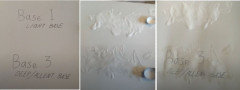
    Here is a test of BM Regal Select Eggshell base 1 (no tint added) covering a black stripe on drywall.


    The bottom section was covered with a single layer or primer

    Next section up had one coat of BM Regal Select

    Added another coat of BM Regal Select

    Top section - added a 3rd coat of BM Regal Select


    I determined that one coat of primer and 2 coats of paint completely covered the black stripe. There was no benefit to painting a 3rd coat.


  • 4 years ago

    I have often removed paint from hinges in every home I have lived in - not sure why people think it is a good idea to paint hinges and hardware.


    The method that I find easiest is soaking them in a crockpot with a bit of detergent. After an overnight cook in the crockpot the paint peels off the hardware like meat off a bone.


    https://www.thisoldhouse.com/painting/21016353/how-to-strip-paint-from-hardware


  • PRO
    4 years ago
    last modified: 4 years ago

    How many coats of primer and how many coats of paint are needed to cover these insane wall colors?

    It depends on a couple factors.

    Primer is less expensive than topcoat (usually) but primer's job isn't to hide anything - that's why it doesn't look like a topcoat when it dries. Primer's job is to prep the substrate for the new color and new coat of paint.

    Doesn't matter if they're rolling primer or topcoats, the cost of labor is the same.

    So if you want to be strategic about it, find a topcoat color that hides well.

    It's a simple fact of color that some hide better than others. Choosing the right product can help but it's not the solution to the problem of low-hide colors.

    For example, Dunn Edwards has a collection of high hide whites for the very fact that many colors of white take multiple coats: "Whites are typically lower-hiding and require multiple coats for coverage."

    Your best bet is to decide on a brand and go to the store and talk to the pro's there. If it's Benjamin Moore go to a Benjamin Moore brand store - don't go to a hardware store that carries Benjamin Moore. Or if it's PPG, go to a PPG store don't go to the Home Depot, etc.

    The pros behind a branded paint store counter will know (or should know) exactly which of their colors have the best hide.

    I'm hoping to use Benjamin Moore Eco Spec primer because it is low VOC and I have really quite severe asthma that gets kicked off by heavy duty paints.

    I use, recommend, and specify Ecos Paints. We're actually adding their palette to The Color DNA Table. If Ecos is an option, again, call them and tell them you need a high hide color.

    If you're strategic about the new color, it shouldn't matter what colors you're rolling over.

  • 4 years ago

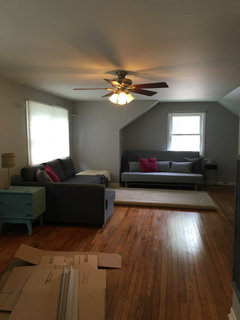
    I painted both of these rooms with 2 coats of flat paint and no primer.

    Kendrah thanked Janet Mmm
  • 4 years ago

    I don’t know the answer. But please, please - what is the story? Did you buy it that way? Did you design it that way? I’m so curious and a little enamored at the boldness of it all!!

  • 4 years ago
    last modified: 4 years ago

    An artist uses this space as her studio. She is in her 80s and a very vibrant woman. While I marvel at her love of color, I'm a total fan of calm neutrals!

    Here is what I'm brainstorming as a color pallet for these walls. I'm curious about feedback on how to cover the bright current colors with these neutrals.

    I recently painted my bedroom Farrow and Ball dimity. It is such a soothing, relaxing warm neutral. I'm thinking of for the entry area and main room of this studio.

    Dimity

    Dimity Modern Emulsion Paint · More Info


    Imagining something like Farrow and Ball Matchstick or Cord for the long hallway that will be used as a dressing room and leads to the bathroom. (Currently has the turquoise mirrored door at the end.)

    Matchstick

    Matchstick Estate Emulsion Paint · More Info


    Cord

    Cord Exterior Masonry Paint · More Info


    For the tiny kitchenette room I'm thinking of bone. (It is currently red, turquoise, yellow, black and orange.)

    Bone


    Bone Estate Emulsion Paint · More Info


    Thinking of Mouse's Back or French Gray for the bathroom walls, which have vintage peachy beige tile and matching fixtures. (The paint in there now is magenta with the yellow ceiling.)


    Mouse's Back

    Mouse's Back Estate Emulsion Paint · More Info


    French Grey


    French Gray Exterior Masonry Paint · More Info


    I'm a bit torn about paint because I adore Farrow and Ball colors, but recently painted our apartment (down the hall from the studio) in estate emulsion and it really gets nicked and dirty so easily. I know F&B has a modern emulsion line but the smell really bothers me. I've used flat Benjamin Moore Natura extensively in our old home. It wore well and the smell didn't bother me. They don't make Nature anymore and I need to test out their Eco Spec line. I painted our old dining room in Ben Moore color matched to Farrow and Ball and I don't care what anyone says, it is just not the same.

    I should try Eco Spec. I've ordered samples of some of their products before and the scent bothered me but I can't remember if it was their paint or some other product from them.

  • 4 years ago

    We used Farrow and Ball in a small bathroom and I don't recall any problems, but I have heard that some painters very much dislike it. My son lives in Dublin, a few doors down from a Farrow and Ball store, and his painter flat out (pun intended) refused to used their paints. Apparently it's hard to use.

  • 4 years ago

    Interesting. Our painter loved using Farrow and Ball and I've heard the same from other painters as well, that it is great coverage and consistency. Then again the painter we used recently is a perfectionist and goes very, very slowly. Different strokes for different folks (pun intended)?


    I'm so in love with their colors, it's just their flat is so markable I feel like if I breathe on the wall it will leave a mark!

  • 4 years ago

    My painter had to use 6 coats of SW paint over 2 coats of primer to get a tobacco smoke-stained orange wall back to white. It would have been cheaper for me to put new drywall up. Hope yours works out

  • 4 years ago

    Adding your new color to the primer helps. Using a base that is not clear but opaque helps. I have found over time bleeding through to be a thing. It may look covered for a few years then one starts to see the color coming through.

  • 4 years ago

    @Janet Muriby - I love your examples. So many people think that red and yellow are the hardest to cover, when in actuality they are the most difficult to use to cover. Both use a transparent base and the pigments that create red and yellow are fairly transparent, so it is akin to painting with a highlighter.

  • 4 years ago

    4arnottp - tobacco stains are oily. Walls need to be thoroughly cleaned with a grease cutting cleanser and then, once dry, sealed with a shellac based primer. If the wrong primer is used it will continue to bleed through.

  • 4 years ago

    Jennifer, I remember watching a video of a cleaning crew wiping down the walls, ceilings and fixtures of a nicotine stained home (20 or 30 years of smoking if I remember correctly)--it was so horrifying and gratifying at the same time.

  • 4 years ago

    That room is so fascinating. I have come back to this post and looked at it a few times. Its happy and cheerful in there. If the lady artist did all that, and is still using it, will she be happy in something not quite so vibrant.

  • 4 years ago
    last modified: 4 years ago

    It took me 3 coats of Behr paint, with the primer IN the paint to cover a bright red wall.

  • 4 years ago
    last modified: 4 years ago

    Cat-ky - The woman uses this as her art studio. She has a very large apartment that is equally bibrant and art filled where she will continue to live and make art. Someday I will make a separate post with more pics for you to see.

    Yikes - Scary to hear about color bleeding a few years later. I really want to get this right the first time!


    Thank god no tonacco smells or stains. I’d walk away.


    Im going to call Farrow and Ball today, and Ben Moore for advice.

  • 4 years ago

    Wow now there is someone who is not afraid of color!! :0)

  • 4 years ago

    @Janet Mmm How long ago did you paint your rooms with just the 2 coats of paint and no primer? I'm curious to know if over time you have had any bleed through.

  • 4 years ago

    Thank you for the explanation. I think the French Gray is lovely but I also think it will depend a bit on what kind of natural light is there. I also suggest you consider BM Revere Pewter. It’s a lovely calm color.

  • 4 years ago

    Please post an update when you are ready.

  • 4 years ago

    I spoke with Farrow and Ball today: 3 coats of primer + 2 coats of paint.


    Next spoke with Benjamin Moore: 2 coats of primer + 2-3 coats of paint. They said their Eco-Spec primer will not do nearly as good of a job covering up bright colors as their other primers.


    Both said that any painter quoting one coat of primer and two coats of paint is using cheap gloppy products they slop on the wall to get the job done quickly and will have a higher risk of bleeding.

  • 4 years ago

    Did you call headquarters or speak to some clerk behind the paint counter?


    Farrow and Ball's website lists the following information

    Application Information:

    Do not paint in temperatures below 10°C or in excessive heat above 30°C.

    Coverage Rate (m2/l per coat): : Up to 14

    Drying Time: : Dry in 2 hours.

    Typical Recoat Time: : Recoat after 2 hours.

    Curing Time: : Please note that some darker paint colours will take up to 14 days to achieve full hardness, strength and durability.

    Recommended Number of Coats: : 2*

    *Darker/stronger colours may require additional coats.


    You notice that they don't say anything about needing more to cover darker colors - only needing more coats if painting darker colors.


    Why do you think this is?

    Maybe because dark colors have a translucent base and whites and light colors have high quantities of titanium dioxide, which is opaque.


    Here is an idea - go out and get a sample of one of the colors you like. Benjamin Moore sells 8 oz samples. If one gallon covers 400 square feet and 8 oz sample should cover 25 square feet.

    That means with one sample you should paint a 3' x 4' (12 Sqft) with 2 coats of paint and each coat should use 1/2 the sample jar of paint. Use a mini roller so you aren't soaking up a couple of oz of paint with the roller.


    I think the biggest problem is that people don't use enough paint or the recommended amount of paint. They use too much pressure on the roller and roll it until it is dry and then wonder why it didn't cover.

  • 4 years ago

    I spoke with the woman who runs one of the Manhattan Farrow and Ball stores. I think she has a better idea of how the paint actually works, not just how it should ideally work. She deals all the time with customers who return paint or need more paint, or aren't having the desired results covering different colors. She told me about the problems they had at their own store with painting over bright saturated colors. Her customers have the same kind of plaster coop walls that I do and the same climate that will produce actual drying times. I've dealt with her many times in the past and think she has an honest assessment of what to expect not just from Farrow and Ball paint but from how different NYC painters do or don't use it.


    She concurred that red is a bitch and that I can expect to pay double in labor for this job. That is what I really need to know at this point in order to budget. I think it is an excellent idea to get samples and do tests once I'm ready to start.

  • 4 years ago

    Just saw your question - it’s been 3-4 years and no bleed through. I did use Behr paint which I will say is definitely thicker than BM paint but I wouldn’t call it gloppy. It’s the only paint I use because I am a little careless with the drop cloths and behr doesn’t spatter as much as thinner paints.

    Kendrah thanked Janet Mmm