Software
Houzz Logo Print
getgoing100_7b_nj

Stung by a wasp/carpenter bee type while emptying out pots

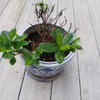
I was just emptying out pots brought in from outdoors where the plants have died for some reason or another. Not wearing any gloves... and felt a sharp pain in the middle of two fingers, thought it was wayward splintered wood ... no sign of wood and then saw the culprit in the potting mix. Still feeling the sting, can't see any stinger, using cold compress and keeping fingers crossed. How do you avoid such a mishap?

Comments (15)

  • 4 years ago

    I've worked as a professional horticulturist for fifty years and have never been stung! I stay aware, however, and am likely to wear gloves when handling old potted plants or stacks of empty pots......because of the high probability of black widow spiders in those environments.


    I encourage you to keep a container of unseasoned Adolph's granulated meat tenderizer on hand to rub into a recent insect sting or bite. The bromelain in the product will help neutralize the proteins in the venom. It must be applied promptly.

    getgoing100_7b_nj thanked rhizo_1 (North AL) zone 7
  • 4 years ago

    @rhizo_1 (North AL) zone 7 Is there a reference for using the meat tenderizer for stings? That's worth studying.

  • 4 years ago

    If you can get a photo of the culprit we could identify it. If there is no stinger it was probably a wasp or yellow jacket. Ice water might slow down the spread of venom.

    An anti-inflammatory like ibuprofen can help.

    An antihistamine or steroid cream applied to the wound can help lower inflammation.

    Watch for signs of allergic response like hives, problems breathing, etc. That might require medical treatment.

    getgoing100_7b_nj thanked westes Zone 9b California SF Bay
  • 4 years ago

    ​The culprit managed to hide somewhere, likely back in the potting mix or could be anywhere in the house for all I know, while I was tending to the sting as best I could with zero experience or knowledge of what to do. I washed my hands with soap and pressed hard on the wound instinctively while I googled what to do next. It it still stinging and part of the hand is swollen but icing it periodically helps. No violent allergic reaction thankfully. Gardening in containers on a balcony means one never really thinks about dangers that might lurk there. I had seen and dealt with a carpenter bee trying to burrow into one my plant benches and had to duck a wasp or two during the warmer months but nothing that made me think to be careful with dead plants in a container. It looks like it will be hurting for a couple of days and then I will need to hunt down the culprit. Lesson learned. Still not sure if gloves would prevent a sting though.

  • 4 years ago

    Are you sure it was not a spider? I would try to get an identification.

    If it were Black Widow, you would be having symptoms by now. If it were a Brown Recluse, the wound would become an ulceration and might benefit from early medical intervention.

  • 4 years ago

    It definitely looked like a wasp/bumblebee/carpenter bee or similarly sized and featured bug. It was partly covered in dirt and I was in too much pain and shock to notice the details (not that I would have been immediately able to tell which one it was even if I saw it all it's scary glory). I am positive it wasn't a spider. The pain is still localized and probably a shade or two less than earlier. I think I will live and wake up tomorrow (hopefully). Keeping fingers crossed.

  • 4 years ago

    I am just too scared to go poking around again for it while I am still somewhat disabled.

  • 4 years ago

    I'm sorry that you had this experience and hope that it doesn't prevent you from participating in a hugely popular outdoor hobby. There are numerous species of solitary, burrowing wasps so I would probably look in that direction for your research.


    Westes, I rather doubt that there have been scientific studies done on the effects of naturally occurring tenderizers such as bromelain and papain enzymes for venomous insect proteins.


    However, I'll bet that there are a ton of recommendations in spite of that. It was first recommended to me (by my physician) after an episode of multiple fire ant stings, yikes! That was three or four decades ago, and I have made it a point to keep a container of meat tenderizer in the first aid kit ever since.


    Doesn't have to be Adolph's, but the active ingredients must include papain, bromelain, or both. Fresh pineapple (papain) or papaya (bromelain) will do the trick, too, but most of us don't carry fresh fruit around while gardening. 😊


    Use this remedy for all the stings of all ants, bees, wasps, hornets, mosquitoes, and most spiders. It is most important that it be applied as soon after the sting as possible.


    getgoing100_7b_nj thanked rhizo_1 (North AL) zone 7
  • 4 years ago

    I am happy to report that the pain is minimal now but it did hurt for a really long time, more than 12 hours… luckily, there was no allergic reaction or itching, just the stinging pain and inflammation. It was obviously my fault not the bee's or wasps that I disturbed their hibernation. If I find it, I will probably set it outdoor s if I can do that safely.


     Rhizo, I am certainly not giving up gardening… hopefully I will be more careful, probably wear a glove, and get that meat tenderizer (being a vegetarian, I have never really heard of it). 


    GG, those wasps had it coming and I feel for you. Just one sting kept me out of order for half a day and most of the night, I can't imagine how horrible more than half a dozen stings would feel like, especially on the head. You were brave to take your revenge so soon after. it's a shame I had aloe vera on hand but didn't know it could help. The ice was helpful, but only for short duration s and the pain kept coming back.

  • 4 years ago

    The culprit is MIA. I looked around in the dirt (with a bamboo stick) and couldn't find it. There are too many plants and potting mix piles around to keep looking. It is going to lurk and haunt me for some time I guess. :)

  • 4 years ago

    If you ever see a yellow jacket nest in a hole in the ground, you need to get a professional to remove it. There is normally a huge underground nest. I had an old ground squirrel hole that became the home to a yellow jacket colony, and it grew to the point I had a highway of jackets going in and out at all times of the day. There is a video on Youtube of someone removing one of these, and he uses a vacuum on the opening to keep the huge numbers of angry yellow jackets contained. The size of the underground colony is impressive. It was about the size of two large basketballs.

  • 4 years ago

    It was probably a bumble bee or yellow jacket, because they do go underground. Carpenter bees don't go underground and none of them sting, except the queen. A yellow jacket can sting more than once and don't leave a stinger behind, so that's probably what stung you. I know from experience their sting is very painful. I was stung five times by one, and the pain was awful.

    getgoing100_7b_nj thanked woodrose77
  • 4 years ago

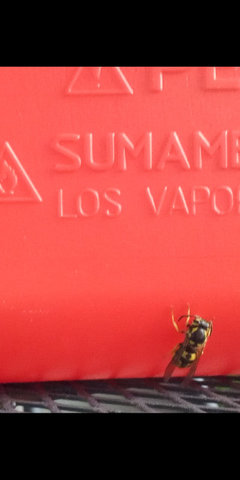
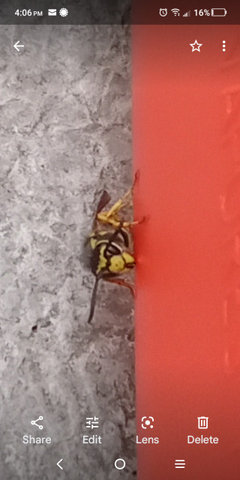
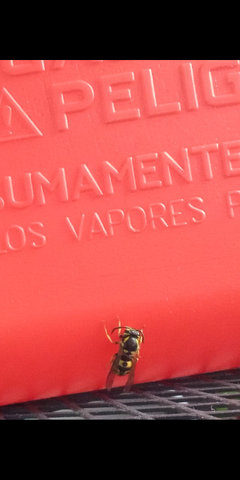
    Found the culprit today while tidying up - looks like a wasp. Moved him outdoors with the can. Hopefully he leaves for good and doesn't hid back in one of the pots to give a nasty surprise.

  • 4 years ago

    I'm glad you found the him. I would have "disposed" of him to make sure he didn't come back. Definitely a yellow-jacket wasp, which I was pretty sure it would be.

Sponsored
Peabody Landscape Group
Average rating: 3.5 out of 5 stars8 Reviews
Franklin County's Reliable Landscape Design & Contracting