Software
Houzz Logo Print
dan_chapman62

What happened to my young Oak tree?

4 years ago
last modified: 4 years ago

I have a recently transplanted Red Oak Tree that is stressed and, I believe dying (I am located in Burlington, Ontario Canada - about 40 min drive from Buffalo, for reference). I had it professionally planted last June by a popular nursery in the area. My guess is it was about 70mm diameter last year and probably just over ten years old when I purchased it.


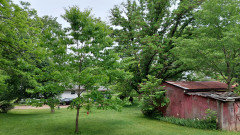
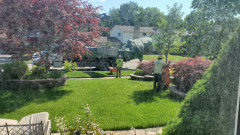
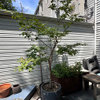
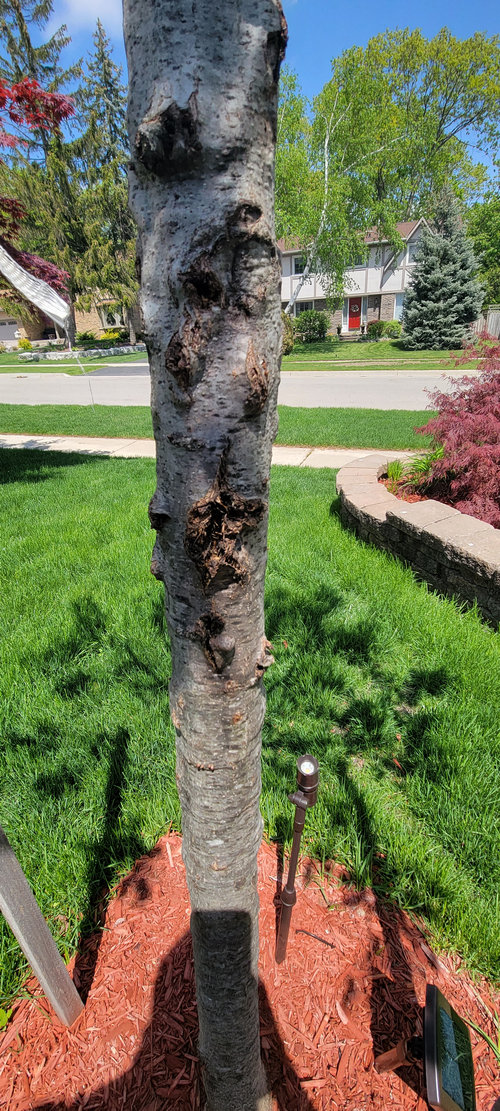
This year I noticed that the entire top 2/3 of the foiliage area is not producing any leaves. There are buds way up to the top, but none of them are growing into leaves. Here's an overview picture of the tree (my little one photo-bombed it!):


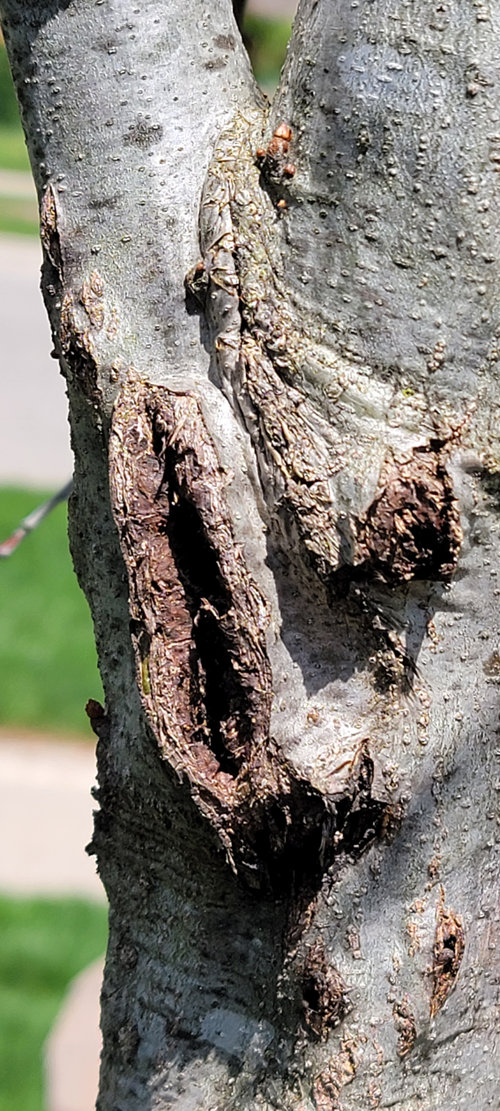
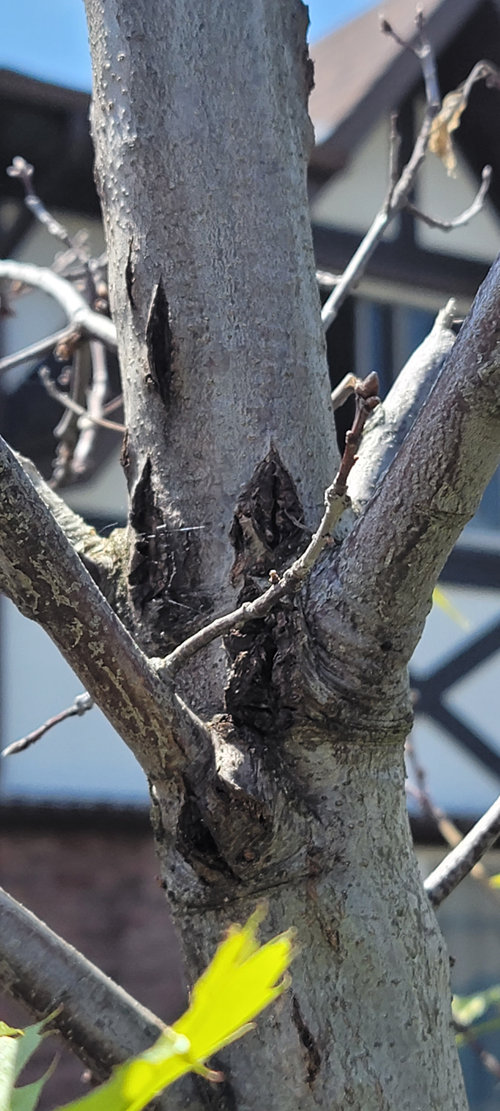
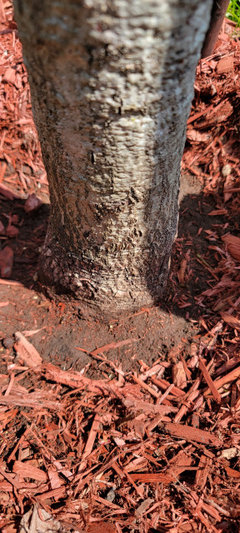
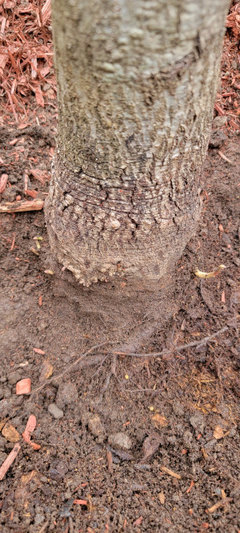
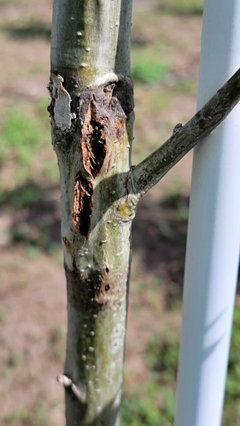
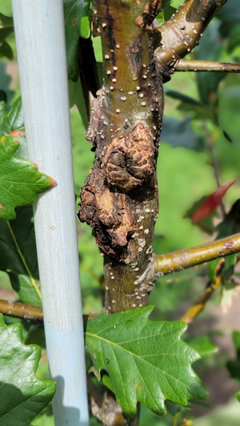
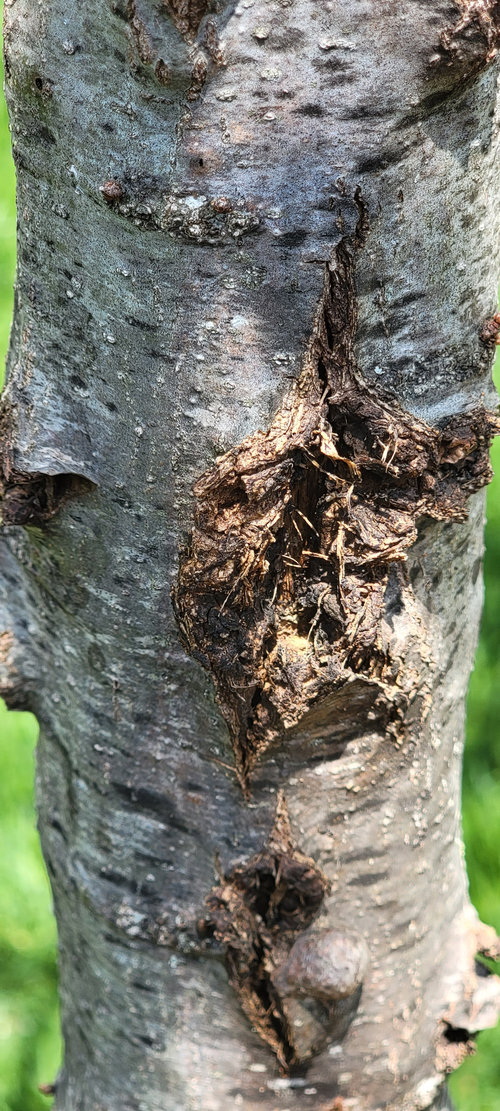
I took a closer look at the trunk and discovered to my horror that there appear to be long splits running all up and down the bottom 2/3 of the tree. I snapped a few pics:


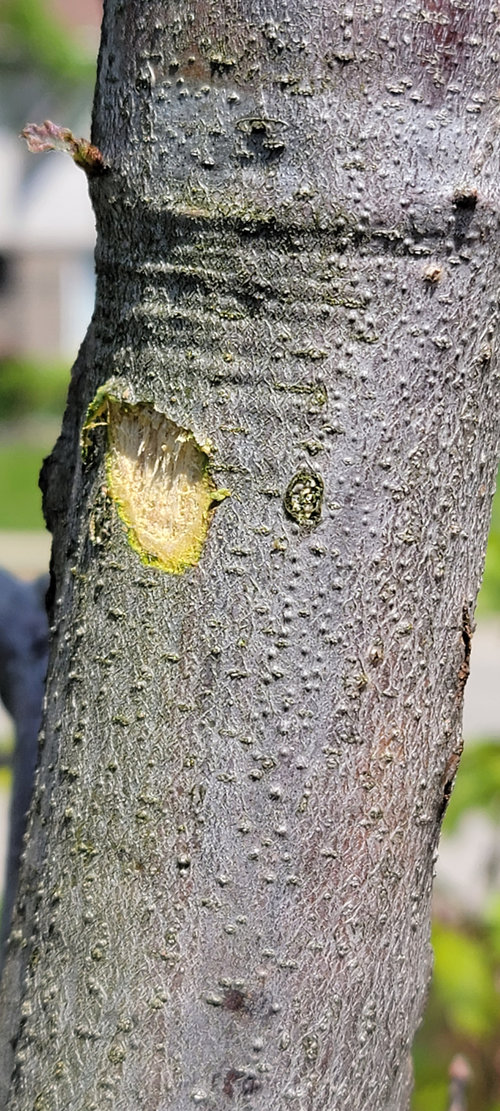
I don't believe this is normal. Does anyone know what might have caused that kind of damage? The nursery warrantied my tree for three years from planting, but they are saying that because there are 'signs of life', they won't replace it. They asked me to cut a 1/4" deep into the bark and look to see whether there is anything green underneath or whether it was just typical wood.. If there wasn't then the tree had likely died beyond a certain point When I did that, I did see some green, but it was only slightly underneath the bark. Here's a pic:


Do you think the top of the tree is permanently dead? If it is, then I may be able to have it covered under warranty, but if it's not, then they are refusing to replace it (even though I will have lost 2/3 of the foiliaged area - maybe more).


I snapped a video as well which I uploaded to Youtube and which you can see here: https://youtube.com/shorts/glVOfDVgpdA?feature=share


Any thoughts are welcomed. Thanks!


p.s. - this is my first post here!

Comments (26)

  • 4 years ago

    Welcome aboard!


    Typing on the cell so this will come out random.


    -The green is going to be right under the bark, not in the center.


    -That trunk looks rough. Is that environmental damage like sun scald? On an oak?


    -I mean there ARE signs of life and I have a Nyssa sylvatica which died down to the ground and is now a tree, but man, do they really want you to hang their name on that tree on your Facebook page?


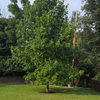
    -If you can keep any pets and kids from digging them up I find smaller transplants to be better. You get all the roots. The Scarlet oak below witb the kid made red solo cup wind chime / deer deterrant was brought home in the MarkVIII you see in the background about 2016. Its even survived a deet attack. Darn, the add on part of the shed needs to find the bonfire pit.


    Dan Chapman thanked Toronado3800 Zone 6 St Louis
  • 4 years ago

    Pretty hard to tell from the pictures, but I don't see the root flare.

  • 4 years ago

    I was going to say- "professionally" planted doesn't mean correctly planted.

    But I would not be happy with that tree, it looks like it's been through a war.


    Do you have photos from the happy day it arrived and was planted?

    What did the bark look like then?

  • 4 years ago

    Thanks Tornado for the feedback! So, from the looks of it, that bark scraping I took does show some green, which means that the trunk above the 'dead line' is still technically alive from what I understand? Is there any chance any of those branches will ever grow back or will the trunk have to start new branches from scratch? If so, and assuming the tree survives whatever stresses it has already been through and will likely continue to go through, then it will likely take years before it gets back to the size it was when I bought it last year.


    I think that winter sun scald is certainly a possibility, but just curious as to why my tree and none others along the street have been similarly affected? Could it be because it's a recent transplant and simply more susceptible to sunscald?


    Thanks so much for the advice and thoughts!

  • 4 years ago

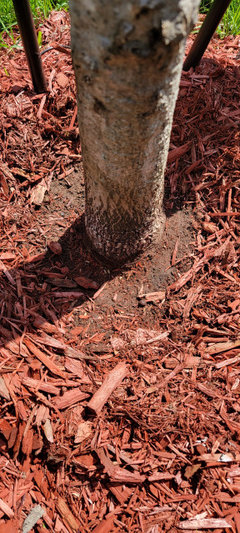
    Laceyvail - I went out and snapped a couple pics of the root flare (doesn't look like there is much frankly):


    Does this help at all?


    Thanks again!

  • 4 years ago

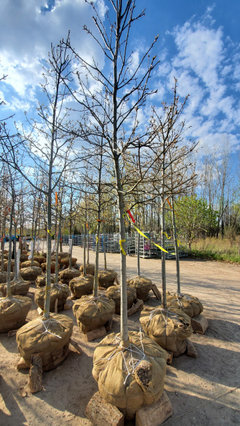
    Cearbhaill, here's a high quality video of the tree I took while it was still in the nursery in May, 2021 (1 year ago exactly):


    https://youtube.com/shorts/G2wAqALow94?feature=share


    As you can see, the trunk looks great - no signs of sun scald or anything. Also, you'll note it was delivered (and I believe grown?) in a basket, so wouldn't that mean the root structure would have been intact? Or is the common practice to grow in ground and then harvest into a root ball a year or two before being sold commercially?


    Here's a pic of the tree I snapped back in May '21 as well if that's easier than a video for you:


    If you can zoom in close enough, you'll see there doesn't appear to be any sun scald like damage here.

  • 4 years ago

    And a photo of it being delivered in June of 2021 - as you can see, full foliage:


  • 4 years ago

    I don't know what is happening with the bark it doesn't look good but we had a recently planted cork oak act like yours leaf wise. We thought it might be dying as it was only leafing out down low at first but then it greened up higher and higher. It lost a little height but it looks healthy now. Maybe your tree just needs a little more time.

  • 4 years ago

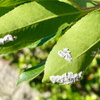
    I don't know if you had cicadas last year in Ontario, but we had a huge brood in Maryland. They killed off the ends of every oak branch. Dangling mass of dead leaves all over the trees. They're supposed to not do long term damage, but they can and do. Particularly on young trees. Just a possibility. I doubt they would cause the trunk damage.

  • 4 years ago

    Thanks Kidhorn - we certainly did have cicaidas here in Ontario, but I don't think they caused any damage to the tree during the summer/early fall - the tree had full foliage until the fall, and the leaves turned and fell as I would have expected them to do. The presence of buds on the upper branches suggest to me that the upper 2/3 of the tree tied some time in the winter.


    There has been no change whatsoever in the dead area of the tree since I took that picture meaning I highly doubt it's going to come back.


    It is extremely unsightly right now, and while I am sympathetic towards giving it a chance, I do not believe there is any hope for the upper 2/3 of the tree at the moment. It may be technically alive, but I would hardly call it even that.


    Is there any chance at all the branches coming off of the upper trunk will develop foliage? They snap off like kindling right now (i.e. there is no flexibility as there would be for live branches).

  • 4 years ago

    this is a root flare ...


    https://duckduckgo.com/?q=root+flare&t=ffab&iar=images&iax=images&ia=images


    go all indiana jones archeologist on yours.. until you find the root flare on your tree.. then sanp some more pic ...


    you could have been a bit more gente in the gash you made to look for the cambium layer... that is the lifeblood of the tree .. as long as its green.. the tree will have life..


    https://duckduckgo.com/?t=ffcm&q=cambium+layer&iax=images&ia=images


    make sure you are talking to the manager or owner next time ... it could be delay bud out due to very significant stress of digging and moving a tree that size ... and its still pretty early for many of us ..


    i would give it another month and if the top doesnt leaf out.. i would make a claim for replacement in fall... or next spring .. as appropriate for your specific area..


    ken


  • 4 years ago

    Ken - thanks so much for the education. I'm going to put on some gloves after work today and do some gentle excavation (I'll even use a brush!).


    Re the gash in the cambium layer, it hurt me too to do that, but my nursery told me to do a scratch test: "You can do this by scratching the surface of the bark about 1/4” deep and about 1” in length." My gouge is pretty much this exactly. Maybe she should have told me instead to just gently scratch the surface of the bark and look for green?


    Thanks again!

  • 4 years ago

    Laceyvail - something I can appreciate now more than ever to be honest. But to be perfectly frank, I would be fine if no "real growth" happened for a few years - but dieback like this? A tree that "looks like it's been through a war" is something else altogether. This one is (to my untrained eye at least) clearly going in the wrong direction.

  • 4 years ago

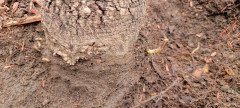
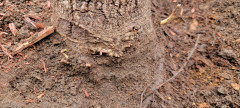
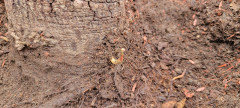
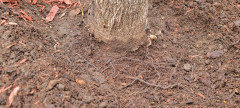
    Alright so I dug up as much as I felt comfortable around the root flare. Went down about 3-4 inches:


    Only thing that seemed strange was there were a lot of new branch sprouts coming out, which I think is not something usual. I didn't want to go down any deeper as I was encountering light latticework root structures visible in the last couple photos.

  • 4 years ago

    I wonder how long it was balled up. Those indentations at the base look like the trunk growing around twine.

    tj

  • 4 years ago

    Tsugajunkie - but trees grow around things like fences from time to time - doesn't seem like it causes much harm to the tree. Would that maybe cause the problems I've been having?

  • 4 years ago
    last modified: 4 years ago
    Going down that far and still not seeing the root flair is not good -- at the very least it was planted way too deep. I would continue carefully and gently keep removing soil until I could see it.

  • 4 years ago

    Bengz6westmd - thanks for the commentary on that. I won't be doing damage to the root structure if I keep going down? I started to hit some of the root structure that (and I am deducing here because the root flare isn't yet visible) appear to have grown in on top of the root flare itself, so my concern would be damaging the root structure. I'll exercise extreme caution and get out the brush again and re-post when I've hit it.


    Thanks so much all - this is an awesome forum.

  • 4 years ago

    You won't damage it if you use a strong water stream to wash away the soil.

  • 4 years ago

    Dan - Sorry to say but your oak tree likely has borer damage. I would never say I'm 100% certain without examining the tree in person, but I feel pretty confident about it. The ridges, lesions, contorted trunk growth - however you want to describe it - is a result of the tree trying to heal over all the damage the borers are doing underneath the bark. And your tree appears to be losing the battle with so much of the top now dead. If you were to peel back the bark near one of those scar areas, you will likely find numerous borer galleries underneath. I've been waging a war on borers now for two years due to back-to-back summers of severe heat and drought. Here's what two-lined chestnut borer has done to a few of my young nursery oaks:


    I'd make a strong wager too that the borers were already in your tree when you bought it due to the extent of the die-back already. Transplant oaks are prime targets for borers in holding yards.


    As for my response to this thread.....better late than never, I hope? The nursery should replace your tree.


  • 4 years ago

    Being planted in June in full leaf would not have been a great start for it either.

  • 4 years ago

    Better late than never - thanks mntreegrower! That was the nursery's first impression as well, but nobody came down firmly on any sort of conclusions. It still looks awful but thankfully the nursery has yielded and actually honored its guarantee(!), albeit making an 'exception' for me (signs of life). I think this thread helped - I sent it to them to show I had tried everything I could think of to determine what was happening.


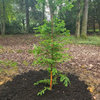
    I'm going to get this one removed and replaced, but next spring. This time, I'm not going for a large translpant (this was a 70mm, or 2 3/4" diameter tree, so a relatively big one), but a more medium sized one (I'm thinking 40mm or 1 3/5" diameter), as the sound advice here seems to be: If you absolutely can't wait the 10-15 years to grow from seed, get a small(ish) transplant. I'm also planting it next spring, probably in March/April, before it leaves out for the summer.


    Obviously, I'm going to go all Sherlock Holmes on it and inspect the trunk of the new tree like nobody's business for signs of borer or mildew or anything else damage, but any other tips on what I should look for/avoid based on the damage that was very likely present in this tree before I picked it out?

  • 4 years ago
    last modified: 4 years ago
    Dan, I've planted maybe 60+ trees on my lot, and all were mail-order. There's less chance of root-binding in these small trees (or easier to deal with if there is) than large nursery trees that have been potted up. And they establsh & get growing much quicker. Just sayin....

  • 4 years ago

    Bengz, what do you mean by mail order and how small were they (by trunk diameter)?

  • 4 years ago

    Mail order is very small to small trees sent in boxes in the mail. Look at some place like the below for an example of a mail-order tree business.

    https://www.musserforests.com/