Software
Houzz Logo Print
violetsnapdragon

Yellow Wax Bells - Sun? Shade?

3 years ago

I have been looking up the conditions of Yellow Wax Bells and getting absolute opposite info--full sun on some sites and full shade on others. What has been your experience? I am in Zone 5/6 in NJ. Thanks.

Comments (25)

  • 3 years ago

    That can be a problem with using common names......not everyone is necessarily referring to the same plant :-)) If you are referring to Kirengeshoma palmata, this is definitely a shade plant!! Partial to full shade and consistently moist soils.

    violetsnapdragon thanked gardengal48 (PNW Z8/9)
  • 3 years ago

    That must be the issue! I'm reading "6 or more hours of sun" and "thrives in shade." Thanks for clearing that up!

  • 3 years ago

    violet - then you are sure it is kirengeshoma palmata you have?

  • 3 years ago

    I grow both Kirengeshoma palmata & K. koreana. They are unsure if they are separate sp. or just different in geographical locations. To me there are differences. Either way they are a terrific plant. Mine get morning sun in moisture retentive soil. I hope you get this lovely and under used plant. They are deer resistant as well.

  • 3 years ago

    Oh, yes, Marie--I forgot to mention that I ran out to read the tag after I saw gardengal's post, so it is KP. I was just surveying where I want to put it--in a place where the astilbe comes up very healthy, but does not bloom and wondering if that would be too dark a spot.

  • 3 years ago

    I grow one next to a north-facing wall (have to water). A really good plant.

  • 3 years ago

    Curious. Many years ago, I tried one in partial shade. It died out fairly quickly, and then I found the fatal words 'prefers acidic soil'. Since I have a terrible track record with Japanese plants, I crossed it off my list of plants I had any business growing. It sounds like I should rethink that.

  • 3 years ago

    I certainly don't have acid soil, Mads...but I do grow it next to a chaenomeles, which I have to do a seasonal sequestrene treatment so mayhap it benefits from that. I do have to water it almost daily though...and all the lowest leaves are a bit...chewed (from mollusc predation, I assume). I wouldn't consider growing a hosta under any circumstances, but I don't begrudge the (huge) space kirengoshoma takes up..

  • 3 years ago

    rosaprimula, i dont understand ””but I do grow it next to a chaenomeles, which I have to do a seasonal sequestrene treatment”

    in fact i dont think i understand your entire post. i do feel uneducated.

  • 3 years ago

    Regardless of feeling stupid i have k palmeta and koreana, both in bight shade. (No direct sun)

    i tried growing k. palmata in afternoon sun in well drained soil and nearly lost it despite deep watering 2 x weekly. Now i I grow them in deeper woodland duff; both do well though they needed a deep weekly drink during last year’s killing drought


  • 3 years ago

    My experience is no direct sun or leaves burn very quickly. Bright shade was best.

  • 3 years ago

    I chopped a potted kirengeshoma palmata in half 2 years ago so I have 2 and they are in 4 hours of direct morning sun(9-1pm) and they grow fine for me.

  • 3 years ago

    Sequestrene is a product used for acid loving plants. Chaenomeles gets chlorotic on soil which is too alkaline. Hence the treatment.


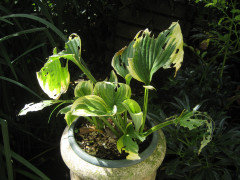
    The reason Rosa doesn't grow hostas is this .....


    That's my one and only Hosta, growing in a container on top of a three foot tall chimney and surrounded by egg shells. (Please don't offer other home made snail 'remedies'. They do not work.)

  • 3 years ago
    last modified: 3 years ago

    Is Sluggo or a similar product not available in the UK? It's harmless to pets and wildlife. I don't grow hostas because of deer but I do have slugs and use Sluggo usually with great effect, especially in the veggie garden.

  • 3 years ago

    Yes. Ferric phosphate products are available. And that's what I use now, although in our climate it needs reapplying very frequently due to rain and it gets expensive. I was referring to all the home made so-called remedies such as egg shells, sharp sand, coffee grounds, beer traps, copper strips, etc.

  • 3 years ago
    last modified: 3 years ago

    Cheers, Floral. I can't be bothered with Sluggo because it only takes one single moment of inattention and the horrible chewed effects (on hosta) are depressingly visible for the entire season. I still do the nightly patrol (mostly slugs, now). I have a sheepdog who also enjoys grazing on certain lush foliage, and worry, possibly needlessly, about slug-born diseases.

    Hole-y leaves on kirengoshoma are easily camouflaged by newer, more pristine growth, but an eaten hosta is just a reproach I would as soon avoid.

    I really apologise, to come across as unhelpfully obtuse, Marie...and thank Floral for the clear explanation. I am normally scathing about 'expert jargon', as we all benefit from sharing our hard won knowledge.

    Interesting to hear that, Heruga. Mine is an enormous thing, occupying the full width of a raised bed, so I have been a bit reticent about digging it out and dividing. Do tell me more (especially when you did the deed and what the roots looked like). I have only grown this single specimen so have scant experience of how best to use them.

  • 3 years ago

    Well since mine was just a 3 gallon potted plant it wasn’t as difficult. I did it in early Spring(April) just when growth started to emerge. Crown was very woody and somewhat tough to cut through, didn’t have sharp knife so I resorted to using my handsaw and sliced it right through the crown. Didn’t really pay much attention to the roots much but it was pretty woody all the way through when cutting it. I probably should’ve washed all the potting mix off the rootball before dividing it but I had a million things to divide and transplant from my old house as it was my first Spring in this house since I moved in. The plant didn’t really take off until a year later, so its probably not something you want to divide so often especially as small a plant I had. It probably got more sun than it needed as a divided plant so that might’ve affected its vigor at first. Right now its still about 2.5 ft wide and slightly taller. But like you said I know this plant will become a monster one day so I gave it 5 ft of circumfrence space but after reading your post rosaprimula, its probably much bigger? Or 150cm ish

  • 3 years ago

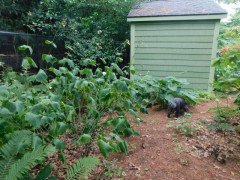
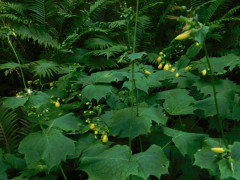
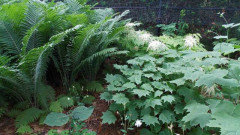
    Kirengeshoma is the only yellow-flowering plant I grow! I think it needs moisture more than light. I grow ours in 'the wet corner' where three properties slope down to meet in that corner. It grow with ostrich ferns and misc. other smaller plants (e.g. a goatsbeard, some white trilliums, some smaller blue hostas, a Jack-in-the-pulpit, a hydrangea etc.) I tried growing the kirengeshoma on slightly higher ground to give it more light. But those ones died out. It survived (in a limp state!) the drought last summer and also a drought in 2016.


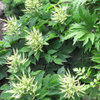
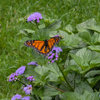
    Some pictures:

    dry in 2022!


    Better in 2021:


    With some companions:


    violetsnapdragon thanked woodyoak
  • 3 years ago

    Ah, I think I should leave mine well alone...not least because I can actually give it as much water as it needs...which would not be the case in either the allotment or wood. I am, however, going to hoik out a much diminished hellebore which has been overwhelmed by the kirengoshomas vasty architecture, and stick the ill-advised trollius seedlings in the empty space and have a sort of mini bog garden.

  • 3 years ago

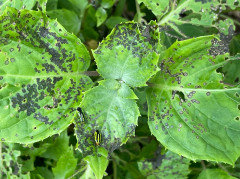
    I'm wondering if others in my zone, possibly woodyoak and peren.all, ever see late spring frost or freeze damage? Mine seems to get zapped more often than not. Mine also commonly gets slug damage, and for the past couple years some serious 4-lined plant bug injury (photo taken today 7/4/23)


  • 3 years ago

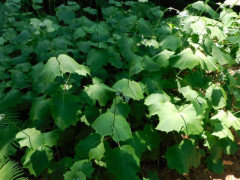
    arbordave - I've never really seen frost damage on the Kirengeshoma - or plants that look as damaged as yours - DH just went down and took some pictures of ours this morning - This is what they looked like on this very hot and humid day:


    I find them very sturdy and tough plants!

  • 3 years ago

    I have K. palmata in alkaline clay. I read that it needed acidic soil, but when I saw a little one for a few dollars, I decided to try it. I dug in a lot of peat moss when I planted it, but by now that is at least 15 years ago, so I am sure it is as alkaline there as the rest of the garden now. It is still doing well every year, with no frost damage or bug damage, but does it ever need its water!

  • 3 years ago
    last modified: 3 years ago

    Just a correction in my report as I was home today in an actually fully sunny day. My kirengeshomas actually get 6 hours of direct sun, at least in the high summer sun. Started receiving light from 8 am and until about 2 pm so thats full sun. Just waiting for my nearby trees to get bigger so they’ll be able to be in more shade in the future.

  • 2 years ago

    I do not have Yellow WAX bells/ kirengeshoma palmata, I saw a photo & did a google search & found it like shade, but the same search had Yellow bells which is forsythia & it love full sun, will grow in poor sandy soil. kirengeshoma palmata blooms in fall & forsythia blooms in early spring.

    I will get the KP, because it is a fall bloomer & is cold hardy to zone 6 or 5 maybe.