Software
Houzz Logo Print
nm4bd3lj

Ground Rod / Electrical.. Help!!

2 years ago
last modified: 2 years ago
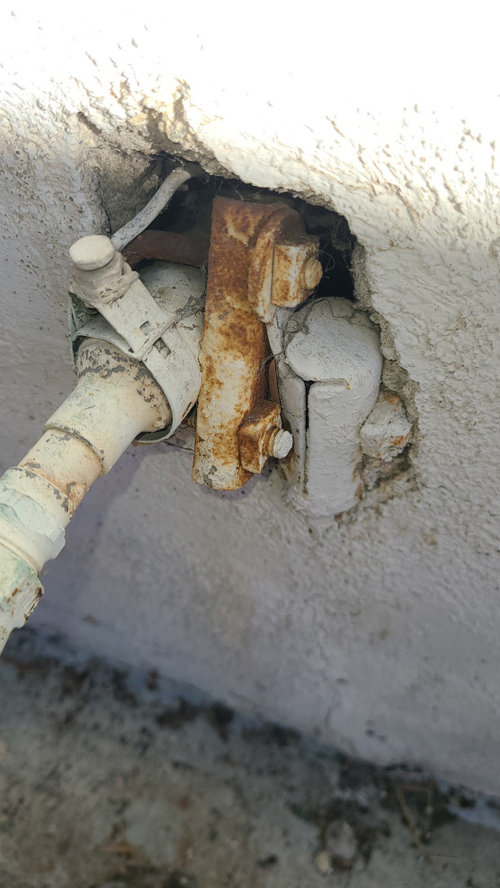
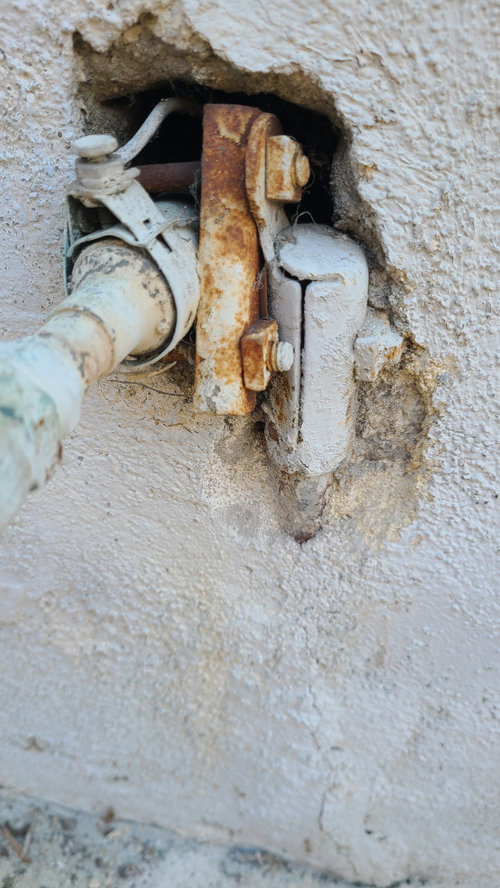
So I have a 1" copper line that's the main water source coming into the house through the garage. The first tee off is to this 1/2" house bib. I'm getting ready to redo the previous water supply project by the former owner and I'm transitioning to pex. Herein lies the problem, I know some older homes used to attach a ground to water lines. I didn't think that was the case here (although house is pre 1970) but I'm confused as to what I'm actually looking at. It's a stucco exterior siding (black paper, wiring, mesh, stucco). Thoughts on what this metal attachment and wiring is??


Comments (14)

  • 2 years ago

    That is a ground conductor.

    Run a properly sized ground conductor from the breaker box to the water line where it comes in - before it goes pex.


    Your home should have 2 grounding electrodes - usually a water supply (when that's metal) and a ground rod.


    Noor thanked Jake The Wonderdog
  • 2 years ago
    last modified: 2 years ago
    Thanks so much for the comments everyone. @jake is it sufficient to remove the clamps and wires, extend the wire, and clamp it down where it comes into the home, roughly 20ft over through the joist space? The breaker box is completely on the other side of the home. I could otherwise, transition to pex very close to where it is now and it would only need to move about 2 feet.


    Dave as far as a bonding jumper vs ground conductor, is the process the same?

    Also does anyone know why these connections are halfway in the wall as opposed to completely inside or outside?

  • 2 years ago

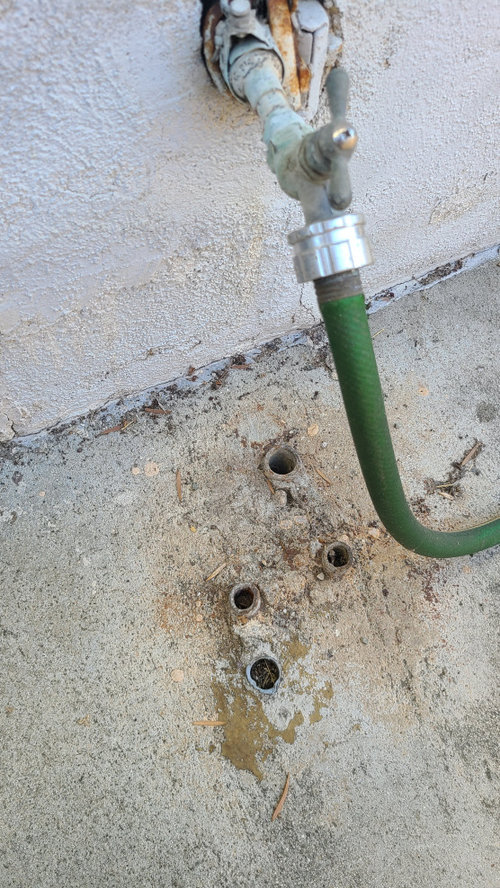
    So I broke off some of the stucco to the white clamped piece. Looks like it's a rod that's going down into the foundation sort of. I can't see it in its entirety but the way the stucco bows out leads me to believe this. As we can see on the inside we can't see that copper rod at all. So we have a copper rod going through the ground / foundation that is clamped to a metal piece that's clamped to the hose bib pipe which has what looks like a 14 gauge wire going into the stucco. I was also under the impression that I needed 4 of 6 gauge for a ground wire to metal pipe. So still sort of unsure how to remedy here.

  • 2 years ago

    Ditto Jake.


    http://wiresizecalculator.net/calculators/groundconductor.htm

    Put in your main breaker/fuse size and calculate.

    Noor thanked HU-867564120
  • 2 years ago

    A few questions I'm still trying to understand/ clarify.


    Does the distance between the breaker box and where the pipe comes in and is attached matter? If I snake it through all the way from the box it's going to be at least 30-40 feet.


    Do we think this was an improper installation that was code compliant back then and we should just upgrade now? Lastly, could this have to do with or would it help having a sub panel? I just noticed there was one above almost directly, on the side of the house for the air unit.


    As I understand it so far. If a rod is going into the ground (copper pipe with white clamp) that's a ground rod?


    The wire you want me to run back with 6 gauge to the electrial box and attach to the water pipe would be considered the grounding electrode conductor?


    Does this make the clamp between the two, the bonding jumper?


    What other pictures can I take to help? Is there anyway to very any of this with a volt meter or such?

  • 2 years ago

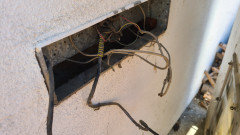
    Found this as well. Looks like it's potentially a ground (black wire on the left) and a phone line with a smaller (14 gauge) wire that matches the origial size of the picture. This one is buried in the wall so I'm wondering if it's going to that hose bib. So I'm not sure I need to run a new one to the water pipe. Thoughts?


  • 2 years ago

    Take the opportunity to put in proper grounding rods. Using the water line as the ground no longer meets code and is potentially dangerous as pieces and parts of your system get replaced with PEX. It's not worth the effort to try to ensure continuity of your ground every time you make a change to the wiring or plumbing. It's a cheap upgrade.

    Noor thanked rwiegand
  • 2 years ago

    Rwiegand, are you saying that you believe that this grounding is improperly done? Any thoughts on my other questions below?

  • 2 years ago

    I don't want to comment on whether it is proper, I'm not an electrician. Old grounds to water pipes were used for many decades and are grandfathered for ongoing use. I'm just saying that if I had any occasion to wonder about or do any work on the ground of my system I'd get rid of the water pipe connection and put in dedicated grounding rods. With any kind of reasonable soil putting two rods in will take you an hour plus a little #6 copper back to your main panel giving you a solid, permanent solution. I've lived in houses with questionable grounds and they can cause weird problems, like odd humming in stereo systems.

    Noor thanked rwiegand
  • 2 years ago

    It looks to me as there was an old pipe that had two ground connections. But that it was cut off and a new copper pipe run inside it. So the copper pipe may not be grounded at all - or at least not there.

    So are you saying that there is a rod going down from the clamp on the right? Post a photo after you chipped away the stucco.

    The smaller wire on the left may go to the telephone box where there should be a grounded "protector". But you can't tell from that photo what is in the box and where that wire is connected.

  • 2 years ago

    Thanks for the comments all. Update, I noticed that the main shutoff for the water that's inside the home is actually 2 joined copper pipes with a Ptc Sharkbite coupler. If this line is supposed to supply a grounding electrode, I'm not sure it is.


    Rwiegand, I hear you. I've tested all the outlets in my house and only a handful show an open ground as it stands. (This may not be relted ato grounding, I haven't taken off the outlet covers) I can see all the water piping and none of it has any other ground clamps or wires attached to it. I could install new ground but I would have to dig into concrete because there isn't any soil near the house aside from where the main water line comes inside. I'm not sure I'm missing a ground as it stands. Especially with what looks to be a ground rod / cable in the telco box gives me a bit of ease that the main panel is secured.


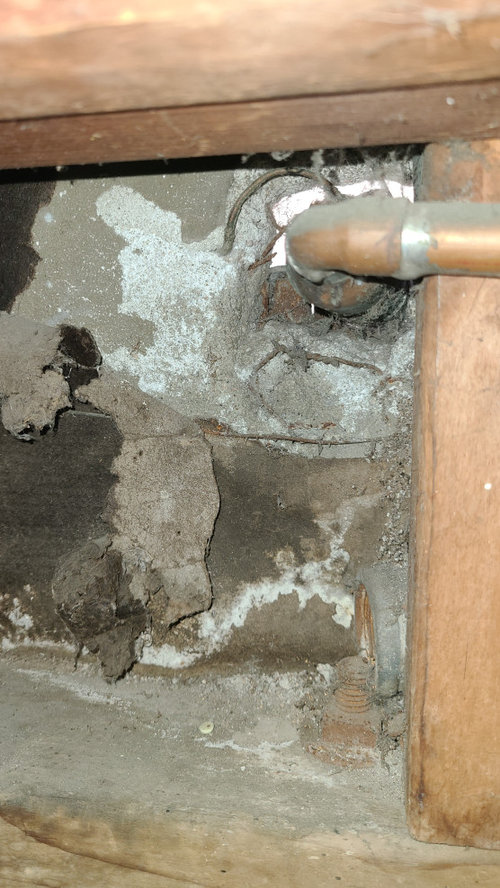
    Dennisgli, I'm not sure I'm seeing the old pipe with a new pipe inside of it. To which pipe are you referencing? In my images there is one copper pipe that I believe to be a rod. It's not visible at all on the interior and on the exterior it seems to be going through the ground as that's where the stucco on the outside bows. See 2nd picture in the original post. It's capped with a clamp that's connected to another clamp connected to the hose bib. The ground wire that seems to be connected to the hose bib matches the wire that's connected to the grounding plate in the telco box. I can't actually see where the wire in the box goes nor can I confirm that it's the same wire. It was just my guess.


    At this point, I'm thinking of running a smaller gauge wire from the main water line before the Sharkbite connector all the way to the area with the hose bib, joining it to the small gagude currently on the bib and clamping both to the copper rod that's going into the ground. Does this seem reasonable? I'm not necessarily looking to redo things, just ensure that by converting to pex, I'm not messing up anything in place currently.

  • 2 years ago

    I was referring to your second picture. It looks like there are two ground clamps - but it doesn't look like they are clamped around the small copper pipe going to the hose bib - but clamped to some larger pipe that has some 'white stuff' between it and the smaller copper pipe.


    But let's take a more logical approach to this. The real question is where is you main electrical service panel grounded now? So I would start there 0 by looking into the panel and tracing the wire back to the "ground".

  • 2 years ago
    last modified: 2 years ago
    So, look:

    We can't tell EXACTLY what's going on here because much of this is hidden.

    Based on your description,

    "We can see on the inside we can't see that copper rod at all. So we have a copper rod going through the ground / foundation that is clamped to a metal piece that's clamped to the hose bib pipe which has what looks like a 14 gauge wire going into the stucco."

    I'm going to make an educated guess:

    1. Residential electrical services require 2 grounding electrodes (although many of the older homes only had one). I think we are looking at both of them. A rebar that is encased in concrete that meets the specified length, etc. can serve as a grounding electrode (that changed in 2020). A metal water service can serve as the second (in fact it's required if present) and must be connected within 5 feet of the pipe entering the building. I think you are seeing the rebar grounding conductor bonded to the pipe with a U type clamp. Note: Any metal pipe needs to be electrically bonded as well. So keep that in mind when you are splicing in PEX.

    2. The #14 or #12 gauge wire probably goes to the telephone box in the other photo. That has a lightning arrestor in it that typically connects to a waterline. It's not large enough for an electrical service.

    3. RWiegand is correct, in that you need to call an electrician to fix this. I can get a sense of your understanding of the grounding system - and I think you should call someone. It's going to be an ongoing problem every time someone patches in PEX or CPVC. An electrician can evaluate this, know what you have to add to bring to code, and the best way to get a ground rod in. I've drilled concrete sidewalks / patios before - no problem.

    It is entirely beyond the scope of this group to accurately evaluate your grounding system - but we can see enough to know that you need to call in help.