Software
Houzz Logo Print
sandra_plate

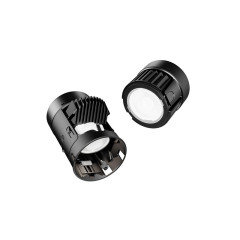
2" LED recessed lights

last year

Anyone have experience with 2" LED Mini Recessed lighting? I'm beginning a kitchen/den/laundry reno and I have been toying with these but I'd like some first-hand info. Thx.

Comments (13)

  • last year

    Why do you want those? Because of looks?

    How high are your ceilings.

    Pick the best lighting for the tasks you want to do in that room.

    I have mostly 12 ft ceilings, so most of my recessed lights are 6" with some 4". We used a local lighting showroom to help with size, lumens, location, etc of the lights needed for each space.

  • PRO
    last year

    1 little candle lit in a cathedral won't let you find your path to walk. Small lights are accents, not lighting.

  • last year
    last modified: last year

    Task lighting. You need lumens at the counter for work zones. 450 at the surface minimum is recommended. Narrow spot, wide spot and flood are led bulb options with different light spreads. As an example, two sources 6" in from the counter edge and offset to either side of the work zone will eliminate shadowing from your body on what you're cutting. Home - DMF Lighting This is one source with products for your needs. You'll also want to choose the color temperature of the bulbs.

    Lumens (Downlight): 500 lm (9.5W), 750 lm (9.5W), 1000 lm (12.5W), 1250 lm (14.3W), 1500 lm (16.5W)


    Sandra Plate thanked dan1888
  • last year

    I'm not sure what brands offer this, but Element offers a product called Multiples, where there are several small recessed lights in a row immediately next to each other.

  • last year

    I think point light sources are nice for dramatic lighting, think cocktail lounge or atmospheric restaurant. For a kitchen, it seems a broad, bright, diffuse light with as few shadows as possible would be better. Imagine you’re a surgeon, preparing to operate on a pork loin, what sort of illumination would you like?

  • last year
    last modified: last year

    Minimum of 4", IMHO. 2" will not emit much light. As others have said, they're more for spotlighting a small object such as a sculpture or painting or a small nook/alcove.

    In general, lighting should be "layered".

    • Recessed lighting throughout Kitchen
    • Under-counter lighting for task lighting
    • Pendants or similar in places such as over sinks, islands, or peninsulas
    • Lighting under the rangehood (over a cooktop or range)
    • Ideally, all should be dimmable
  • last year

    It isn't the case that 2" recessed lights "will not emit much light". For example, this Luxrite LR23415 emits 1000 lumens and this Nicor DRD2 emits 626 lumens.* I used the 2" Nicor lights in my hallway remodel and they work fine. They're on a dimmer; at full brightness they'd be far too bright. These 2" recessed lights have a 38-degree beam angle which is only slightly smaller than the 40-degree beam angle of a PAR20 bulb used in a typical 4" recessed can light. Home Depot has lots of 2" models.

    -----

    *For comparison, this 4" Juno WF4 emits 700, 900, or 1100 lumens (adjustable).

  • last year

    Sorry for the delayed response:

    I have 8’ ceilings. I would hate to get 4” pot lights and then 2” is all the rage five years from now. Ive heard designers on tv brag about doing them (I know, I know, tv…) They seem to have similar spread as 4” ones.


    I will be getting under cabinet LED strips and hood light. But I have a large skylight so no pendants or chandeliers.


    Thank you!

  • last year

    6", (5"), 4", 3", and 2" recessed lights can all be made to functionally work in your spaces. I would say it is more a matter of the level and design of the spaces, the house, the cabinetry, and fixtures (appliances/furniture) which would influence the lumenaires you choose.

  • last year

    As others have stated, you will need to pay attention to light output (lumens) beam shape (narrow, broad, etc.) color temp, placement and general overall design. The diameter is just one factor. My experience is that it's generally easy to find what I'm looking for in a 4" fixture.


    Just an FYI: There are ultra thin LED fixtures (less than 1/2") that solve the problem of a joist being in the way. They are cheap, color temp selectable via a switch, and dimmable.


  • last year
    last modified: last year

    "There are ultra thin LED fixtures (less than 1/2") that solve the problem of a joist being in the way."

    The problem with the ultra-thins (wafers) is the glare. Yes, they solve the joist problem, but the downside is more glare compared to a recessed. I have them in the basement precisely because of the joist problem but it doesn't bother me down there, but the glare would bother me upstairs in the kitchen and living areas.


    ETA:


    "For a kitchen, it seems a broad, bright, diffuse light with as few shadows as possible would be better. Imagine you’re a surgeon, preparing to operate on a pork loin, what sort of illumination would you like?"


    ^^ This. The amount of 2" lights needed to properly light up a kitchen space = swiss cheese effect.

  • last year
    last modified: last year

    Regarding the glare: Recessed lights give you more of a down light. It's a different lighting pattern. I've never been crazy about the dark ceiling and 1' or so down the walls with recessed lighting.

    Flush, or nearly flush, gives a cleaner appearance on a white ceiling - especially when they are off. But yes, there can be more glare. I think glare is increased when the lights become smaller and brighter.

    I know that the OP said no hanging lights, but usually having some light from a fixture bouncing off the ceiling solves the problem of the dark ceiling/walls and also produces diffused light that reduces shadows. A combination of directed task light and general illumination is generally best.