Software
Houzz Logo Print
floral_uk

Are you considering landscape fabric weed block?

10 months ago
last modified: 10 months ago

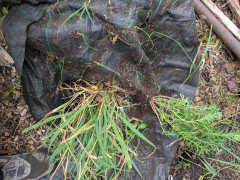
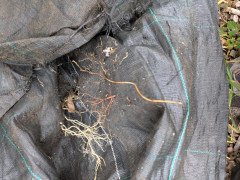
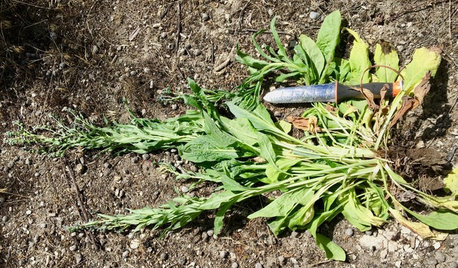
Often on these forums we warn people against laying landscape fabric in beds in the hope it will eliminate weeds. This is why.

Comments (14)

  • 10 months ago


    Weeds growing through landscape fabric. Seeds germinate on the surface.


    And roots grow right through the fabric. Incredibly hard to get out.

  • 10 months ago

    just dont do it, it is just a matter of time until some seedlings, especially tree seedlings poke their stubborn roots through the fabric

    IMO the weed blocker is suitable for veggies and stuff you just grow for a season, or cover a seasonal path between the rows

    AND THEN REMOVE IT and put it dow again somewhere else


    you can only heighten or enlarge the problems by throwing "rocks", like granite rubble on top

    again, just a matter of time when the natural succession takes hold,

    it it a b*tch to clean and usually decomposing leaves make a nice bed for tree seedlings


    I do ladscape design and garden consulting and I have had several clients who were totally disappointed that this lovely fabric didnt work in the long run, like 5y plus

    floral_uk z.8/9 SW UK thanked linaria_gw
  • 10 months ago

    Yes it is a terrible product and will only turn your gardening experience into a bad one for all of the above reasons. Do not use it.

    floral_uk z.8/9 SW UK thanked peren.all Zone 5a Ontario Canada
  • 10 months ago

    "...or cover a seasonal path between the rows"


    Don't throw said rocks and rubble at me but yes I do use it for this purpose. I have a large (~2000 sq ft) vegetable garden, not all of it planted, and it's nearly impossible to keep up with weeding until I put down the landscape fabric on the paths and other areas that aren't used. I also put down a layer on the area the squash and melon vines are going to ramble over.


    There is a difference in landscape fabric. I've found the heavy-duty Vigoro gray stuff I got at Home Depot is much better than the black stuff. In some areas that are permanently out of use, I put down a double layer of the Vigoro and wood chips on top of that. Nothing gets through it from underneath, and anything that blows in and germinates on top is simply a bend and tug. Not too much takes hold on the paths because I walk back and forth on them and stuff gets trampled as I go.


    Now, let's face it -- if you don't keep up with weeding eventually stuff is going to take hold no matter what you put down or don't put down.


    I don't use the fabric in my beds or areas of the vegetable garden I plant, but for paths and such it works well.

  • 10 months ago
    last modified: 10 months ago

    I agree and disagree at the same time. [g] We have used it in both a pathway that is a simple bark mulch path and a sitting area again of bark mulch. The pathway did not have the mulch consistently renewed and sure enough the weeds have grown up through it. We are starting to remove it soon. The edge of one side of the pathway was edged with rocks and we tried placing the fabric under the rocks and then added bark mulch around them. Unfortunately, again, we were not able to maintain this area for awhile and there was a patch of lawn nearby that had crabgrass in it and without consistent edging, the crabgrass has ended up coming up around the rocks and in the perennial bed on the other side of the rock edge. Now that is a job we are not happy to be facing. The fabric was not that hard to remove and dispose of, but...getting all the crabgrass out is not going to be easy.

    The sitting area though, where we consistently added a thick layer of mulch just about every year, held up well and has served it's purpose for years.

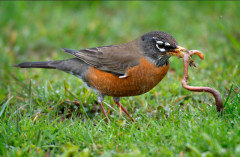
    So in certain circumstances it can be pretty good. We've never used it in a bed that has anything growing in it. We always use cardboard which we love the results of. It really does keep the weeds out for a year or two and then breaks down and improves the soil and attracts worms.

    floral_uk z.8/9 SW UK thanked prairiemoon2 z6b MA
  • 10 months ago
    last modified: 10 months ago

    I've used landscape fabric. It cuts down on the weeds, although it doesn't eliminate them. It's particularly helpful if the soil you're putting it on has a hefty seed bank. I often put it under mulch and then, after a few years, remove it.

    floral_uk z.8/9 SW UK thanked Sigrid
  • 10 months ago
    last modified: 10 months ago

    "Now, let's face it -- if you don't keep up with weeding eventually stuff is going to take hold no matter what you put down or don't put down."

    That's my point. People who think it will eliminate weeds and weeding will be disappointed. And they think it is a permanent maintenance-free solution, not something which needs lifting periodically. The pictures I posted are of fabric I had laid down under my container blueberries. I knew it would need lifting periodically.

  • 10 months ago
    last modified: 10 months ago


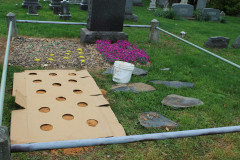
    I don't like landscape fabric either. It always comes back to haunt you. Here's what I did. Use HEAVY cardboard as shown. Plant in the holes and cover the whole area with gravel. This imensely cuts down on the weeds in the seedbank. There is an ocassional weed like crabgrass but it will be easy to pull out. The best thing is the cardboard will decompose which is what you want.

    floral_uk z.8/9 SW UK thanked sam_md
  • 10 months ago

    Ecocidal, now that's a good word. I imagine farmers, gardeners and archaeologists digging this stuff up in future generations and having to deal with tonnes and tonnes of plastic waste. It already litters up our countryside where it's been used in hedge planting, farming and amenity horticulture.

  • 10 months ago
    last modified: 10 months ago

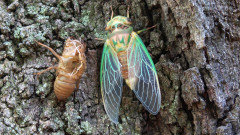
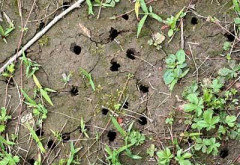
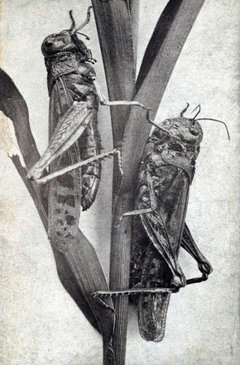
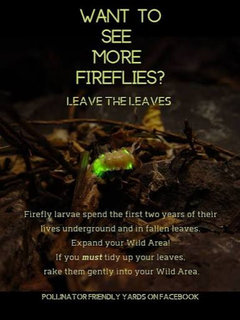
    Here's creatures that are negatively effected by landscape fabric. The now extinct Rocky Mountain Locust used to darken the skies marching in their billions, but they went extict because of farming and geoengineering. Im sure a lot of wildlife, especially birds, depended on those locusts. Our north american fireflies are dissapearing at an alarming rate. The larva depend on leaf litter, and landscape fabric that upsets the microbial balance is adding to the problem. Beautiful creatures are dying because of ignorant humans who want tidy, manicured yards.


    Rocky Mountain Locust

    https://en.wikipedia.org/wiki/Rocky_Mountain_locust


  • 10 months ago

    My neighbors had their rocks removed and then replaced on top of landscape fabric. Unfortunately the returned rocks were not cleaned so there is a lot of dirt mixed with them. Weeds sprouted almost immediately. Luckily they have given me permission to weed the area along my driveway that I see from my kitchen window. I am removing the weeds while they are small and the roots not yet entrapped in the fabric.

  • 10 months ago
    last modified: 10 months ago

    I am sure there are a lot of pressures on wildlife from human activity. Is landscape fabric that much of a contributor? I've used fabric, but only on a fraction of my overall property, so there is plenty of area for birds and insects and rabbits and chipmunks and the occassional skunk. I'd assume that is true of most people using it. It would be interesting to know how much is used commercially.

    Think about all the parking lots and the use of concrete everywhere. I wonder what the soil activity is like under concrete and if there are any studies looking at it. I also wonder about places like European countries where old construction in streets was often pavers so that the soil had a chance for rain to be absorbed and perhaps the soil activity was less disturbed.

  • 10 months ago

    I seem to have been fated to struggle removing landscape fabric at every home to which I've moved.


    In the latest example, a previous homeowner put down landscape fabric over all the borders fronting and at the sides of the house, and I've had to tear it out to replace/add to plantings, plus deal with weeds that grew in the leaf litter and mulch debris atop the fabric and sunk their roots into it.


    The other downsides to landscape fabric in borders and beds is that soil tends to compact under it, you can't readily add soil amendments and beneficial self-sowing is impeded.


    A more overused, less useful landscaping product is hard to envision.