Software
Houzz Logo Print
deb_c13

Best way to fill a siding gap?

17 days ago

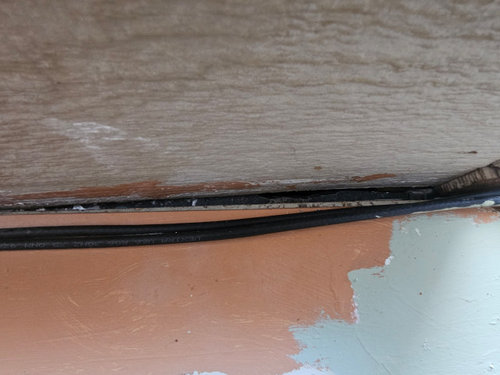
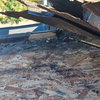
I have a gap in my siding where wasps have been entering my home. I've attached a photo of the crack. Ignore the black utility wire running below it.


The crack is about 18" long and 7/8" deep. At its widest point, it's 3/4" wide, eventually tapering down to nothing.

I need to fill this crack. I don't know whether Sikaflex or some other caulk will fill a crack that large.

If I use backer rod with caulk and the siding flexes, it might push the backer rod out (I've seen it happen with concrete). Another option might be to fill the crack with expanding foam and then seal it with caulk.

I would appreciate any input you might have about what might work best.


Comments (15)

  • PRO
    17 days ago

    Everyone can see the gap, but we cannot tell where is is on the house, and location may be important.


    It seems you already know how to fill it.

    I'd probably use a backer rod covered with Big Stretch. I closed a one inch gap this way 15 years ago between two structures that move independently, and it's still holding.

    Deb C thanked PPF.
  • 16 days ago

    I would use a router and guide to cut crack consistent size end to end then glue a piece of wood in.

    Deb C thanked klem1
  • 16 days ago

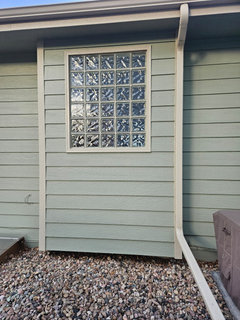
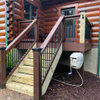
    I did some more investigation and took another photo. The photo with the window and drainpipe gives you an overview of the location. The crack is near the drainpipe, but recessed. Looking at the underside of the eave, I see the "roof" of the area (base of the eave), then siding, and then siding over the concrete foundation. The crack is between the top siding and the siding over the concrete foundation.

    On the one hand, I understand the concern about wood rot. On the other, I'm dealing with a health and safety issue when yellow jackets are flying around in my basement.


  • 15 days ago

    Where in this picture is the "crack"?

  • 15 days ago

    I suggest temporarily plugging it with a non-absorbent,non-rusting material (think Scotch-Brite) while scratching your head for perfect solution. Do it at night when wasps are inactive. If wasps are bothering you that much I can't believe you haven't already plugged the hole.

  • 15 days ago

    The terminology is a bit raw, so I'm going to guess here and try to fill in the gaps of the story (pun intended) to move this along.

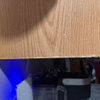
    I believe that is the bottom plane of the cantilevered bathtub bay covered with a piece of HardieBoard, and the orange-ish paint on the foundation wall is an insulation board, that was painted over with the greyish-green (the Dish satellite cable looks painted adjacent to the bay) but they couldn't reach under the cantilever to carry the new paint across over the orange-ish.

    The end of this board near the downspout looks as if either it was installed floating between joists, the blocking was high, or "arched" up over time from house movement.

    If this is all correct assumptions, I may have initially guessed right that it may be a can of worms.

    Here's the easy part: To fill the gap, you can use as suggested backer rod and caulk. Or a trim piece can also work, but you don't want it to extend down past the siding trim on each side, and it needs caulked anyway. I don't know if the board can be pulled down, it would depend on what caused it to "arch." You may have to remove some rock or dig down to maneuver your arms in there.

    Here's the worms part: Since the yellow jacket wasps have been entering there beyond scouting, you probably have a nest. It may be in the cantilever portion of the floor joists, or if there is a bathtub rather than just shower there, then there are large holes in the floor sheathing for the plumbing ptrap and overflow so the wasps could have gotten up in a tub area. If you can access this cantilever through the basement, that might be an avenue.

    I see an a/c condenser cover, so you must be in a seasonal climate. The Queen may have left the nest, or not. Closing the board's gap might kill any Queens remaining, or not. Leaving the nest abandoned may be fine, it might not be abandoned. That's your decision on how far to open the can of worms.


    Deb C thanked 3onthetree
  • 15 days ago

    I live in Colorado, so the yellow jackets die in the winter, usually around January or February. Because I haven't seen a nest under the eave, I'm assuming it's a ground nest that has now been abandoned.

    My basement is finished, so it would be a major deal to tear into the ceiling to deal with the arch, but it's not out of the question. I think you're right about arching under the bathtub.

    Re Klem's question, I had to find the hole first. I waited months for the wasps to die so I could get under the eave and look for the crack.

    I'll get some Big Stretch. Already have the backer rod.

    Thanks to all of you for your thoughtful input.


  • PRO
    13 days ago

    I'd pop the siding off and check the flashing details. Mechanical flashing is superior to caulk. Some gaps are not designed to be filled; you can't know if this one shoud be or not until you know how the wall works (or doesn't).

    Deb C thanked Joseph Corlett, LLC
  • 12 days ago

    That's outside my pay grade, Joseph. If I wanted to hire someone to work on this, would I look for a handy person or someone else?

  • 12 days ago

    You've about rode this horse into ground, hire an exterminator then forgetaboutit !

  • PRO
    12 days ago

    Deb: A reputable handyman could handle this.

    Deb C thanked Joseph Corlett, LLC
  • 12 days ago

    No handyman is needed. Caulking is one of the basic DIY tasks. Metal flashing will not work here, that was misunderstood.

    Deb C thanked 3onthetree
  • 10 days ago

    Thanks for your comments. I'm going to crawl under there again today for another look and to clean out the crack. I do have concerns about the raised wooden "roof" above the siding and will examine that more closely.

  • 9 days ago

    Use backer rod and a highquality exterior polyurethane sealant. Do not use expanding foam. Make sure the gap is clean and dry and use a thick nough backer rod so it stays compressed and doesn’t push out

    Deb C thanked HU-723298302