Software
Houzz Logo Print
bengz6westmd

Eastern white pine hybrid?

7 months ago
last modified: 7 months ago
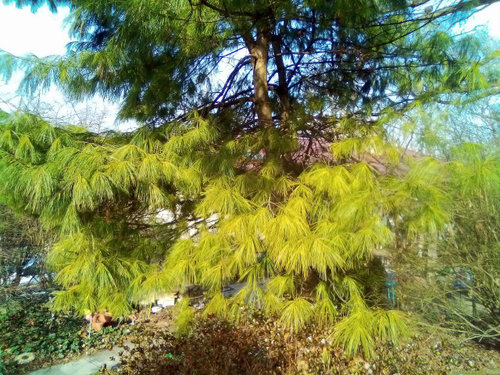
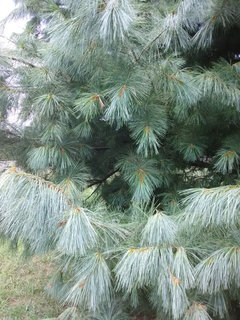
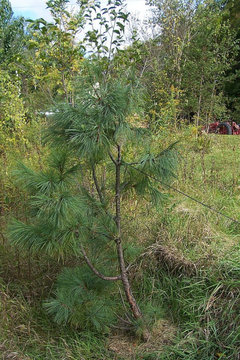
This white pine underneath brother's big white oak in PA captures the attention in the winter months. The needles are definitely weeping, tho not the tree itself. I have seen an occasional eastern white X Himalayan white pine, and this looks similar. Could be just a chance genetic feature of a straight P strobus. Cones might tell (longer than the straight species), but this hasn't coned yet. Graceful whatever its ID, tho crowded by the white oak above. Another, larger white pine on his lot does not have the weeping needles. It's not from dryness -- looks like this wet or dry periods.


Comments (19)

  • 7 months ago

    It is quite attractive!

    bengz6westmd thanked indianagardengirl
  • 7 months ago

    How do P. strobus do in this area? Do you see large, healthy specimens throughout the region? You’ve piqued my interest.

    bengz6westmd thanked maackia
  • 7 months ago
    last modified: 7 months ago
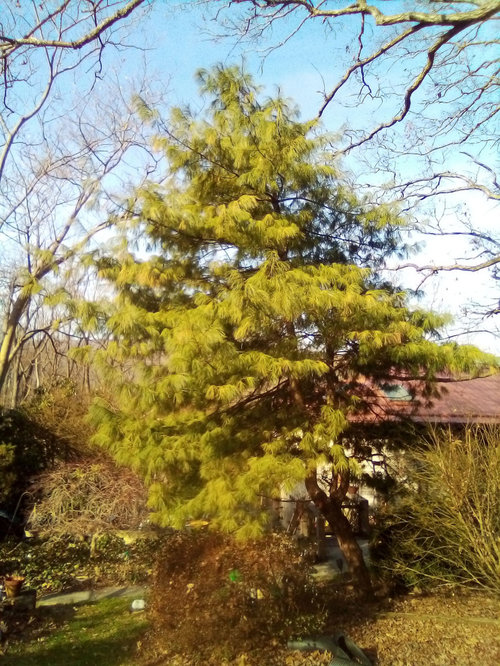
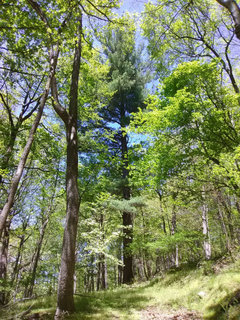
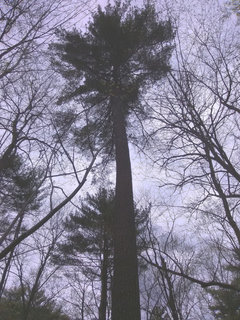
    maackia, they are a fairly common tree in certain areas here. Some areas have quite a few (like near me), others seem devoid of them. Sometimes they mix w/Virginia pines. Farther east they are less common in the wild, tho often planted. They don't seem to regenerate much in the oak forest -- to much competition and closure (tho struggling, shaded seedlings are common enough). Ones near me are too tall above the canopy and get broken off and die. Here's a couple near me -- first is called a "line" tree as it's right on the MD/PA line (and thus spared the chainsaw). Its top was broken long ago and has two crowns now.


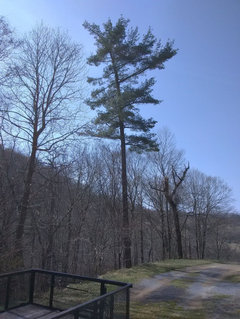
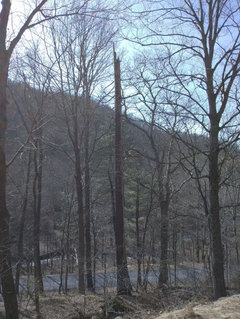
    Here's an exposed one just up from me on neighbor's lot. To left is a cucumber magnolia.


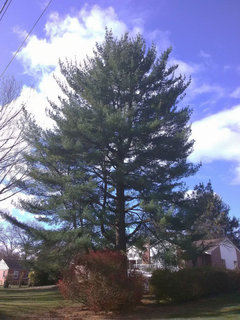
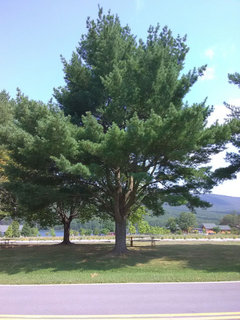
    Here's a planted one adjacent to older brother's lot in west MD.


  • 7 months ago
    last modified: 7 months ago
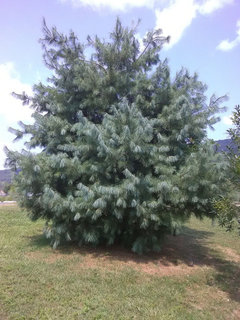
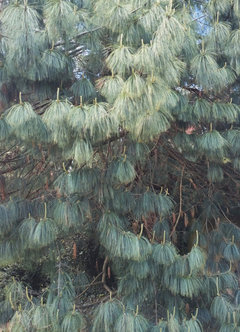
    To add, here's a rather striking Himalayan white pine w/drooping, silvery needles in nearby Rocky Gap state park (MD).


  • 7 months ago

    The reason I ask is I have noticed sickly, gaunt, yellowish White Pines on their territorial fringes. An example is central Illinois where soil deficiencies (too alkaline or iron deficient) keeps them from prospering. The specimen you show could be something different, and it would be interesting to watch it develop over the next several years. I hope you/we get to see it!

    bengz6westmd thanked maackia
  • 7 months ago
    last modified: 7 months ago
    maackia, I notice in cemeteries where old white pines are rather weather-beaten or even broken then cut down. Nearby same-age Norway spruces that are as exposed tend to be in better shape. So eastern white pines are trees that do best in sheltered ravines or slopes w/accompanying trees for protection.

    Protected white pine near me down low in stream gap, 100+ ft tall.


    White pine snag near me broken and dead. Quite a few of these.


    Open-grown (and perhaps "weeviled" at an early age) white pines in nearby Rocky Gap park. Branching down low and spreading out may perhaps be a later benefit for resisting wind-breakage out in the open. Actually I find this form attractive.


    Another park specimen w/spreading form. Alot of these at the park.


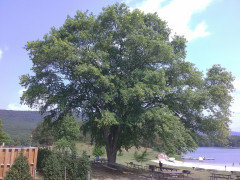
    And just to stir people up, a very handsome silver maple at the park, with a nice, cool picnic area under it. A few of these nice specimens at the park too.


  • 7 months ago

    Ben,

    I was look at old white pine threads.

    (I was actually trying to find the one I posted about a picturesque Pinus strobus in Bel Air, MD. To update the post to say it was cut down!)

    But I found an old thread where you said you had a P. wallichiana that Jason traded to you. It was sourced from Bhutanese seed. Do you still have that?


    I really want to graft the incredibly weeping Himalayan pine I found in Bucks Co., PA. It's by far the best looking weeping (needle) conifer I've seen in the eastern US - almost the equal of the subtropical Pinus patula. I wanted to buy P. strobus for rootstock from Musser Forest, but they were out of them, so I had to buy P. strobiformis instead. I'm doing some practice grafting this year before I 'make a move' on getting scions from the PA tree. And who knows maybe next fall, the white pines will be back in stock.

    bengz6westmd thanked UpperBayGardener (zone 7)
  • 7 months ago
    last modified: 7 months ago
    Maackia - soil is fine for white pines along the east coast, but the problem is they don't cope w/damage from ice or wet snow.

    There was some other thread where I posted a shockingly haggard looking white pine I spotted in the NoVA (northern VA) suburbs of DC. I'd say, if you drive around older neighborhoods of NoVA with an attentive eye, you would NEVER want to plant Pinus strobus! Pinus taedas, though far less common, look a lot better. The 'wonkiest' looking trees in places like Oakton, Great Falls, and Burke are white pines with 'multiple extreme branch injury'. Even in my area, with a lower sample size because I feel like people don't plant as many pines around here for whatever reason, the southern pines look better than the white pines.

    I was just about to 'spring' on a driving trip to NoVA to visit some work friends and possibly the National Arboretum, but w/gas prices being what they are...it can wait!

    bengz6westmd thanked UpperBayGardener (zone 7)
  • 7 months ago
    last modified: 7 months ago
    @UBG, the Himalayan pine you mention did well for a few yrs, then at ~4 ft tall got attacked severely by stem weevils, so bad that it declined and died. Stem weevils seem to particularly go after white pines, and maybe Himalayan white pines are even less resistant than the native white pine, which have dealt w/them over the ages.


    PS Jason also traded w/me my thriving Loblolly pine, which he had sourced from NW Arkansas, at the coldest part of its natural range. I sent him in exchange one of my Montaine longleaf pine seedlings, sourced from hilly NE Alabama.

    PPS Very long ago, but I remember some very attractive, silvery Himalayan white pines at the DC National Arboretum.

    PPPS I prb'ly mentioned to you before, but the Virginia State Arboretum has a very big loblolly pine right near the main building area, kinda hidden by surrounding trees. It also had a Ponderosa pine way back in the property that had to be the sickest, most miserable pine I ever saw -- foliage all gone from needlecast except the very top.

    PPPPS Is this the white pine(s) you mentioned? All I see is I labeled it MD white pines, but can't remember where I got it from.


  • 7 months ago
    last modified: 7 months ago
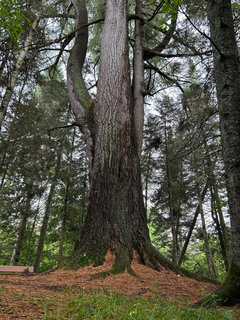
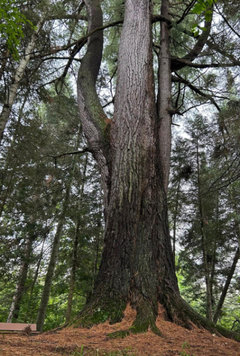
    To add to the fray, a big eastern white pine in the Estrie region of Quebec, Canada.


  • 7 months ago

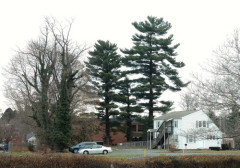
    I remember the post with the Bel Aire, MD, P. strobus dwarfing the saltbox home. They look like they could be growing in the Great Lakes region. Any idea why they would have been removed?

    I just got back from Arizona yesterday and was worried what impact the heavy snowfall we got this past Sunday/Monday would have have on my large White Pines. Ice and heavy spring snow can also damage pines in our area, but probably not to the extent you experience in the east. To my relief there was no damage.

    bengz6westmd thanked maackia
  • 7 months ago
    last modified: 7 months ago
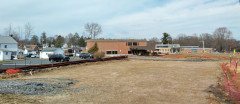
    Yep, well sadly in the name of progress, the saltbox house is gone, along w/its pines! It's near the 'downtown' of Bel Air so someone is probably putting a small shopping center or office building there. I'm glad you kept the pic although I could somehow find the original file again. It's infurating there isn't a better way on this website to catalog one's older posts, but oh well!

    Sorry to hear about your pine dying. Since these Himalayan white pines are 1) beautiful and 2) been around a long while, it makes me wonder if disease problems are why we don't see more of them at mature sizes. It also makes the Buck Co. tree that much more alluring...maybe it's a hybrid that has some disease resistance from the America P. strobus but kept the super weepy needles of some forms of P. wallichiana or even P. bhutanica.

    Here's the Bucks County "super drooper".


    Apparently that pest is native, so it makes sense at least some of the exotic 5 needle pines would be more susceptible.

    https://extension.psu.edu/white-pine-weevil

    bengz6westmd thanked UpperBayGardener (zone 7)
  • 7 months ago
    last modified: 7 months ago
    From a slightly different angle.


    I found what's replacing this lot...

    https://www.mackenziecommercial.com/property-search/2210-old-emmorton-road/

    Way OT but some of the suburbs of Baltimore continue to grow as, um, 'the flight of the affluent' never reversed itself to the same degree as it did for, say, Washington DC and even Philly.* One could almost say the city is 'reverse gentrifying' to some degree, and people gotta live somewhere. So there's definitely way more traffic in Harford County than when I moved to the adjacent one 20 years ago. It still isn't as busy as New Castle County, Delaware, but it's getting there.

    And lots of new large scale developments like this place:

    https://www.mackenziecommercial.com/wp-content/uploads/James-Run-1.pdf

    (* in fairness a handful of quarters w/in Baltimore did quasi-gentrify like Canton, but you couldn't pay me to live there! It does NOT have the same vibe of say, Georgetown DC. The underbelly of the city always feels a couple minutes drive away. Meanwhile some wannabe hip new neighborhoods are experiencing 'arrested development' it seems...as explored in this amusing video. https://www.youtube.com/watch?v=hQlBlFune1M )

    bengz6westmd thanked UpperBayGardener (zone 7)
  • 7 months ago
    last modified: 7 months ago

    @UBG, I can't imagine what the rental costs would be in that Baltimore waterfront area your utube showed.

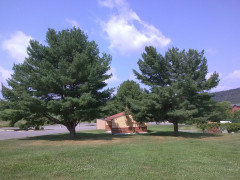
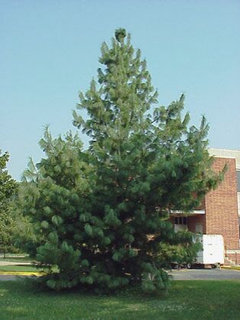
    Here's an eastern white pine x Himalayan white pine on the Hagerstown (MD) college campus. Like the native white pine w/drooping needles. They have some interesting trees there, including some large osage oranges, a couple Arizona cypresses and even a water oak!


  • 7 months ago

    Thanks I'll check that out, if I ever get out that way!


    bengz6westmd thanked UpperBayGardener (zone 7)
  • 7 months ago

    The screenshot below of a photo posted in the above, shows quite well IMHO why white pines were used as ship masts by the British Navy


    bengz6westmd thanked Ontario_Canada5a_USDA4b
  • 7 months ago

    " Ontario_Canada5a_USDA4b " Just checking, are you the same individual who posted under a different account name, and had knowledge of the pine hybrids created at the Ontario Forestry Research Institute? If so, do you know if any of them are still there?


    bengz6westmd thanked UpperBayGardener (zone 7)
  • 7 months ago

    No, that was somebody else

    I did have an older username ontario_backyard which I changed into my present one long, long time ago, because I was tired typing my plant hardiness zone again and again

    bengz6westmd thanked Ontario_Canada5a_USDA4b
Sponsored
Peabody Landscape Group
Average rating: 3.5 out of 5 stars8 Reviews
Columbus' Reliable Landscape Design & Contracting