Software
Houzz Logo Print
upperbaygardener

For zone pushers or experimentalists - plants on last call!

5 months ago
last modified: 5 months ago
Over the years I've had some successes, and some failures. But the older I get, the less I have the mental energy to fool around w/stuff that might not survive here, or to invest a lot of time into protection. Here are plants I'll probably give up on if they don't get established this time:

Eucalyptus

Grevillea

Callistemon 'Woodlander's Hardy'

From 2007-2008 to 2012 I had a Euc get to roughly 20' tall, and a Grevillea juniperina get to about 3' x 4'. I can't remember which PV winter killed the Grevillea, but the Euc. parvula actually vigorously resprouted after the first polar vortex winter, but having another bad winter follow it was just too much. After this I'd only plant a Euc. if I know it has somehow been bred for and/or tested to be hardy and tough (e.g., root rot resistant) in the mid-Atlantic US. I still think, for example, a E. lacrimans x E. parvula hybrid could be way better than either parent around here, but that's just not something that's going to happen in American horticulture at the moment. I'm planting another E. parvula now because that was the one that got going before. As for 'Woodlander's Hardy', I had planted one right before the PV winters, so I figured it deserved a second and last try. It was ok last winter with a wall-o-water. This winter, the parts above the snowline were killed but there's enough green leaves I assume it should be able to get going again.

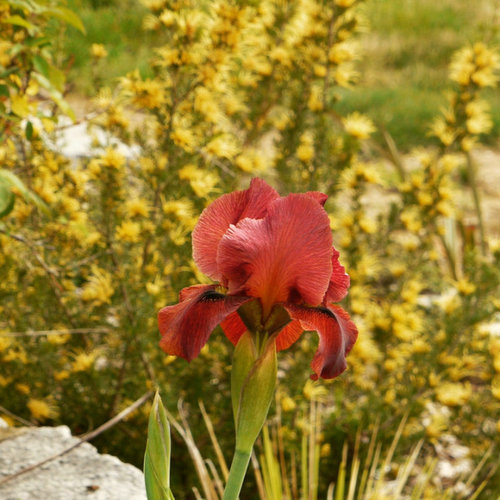
The Grevillea behind an arilbred Iris in its heyday, 2012.


Fritillarias

What in the actual f---!? I have a ridiculously bad track record with these, trying various mainstream species...not some oddities from the west coast mind you, but from places like Brent and Beckys. Yet as a kid in my first garden, I remember that I grew a 'crown imperial', so I know they can grow on the east coast. (Seen them at Longwood Gardens, too, but that doesn't mean much because they have the $$$ to treat them as expensive annuals!) I have no idea what is going on! Am I 'overthinking' things by putting them in places that are TOO dry? Anyhow, if this latest one doesn't work...that's it. I'm writing off the whole genus.

west coast Ceanothus

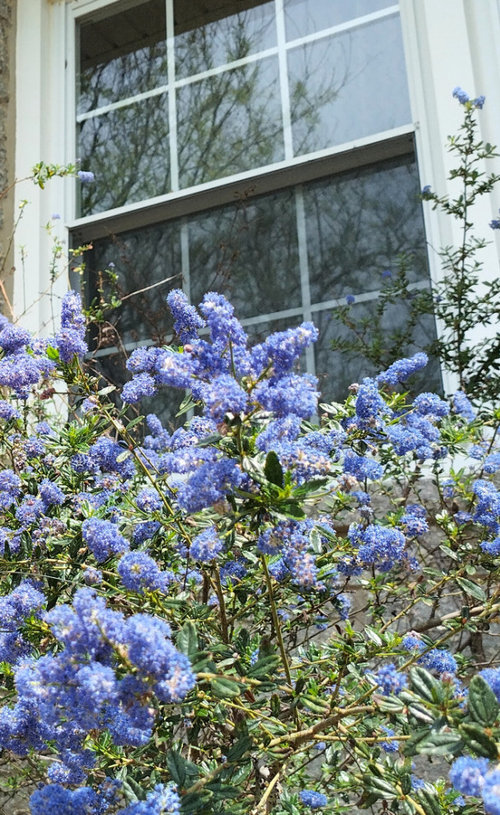
From 2008 to 2013 I had Cenothus 'Concha'. IIRC the second PV winter killed it. Then in the 2016 timeframe I planted an 'Italian Skies'. Even last winter's near 2F or so didn't kill it. But this year's icy ,long lasting snow, incredible wind and intense freeze thaw cycles was too much for it. They bloomed well most years. I've kind of proven it can be done here, if you're willing to replant, but I don't want to have a shrub I have to replant ever few years at this point. If it comes back from its roots, I'll be thrilled - if not, so long and thanks for the memories.


Azara microphylla - has a bit of green left on it. Should start regrowing unless there's some cryptic damage lurking. But clearly very much on the border here. Interesting for being one of the only Chilean shrubs that doesn't seem to have a problem with root rot - I found an account somewhere saying they can grow in New Orleans!

And one more Chilean - Berberis x lologensis. First off, I've seen places rate these Chilean Berberis as zone 7, or even zone 6. No way! This also had 'graduated' from wall-o-water protection, as was the case w/the Azara and Callistemon. There's green below the snowline, as w/those. But if it can't fully recover, it's the last Chilean Berberis I'll try. Unlike the Azara, it is super prone to root rot around here, so I have a it on the steepest slope I could find.

What are your 'this is your last chance' plants?

Comments (20)

  • 5 months ago

    Thanks, sky-blue is an uncommon plant color as the chemistry to produce it is uncommon. But there are a couple ground plants on my lot that make it, for ex some kind of creeping, spindly grass-like plant I don't know the name of.

    UpperBayGardener (zone 7) thanked bengz6westmd
  • 5 months ago
    last modified: 5 months ago
    I agree with maackia, if I had 20-30 more years left of life expectancy, I'd be bolder in my planting choices.

    My main focus, the last few years, is to find trees and shrubs that once established will be little to no maintenance (watering and fertilizing notwithstanding).

    Conifers have been my 'Go To' for the most part bc once established, they generally are non-attractive to varmints and have varieties best at withstanding harsh winter conditions and also grow well here.

    And all along, I haven't strayed too far from what's 'Zone Hardy' but I know that zone 4 here is not exactly the same as zone 4 somewhere else. Not to mention zone ratings on plants seem to vary between sources.

    But I won't plant anything that is not 'Frost Hardy' and in particular, those that are 'West Coast' trees.

    Even with snow cover 2ft. high around base of the nootka, the only parts that is free of browning is the part that was snow covered. And we only had lows of -27 once or twice (Z4) and this tree is located in a wind protected location with a sunshade on it all winter. And the first tree I ever had die of root rot was an Abies lowiana.

    With that said, I'm nearing the end of my 'yard tree planting project' which began in force, circa 2015. I only have a couple of open locations left, depending on what currently survives and I'll be hawkeyed this time around, for plants that will no question thrive in my location, with little or no interference from me!

    ☺️

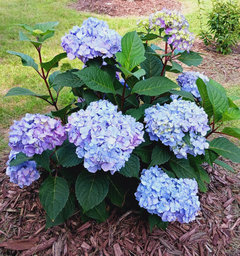
    ps: Blue Flowers. H. macrophylla 'bloomstruck. (deer/rabbit magnet).

    edit: plant only near a water source.😒


    UpperBayGardener (zone 7) thanked BillMN-z4a
  • 5 months ago

    I tried a horse chestnut. dead-ski

    UpperBayGardener (zone 7) thanked L Clark (zone 4 WY)
  • 5 months ago
    last modified: 5 months ago

    Geesh, this list would be as long as I can count. By the way, I do not protect from the elements. Some of the ones at the top of the frustration list are:

    Jubaea chilensis

    Butia odorata

    Chamaerops humilis

    Zamia integrifolia

    Washingtonia filfera

    Red Oleanders

    Ensete maurelii

    Any Daphne (user error I am sure)

    UpperBayGardener (zone 7) thanked Pete in Apex, NC (z8a)
  • 5 months ago
    last modified: 5 months ago

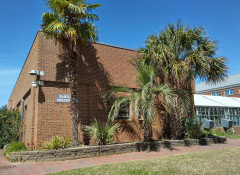
    Interesting list. Just curious, did you see my thread from UNC Charlotte? They have a Butia, but it's protected by a large building. (the greenhouse office actually)

    Thread is here but I didn't realize I hadn't put the pic of the palms there, only the yellow buddleia.

    https://www.houzz.com/discussions/6492938/last-of-the-davidrt28-trip-reports


    My point in asking, it seems like Butias can do ok in Piedmont of NC if they have a really sheltered spot, is that your take on it? IIRC I've seen one at NCSU too.

    Try Daphne 'Perfume Princess' on a SUPER dry substrate. Knock on wood but mine is ok after about 8 years on a pile of very old concrete rubble (washed of alkalinity) and sand. The hybrid vigor helps it outgrow root rot even there.

    I might be done experimenting, but my plants are not. In general prefer it not warm up so fast as it did today, but the nice thing is a hot spell will kickstart the revival of sleeping plants. Returning and therefore indicating survival:

    1) my Phormium tenax collection from a cold part of NZ. Still not good, it will not survive dying back every year, but I'll glad it's not 'down and out'.

    2) Fuchsia 'Porphyrio'. I related in other thread how these are tedious to keep happy in pots, so had to be planted last spring. Glad at least one made it.

    3) Hesperantha coccinea. I would say this makes me think I'm home free on all the other tenderish geophytes - but oddly my biggest patch of Zantedeschia is usually so massive there's always some top growth sticking out of the ground. With bits of green even through winter. That's gone this year. I still think it will be ok though.

    BTW Bill - good luck with your Hydrangea! I feel that that's your equivalent of my Trachycarpus. Can't be too upset if it can't make it, because they are super common a zone or two away.

    (wait, I just realized you might have only been posting because it's blue, but, OTOH, it's def. borderline in zone 4. And yes, in any zone, they don't like getting dry.)


    BTW pt 2, Pete, which oleanders are hardy for you? If the Ceanothus doesn't come back, srsly thinking of putting a Nerium 'Mathilde Ferrier' there....supposedly one of the hardiest.

  • 5 months ago
    last modified: 5 months ago

    There’s a 60 year old Butia in Raleigh proper that looks perfect. I wrote an article about it for the North Carolina Palm Society probably 20 years ago. And yes, I do agree that if you have the one, incredibly right microclimate, you can get them to grow longer than a 5-15yr stretch. Just frustrating when Butias are reliably hardy just 45 minutes south.

    I am trying Phormium tenax ’Tri-Color’. Supposedly evergreen here. We’ll see.

    As for the Nerium oleander, pretty much all of the ’Hardy’ selections have done fine with minimal leaf burn every year. White had no leaf burn this year. Have pink, yellow (not sure if Mathilde), and red (this has struggled). Also have a white with pink stripe that I propagated from a nearby deserted house. Plant Delights used to sell it but I can’t find it online anymore.

    UpperBayGardener (zone 7) thanked Pete in Apex, NC (z8a)
  • 5 months ago
    last modified: 5 months ago

    "Just frustrating when Butias are reliably hardy just 45 minutes south. "

    Or a couple hours ENE. Not sure if you've seen my posts where I reminiscence about how in the early 1990s, there was ONE Butia in a publicly visible planting in Virginia Beach. I know because my relatives in that area were friends of Pat Bridges, who had known Fred Heutte. So he knew subtropical plants in SE VA. Even Trachys were quite scarce...once in about 1988, we all drove with Pat somewhere to see a 20' or so tall Trachy, one of the few that had survived 1985 when all of SE VA went < 0F. Now, there are THOUSANDS of Butias in VA Beach! (and obviously at least as many Trachys) I'd actually say that they the most common palm there now, and I spotted them reproducing at one of the waterfront hotels, without even looking very hard.

    The problem anywhere south of Richmond for hardier Phormiums is larger not going to be cold, except in really bad winters...it's going to be rotting in summer. Think about it...why are they not seen all along the Gulf Coast and in Florida? Look at how mild the warmest part of NZ is in summer...

    https://en.wikipedia.org/wiki/Auckland

    81f/61f - summers as 'hot' as Rochester, NY!

    Which, back to your Rhododendron grandia or falconera subsection quest (e.g., the true elepidote 'big leaf' ones) it's interesting to note that even there, a NZ woman who was considered one of the country's leading experts on the genus (NOT Abby Jury, though they surely know each other), found that R. rex et al grew better when grafted! So even in a climate that mild, root rot was a problem! Her name escapes me RN, but Kathy Van Veen told me they once corresponded and that she'd found plain old R. 'English Roseum' worked for grafting R. rex. You only needed to get one side of the scion and stock to line up - a problem w/grafting big leaf rhodies is the stems size is gigantic compared to regular rhodies. I have max x calophytum which grows well around here and should make a good rootstock for a big leaf, if I can ever get someone to do it.

  • 5 months ago
    last modified: 5 months ago

    I have R. ’English Roseum’….but I don’t know how to graft and not likely to try. 😂 Is R. arizelum also one of those problem big leafs?


    As for the Phormium, holding out hope. My yard tends to run on the dry, loamy side. Loblollies also suck up most of the moisture. So, we’ll see how it does. Otherwise in my yard, it’s clay that never seems to stay wet. The dry, clay slopes are where I plant my agaves, cactus, chollas, nolinas, yuccas, and other arid plants like Silene virginica ‘Forged by Fire‘.

    UpperBayGardener (zone 7) thanked Pete in Apex, NC (z8a)
  • 5 months ago
    last modified: 5 months ago

    Yes. It's a shame wikipedia's template doesn't have a slot for subsection, so you need to refer to another source to get it.

    Trees and Shrubs Online, of course, knows to list it: https://www.treesandshrubsonline.org/articles/rhododendron/rhododendron-arizelum/

    Which is good because, though I knew it was one or the other, for some reason I thought arizelum was subsection grandia! BTW, are you just seeing pictures online or in books, or have you actually seen such rhododendrons in person? If you think you have a problem now, just wait until you see them IRL! The UC Berkeley R. protistum × grande hybrid is one of the most unforgettable plants I've seen in my life, anywhere, ever. (Although overall, the biggest and healthiest big leaf rhodies I've seen were at the National Rhododendron Garden in Olinda, Australia. Sorry west coast of US. SW UK surely has them both beaten, but I haven't made it there yet.)

    Sounds like your Phormium might be ok until a hurricane sweeps through Raleigh and you 'involuntarily overwater' it 🤣. Good luck.

  • 5 months ago

    I found the R. arizelum in stock at one point online. Thought it was beautiful. It’s no longer available for me to waste my money on. 😂

    UpperBayGardener (zone 7) thanked Pete in Apex, NC (z8a)
  • 5 months ago

    I gave up on heathers. For the most part, I try to get plants one zone colder than where I live because pushing boundaries just means losing plants in a colder than average winter.

    UpperBayGardener (zone 7) thanked Sigrid
  • 5 months ago

    As of this week I've been gardening here in Cedar Hills Portland for one year! I now have 268 varieties, probably around 280 individual plants. (Hey, I'm a collector, I can't waste space on more than one or three of anything;^) ). I've (unintentionally) lost exactly three plants this first year: Lewisia x 'Rainbow Mix' - killed by dogs peeing on it, Hebe 'Karo Golden Esk' - killed by dogs peeing on it & Aucuba japonica 'Petite Jade'. The Aucuba is really surprising, planted on June 10, it never did anything all last summer and started to look like death by autumn. All of my other Aucuba are actively growing now, and blooming! It is just barely in the pee zone, so that could be a contributor. I'm not sure what happened, but this is the first Aucuba I've killed out of at least a dozen.


    I will continue to be a zone pusher and experimentalist until someone plants me in the ground. Heck, you kind of have to be always experimenting, given how the climate has gone completely berserk. The science aspect has always really been irresistible for me, I'm constantly trying new stuff, both plants and techniques, in the garden, "just to see if it works".


    That said, there are plants that I repeatedly kill: I've killed more Daphne than anything. I really like them though, so I'll keep trying. Calluna and Erica don't like being in my gardens for long, I think I may be done with them. Evergreen Azaleas take one look at me and say, NOPE! No big loss there, I've never bought one, I've only inherited them, and they all die.


    One of my current passions are the "heavily tomented/indumented" Rhododendrons. A lot of these are prima donnas! I've lost 'Golfer' once, and it looks like I might be loosing R. pachysanthum and 'Silver Bear'.

    UpperBayGardener (zone 7) thanked artinnaturez8b
  • 5 months ago
    last modified: 5 months ago

    Art some of the most gorgeous rhodie foliage I ever grew in terms of indumentum was an unnamed cross floating around out there, R. bureavii × 'Sir Charles Lemon'. It came from Greer Gardens in one of my last orders ever from him in the early 2010s. Alas, it was just a little too weak on its own roots and petered out from root rot eventually. You'd be fine in Portland, unless hurricanes stop dumping 4" of rain in one storm after an August heatwave ;-) I would classify it as modest root rot sensitivity, not severe like R. xanthocodon. Keep an eye open for it...it could still be circulating out in the PNW. Van Veen might have a lead on finding it. I can't go find a pic RN but the new foliage had such bright orange hairs it almost looked like a kind of blooming from a distance.

    It's not as furry as that one, but at least one of my R. 'Captain Jack' × delavayi crosses also has showy orange indumentum. Look forward to it blooming soon...if the flowers are knockouts, it will be the first hybrid of mine that I will name. Then will send cuttings to Camellia Forest for root rot resistance testing in NC.

    (Sir Charles Lemon is now understood to be R. arboreum × R. campanulatum; the latter would be OK around here in most forms, but the R. campanulatum is a very high elevation species in a not-very heat resistant subsection...so crossing w/the equally fussy R. bureavii was just a bridge too far. I gave one rooted cutting of the cross away at an east coast hybridizer's meeting, but don't know who took it...hoping somebody up in New England still has it. It should be zone 6 hardy.)

  • 5 months ago
    last modified: 5 months ago

    Found a pic of it https://www.facebook.com/groups/35429932192/posts/10160343165287193/

    glad it's still circulating in the PNW. hopefully it games named soon to avoid the indiginity of being nameless!

    the undersides are actually an even more saturated color; I think that's where I am remembering orange

  • 5 months ago

    UpperBay - That is gorgeous foliage! Pretty sure root rot took out my first Golfer, it bloomed heavily and then collapsed. That was in my former garden. I have it again here and it seems to be hanging in there, but it is absolutely not able to handle 95F+ PLUS sun.


    Silver Bear and R. pachysanthum are having major problems with heat + sun. I don't think root rot is happening with those two....so far.


    If I plant more of these types, they will absolutely require shade from 11am on -- in this climate.


    Something that is happening here on the west coast, & I wonder if it's happening back east: plants grow at their "normal" time in spring, then, after a break they have a second BIG flush of growth in late summer during the worst of the heat, sun and very low humidity. That fresh foliage is not able to remain hydrated and scorches if not in shade. All of my rhodies did this last season, and many other genera as well.

    UpperBayGardener (zone 7) thanked artinnaturez8b
  • 4 months ago

    Looks like Bloom River Gardens has Sir Charles Lemon backordered. They did have these in stock a few weeks ago. So, better than average chance they’ll have them again soon. Plant Lust is a good way to find things from local nurseries. Folks like Bloom River and other nurseries drop ship for Plant Lust. I’ve gotten all sorts of plants this way and they’ve always been great quality. You can order from Bloom River directly if you prefer.

  • 4 months ago

    Just to clarify, the plant I was talking about (I'll try to find some amazing pics of my own, eventually) is R. bureavii × 'Sir Charles Lemon'. Most of the indumentum comes from R. bureavii, which is root rot susceptible. No way either would grow in NC. Plain 'Sir Charles Lemon' might, but I wouldn't hold my breath.


  • 4 months ago
    last modified: 4 months ago

    Sorry, wasn’t suggesting it would grow here. Just that there was a possible nursery for @artinnaturez8b to purchase one (albeit the wrong one).

    UpperBayGardener (zone 7) thanked Pete in Apex, NC (z8a)
  • 4 months ago

    I'm not having trouble finding "fuzzy" rhodies in Oregon. I am somewhat struggling to get them to grow, however. Most of the better outlets have several. Rocky Knoll is another really good source for mail order. I had Sir Charles Lemon in my last garden and will get it again if I find it.


    Another reason to grow "the fuzzies" is that they're supposed to be much more resistant to rhododendron lacebug, which is becoming more of an issue in the PNW, and I'm sure the warming and drying climate is compounding the problem.

    UpperBayGardener (zone 7) thanked artinnaturez8b