

Mid-Atlantic Public Trees, 2026 thread
I missed Sam's threads of trees he had spotted during his travels. My version will have an 'upgrade'. In most cases, I intend to share where these are, and/or not conceal it if obvious.
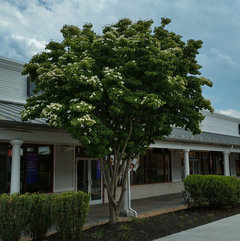
Let's start closer to me in Havre de Grace. I remember these 'Red Obelisk' being planted around the spring of 2007. The storefront to the left was trying to be an upscale nautical boutique, like something you'd see in ritzy Annapolis, that sold brands like Nautica. Needless to say the great recession put them out of business. After many years of being fallow, it's a microbrewery now.
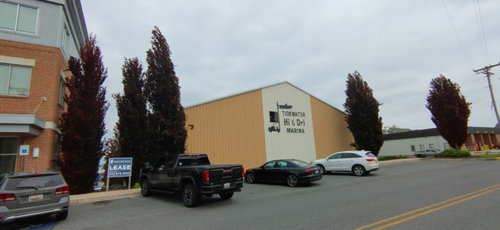
They've grow quite well from the 5-6' specimens 19 years ago. The soil is steeply sloping back towards the water, which is obviously behind the marina, so they get good drainage. The lot those buildings is on probably has as much elevation change as the entire city of Annapolis!
(After having visited the 3 towns in the mid 2000s, I made this joke about them, that has been complimented by actual Marylanders: Havre de Grace is the town that most wants to be like Annapolis, and North East, MD is the the town that most wants to be like Havre de Grace!)
I'll have more from HdG a little later.
Next let's visit 'The real McCoy'. The Maryland State capital. I've long known about this Cedar of Lebanon (I think) across from the Croquet Playing Grounds of St. John's College. I'm glad it is still basically ok.
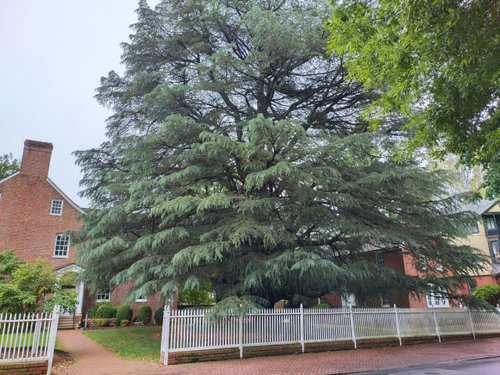
I hope it's under the care of a wise (probably not the majority of them, unfortunately) arborist.
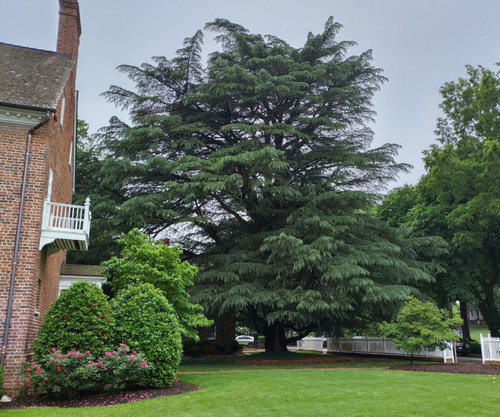
People around there certainly have the money to afford one.
I've also long admired this conifer on the other side of the close.
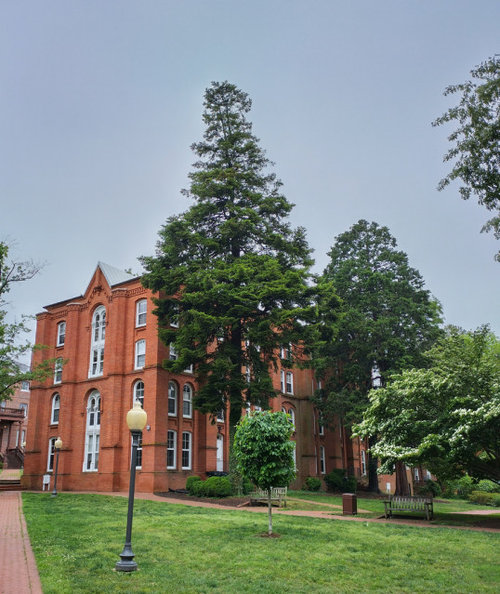
There's a Nordmann Fir that looks like that near the Forest Glen metro stop, but honestly with the foliage so high in the air, and not a single cone to be found on the ground (evidence which might well favor fir, of course, because they tend to disintegrate) I have no way to be absolutely sure what it is. Either way, a very uncommon tree to see in the area. It certainly wouldn't be a norway spruce, it would be something 'odd' like a Picea orientalis. Norway spruces are way more common in the N & W suburbs of Baltimore than anywhere in Anne Arundel County.
Finally I recently had time to visit the secret collection of rare trees in western Howard County, known as the 'enchanted forest' by the man who supplied the trees. Per the owner, who I saw, she prefers I continue to not publicize the location, although I think it might have been posted somewhere else on the internet by people w/less respect for other's privacy.
I've never been there at the time of year to see this magnificent kousa blooming, but what really catches my eye are the fine Juniperus rigidas next to it.
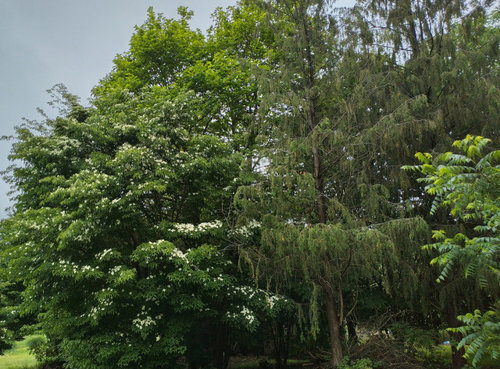
They were planted in the late 1980s/early 1990s.
The huge, mature, Lithocarpus henryi were showing a bit of winter burn on their most eastern exposed, unsheltered flanks. This view allows one to compare the smaller leaves of Quercus mysinifolia with the larger ones of Lithocarpus henryi.
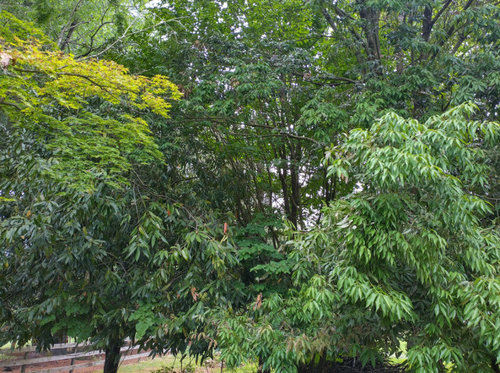
It's a shame either of these magnificent trees are so seldom encountered in our area, where they are perfectly hardy. (these trees are in an extreme cold hollow that went to -16F in 1994, and they survived it as much smaller plants)
More on the way!
Comments (17)
UpperBayGardener (zone 7)
Original Author5 months agolast modified: 5 months agoSome geographers might say including SE Virginia in 'Mid-Atlantic' is a stretch, but at least culturally speaking, it's there now!
Here are trees I spotted on my recent trip there, I alluded to making a post on this thread
https://www.houzz.com/discussions/6518487/where-have-you-seen-american-mistletoe
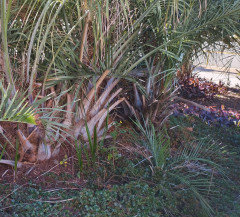
Here are some butia palms self seeding at a hotel near Virginia Beach. (i.e., the beach itself!) Amazing that 25 years ago, there was *one* butia in a publicly visible spot at Virginia Beach, now there are thousands! If we ever have winters like 85-94 again, things could revert to the mean!
These are some typical plantings of Quercus virginiana outside Princess Anne Country Club. These have to be the most common non-flowering angiosperm (LOL) in the area. It's telling that you generally don't see ones as massive as in the deep south.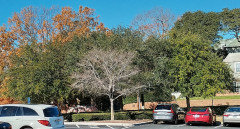
On the way down, I spotted this cedar. The eastern shore of Virginia is truly 'the land that time forgot'. I was reminded of rural Victoria, AU where you could drive for miles and miles without seeing any 'exotic' plant besides rose bushes...not even a date palm. (of course, the natives gums seemed exotic to me, but they definitely are not for them) This was probably the only interesting tree from the MD border all the way to the Bay Bridge tunnel. Trachys would grow just fine here - it's zone 8a - but you just don't seen any.
Looks like a PNC bank sign if anybody wants to try to find it LOL.On the way home, I drove past my 'alma mater', W&M, for the first time in many years. The campus has had a lot of updates in terms of buildings. All of it is a downgrade in terms of interesting plants. This area used to house Dr. Baldwin's collection of rare boxwoods. Granted, many of them probably died of boxwood blight, but it's unfortunate all the same, seeing what had been a lovely small garden taken up with whatever this is. And with brainless, perfunctory, hideous landscaping, too. (Blue spruces in containers, FFS. Barf.) I'm glad I went there during the last days of Dr. Baldwin's adventurous and intellectually engaging plantings.
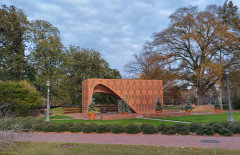
The famous redwoods are hanging in there for now. I saw no signs of mild foliar diseases as I had seen at the Norfolk Botanical Garden about 10 years prior.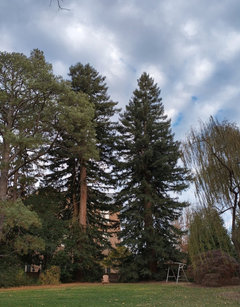
It's a shame the one on the left was allowed to develop a forked trunk.These once notable seeming Trachys are still there. It was said in the 1990s they relied on an air exchange vent in alcove surrounding them to survive. That was probably true back then.
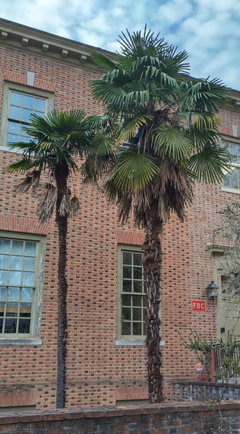
Much less likely to be successful is an Araucaria araucana planted next to them.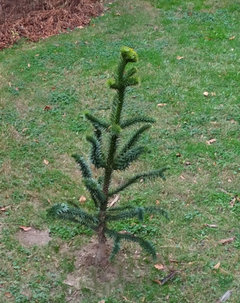
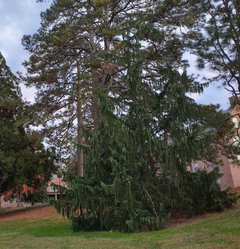
It would be far more intelligent to try an Araucaria angustifolia, but, alas, since the mid 1980s when Dr. Baldwin retired, there doesn't seem to be much intelligence to go around. At least we have the NCSU and even UNC Charlotte arboreta being operated the way that they are.I'm amazed this weeping Nootka cypress hasn't succumbed to root rot, but the local soil, a seeming mix of sandy and calcareous, probably helps the drainage be as good as it can get. There used to be a huge Arizona Cypress nearby, but it was knocked down for a building expansion.
Finally, shifting gears and locations quite a bit, this crapapple I spotted driving through Bucks County, PA. They are really pretty when this laden with fruit...but somewhat uncommon to see I think. I suspect they are nowadays an old-fashioned tree that often got cut down as they succumbed to disease issues. I've never been in New England in the fall but I bet I'd see more of them up there.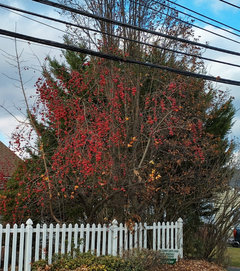
 5 months agolast modified: 5 months ago
Thanks for the road trip pics. In the pic w/the big, red building, you're saying that big conifer is a Nordmann fir? If so, it's gotta be a champ of some degree, and darn out-of-place that far southeast. And some slightly less but big impressive conifers beside it. I guess they trimmed up the fir, the one at my house growing up layered branches to the ground.
The coastal redwoods are very impressive, but that pine to their left is giving them a run for their money -- guessing loblolly pine. Pine: "Hey you guys from the west coast, you ain't so big".
The Trachys are impressive. I've been to Ocean City MD where they bring in surprisingly big Trachys from southward in giant POTS! and place them around outside eateries, just for the warm season, and later dispose of them.
And blue spruces in pots? Pffff, gag me w/a spoon.... :)
UpperBayGardener (zone 7) thanked bengz6westmdRelated Professionals
Waycross Landscape Contractors · Grand Island Landscape Contractors · Napa Landscape Contractors · San Jose Home Builders · Portsmouth Landscape Architects & Landscape Designers · Orange County Landscape Architects & Landscape Designers · Gulfport Landscape Contractors · Spanish Fork Landscape Contractors · Middletown Landscape Architects & Landscape Designers · Danbury Landscape Architects & Landscape Designers · Redding Landscape Architects & Landscape Designers · West Plains Landscape Contractors · McAllen Landscape Contractors · Los Angeles Landscape Contractors · Bismarck Landscape ContractorsUpperBayGardener (zone 7)
Original Author5 months agolast modified: 5 months ago"If so, it's gotta be a champ of some degree, and darn out-of-place that far southeast."
Well exactly. Even relative just to the state!
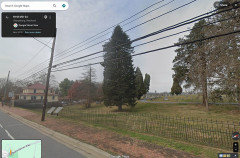
Here is the one near Forest Glen metro.
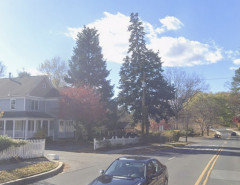
Seeing this reminds me that the only other point along the Capital Beltway that is higher that the stretch besides Forest Glen is Tyson's Corner at almost 500'. And when I was last there last year, at least one of the douglas firs that were planted many years ago, in the late 1980s, was hanging on...although I wasn't going to bother parking to get a closer look at it.Nordmann was my best effort to type out the Forest Glen tree 17 or so years ago, when I briefly rented in that area. I'd be able to do a better job now but haven't had time to revisit it.
Interestingly there was another fir across the street many years ago, that I tentatively thought was a Korean fir. But it's gone now. No sign it was diseased as I remember, someone probably just didn't like it. I've previously posted how there seems to be a trend of people removing any tree that is large and dark on their property.
https://maps.app.goo.gl/VKQYXxMA1dRBt3z56
I've been told by an old timer than the soil around Silver Spring is extra well draining (the mica and schist in the spring is actually what the name comes from), which could explain why those firs did as well as they did.
The 'National Park Seminary' was originally built as retreat for folks from DC to 'cool off'! Seems laughable these days!
 5 months agolast modified: 5 months ago
Awesome write up. I especially like that first cedar of Lebanon
UpperBayGardener (zone 7) thanked L Clark (zone 4 WY)- 5 months agolast modified: 5 months ago
UBG, as a kid I was taken to the "Enchanted Forest" a couple of times! It's kinda presented to be for children.
And if your shown conifer against the big red building above is only producing cones at the top, that's indicative of a fir, not a spruce -- as you said. Could it be a balsam fir? There are some large balsam firs at the Sharpsburg, MD Antietam battlefield cemetery, so they can grow farther south than their range. Many of the trees around/in the cemetery are labeled, and as I recall, this particular one (bigger labeled B firs are not visible from the street-view) was labeled a balsam fir.
PS The Nordmann fir at my childhood home produced cones only at the very top, and as you mention, don't fall but just disintegrated. I always wanted to get my hand on one, but obviously never could. Here it is.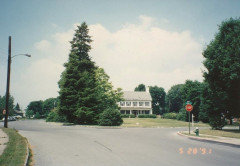 UpperBayGardener (zone 7) thanked bengz6westmd
UpperBayGardener (zone 7)
Original Author5 months agolast modified: 5 months agoUBG, as a kid I was taken to the "Enchanted Forest" a couple of times!
Since both the person who planted the trees and the woman (or her husband) who owned the property were long time Marylanders, I think they were making a humorous allusion to the former theme park. But just to clarify for anyone, they are unrelated in terms of actual location. Well, both in Howard County...but miles apart! As for your question...in my opinion, there's no way in hell a balsam fir could grow anywhere near Annapolis. I don't even know of any in DC or Baltimore. Out past Frederick, it's possible you get a few like the ones you shared.
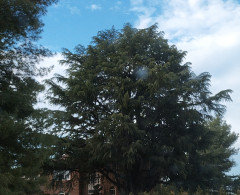
Lane, since you like Cedars of Lebanon, here's a monster in a wealthy suburb outside DC that I became aware of about 30 years ago. Every time I drive by, I am relieved that it hasn't been cut down. This used to be an old horse farm...it's fortunate the county zoning office probably required the developer to not cut it down. (I don't know that for a fact though. Maybe the guy who built this neighborhood just liked it. The way the house had to be shoehorned on the lot though, makes me think he had to work around it.)It's honestly rare to see trees of that distinguished magnitude in most of the DC suburbs though. Because they are were so recently developed. If I was just shown this photograph not knowing where it was other than the eastern seaboard, I'd assume Main Line Philly, Gold Coast Long Island, Darien, CT, or even Richmond, VA, before I'd guess the NoVA suburbs.
Moving back to Havre de Grace for a moment. I was shocked last year to spot an out of place looking conifer. It's a douglas fir. Believe me I saw the distinctive cones and I'm 100% sure of the ID. As with the Nordmann fir in Annapolis, this is a mountaineous climate conifer surprisingly growing in the coastal plain of Maryland. It's a shame that in a few years the vines are going to kill it.
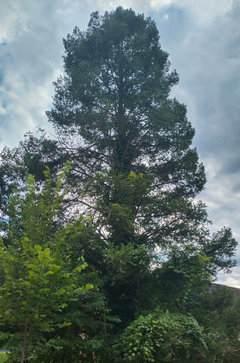
A few blocks away I spotted this longleaf pine. You spot these once in a blue moon between say, Philly, Richmond, and York or Harrisburg. They are a 'level 1' rare plant that is reasonable obtainable and appeals to people for its exotic look.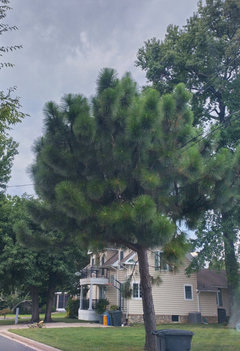
Now let's go to the National Arboretum one more time. I forgot to post pics from a trip I made there last fall.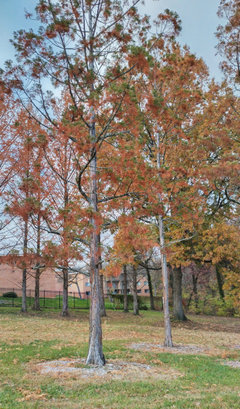
One of I think 2 plantings of rather forlorn looking Glyptostrobus pensilis. I think the soil here is just too high and dry for their liking.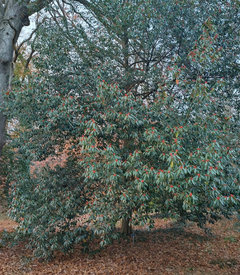
Here's a really bad picture of the legendary Ilex purpurea. (it's the flowers that are purple, not the fruits) You can see how the way the berries cluster at the branch tips, makes it almost look like they are some kind of flower. And the leaves are huge but you can't really get a sense of scale here. (The former trait being one that you won't see on other 'Ilex purpureas' in the US, further proof that most of the ones down south are actually hybrids. I've never seen ones anywhere else in the US that look like these.)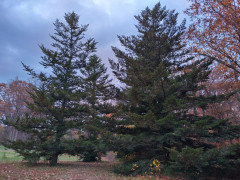
Some of their Abies firma. There are some mildly fragrant seedlings under these, strongly implying that they've outcrossed with nearby stuff like Abies alba.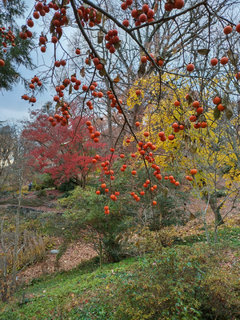
A Diospyros, presumably one of the Asian ones like D. lotus because this is near the Asian Valley.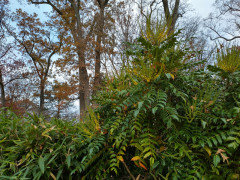
I would love to know which Mahonia media was blooming on 11/22 but I could not find a label.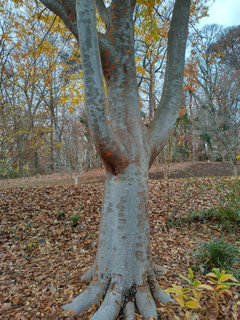
Finally, the stunning bark of the rare and hard to obtain Zelkova sinica.- UpperBayGardener (zone 7) thanked L Clark (zone 4 WY)
- 5 months agolast modified: 5 months ago
L Clark, I have seen a couple Douglas firs remain unaffected by disease in my areas, but most, like blue spruce, eventually suffer from needlecast, tho maybe not quite as quickly or thoroughly. Bottom line is there are ALMOST no large, mature ones to be seen here. Again, they may do better in cooler summer locations than here in the mid-Atlantic states.
It seems like conifers from the US southwest do better here, guessing because that area experiences a monsoon precip w/humidity and hence have reasonable resistance to the eastern US diseases. Examples are Arizona cypress, concolor fir and southwestern white pine.UpperBayGardener (zone 7) thanked bengz6westmd UpperBayGardener (zone 7)
Original Author5 months agolast modified: 5 months agoThe PA big tree listings are useful to track where species can grow (for a long time, obviously!)
https://www.pabigtrees.com/tree-listings
The PA champion Balsam Fir is in Adams County, west of Gettysburg. At some elevation no doubt. This aligns with Ben seeing some in western MD.
OTOH the 3 champion Douglas Firs are all in SE PA. Even I was surprised by that! I figured most would be in places like State College. So the conclusion I must come to is the Douglas Fir has to be overall more tolerant of conditions in the Piedmont of the Mid-Atlantic region; albeit still doing better north of DC. If I had a bigger lot I'd probably try to plant a couple, but all my 'suitable for drainage loving conifers' spots are reserved for things like Pinus gerardiana, if I ever raise the seedlings to the point of being ready to plant.
This post will be what I intended as the last chapter of this thread. Three remaining "destination nurseries" to visit within a 2.5 hour drive of DC. I say 'remaining' because these sort of establishments seem to be going the way of the dodo. Large rural properties, developed over decades, that showcase trees and large plants in a garden setting.
1) Susanna Farm in Boyds, MD. The 'agricultural preserve' of western Montgomery County that is so striking when flying into or out of Dulles Airport at night. Bright lights on one side of the river, darkness on the other.
I didn't have time to take many pics because I was coming here to pick up a rare Japanese maple and then drive to Loudoun Co VA to visit a friend and former co-worker. But they really love plants and have an amazing selection. 15 years ago when I found out about this place I thought it was expensive...well guess what, running a nursery is expensive! There's a lot of interesting specimen plants over a large, multi-acre park like setting. I guess this is an Acer griseum but didn't check the label.
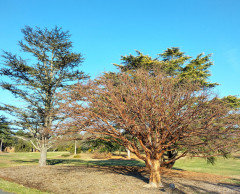
2) Kollar Nursery west of Whiteford, MD. Almost on the Mason-Dixon line, and the closest gas station is probably in PA. Stan, the owner, has a degree in botany and is super knowledgeable. While Susanna focuses on rare conifers and japanese maples, this nursery specializes in natives but has a lot of desirable non-natives too. This was the first place I bought a Cardiocrinum that actually survived, unlike the mail order ones from the PNW.There are many interesting plantings. I was SHOCKED to know he planted this huge Pinus palustris only 40 or so years ago. It is by far the biggest I've seen north of southeastern Virginia.
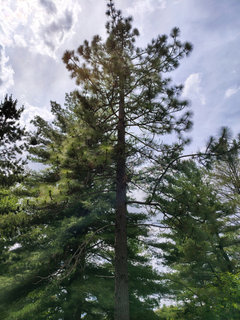
He said it's never produced cones though, even when it had a companion. Another one of similar size came down in a storm IIRC.This "bird's nest" Picea orientalis produced an upright sport, which they allowed to grow.
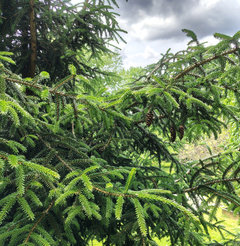
A good thing about both 1 & 2 is they appear to have a next generation ready to take over. This is the tragedy of a number of US specialist nurseries versus ones in Europe (or even Japan, probably). A great nursery, especially ones focusing on trees and shrubs, really takes decades to 'mature'. It's almost got to be multigenerational to reach its true potential.Finally - 3) Edible Landscaping, SW of Charlottesville, VA. This is probably one of the last mail order nurseries I've used for a long time - at least 20 years, had *had* the opportunity to visit (it's obviously not far from MD) but never had. Finally got around to it last month.
First of all it's huge. Definitely around the size that Rarefind was in Rarefind's heyday.* That would make it the biggest mail order nursery I've ever visited.** You get to it by driving up a twisty mountain road. They seem to be in a south facing glen in the foothills, which might help their microclimate. Alas I was on my way to family events so only had time to pick up a plant I had purchased, and not really look around, but there's clearly a lot to see here! Although they obviously focus on edible plants, imagine my shock at seeing the huge Podocarpus. Quite unexpected in a location not far from a couple locally known ski resorts! They rate themselves zone 7, which I'd always been a little skeptical about over the years given that a cursory check of a map appears to put them in the mountains -- but clearly their microclimate helps them out.
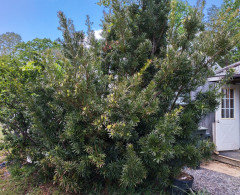
Finally just a few random pics from my recent travels. I mentioned how one sometimes seems Pinus palustris in the Mid-Atlantic, even fairly far inland. (of course we already knew Ben had one, but most people aren't Ben!) I spotted this one in northern Lancaster County a few weeks ago. A little burnt from the winter but it will recover. That location surely went below 0F this winter.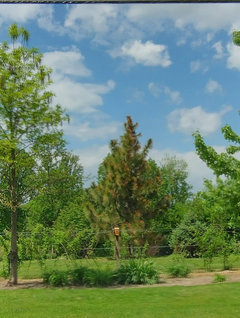
This was drive-by photography, so excuse the poor quality!Finally, I went to the outlet malls in Leesburg for the first time in maybe 20 years. It's fascinating how the landscaping in these places grows up, and now there's talk that this outlet mall may not even be there much longer. These kousas had a good life I guess!
* - on my cross-country road trip in 2011, I didn't manage to get to Forestfarm, but I suspect that was bigger than either, and surely must be one of the biggest (by both footprint and sales) mail order nurseries in the country.
** glad I had time to make a slight correction. I was saying big in terms of physical foot print. I would estimate Rarefind and Plant Delights had about the same amount of greenhouse space, back in the early 2010s heyday of Rarefind. Maybe Rarefind had even a bit more in terms of unheated hoop houses. BUT, PDN was selling plants that take up much, much less space. So I bet the revenue was not even comparable. With what they charge and how much they sell, PDN had to be one of the top 5 grossing mail order nurseries in US history I'd bet. (And Rarefind grow plants that took much longer to produce, too...another 'strike' against their bottom line.)- 5 months agolast modified: 5 months ago
Thanks as always. Your first pic of the handsome maple has what I'm guessing a cedrus on the left -- boy howdy, that one is suffering. The longleaf pines are handsome -- big one looks alot like mine, perhaps getting bent up sometimes by wet snows, but not breaking. But mine has never once had any burning -- perhaps from its northeast Alabama origins. The kousa is dense! I like kousas alot -- brother has a nice one in PA. Native C. florida beside it has lost lower branches to the anthracnose, but not the kousa.
PS Douglas firs are rather diverse, could be that a certain sourced type would do better in the east. I dunno if any trials have been done, but I'd guess the farthest south source might be best? Lots of Douglas firs in Christmas tree farms around, but initial growth isn't the problem. Childhood buddy of mine in Hagerstown planted one in the early 80s -- it's still there & looks OK, but growth is pretty slow.
PPS My longleaf has not produced either male or female cones yet. Neither has my loblolly or pond pine. Hybrid loblolly-pitch pine has had cones early and often, as my table-mountain pines. Southwestern white pine has had only male-cones so far, but this year none, perhaps because of the late severe freezes, or just random. The late freezes has caused alot of my trees & shrubs to either not bloom or only alittle. First blooms on my umbrella magnolia froze, but it has since put out a few late blooms that are about half the normal size.
UpperBayGardener (zone 7) thanked bengz6westmd UpperBayGardener (zone 7)
Original Author5 months agolast modified: 5 months agoBen, yes, I have no idea what is going on w/that Cedrus! That pic was actually taken in early December, I went to Susanna twice in the past 6 months.
What you say about pines is really fascinating...my 'purchased as a loblolly' pine might well be a loblolly-longleaf hybrid, as you know...and it produces a TON of cones. Maybe the hybrids are more fecund than the pure species, in this case. Or the mechanisms to prevent self pollination get suppressed in the hybrids. There is another southern pine in my neighborhood, about 1/4 mile away. And btw the cones are definitely fertile (not sure they can be seedless, as angiosperm fruits can be...where's willows when we need him!) because southern pine seedlings are popping up all over underneath it.
- 5 months agolast modified: 5 months ago
To add, none of my 13 baldcypresses have coned, nor my dawn redwood. However, both of my 2 pond cypresses have coned a bit, with male tassels forming in the late fall on branch ends, but only high up. Male tassels on baldcypresses/pond cypresses can look like leftover leaves that just didn't fall off, unless you know what you're looking at (binoculars can help see).
UpperBayGardener (zone 7) thanked bengz6westmd UpperBayGardener (zone 7)
Original Author5 months agolast modified: 5 months ago" PS Douglas firs are rather diverse, could be that a certain sourced type would do better in the east. I dunno if any trials have been done, but I'd guess the farthest south source might be best? "
I actually think ones from as far inland as possible are likely to do well on the east coast, not as far south. The more inland you go, the more chances of summer rainfall. I am trying a few small ones from Musser Forest on a steep slope, just for kicks. I asked them ahead of time - they get their seed from Idaho. They are miniscule (4-5") so it will be years before they even look like trees. Some died this winter but a couple are hanging in there. We'll see. Just a little experiment for fun.
EDIT - HAD A SLIGHT BRAIN FREEZE!I bought both Grand Fir and Douglas Fir seedlings from Musser. The Doug Firs were to experiment with grafting larch unto them. None of them took although I will try again next year. Pineresin in the UK said he's seen it be done in the UK. FWIW, the smallest size of doug fir from them were very delicate and the majority of them died, I don't recommend getting that size unless you have a true greenhouse to transplant them to. They are from New Mexico seed, according to Musser's catalog.
The Grand Firs (Abies grandis) were just meant to be a fun experiment on a super steep slope, since root rot is what would kill them. Because Musser had a minimum shipping cost and I figured, might as well order something else. THEY are sourced from Idaho seed, per an email question I posed to them because the catalog didn't list the seed source. If I could get Conifer Kingdom, et al. to graft any straight species western fir onto Abies firma, it would be Abies grandis because the foliar odor is absolutely incredible. Probably in the top 10 best of world's foliar fragrances in my opinion.
And btw speaking of firs and fragrance, I forgot to mention that Kollar Nursery has both a Nordmann Fir and, very rare for the Piedmont, a Balsam Fir. Surely one of the most 'easterly' Balsam Firs anywhere south of the Mason-Dixon. (although they are literally < 1 mile south of it LOL) It was fascinating to compare needle fragrance. The Nordmann is nice, but the balsam is better. 'Piney-sweet' is the way I'd describe it. But it doesn't have the citrus note of the 2 western firs: Abies grandis and (to a less degree) Abies concolor. Abies grandis is truly incredible, like a bowl of tangerines.
UpperBayGardener (zone 7)
Original Author5 months agolast modified: 5 months agoI want to point out something interesting.
The Fagus 'Red Obelisk' (I have it on authority of a local landscaper that's that what they were, although he didn't plant them) at this marina have grown the tallest when planted on steep slopes right next to the warehouse. There are others that have done just fine on level ground though. It could be that the shade of the building made them try to grow thinner and taller when they were younger. That's sort of evident from the first pic I posted. In any case, what a wonderful planting, if only more places used quality trees like this and took good care of them.
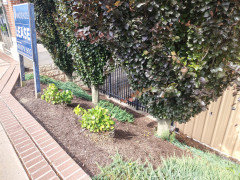
I never realized they had been planted far at the back of the marina, where I guess you don't get to go unless you're shopping for a yacht. 🤣 There's a little opening between buildings where you can peek back there. As you walk past, for a split second there's an illusory sense that the water must be right behind it, until you realize all of the boats are dry docked.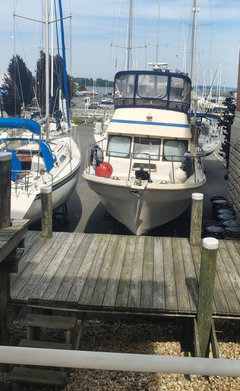
- 5 months agolast modified: 5 months ago
Thanks for the update. Douglas firs sourced from NM might be the best choice of that species as it's more of a monsoon climate than farther north/northwest and perhaps better resistance to the needlecast. Might have to order some larger sizes -- I've ordered a number of things from muisserforests and generally the tiny seedlings (usually bareroot) are indeed problematic. The bareroot Canaan firs from them were pretty big and all 5 have survived 2 yrs so far.
UpperBayGardener (zone 7) thanked bengz6westmd UpperBayGardener (zone 7)
Original Author5 months agolast modified: 5 months agoYeah. I actually appreciate that Musser offers that smallest size, but only experts versed in the handling of tree seedlings should purchase! I also ordered the next biggest Douglas Fir size offered, and all of those were fine.


41 North (Zone 7a/b, NE, coastal)