
Search results for "Bloom clusters" in Home Design Ideas
 Siobhan's Outdoor Transformations
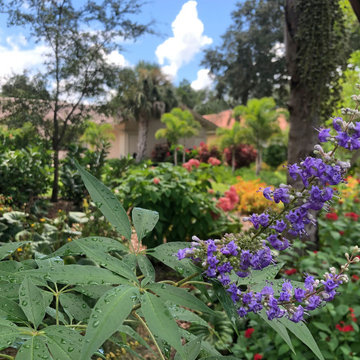
Seen here in the foreground is Chastetree, or Vitex, (Vitex agnus-castus). If you are missing lilacs, try this standout shurb/ small tree. We used mostly vibrant hot colors in this landscape and the cool bluish purple of Vitex contrasts nicely with the other, brighter landscape plants. It can be planted wherever a smaller tree might enhance the landscape, even in a planter! The compound leaves and gray bark also make this plant a beautiful addition to a shrubbery border.
The wide variety of chastetree cultivars offer a choice in flower color. 'Silver Spire' and 'Alba' have white flowers while 'Rosea' has pink flowers. 'Shoal Creek' boasts show-stopping purple blooms while 'Purpurea' cultivars have delicate lilac flowers. This large, deciduous flowering shrub or small tree is found in gardens across the country. It puts on a show from late spring through fall with its beautiful bluish-purple flowers clustered along tall spikes.
The curious name, "chastetree" finds its roots in a Roman book, Naturalis Historia. This early natural history text was written in the first century AD. The author was Pliny the Elder, a noted naturalist, writer, and military commander of the early Roman empire. He notes that women in Athens kept branches of the tree under their beds during the feast of Ceres, the Roman goddess of agriculture, grain, and fertility. These young women believe the leaves of the plant would help them remain pure, thus the "chastetree". Pliny also notes the origin of another of this plant's names: vitex. The name vitex comes from the Latin vieo, meaning to weave. Pliny believed this name was connected to the tree's use in Roman basket weaving.


 Eden Garden Design
Scented star jasmine vines twine through the perforations of this custom steel screen that provides privacy to the outdoor dining area. Pocket planting on the stair treads includes a variegated Silver Dragon lilyturf and the bromeliad Queen's Tears (Billbergia nutans).
Photographer: Greg Thomas, http://optphotography.com/
Find the right local pro for your project

 Dig Your Garden Landscape Design
Lovely plant combination of Loropetalum and Coleonema (Breath of Heaven). These are two great plant combinations that don't need a lot of water and provide nice leaf color and textures throughout the seasons. Located in a Sleepy Hollow/San Anselmo garden in northern California. Other plants n this garden include Phormiums, native Penstemon, Snow in Summer, Lambs Ears and other colorful plants that create a beautiful low-water tapestry of groupings. Photo and Design: © Eileen Kelly, Dig Your Garden Landscape Design
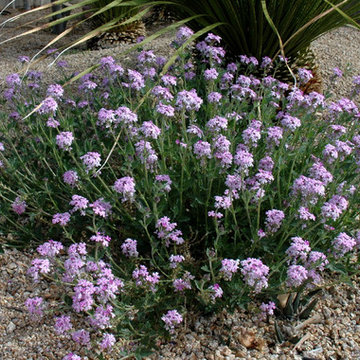

Chionanthus virginicus / fringe tree
The High Line Park
Photo: Kristine Paulus, licensed under Creative Commons Attribution-2.0 Generic

 Susan J Tweit
Photo: Susan J. Tweit
shot earlier this month at the Lady Bird Johnson Wildflower Center in Austin, Texas, in a native Hill Country prairie. The cacti are prickly pears (Opuntia species), and the wildflowers include Texas indian paintbrush (Castilleja indivisa, the pinky-red ones), Hill country rain lily (the white ones, Cooperia pedunculata), and a native yellow composite (Asteraceae) I didn’t identify.


 Sunset Western Garden Collection
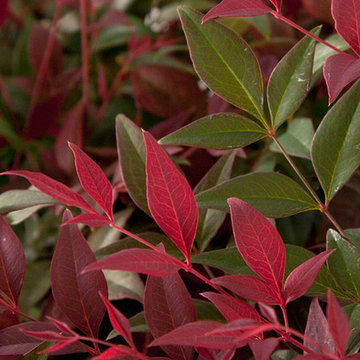
Stunning, deep red, new growth from spring until fall accentuates the evergreen leaves of this nandina. Flirt™ holds it's superior red color through the summer, unlike similar varieties. Space 2' apart for groundcover or low hedge. Perfect in mixed beds and containers.
Features
Feature/Bloom Wine red young foliage spring to fall
Evergreen or Deciduous evergreen
USDA Zones Hardy to -10°F USDA 6, 7, 8, 9, 10, 11
Sunset Zones 3-33
Special Features Year-round interest, easy care, dwarf, water-wise
Landscape Use Border, container, firescaping/fire wise, mass planting
Exposure Full sun to part shade
Bloom Season None
Dimension 1-2 ft H x 1.5-2 ft W
Growth Rate Slow to moderate
Plant Type evergreen
About the Collection
Brought to you by the authority on Western gardening, the Sunset Western Garden Collection is an exclusive plant collection of top performing plants for the Western Gardener.

 Missouri Botanical Garden
Courtesy Missouri Botanical Garden PlantFinder
Wild type of Hydrangea arborescens. Note the flowers are smaller and essentially all of them are fertile, there may be one a few of the large sterile florets in this image.


 Refugia Design/Build
This backyard patio garden was transformed with the client’s goal of minimizing lawn and creating intimate gathering space. Layered perennial beds are filled with a rich diversity of texture, form and color, enveloping the patio with stunning 3-dimensional views. Take a wander into the planting and you’ll find a meandering exploratory pathway that immerses you in nature’s sounds, movement and smells, up close. This grassy channel also provides the kids fun access from one playing area to the next, hidden from the grown-ups, free to roam and explore.


 Icos Gardening & Landscape
Trachelospermum jasminoides
Species
Trachelospermum jasminoides is a species of flowering plant in the family Apocynaceae, native to eastern and southeastern Asia. Common names include confederate jasmine, star jasmine, confederate jessamine, and Chinese star jessamine.

 BETWIXTdesign - Landscape & Interior Design
Inspiration for a mid-sized tropical drought-tolerant and full sun backyard concrete paver landscaping in San Diego.


8