
Search results for "Itll function">itll" in Home Design Ideas
 Proline Range Hoods
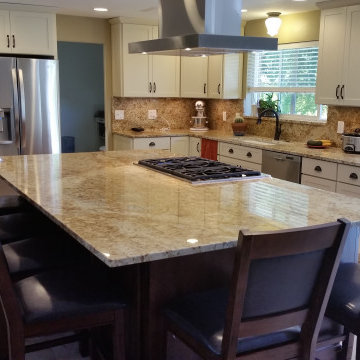
This kitchen features a unique island. It's large enough for six people, and even a couple more if necessary. Imagine cooking in this kitchen with the island range hood on, while conversing with your guests! Simply turn it to one of the lower speeds and it'll be easy to socialize. The white shaker style cabinets and granite countertops complement each other beautifully – and the island range hood is a great focal point.
The PLFI 750 is a beautiful island range hood for your kitchen. It features a unique, sleek rectangular design that looks great in any kitchen. The PLFI 750 includes an 1100 CFM blower. With this powerful blower, you can cook fried, greasy, Chinese, and other high-heat foods with ease. Your kitchen air will stay incredibly clean and you'll be comfortable while cooking. This island hood is also versatile, allowing you to adjust between six different blower speeds.
The PLFI 750 includes dishwasher-safe stainless steel baffle filters. This saves you time cleaning and gives you more time to spend with your family or guests. Four LED lights brighten your range, keeping you on task while cooking. There's no need to find additional lighting!
Take a look at the specs below:
Hood depth: 23.6"
Hood height: 3.2"
Sones: 7.8
Duct size: 10"
Number of lights: 4
Power: 110v / 60 hz
For more information, click on the link below.
https://www.prolinerangehoods.com/catalogsearch/result/?q=PLFI%20750


 Dillard-Jones Builders
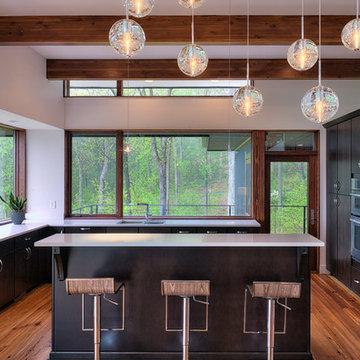
Contemporary kitchen.
Photographer: Traveling Storytellers
Inspiration for a mid-sized contemporary u-shaped medium tone wood floor eat-in kitchen remodel with flat-panel cabinets, brown cabinets, solid surface countertops, stainless steel appliances and an island
Inspiration for a mid-sized contemporary u-shaped medium tone wood floor eat-in kitchen remodel with flat-panel cabinets, brown cabinets, solid surface countertops, stainless steel appliances and an island
Find the right local pro for your project
 Minglewood, LLC
Angela Kearney, Minglewood Designs
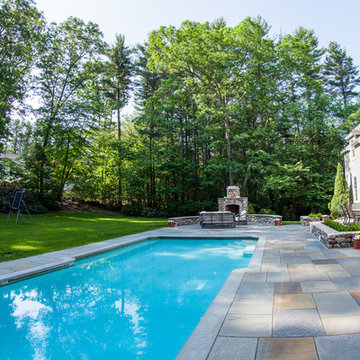
Example of a mid-sized classic backyard stone and rectangular lap pool design in Boston
Example of a mid-sized classic backyard stone and rectangular lap pool design in Boston
 Orangeville Furniture
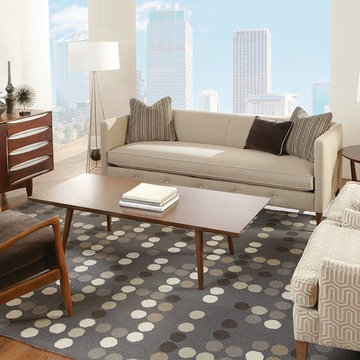
We staged this room to look like a high-rise condominium. Using neutrals and grays together we created an open homey feel.
Example of a small minimalist loft-style medium tone wood floor living room design in Toronto with beige walls, no fireplace, a brick fireplace and no tv
Example of a small minimalist loft-style medium tone wood floor living room design in Toronto with beige walls, no fireplace, a brick fireplace and no tv
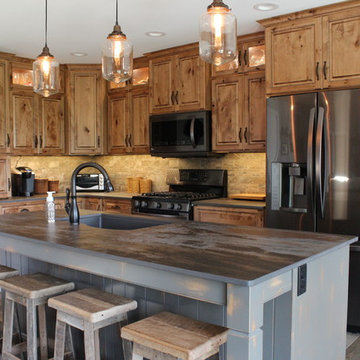
 Creation Cabinetry
This Modern Rustic Kitchen is full of character with a rustic maple cabinetry, a rubbed through island, and countertops from Dekton by Cosentino!
Andrew Long
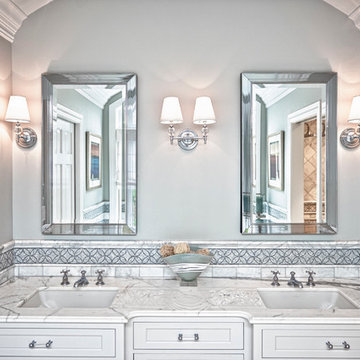
 MMCC, LLC
Beautiful master bath with mosaic tile border on all surrounding walls. Features two recessed Robern medicine cabinets with electrical outlet and mirrored finish inside. Calcutta marble vanity top. Photo credit: Sloan T. Howard.
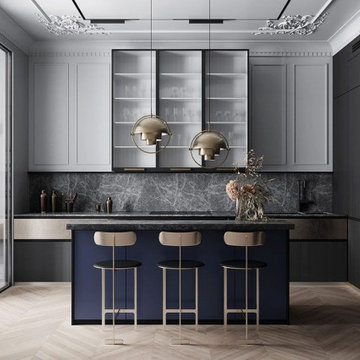

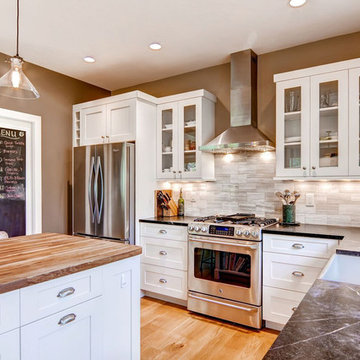
 Fedewa Custom Works
Awesome little house with an awesome kitchen. House is built by Sustainable Building Solutions. Cabinets were made by Fedewa Custom Works. They are a shaker style, painted "arrow root" by ML Campbell.
 Fannie Allen Design
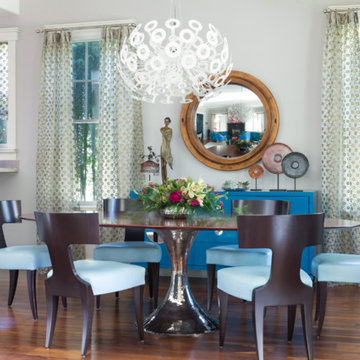
Modern "klismos" dining chairs from Donghia, with blue leather seats, around rosewood dining table on hammered metal pedestal base. Custom lacquered peacock blue sideboard holds table linens. Polished metal bar stools with faux shagreen blue leather seats and backs. Chandelier casts soft "donut" shadows when illuminated. Antique convex mirror.
 Darcy Bean Custom Construction Inc.
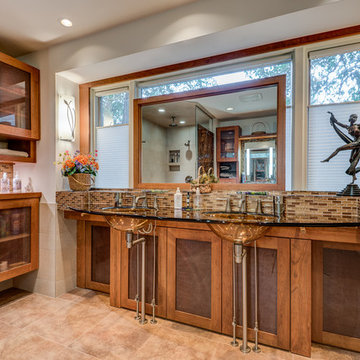
This bathroom plays with both Contemporary and Craftsmen concepts. Detail elements include the following: Gorgeous glass vanity that sits atop polished nickel piping with matching faucet. Glass backspash shelf, Cherry cabinetry with custom made fabric infused glass fronts. Lighting to include underlit cabinetry and recessed lighting in ceiling. Motorized mirror mechanism allowing mirror to descend down into glass shelf and pleated levolor blinds which accend up the window.
Buras Photography

 Rocky Tops Granite & Marble LLC
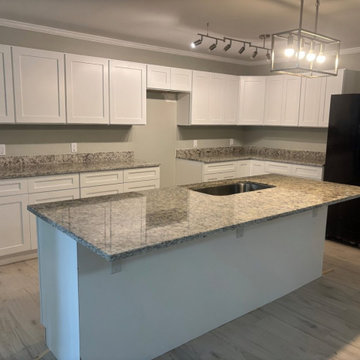
This kitchen came together with Ornamental White granite on the counters. No waterfall, no fancy backsplash story here, just solid granite doing what granite does best, holding up to real cooking and real life in a busy South Carolina kitchen.
We finished the edges with an eased profile, which is the detail people don't think about until they're leaning on the counter every day. An eased edge takes the sharp corner off the slab and rounds it just enough so it's comfortable to work against, without adding a bunch of extra machining that can chip or crack down the line. It's a clean, classic look that doesn't fight with the granite's natural pattern, and it wears well over years of use.
Granite is still one of the best choices you can put in a kitchen. It's hard, it's heat resistant, and you can set a hot pan on it without worrying. It'll take a knife dragged across it by accident and shrug it off. Every slab has its own movement in the stone, its own crystal structure catching light differently depending on where you stand, and templating a kitchen like this means matching that pattern at the seams so it reads like one continuous piece instead of two pieces bolted together.
Day to day, this countertop is going to earn its keep. Granite seals up easily and, once it's sealed, it resists staining from wine, oil, coffee, whatever gets set down on it. It doesn't scratch from normal kitchen use, and it doesn't dull over time the way some softer stones can. That's why we keep coming back to it for kitchens that actually get used, not just looked at.
We fabricate and install jobs like this all over the Midlands, and it's the same story every time: good stone, cut right, set level, edges finished clean. That's what makes a countertop last for decades instead of years, and that's what you're getting here.
 Rocky Tops Granite & Marble LLC
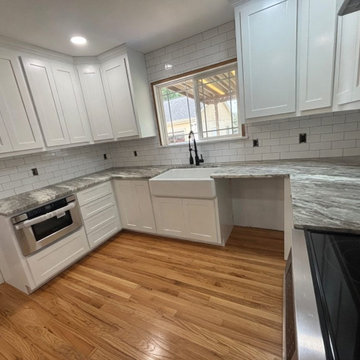
Fantasy Brown Leathered dolomite went into this West Columbia kitchen, and it's the kind of stone that changes how a room feels the second the light hits it. Leathered finish instead of polished, so you get texture under your hand instead of a mirror flat surface. It softens the brown and cream movement in the stone, gives it a low sheen, and hides fingerprints and water spots a lot better than a honed or polished slab would in a kitchen that actually gets used.
Dolomite has that soft, warm background movement, browns and creams drifting through each other, and it holds up well against everyday acids and scratching in a working kitchen. It's still a natural stone, so we sealed it properly, and the leathered texture actually helps there, it hides the wear that would show up fast on a glass-smooth surface.
Getting the veining to read right across the seams is the real work on a stone like this. We template the room, lay the slabs out, and take our time matching the movement across the corners and the seams before anything gets cut, so the pattern keeps flowing instead of jumping when you walk from one stretch of counter to the next. It's slower than pushing straight into fabrication, but it's the difference between a kitchen that looks like one slab and one that looks like pieces.
Edge came out eased, clean and simple, which is the right call on a stone with this much going on in the surface. You don't need a fancy profile competing with the leathering and the movement in the dolomite, the material carries the room on its own.
Day to day it lives well. Set a hot pan down and it takes it fine, though a trivet never hurts. It'll take the knocks of a working kitchen better than people expect, and the leathered texture keeps it looking good years in instead of showing every little scuff. That's the kind of project we like doing around West Columbia and the rest of the Midlands, matching the right stone to a kitchen that's going to get lived in, not just looked at.
Sponsored
Columbus, OH

Structural Remodeling
Franklin County's Heavy Timber Specialists | Best of Houzz 2020!
 Rocky Tops Granite & Marble LLC
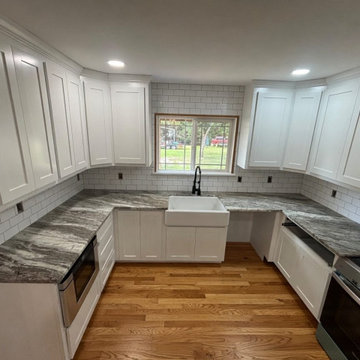
Fantasy Brown Leathered dolomite went into this West Columbia kitchen, and it's the kind of stone that changes how a room feels the second the light hits it. Leathered finish instead of polished, so you get texture under your hand instead of a mirror flat surface. It softens the brown and cream movement in the stone, gives it a low sheen, and hides fingerprints and water spots a lot better than a honed or polished slab would in a kitchen that actually gets used.
Dolomite has that soft, warm background movement, browns and creams drifting through each other, and it holds up well against everyday acids and scratching in a working kitchen. It's still a natural stone, so we sealed it properly, and the leathered texture actually helps there, it hides the wear that would show up fast on a glass-smooth surface.
Getting the veining to read right across the seams is the real work on a stone like this. We template the room, lay the slabs out, and take our time matching the movement across the corners and the seams before anything gets cut, so the pattern keeps flowing instead of jumping when you walk from one stretch of counter to the next. It's slower than pushing straight into fabrication, but it's the difference between a kitchen that looks like one slab and one that looks like pieces.
Edge came out eased, clean and simple, which is the right call on a stone with this much going on in the surface. You don't need a fancy profile competing with the leathering and the movement in the dolomite, the material carries the room on its own.
Day to day it lives well. Set a hot pan down and it takes it fine, though a trivet never hurts. It'll take the knocks of a working kitchen better than people expect, and the leathered texture keeps it looking good years in instead of showing every little scuff. That's the kind of project we like doing around West Columbia and the rest of the Midlands, matching the right stone to a kitchen that's going to get lived in, not just looked at.
 Rocky Tops Granite & Marble LLC
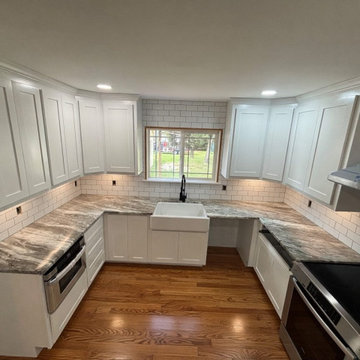
Fantasy Brown Leathered dolomite went into this West Columbia kitchen, and it's the kind of stone that changes how a room feels the second the light hits it. Leathered finish instead of polished, so you get texture under your hand instead of a mirror flat surface. It softens the brown and cream movement in the stone, gives it a low sheen, and hides fingerprints and water spots a lot better than a honed or polished slab would in a kitchen that actually gets used.
Dolomite has that soft, warm background movement, browns and creams drifting through each other, and it holds up well against everyday acids and scratching in a working kitchen. It's still a natural stone, so we sealed it properly, and the leathered texture actually helps there, it hides the wear that would show up fast on a glass-smooth surface.
Getting the veining to read right across the seams is the real work on a stone like this. We template the room, lay the slabs out, and take our time matching the movement across the corners and the seams before anything gets cut, so the pattern keeps flowing instead of jumping when you walk from one stretch of counter to the next. It's slower than pushing straight into fabrication, but it's the difference between a kitchen that looks like one slab and one that looks like pieces.
Edge came out eased, clean and simple, which is the right call on a stone with this much going on in the surface. You don't need a fancy profile competing with the leathering and the movement in the dolomite, the material carries the room on its own.
Day to day it lives well. Set a hot pan down and it takes it fine, though a trivet never hurts. It'll take the knocks of a working kitchen better than people expect, and the leathered texture keeps it looking good years in instead of showing every little scuff. That's the kind of project we like doing around West Columbia and the rest of the Midlands, matching the right stone to a kitchen that's going to get lived in, not just looked at.
 Rocky Tops Granite & Marble LLC
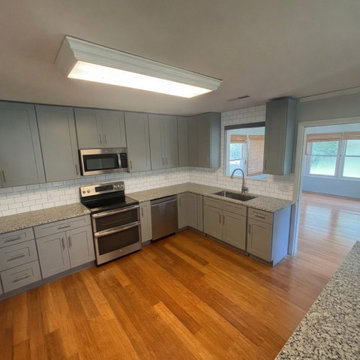
This West Columbia kitchen got new countertops in White Alpes granite, a stone with a light background scattered through with dark speckling and mineral flecks that catch the light differently depending on where you stand. It's the kind of pattern that reads calm from across the room and gets more interesting up close, which is exactly what you want on a surface you're going to be looking at every day.
Granite like this is quarried and cut into slabs, then polished to bring out that natural fleck and depth. It's dense, heat resistant, and about as tough a countertop material as you can put in a kitchen. You can set a hot pan on it without worrying, and it shrugs off the daily knife-and-cutting-board traffic that wears down softer stones. With a good sealer applied at install, it resists staining from wine, oil, and the usual kitchen spills for years before it needs to be redone.
We templated the space to fit around the existing gray shaker cabinets and stainless appliances, cutting the sink opening for the stainless steel sink and squaring up the seams so the pattern in the granite carries through cleanly from one run to the next. That's the part of the job that doesn't show up in a photo: getting the slab cut so the speckling doesn't look choppy at the seam, and getting the sink cutout dialed in so the reveal is even all the way around.
With the backsplash area still open, the countertop is doing a lot of the visual work right now, and it's holding its own. The light background of the White Alpes plays well against the gray cabinetry, and it'll give whatever backsplash goes in next a neutral, textured surface to build off of.
We do a lot of this kind of granite work around West Columbia and the rest of the Midlands. Kitchens like this one are a good reminder of why granite has stayed a go-to choice for so long: it looks good, it holds up, and it doesn't ask much of the homeowner once it's in.
 Rocky Tops Granite & Marble LLC
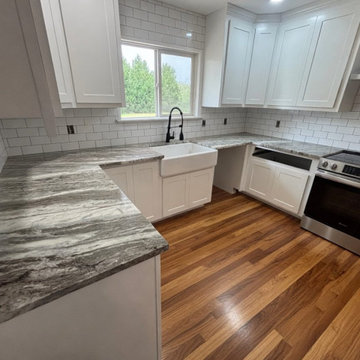
Fantasy Brown Leathered dolomite went into this West Columbia kitchen, and it's the kind of stone that changes how a room feels the second the light hits it. Leathered finish instead of polished, so you get texture under your hand instead of a mirror flat surface. It softens the brown and cream movement in the stone, gives it a low sheen, and hides fingerprints and water spots a lot better than a honed or polished slab would in a kitchen that actually gets used.
Dolomite has that soft, warm background movement, browns and creams drifting through each other, and it holds up well against everyday acids and scratching in a working kitchen. It's still a natural stone, so we sealed it properly, and the leathered texture actually helps there, it hides the wear that would show up fast on a glass-smooth surface.
Getting the veining to read right across the seams is the real work on a stone like this. We template the room, lay the slabs out, and take our time matching the movement across the corners and the seams before anything gets cut, so the pattern keeps flowing instead of jumping when you walk from one stretch of counter to the next. It's slower than pushing straight into fabrication, but it's the difference between a kitchen that looks like one slab and one that looks like pieces.
Edge came out eased, clean and simple, which is the right call on a stone with this much going on in the surface. You don't need a fancy profile competing with the leathering and the movement in the dolomite, the material carries the room on its own.
Day to day it lives well. Set a hot pan down and it takes it fine, though a trivet never hurts. It'll take the knocks of a working kitchen better than people expect, and the leathered texture keeps it looking good years in instead of showing every little scuff. That's the kind of project we like doing around West Columbia and the rest of the Midlands, matching the right stone to a kitchen that's going to get lived in, not just looked at.
 TaylorPro Design and Remodeling, Inc.
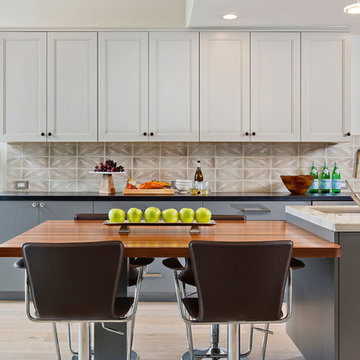
Large trendy u-shaped light wood floor eat-in kitchen photo in Tampa with a single-bowl sink, flat-panel cabinets, gray cabinets, quartzite countertops, porcelain backsplash, stainless steel appliances, an island and gray backsplash

 Rocky Tops Granite & Marble LLC
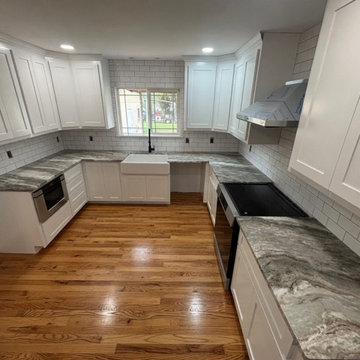
Fantasy Brown Leathered dolomite went into this West Columbia kitchen, and it's the kind of stone that changes how a room feels the second the light hits it. Leathered finish instead of polished, so you get texture under your hand instead of a mirror flat surface. It softens the brown and cream movement in the stone, gives it a low sheen, and hides fingerprints and water spots a lot better than a honed or polished slab would in a kitchen that actually gets used.
Dolomite has that soft, warm background movement, browns and creams drifting through each other, and it holds up well against everyday acids and scratching in a working kitchen. It's still a natural stone, so we sealed it properly, and the leathered texture actually helps there, it hides the wear that would show up fast on a glass-smooth surface.
Getting the veining to read right across the seams is the real work on a stone like this. We template the room, lay the slabs out, and take our time matching the movement across the corners and the seams before anything gets cut, so the pattern keeps flowing instead of jumping when you walk from one stretch of counter to the next. It's slower than pushing straight into fabrication, but it's the difference between a kitchen that looks like one slab and one that looks like pieces.
Edge came out eased, clean and simple, which is the right call on a stone with this much going on in the surface. You don't need a fancy profile competing with the leathering and the movement in the dolomite, the material carries the room on its own.
Day to day it lives well. Set a hot pan down and it takes it fine, though a trivet never hurts. It'll take the knocks of a working kitchen better than people expect, and the leathered texture keeps it looking good years in instead of showing every little scuff. That's the kind of project we like doing around West Columbia and the rest of the Midlands, matching the right stone to a kitchen that's going to get lived in, not just looked at.
36