
Search results for "Low pay" in Home Design Ideas
 Envision Web
Stuart Wade, Envision Virtual Tours
Envision Virtual Tours and High Resolution Photography is your best choice to find just what you are looking for in the Ellijay, Ga. area .Ellijay, Georgia, known as the “Apple Capital” of Georgia, is located between the Ellijay and Cartecay Rivers where they join to make the Coosawattee River and is the county seat of Gilmer County, Georgia. The origin of the city’s name is not certain but thought to be the English derivative of an Indian word(s) meaning “many waters”, “place of green things” or “new ground”. Some histories say it may have been named for an Indian chief.
Inhabited for countless years by the Cherokee people indigenous to the North Georgia, the area was first mentioned as a village and trade center before the onslaught of white settlers inhabited the region. During the 1830’s both white settlers and Indians occupied Ellijay. During the original land lottery in 1832, Martin Scalf acquired the 160 acre lot where the town now stands. In 1833, Clemonds Quinland bought 10 acres from Scalf, retained one acre for himself and donated the rest of the purchase to the County. A plan for twenty town lots, streets and a public square was created and the streets were oriented to allow maximum sunlight exposure to the buildings.
Proceeds from lot sales were used to build a jail and courthouse and pay other city expenses. During this same year, Gilmer County was appropriated $800.00 from the State to build a school, and a three-acre lot was donated for the city cemetery. On December 29, l834, Ellijay was incorporated and designated as the County seat of Gilmer County. By 1837, the town had twenty dwellings, three stores and one attorney. Most of these early buildings were of log construction.
Many roads led to Ellijay by 1849. The population had grown to 150 by 1850 and the town at five stores. Some wood-frame buildings were being constructed at this time and in 1854, a new courthouse was built in the center of the square, replacing the earlier building. The County’s first newspaper was the Ellijay Courier, started in 1875, and during this time period, Ellijay was a stop on the stagecoach line. The railroad bridge over the Cartecay River was completed in 1884 and the town now had rail service.
With the arrival of the railroad and subsequent tracks to White Path, Ellijay began to grow much faster. Many hotels were constructed and land was donated for a depot east of town. More industries, such as a cheese factory and the Shippen Brothers Lumber Mill, located in Ellijay. By 1898, the city had expanded its limits in every direction and now included the depot.
By 1900, all the buildings on the town square were brick. This included the recently completed Hyatt Hotel. Most of the other buildings in town were still of log construction, but new wood-frame buildings were being built. The Shippen Brothers Lumber Company production was expanding and exporting their lumber to Europe. Within the next few decades, this company grew to be one of the largest employers in Ellijay, often with five to six million feet of lumber in the yard at one time.
The population of Ellijay grew to 659 by 1910, and began to acquire many new modern conveniences such as electric lights and power, a telephone company and many new businesses.
Then in 1912, a fire ravaged the city, destroying 23 buildings. As a result, many new buildings were constructed under new and stricter fire and safety guidelines. The population, however, decreased slightly at this time to 632 in 1920.
During the 1920’s the town’s population began to grow again and, by this time, apples were being shipped out of the county and new storage facilities were built. Chickens were also shipped to markets outside of Ellijay and Gilmer County.
From the mid 1930’s to 1950, Ellijay received much assistance from the Federal WPA Programs. The old courthouse was removed from the center of town square and the Hyatt Hotel was remodeled to be the new courthouse. A park was created on the site of the old courthouse and the streets around the square were paved. A new street was built at this time entering town from the northeast. Other new roads, bridges, sidewalks and gutters were constructed to improve the city. A school and gymnasium were also built and other structures improved.
This growth began to impact the city’s infrastructure and in the l950’s and l960’s, a period of upgrading water systems, roads, and power supplies began. New low-rent housing appeared in l960 and a new hospital was built in l957. Georgia Highway 5 was widened in l962, new buildings around the square replaced old ones and some were remodeled. In 1974, the hospital was enlarged.
Currently, Ellijay attracts tourists who love the small-town feel and friendly atmosphere. Hotels and restaurants, unique shops, antiques and art galleries lend their charms to those who visit. A new courthouse constructed to resemble the old one, new streetscaping, family-oriented downtown events and the beautification of the square have stepped up the social and economic activity and have made Ellijay a popular destination.
 Field Architecture
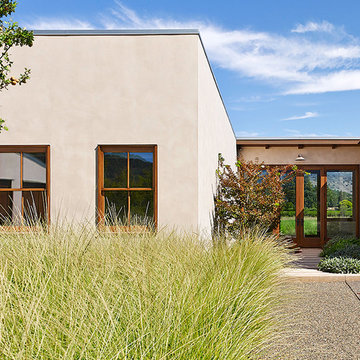
The Yountville Residence was designed to accommodate three family generations coming together over food, wine, outdoor living and the land. Located amongst continuous vineyards on the broad flood plain of the Napa River, creating a strong sense of place was foremost. Rich in a culture of wine making and production from the land, the site demanded a design solution that honored its history and elevated the experience of the land.
The house pays homage to its context by creating a reimagined agrarian compound. Conceived as a family of smaller buildings, the architecture comes together around a shaded patio and pool. The kitchen, dining, and living spaces all flow onto the shaded outdoor patio and gardens. Low-sloped gable roofs evoke the agricultural history of the region and echo the gentle slope of the foothills beyond.
The home remains understated – quietly drawing one’s attention back to the magnificent natural features of the landscape. Gently pulled back into the heart of the serene vineyards, it is carefully oriented with Stag’s Leap at the foot of the Vaca Mountains to the East and the Mayacamas Range to the West. Scenic views continue uninterrupted through the home. Large window walls slide open and pocket on either side of the house, connecting the family to the outdoors and building a personal experience of place on the Valley floor.
“If we can enrich people’s lives, and just maybe inspire them to do something beyond what they might otherwise have done, that brings us great satisfaction.” – Stan Field, fA Principal
The connection of the architecture to the land goes beyond its visual connectivity. The design sensitively responds to land and place by recognizing key passive cooling and natural daylighting strategies present on the site. Broad overhanging roofs and the large slide away doors capture prevailing breezes up the valley. The patio, which is pulled close into a recessed cut-out in the main living space of the house, allows summer breezes across the pool to cool the house. Expansive windows and a narrow cross-section allow natural daylight to penetrate deep into the spaces and illuminate the rich and earthy palette of natural materials.
The architecture created is a vehicle through which the powerful forms of the landscape craft a powerful experience of place. It is a respite from urban life, designed to bring one back to the basics: a love of family, land, food, and of course, wine.
 Paradise Found Construction
Keith and Amy loved their home in quiet Wake Forest neighborhood on a large corner lot on a cul-de-sac. Over time, Amy had developed allergic reactions to unknown allergens in their home. As her condition worsened, it became impossible for her to spend much time in the home, and they were forced to move out and find temporary housing accommodations.
After months of talking with other home improvement providers and indoor air “experts” and trying other solutions to no avail including having their HVAC ducting cleaned, they turned to Paradise Found Construction and our expertise and experience in transforming indoor environments in homes into healthy and clean living spaces. Because many of the improvements we undertook to create a cleaner environment also provided energy savings, we had our work certified under the 2012 National Green Building Standards (NGBS) and were award a Bronze level certification for the home.
We conducted a thorough investigation and testing regimen that included bringing in our team industry leading air quality and HVAC experts, we developed a comprehensive plan of action that would solve their “sick home syndrome”.
We removed all of the carpeting and pad from the home and thoroughly cleaned all surfaces and filtered the air with advanced HEPA filtration units. There were a few areas of mold in the crawl space which we mitigated as well. We thoroughly air sealed the home, paying particular attention to the ground level and attic floor system. Since the HVAC systems and ducting had become re-contaminated, we cleaned both units and all associated duct work.
To eliminate unhealthy air being drawn into the home from the crawl space, we completely sealed and conditioned the crawl. In order to provide a controlled entry point for clean fresh air into the home we installed an energy efficient stand-alone Energy Recovery Ventilator (ERV).
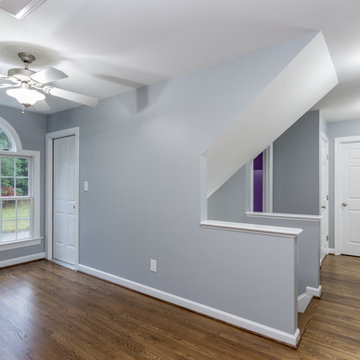
We installed wood flooring in all of the living areas that did not have wood flooring, and finished all of the flooring using a NO-VOC water-based floor finish. All of the painted surfaces of the home were sealed and painted with NO-VOC latex paint.
To further improve the energy performance of the home in addition to thoroughly air-sealing and sealing and conditioning the crawl space, we installed 100% LED lighting in the home. We improved the water efficiency of the home by installing low-flow EPA WaterSense rated toilets and shower heads, converted all of the bathroom and kitchen faucets to be more water efficient.
Upon completion, Amy and her family was able to move back into their cozy and clean “new home”, and are once again able to enjoy and be comfortable in their home.
Find the right local pro for your project
 Envision Web
Stuart Wade, Envision Virtual Tours
Envision Virtual Tours and High Resolution Photography is your best choice to find just what you are looking for in the Ellijay, Ga. area .Ellijay, Georgia, known as the “Apple Capital” of Georgia, is located between the Ellijay and Cartecay Rivers where they join to make the Coosawattee River and is the county seat of Gilmer County, Georgia. The origin of the city’s name is not certain but thought to be the English derivative of an Indian word(s) meaning “many waters”, “place of green things” or “new ground”. Some histories say it may have been named for an Indian chief.
Inhabited for countless years by the Cherokee people indigenous to the North Georgia, the area was first mentioned as a village and trade center before the onslaught of white settlers inhabited the region. During the 1830’s both white settlers and Indians occupied Ellijay. During the original land lottery in 1832, Martin Scalf acquired the 160 acre lot where the town now stands. In 1833, Clemonds Quinland bought 10 acres from Scalf, retained one acre for himself and donated the rest of the purchase to the County. A plan for twenty town lots, streets and a public square was created and the streets were oriented to allow maximum sunlight exposure to the buildings.
Proceeds from lot sales were used to build a jail and courthouse and pay other city expenses. During this same year, Gilmer County was appropriated $800.00 from the State to build a school, and a three-acre lot was donated for the city cemetery. On December 29, l834, Ellijay was incorporated and designated as the County seat of Gilmer County. By 1837, the town had twenty dwellings, three stores and one attorney. Most of these early buildings were of log construction.
Many roads led to Ellijay by 1849. The population had grown to 150 by 1850 and the town at five stores. Some wood-frame buildings were being constructed at this time and in 1854, a new courthouse was built in the center of the square, replacing the earlier building. The County’s first newspaper was the Ellijay Courier, started in 1875, and during this time period, Ellijay was a stop on the stagecoach line. The railroad bridge over the Cartecay River was completed in 1884 and the town now had rail service.
With the arrival of the railroad and subsequent tracks to White Path, Ellijay began to grow much faster. Many hotels were constructed and land was donated for a depot east of town. More industries, such as a cheese factory and the Shippen Brothers Lumber Mill, located in Ellijay. By 1898, the city had expanded its limits in every direction and now included the depot.
By 1900, all the buildings on the town square were brick. This included the recently completed Hyatt Hotel. Most of the other buildings in town were still of log construction, but new wood-frame buildings were being built. The Shippen Brothers Lumber Company production was expanding and exporting their lumber to Europe. Within the next few decades, this company grew to be one of the largest employers in Ellijay, often with five to six million feet of lumber in the yard at one time.
The population of Ellijay grew to 659 by 1910, and began to acquire many new modern conveniences such as electric lights and power, a telephone company and many new businesses.
Then in 1912, a fire ravaged the city, destroying 23 buildings. As a result, many new buildings were constructed under new and stricter fire and safety guidelines. The population, however, decreased slightly at this time to 632 in 1920.
During the 1920’s the town’s population began to grow again and, by this time, apples were being shipped out of the county and new storage facilities were built. Chickens were also shipped to markets outside of Ellijay and Gilmer County.
From the mid 1930’s to 1950, Ellijay received much assistance from the Federal WPA Programs. The old courthouse was removed from the center of town square and the Hyatt Hotel was remodeled to be the new courthouse. A park was created on the site of the old courthouse and the streets around the square were paved. A new street was built at this time entering town from the northeast. Other new roads, bridges, sidewalks and gutters were constructed to improve the city. A school and gymnasium were also built and other structures improved.
This growth began to impact the city’s infrastructure and in the l950’s and l960’s, a period of upgrading water systems, roads, and power supplies began. New low-rent housing appeared in l960 and a new hospital was built in l957. Georgia Highway 5 was widened in l962, new buildings around the square replaced old ones and some were remodeled. In 1974, the hospital was enlarged.
Currently, Ellijay attracts tourists who love the small-town feel and friendly atmosphere. Hotels and restaurants, unique shops, antiques and art galleries lend their charms to those who visit. A new courthouse constructed to resemble the old one, new streetscaping, family-oriented downtown events and the beautification of the square have stepped up the social and economic activity and have made Ellijay a popular destination.
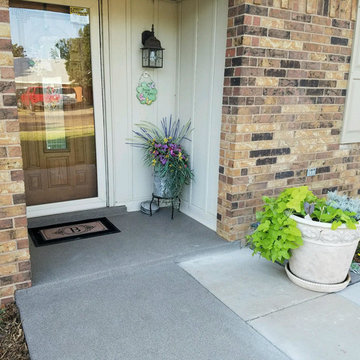
 Lubbock Custom Coating
Super Traxx Sand Coating is a coating that can help your outdoor surfaces. It can give your driveway, sidewalk, patio, garage floor, and outdoor deck a facelift, that’s non-slip, looks great and lasts longer. This coating method provides an alternative to paying for new concrete or installation fees every couple of years. Super Traxx is an extremely low maintenance solution that will increase the lifespan of your outdoor flooring and amenities.
Super Traxx will increase the life of your outdoor surfaces, because it is a durable, and more importantly, weather resistant coating. This coating will be able to handle whatever mother nature throws its way. Super Traxx will decrease the likelihood of cracks and spalling in your concrete.
Our sand coating is a seamless solution that will fill fractures, expansion joints, and saw cuts in concrete. It is also chemical resistant and durable enough to withstand the application of salt or cleaning chemicals. Your outdoor flooring will stand up to heavy traffic for years to come!
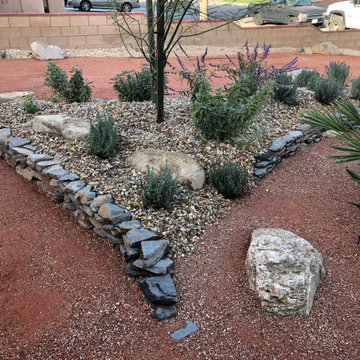
 Greenbee Landscape, Inc.
We transform thirsty unnatractive lawns into colorful, interesting presentations of your property.
Even better, the inner beauty of our work is that you will work less, fertilize less, water less, worry less and pay less every month for your beautiful new landscape.

Sponsored
Columbus, OH

Structural Remodeling
Franklin County's Heavy Timber Specialists | Best of Houzz 2020!
 The Huntington Closet and Cabinet Company
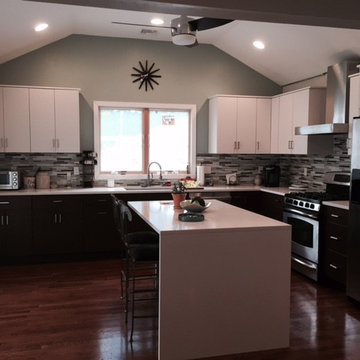
Kitchens
Traditional transitional, or modern….
Whatever style you chose, we will design, build, and install the custom kitchen of your dreams.
•Superior Quality
- All of the materials used to build our cabinets are the highest grade, eco friendly materials that are available in North America.
- Every part of every cabinet, door, and drawer are 3/4” thick. Quality and durability is what we strive for…
- Soft close slides and hinges are standard on all of our kitchen cabinets.
•Unbeatable Quality
- There is no need to settle on stock size cabinets or pay the high price for custom cabinets.
- Our high quality custom cabinets cost less than most low quality stock cabinets available on the market.
•Perfect Installation
- Not only will we design and build your custom cabinets, we will see your vision through to completion. Our “on staff” cabinet installers will keep your kitchen renovation on schedule when we install your custom made cabinets. We handle every step of the kitchen cabinet process. Design, build, and install. All of you have to do is relax and enjoy your new kitchen cabinets.
The math is simple…
Superior Quality + Unbeatable Value + Perfect installation = A Huntington Kitchen
 Lancko Group Inc.
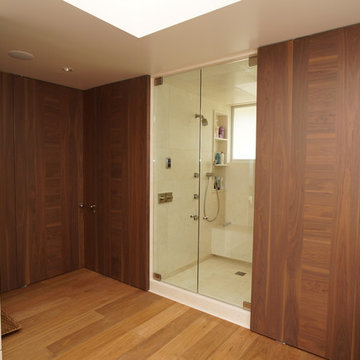
Wide Symmetrical Slats Frame a center ribbon of Encountered Grain. Available with Vertical Grain on the Edges and Horizontal in the Center or vice-versa with Horizontal Grain on Edges and Vertical Grain on the center.
No standard sizes of doors. Each door is produced to your exact specifications at our manufacturing facilities.
Industry accepted lead times; each manufacturing step is made with caution and care to insure a quality product that hopefully outlasts our generation.
It is good to be green; we use Formaldehyde Free products and low VOC Glues, Stains and Cores.
Our cores are FSC certified and we can get any material with FSC certifications.
We build our doors with engineered FSC certified laminated veneer lumber (LVL) cores. This material is none other than the best in the industry and provides superior strength and unmatched dimensional stability. It also has the best results in warping and twist tests. Our LVL core can hold screws with the same capacity as many wood species and is a MUCH better product than the cheap fiberboard core local carpenters typically use. Our cores can be machined the same as many solid wood species and they accept any hardware prep without affecting door integrity.
Stainless steel inserts, special wood elements or leather or cowhide inlays are a common landscape at Lancko. Please let us know what you are dreaming, most likely we can come up with a solution to achieve it.
About 80% of our doors are built with Hidden Hinges. Cool and exclusive and although they are a time consuming & difficult part to put together, we love it when our clients choose this available option. It is a luxury that will pay for itself, an investment into pure refinement and quality that greatly complements Lancko Doors and most definitively your project.
Capabilities. Can we do 20mins, 45 mins., 60 mins. and up to 3 Hour Fire Rated Doors, Bullet Proof Doors, Sound Proof Doors, Barn Doors, Huge Doors, Mini Doors, Hidden Doors, Louver Doors, Bi-pass Doors, Bi-fold doors, Pocket Doors, Dutch Doors, Rustic Doors, Stile and Rail Doors, Leather Doors, Cowhide Doors? Yes we can.. oh and dog doors too and of course we can do normal swing doors. What about gates? Yes. Modern Entry Doors? Yes. Garage doors? No, we need to draw the line somewhere.
Available as: Slabs only, slabs and jambs knocked down,Pre-hung units or Pre-hung & pre-finished units with hardware installed. You decide your level of door package. The best way to go to insure a top notch factory controlled quality product??... well that would be the Pre-Hung, Pre-Finished and Hardware installed product. It will cost you the same as doing it at the uncontrollable job site and the quality will be incomparable. Plus we use Conversion Varnish to finish our products. Who uses Conversion Varnish? High-End Kitchen Manufacturers and Lancko.
At Lancko, we can also manufacture Contemporary and Modern trim to complement your doors and integrate your design throughout your project.
 Unique Home Solutions Inc.
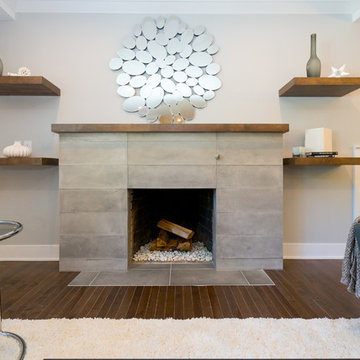
I loved staging this newly renovated house! The owners modernized the fireplace and added some natural wooden suspended shelving. The property sold right away!
If you are planning on selling your property, give us a call. We work with some great realtors who will pay for some of our staging.
Call 514-222-5553. We have been in business for over 10 years.
 Envision Web
Stuart Wade, Envision Virtual Tours
Envision Virtual Tours and High Resolution Photography is your best choice to find just what you are looking for in the Ellijay, Ga. area .Ellijay, Georgia, known as the “Apple Capital” of Georgia, is located between the Ellijay and Cartecay Rivers where they join to make the Coosawattee River and is the county seat of Gilmer County, Georgia. The origin of the city’s name is not certain but thought to be the English derivative of an Indian word(s) meaning “many waters”, “place of green things” or “new ground”. Some histories say it may have been named for an Indian chief.
Inhabited for countless years by the Cherokee people indigenous to the North Georgia, the area was first mentioned as a village and trade center before the onslaught of white settlers inhabited the region. During the 1830’s both white settlers and Indians occupied Ellijay. During the original land lottery in 1832, Martin Scalf acquired the 160 acre lot where the town now stands. In 1833, Clemonds Quinland bought 10 acres from Scalf, retained one acre for himself and donated the rest of the purchase to the County. A plan for twenty town lots, streets and a public square was created and the streets were oriented to allow maximum sunlight exposure to the buildings.
Proceeds from lot sales were used to build a jail and courthouse and pay other city expenses. During this same year, Gilmer County was appropriated $800.00 from the State to build a school, and a three-acre lot was donated for the city cemetery. On December 29, l834, Ellijay was incorporated and designated as the County seat of Gilmer County. By 1837, the town had twenty dwellings, three stores and one attorney. Most of these early buildings were of log construction.
Many roads led to Ellijay by 1849. The population had grown to 150 by 1850 and the town at five stores. Some wood-frame buildings were being constructed at this time and in 1854, a new courthouse was built in the center of the square, replacing the earlier building. The County’s first newspaper was the Ellijay Courier, started in 1875, and during this time period, Ellijay was a stop on the stagecoach line. The railroad bridge over the Cartecay River was completed in 1884 and the town now had rail service.
With the arrival of the railroad and subsequent tracks to White Path, Ellijay began to grow much faster. Many hotels were constructed and land was donated for a depot east of town. More industries, such as a cheese factory and the Shippen Brothers Lumber Mill, located in Ellijay. By 1898, the city had expanded its limits in every direction and now included the depot.
By 1900, all the buildings on the town square were brick. This included the recently completed Hyatt Hotel. Most of the other buildings in town were still of log construction, but new wood-frame buildings were being built. The Shippen Brothers Lumber Company production was expanding and exporting their lumber to Europe. Within the next few decades, this company grew to be one of the largest employers in Ellijay, often with five to six million feet of lumber in the yard at one time.
The population of Ellijay grew to 659 by 1910, and began to acquire many new modern conveniences such as electric lights and power, a telephone company and many new businesses.
Then in 1912, a fire ravaged the city, destroying 23 buildings. As a result, many new buildings were constructed under new and stricter fire and safety guidelines. The population, however, decreased slightly at this time to 632 in 1920.
During the 1920’s the town’s population began to grow again and, by this time, apples were being shipped out of the county and new storage facilities were built. Chickens were also shipped to markets outside of Ellijay and Gilmer County.
From the mid 1930’s to 1950, Ellijay received much assistance from the Federal WPA Programs. The old courthouse was removed from the center of town square and the Hyatt Hotel was remodeled to be the new courthouse. A park was created on the site of the old courthouse and the streets around the square were paved. A new street was built at this time entering town from the northeast. Other new roads, bridges, sidewalks and gutters were constructed to improve the city. A school and gymnasium were also built and other structures improved.
This growth began to impact the city’s infrastructure and in the l950’s and l960’s, a period of upgrading water systems, roads, and power supplies began. New low-rent housing appeared in l960 and a new hospital was built in l957. Georgia Highway 5 was widened in l962, new buildings around the square replaced old ones and some were remodeled. In 1974, the hospital was enlarged.
Currently, Ellijay attracts tourists who love the small-town feel and friendly atmosphere. Hotels and restaurants, unique shops, antiques and art galleries lend their charms to those who visit. A new courthouse constructed to resemble the old one, new streetscaping, family-oriented downtown events and the beautification of the square have stepped up the social and economic activity and have made Ellijay a popular destination.
 Alzona Fontaine Team at PARADISE REAL ESTATE INT’L
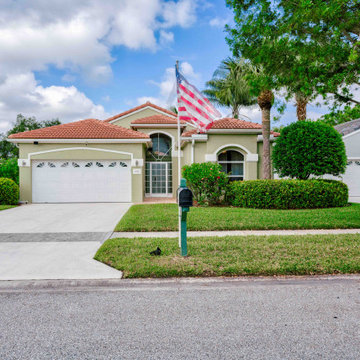
Move-in Ready, Mint condition 3/2/2 Spacious Home w/ Screened in Patio in Gated Community w/ VERY LOW HOA fees, PAY & PLAY GOLF in Highly Rated Champions Golf Club- NO Membership Rq'd! HOA fee includes: Hotwire Fiber Optic Cable TV, Internet, Clubhouse, 24 hr Fitness Ctr, Resort Style Pool, Har-Tru Tennis + Pickleball, Library, Social Events Room, Lush Tropical Landscaping in Community. Tom Fazio designed Golf Course. Newer 2020 Roof, 2020 Generac 20 kW Generator, All Impact Glass Windows except 2 small windows. New 2022 Water Heater. Regularly serviced TRANE A/C System. Stainless Steel Appliances. Granite Countertops. Vaulted ceilings, Open-concept floor plan. Freshly Painted Interior. Plantation Shutters. Close to Beaches, Boat Marinas, Shopping & Dining.
 Greenbee Landscape, Inc.
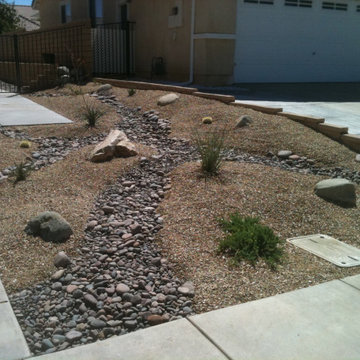
We transform thirsty unnatractive lawns into colorful, interesting presentations of your property.
Even better, the inner beauty of our work is that you will work less, fertilize less, water less, worry less and pay less every month for your beautiful new landscape.

 Green Home Systems
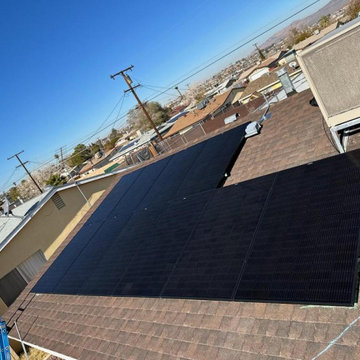
Green Home Systems recently completed a solar installation project in Barstow, California. We provided Albert L. with a 3.60 kW photovoltaic system that allowed him to reduce his utility bill and increase his home value.
Albert chose Green Home Systems because of our competitive pricing and easy payment terms. We worked closely with him to ensure the project was completed quickly and efficiently. Our experienced team of professionals was able to complete the project in less than a month and Albert was very pleased with the results.
At Green Home Systems, we pride ourselves on providing our customers with superior customer service and quality products. We use only the highest quality materials and equipment and take great care to ensure every installation meets our exacting standards for safety and efficiency. Our knowledgeable staff is always available to answer questions about our products or services and provide helpful advice on how to get the most out of your solar energy system.
Our solar energy systems are designed to provide maximum performance with minimal maintenance. Every system includes an inverter that converts the direct current (DC) electricity generated by the solar panels into alternating current (AC) electricity which is used by your home or business. We also offer monitoring services that allow you to track your system’s performance in real time so you can make sure your investment is working as expected.
At Green Home Systems, we understand how important it is for our customers to feel confident in their investment and that’s why we offer competitive financing options through our partners at Sunrun and Sunpower. With these programs you can get started with a low down payment and then pay off your system over time while still enjoying substantial savings on your utility bills each month.
We are proud of the work we do at Green Home Systems and we strive to ensure that every customer is satisfied with their experience. It was an honor for us to work with Albert on this project in Barstow, California and we look forward to continuing to help more people make the switch to solar energy in the future!

18