
Search results for "Migration" in Home Design Ideas
 User
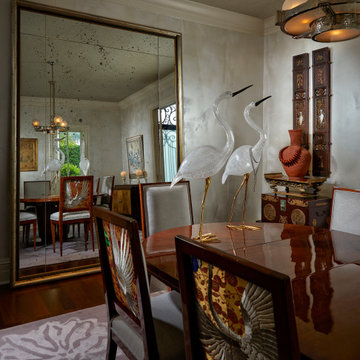
UserI upholstered the chairs in Lee Jofa wool and purchased an antique hand embroidered kimono, then deconstructed to create the back panels to these dining room chairs. I believe that levity is an element that should exist in every home. In this instance, the Murano handblown glass Cranes are caught mid-migration walking across the deco dining room table.
 User
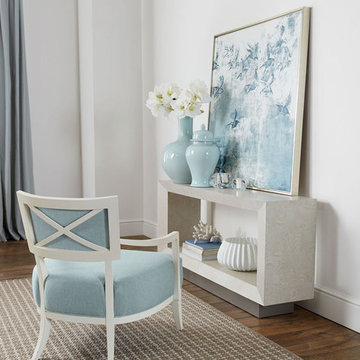
UserMake a chic first impression with just a few pieces in this welcoming entryway. A cool blue-and-white palette and simple styles define a soothing sensibility that invites guests in. The Braemore console table sets up the focal point with an open, yet bold architectural look. The large scale giclée, Migrate, makes an eye-catching statement with an enchanting abstract image of fluttering birds in motion. Finally, the Jaxson chair finishes the look with a sophisticated stay-awhile feel, while white and blue accents tie the calming look of this entryway together.
 Regan Baker Design Inc.
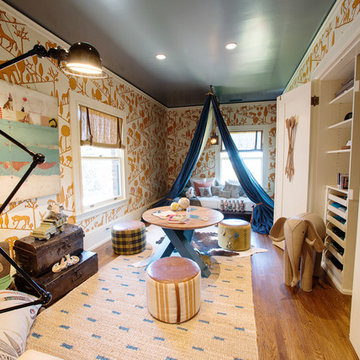
Venturing between different imaginative worlds, Jimmy finds respite in a nomadic tent amongst his journeys. Like a homemade fort requires the assemblage of every sheet and towel in the house, active migration demands resourcefulness in the use of available materials. Leather, denim, canvas, and rope allow Jimmy to remain a rugged little boy as he discovers new territories, and is further encouraged to activate space via movable furniture. Roam on.
Lively pops of orange and blue from the existing vintage wallpaper by Diego Giacometti for Clarence House and dispersed pillows and stuffed animals from Coral & Tusk set the adventurous mood for this little roamer’s room.
Photography by Modern Kids Co
Find the right local pro for your project
 Prestige Landscape & Tree Service LLC
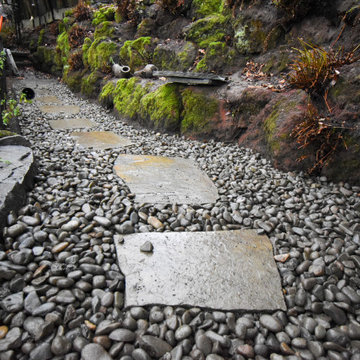
We just finished this beautiful flagstone pad and path, for the flagstone we used the Variegated Bluestone from Smith Rock.
Our customers main problem with their yard was their chickens tearing it apart, we didn’t have too many options for a solution due to huge Sweet Gum roots spanning the length of their yard. We worked around them and got it done! The infill we used here was 3/4-1.5 river rock to minimize the migration due to chickens.
 Hogue Landscape Services
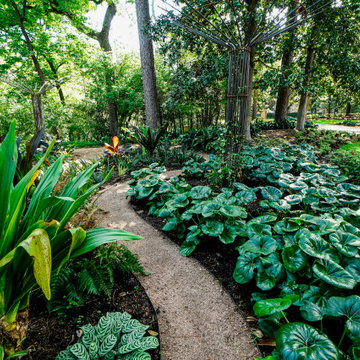
The concept of the garden was based on, “Brazilian Hummingbirds II”, a painting the MFAH has in its collection by the artist, Martin Johnson Heade. Heade travelled to the rainforest in Brazil between 1863 and 1864 and painted a
series of small paintings depicting hummingbirds in the lush foliage of the Brazilian rainforests. His painting, Brazilian
Hummingbirds, II, evokes the sultry atmosphere of the Brazilian rainforest with its misty quality and subtle lighting. His interest in ornithology can be seen in his detailed depictions of the hummingbirds. The garden location is adjacent to one of Buffalo Bayou’s steep, wooded ravines. The ravine, with its native plant communities and topography, is a perfect back-
drop for a garden with a rainforest theme. Because the date for the garden opening coincides with the spring migration of hummingbirds into our region, the hummingbird theme seemed appropriate for this garden competition. The garden will include a variety of tropical plants native to the rainforests such as bromeliads, orchids, heliconia, and passion fruit flowers. In addition, native plants to our region such as the Sabal Minor and Southern Wood Fern will be included to integrate
plants that are found nearby in the ravine. The Heliconia flowers produce considerable amounts of nectar, a high energy food essential for hummingbirds who are known to consume three times their bodyweight in a single day. In addition to nectar producing plants, there will be hummingbird nest materials dispersed throughout the garden. A misty quality to the garden will be provided by a misting system, and tropical colored lights will be lit at night for special events. Visitors to the garden will have a unique sensory experience reminiscent to that of Heade’s travels to Brazil’s rainforests.
 Pennsylvania Landscape & Nursery Association
u2014 ALE: Wayne Rain Garden
Pennsylvania Landscape & Nursery Association
u2014 ALE: Wayne Rain Garden
Terren Landscapes http://www.terrenlandscapes.com
2014 PLNA Awards for Landscape Excellence winner
Category: Residential Up to $15,000
Award Level: Gold
Project Description:
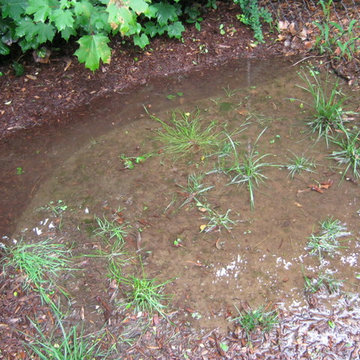
Our company was contracted by the client to provide a creative solution to an ongoing drainage problem. Their property is located within 30 feet of a local stream that collects storm water from the surrounding area. The nearby stream and high water table caused the lawn area at the side of their home to flood and to remain waterlogged for a few days after each storm. The client not only had difficulty growing plants in the existing conditions, but also had a problem with mosquitoes due to standing water.
Our goal was to design a self-contained, naturalistic rain garden that slowed storm water runoff, allowed for percolation, and promoted infiltration while permitting excess clean water to enter the nearby stream with diminished force. As designed, the rain garden allows the earth to slowly and more naturally
absorb excess storm water while filtering out toxins such as excess nitrogen and phosphorous which are frequently found in the landscape, therefore reducing the contaminants entering the stream.
A percolation test was conducted with criteria of absorbing a one-inch rainstorm within four hours without overflow. The one-inch storm calculation included an existing downspout from the home, which would be piped into the rain garden to reduce roof runoff. The first test failed due to a deep layer of high clay-content soil. Excavation continued until a layer of sandy loam was reached, the percolation test was repeated, and a successful test result was achieved. Next, the entire rain garden basin was excavated to the sandy loam layer and the soil amended with compost and sand to create a highly porous planting media.
Geotextile fabric was placed to help reduce migration of the surface stone into the soil and allow for minimal maintenance. Gravel, river stone and small boulders were carefully placed to achieve the look of a natural streambed.
A palette of mostly native plants with a few non-invasive ornamentals were chosen for their ability to survive in extreme conditions ranging from floods to drought and were placed according to their specific preferences.
Wetland plants were chosen for the lowest portion of the rain garden as that area remains saturated for longer periods of time, with a Chionanthus virginicus as a focal point surrounded by irises and ferns at the lowest depth.
Plants tolerant of drier conditions were chosen for the upper edges of the garden. The beautiful colors of Monarda, Ligularia, Eupatorium, Solidago, Chelone, and Rudbeckia were scattered within the upper edge, while movement and softness were incorporated by use of the graceful Nassella that lines the border. Finally, winter interest was provided with a backdrop of Cornus sericea.
As built, this small rain garden creates tremendous impact by decreasing the amount of storm water runoff not only on our client's property, but also in the neighboring stream. It serves as a means of slowing the water and providing an area for infiltration back into the earth. The plants provide a habitat for birds, butterflies, and insects, working in harmony with nature and providing beautiful visual interest year-round.
Photo Credit:
Lisa C. Falls
 Mary Harrison for Ethan Allen, Inc.
mary harrison
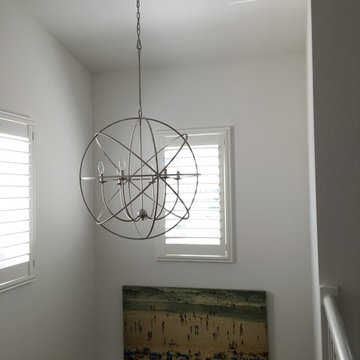
Example of a mid-sized beach style hallway design in Orange County with white walls
Example of a mid-sized beach style hallway design in Orange County with white walls
 Western Outdoor Designs
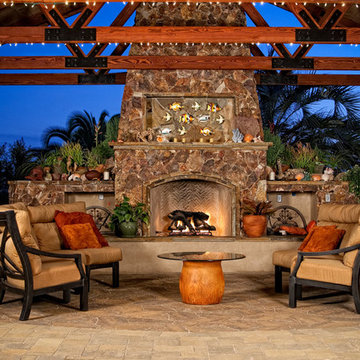
Western Outdoor Design & Build has teams of outdoor living experts, specializing in helping Southern California homeowners expand their living place. Many Southern California homeowners want to add a little wow factor to their backyard paradise and they aren’t sure how to do it. An outdoor fireplace can be the perfect backyard addition that guests will naturally migrate to at night.
http://westernoutdoordesigns.com/gallery-outdoor-fireplaces-san-diego-orange-county.html
 Hogue Landscape Services
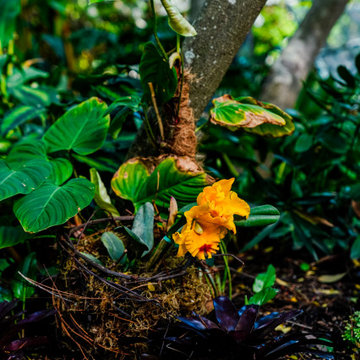
The concept of the garden was based on, “Brazilian Hummingbirds II”, a painting the MFAH has in its collection by the artist, Martin Johnson Heade. Heade travelled to the rainforest in Brazil between 1863 and 1864 and painted a
series of small paintings depicting hummingbirds in the lush foliage of the Brazilian rainforests. His painting, Brazilian
Hummingbirds, II, evokes the sultry atmosphere of the Brazilian rainforest with its misty quality and subtle lighting. His interest in ornithology can be seen in his detailed depictions of the hummingbirds. The garden location is adjacent to one of Buffalo Bayou’s steep, wooded ravines. The ravine, with its native plant communities and topography, is a perfect back-
drop for a garden with a rainforest theme. Because the date for the garden opening coincides with the spring migration of hummingbirds into our region, the hummingbird theme seemed appropriate for this garden competition. The garden will include a variety of tropical plants native to the rainforests such as bromeliads, orchids, heliconia, and passion fruit flowers. In addition, native plants to our region such as the Sabal Minor and Southern Wood Fern will be included to integrate
plants that are found nearby in the ravine. The Heliconia flowers produce considerable amounts of nectar, a high energy food essential for hummingbirds who are known to consume three times their bodyweight in a single day. In addition to nectar producing plants, there will be hummingbird nest materials dispersed throughout the garden. A misty quality to the garden will be provided by a misting system, and tropical colored lights will be lit at night for special events. Visitors to the garden will have a unique sensory experience reminiscent to that of Heade’s travels to Brazil’s rainforests.
 Teakwoodcentral
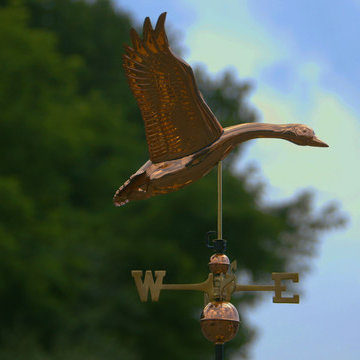
Gently gliding through the sky, this duck is looking for a place to migrate; preferably your garden or yard.
Our Good Directions' artisans use Old World techniques to handcraft this fully functional, garden weathervane that's unsurpassed in style, quality and durability.
A great gift for wildlife enthusiasts.
Polished copper for long-lasting beauty
Includes easy-to-assemble, all-weather garden pole, solid brass directionals and copper spacer balls
Measures 12 L x 21 H x 14" wingspan ideal for any deck, garden, or yard
Weight: 6lbs
L: 12", W: 14", H: 21"
Material: Copper Polished
 Hogue Landscape Services
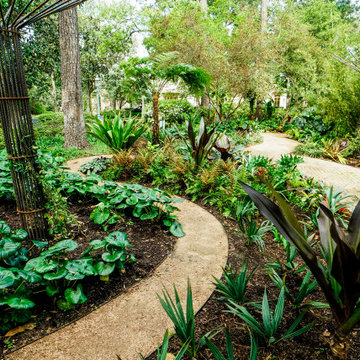
The concept of the garden was based on, “Brazilian Hummingbirds II”, a painting the MFAH has in its collection by the artist, Martin Johnson Heade. Heade travelled to the rainforest in Brazil between 1863 and 1864 and painted a
series of small paintings depicting hummingbirds in the lush foliage of the Brazilian rainforests. His painting, Brazilian
Hummingbirds, II, evokes the sultry atmosphere of the Brazilian rainforest with its misty quality and subtle lighting. His interest in ornithology can be seen in his detailed depictions of the hummingbirds. The garden location is adjacent to one of Buffalo Bayou’s steep, wooded ravines. The ravine, with its native plant communities and topography, is a perfect back-
drop for a garden with a rainforest theme. Because the date for the garden opening coincides with the spring migration of hummingbirds into our region, the hummingbird theme seemed appropriate for this garden competition. The garden will include a variety of tropical plants native to the rainforests such as bromeliads, orchids, heliconia, and passion fruit flowers. In addition, native plants to our region such as the Sabal Minor and Southern Wood Fern will be included to integrate
plants that are found nearby in the ravine. The Heliconia flowers produce considerable amounts of nectar, a high energy food essential for hummingbirds who are known to consume three times their bodyweight in a single day. In addition to nectar producing plants, there will be hummingbird nest materials dispersed throughout the garden. A misty quality to the garden will be provided by a misting system, and tropical colored lights will be lit at night for special events. Visitors to the garden will have a unique sensory experience reminiscent to that of Heade’s travels to Brazil’s rainforests.
 The HighBoy
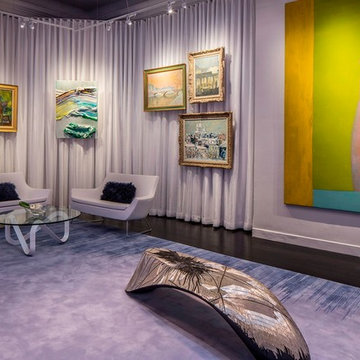
It's this chic migration that inspired designer Justin Shaulis to craft his room for New York’s Holiday House. The celebrated annual show house, founded to raise funds for breast cancer awareness, has given Shaulis the perfect venue to celebrate the magic of the subtropical hotspot in the middle of Manhattan. Photos by Marco Ricca.
 Hogue Landscape Services
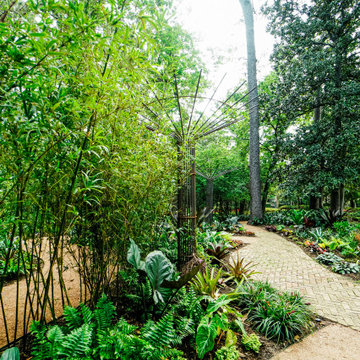
The concept of the garden was based on, “Brazilian Hummingbirds II”, a painting the MFAH has in its collection by the artist, Martin Johnson Heade. Heade travelled to the rainforest in Brazil between 1863 and 1864 and painted a
series of small paintings depicting hummingbirds in the lush foliage of the Brazilian rainforests. His painting, Brazilian
Hummingbirds, II, evokes the sultry atmosphere of the Brazilian rainforest with its misty quality and subtle lighting. His interest in ornithology can be seen in his detailed depictions of the hummingbirds. The garden location is adjacent to one of Buffalo Bayou’s steep, wooded ravines. The ravine, with its native plant communities and topography, is a perfect back-
drop for a garden with a rainforest theme. Because the date for the garden opening coincides with the spring migration of hummingbirds into our region, the hummingbird theme seemed appropriate for this garden competition. The garden will include a variety of tropical plants native to the rainforests such as bromeliads, orchids, heliconia, and passion fruit flowers. In addition, native plants to our region such as the Sabal Minor and Southern Wood Fern will be included to integrate
plants that are found nearby in the ravine. The Heliconia flowers produce considerable amounts of nectar, a high energy food essential for hummingbirds who are known to consume three times their bodyweight in a single day. In addition to nectar producing plants, there will be hummingbird nest materials dispersed throughout the garden. A misty quality to the garden will be provided by a misting system, and tropical colored lights will be lit at night for special events. Visitors to the garden will have a unique sensory experience reminiscent to that of Heade’s travels to Brazil’s rainforests.

 Design Matters
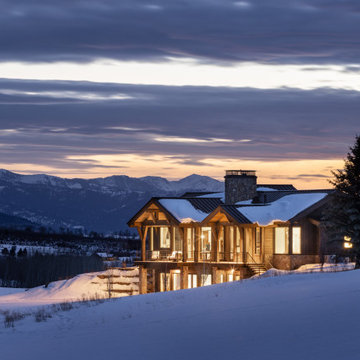
Perched in the rolling landscape of Alta, Wyoming, this legacy home was thoughtfully designed to belong to the land, not dominate it. Nestled into the hillside with sweeping views of the elk migration path and the Teton Range, every decision was made with future generations in mind. Led by Julie Cavanaugh, this project reflects her passion for designing legacy homes...places that honor family history, respect the land, and are built to be passed down for generations. With roots on this property dating back to the late 1800s, the homeowners envisioned a home that would tell their family’s story well into the future.
As featured in the latest edition of Mountain Living Magazine, this home is more than a retreat, it’s a promise to the past and a gift to generations to come.
With 70 acres of land, this timber framed home totals 5,752 sf. - 4 bed, 4.5 bath
 Pollination Press LLC
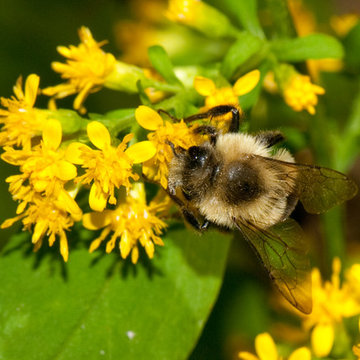
Solidago Flexicaulis / Zigzag Goldenrod
This is an example of a landscaping in Minneapolis.
This is an example of a landscaping in Minneapolis.
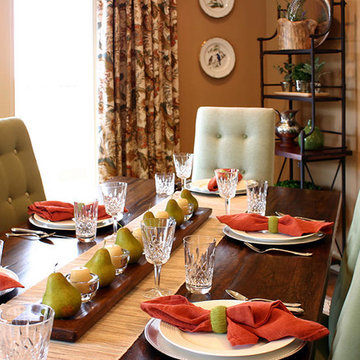
 Avondale Design Studio
Soft, warm greens, oranges, tans, and browns combine to create a richly textured palette inspired by the gorgeous fabric we used for the draperies. In the back, an antique baker's rack is used as a plant stand for fresh herbs and as extra serving surfaces. Hand-painted china plates feature songbirds that migrate throughout North America.
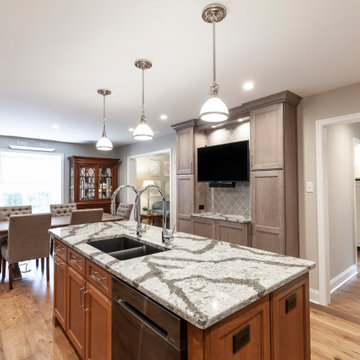
 Touchstone Kitchen and Bath
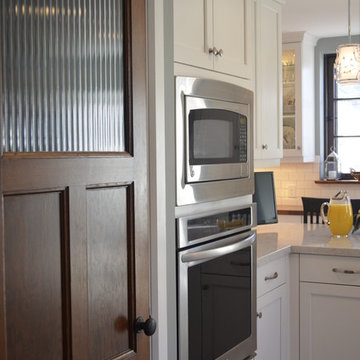
This kitchen previously was closed in and only included an L-shape layout. We opened up the space to a more open concept design, added an island, and migrated the plumbing (sink and dishwasher) to this new island to free up space on the main counter.
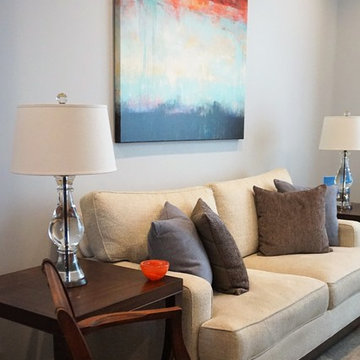
 Diane Stein Design for Sheffield Furniture
The migration to the city is happening everywhere. This home is all about that process. Downsizing, mixing favorites with new and adding unique character. The design is a mix of Vintage and modern with a nod to the areas industrial past. Vintage chairs this Thibaut fabric for a fresh look. 1920s magazine AD, favorite artwork, antique ceramic vase from days gone by, and new pieces bring this family back their Philadelphia roots.
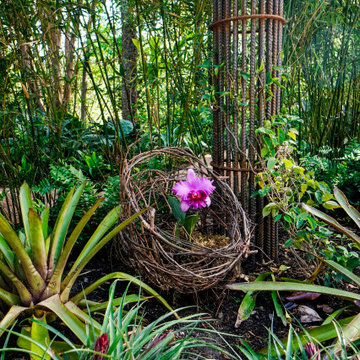 Hogue Landscape Services
The concept of the garden was based on, “Brazilian Hummingbirds II”, a painting the MFAH has in its collection by the artist, Martin Johnson Heade. Heade travelled to the rainforest in Brazil between 1863 and 1864 and painted a
series of small paintings depicting hummingbirds in the lush foliage of the Brazilian rainforests. His painting, Brazilian
Hummingbirds, II, evokes the sultry atmosphere of the Brazilian rainforest with its misty quality and subtle lighting. His interest in ornithology can be seen in his detailed depictions of the hummingbirds. The garden location is adjacent to one of Buffalo Bayou’s steep, wooded ravines. The ravine, with its native plant communities and topography, is a perfect back-
drop for a garden with a rainforest theme. Because the date for the garden opening coincides with the spring migration of hummingbirds into our region, the hummingbird theme seemed appropriate for this garden competition. The garden will include a variety of tropical plants native to the rainforests such as bromeliads, orchids, heliconia, and passion fruit flowers. In addition, native plants to our region such as the Sabal Minor and Southern Wood Fern will be included to integrate
plants that are found nearby in the ravine. The Heliconia flowers produce considerable amounts of nectar, a high energy food essential for hummingbirds who are known to consume three times their bodyweight in a single day. In addition to nectar producing plants, there will be hummingbird nest materials dispersed throughout the garden. A misty quality to the garden will be provided by a misting system, and tropical colored lights will be lit at night for special events. Visitors to the garden will have a unique sensory experience reminiscent to that of Heade’s travels to Brazil’s rainforests.
15