
Search results for "Path rich" in Home Design Ideas
 Green Grass Landscape Contractors
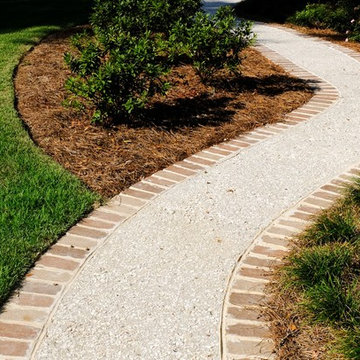
A tabby walkway with a brick border creates a clean entrance to your Eden. The traditional tabby is intimately connected to Charleston, dating back to the first European settlers. What a wonderful way to stay connected to our rich history here in the lowcountry and impress your guests.
 Arrow. Land + Structures
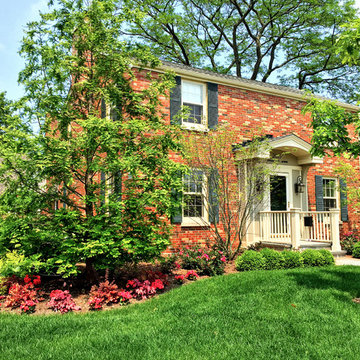
Evanston Landscape Design and Construction by Arrow. Marco Romani, RLA Landscape Architect
Design ideas for a small traditional front yard stone garden path in Chicago.
Design ideas for a small traditional front yard stone garden path in Chicago.
 Sheila Rich Interiors, LLC
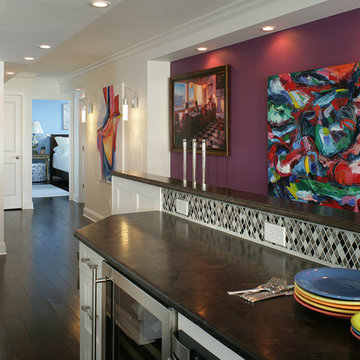
A once dark and enclosed narrow hallway was opened up. Soffits were added to the cement ceiling to accommodate the recessed lighting which creates a lighted path for way finding. The kitchen island in the foreground, complete with wine refrigerator and drawer microwave, was previously closed in by a full wall. The purple passion wall continues around the corner from the living room, strikingly enhancing the artist's original work and delineating the open area between the kitchen and the hallway.
Find the right local pro for your project
 Sheila Rich Interiors, LLC
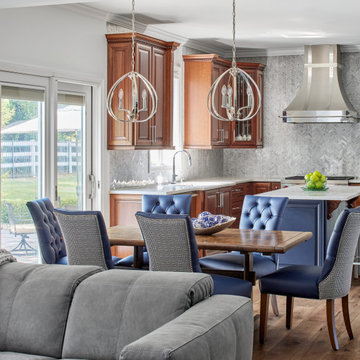
The knee wall between the kitchen and family room was removed, opening the sight lines and expanding the kitchen. This change also created a direct, unobstructed path from the sliding glass doors to the heart of the kitchen. The family’s existing refectory table was refinished to harmonize with the various wood tones in the space. Dining chairs feature blue faux leather fronts and performance fabric backs accented with nail head trim, perfectly complementing the island stools. Above the table, airy and open pendants define the dining area while maintaining a clear, light-filled connection between the kitchen and great room.

 Environmental Designs, LLC
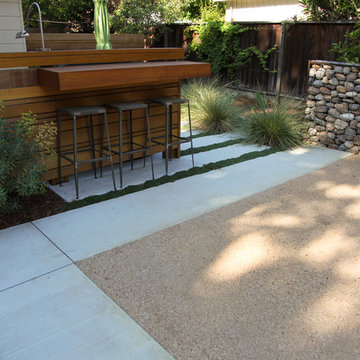
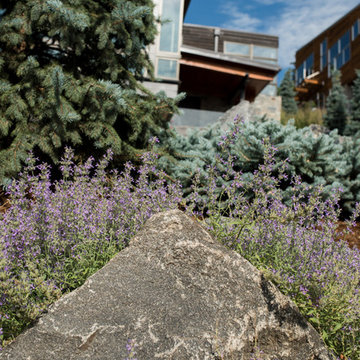
Black Bear is a project that uses the challenges of the site as its strongest asset. The steep slopes afford a series of pathways, landings, and courtyards that have been seamlessly embedded into the hillside. The result is an articulated progression of steps and outdoor rooms that use clean surfaces and are richly planted.
Landscape Construction: Environmental Designs, Inc.; Landscape Architecture Design: MARPA
 The Foxy Garden
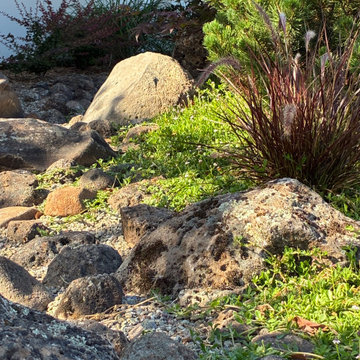
Once an uninspired lawn, this front garden has been reimagined as a lush, Modern Japanese retreat featuring vibrant Japanese Maples, structured Mugo Pines, and a drought-tolerant Kurapia groundcover. The thoughtfully layered planting delivers enduring color, rich texture, and natural privacy for the front bedrooms throughout every season. Functioning as both a focal point and a sustainable drainage solution, an artfully placed dry creek bed captures seasonal rainfall, allowing water to gently percolate into the soil rather than escaping into storm drains.

 Lynch Landscape and Tree Service, Inc.
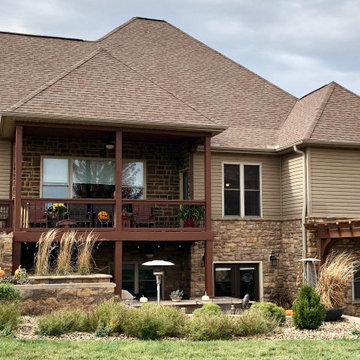
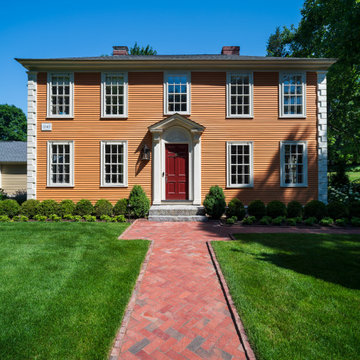
The landscape design for this historic property was carefully crafted to restore the home to its original grandeur. Incorporating Boston City Hall pavers, natural cleft bluestone, and reclaimed granite bridge blocks, the hardscape seamlessly blends timeless materials with the architectural charm of the New England colonial era, honoring its rich heritage with enduring elegance.
 O'hana Art Environments
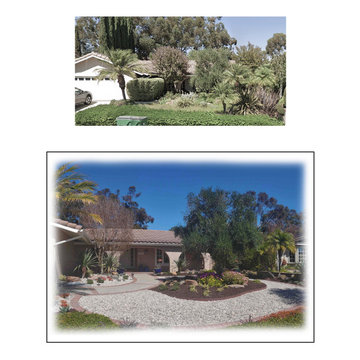
Years of overgrown plantings give way to a reborn succulent showstopper in this Mission Viejo makeover. A careful combination of water-wise plants, rocks and selectively preserved trees now provide an inviting, rich welcome to the world! And unlike many in the landscape contracting industry, Ohana Art Environments completed this job in less than two weeks.
 Refugia Design/Build
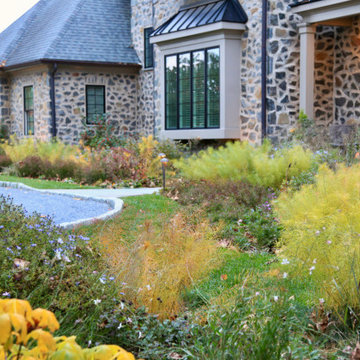
Losing large specimen trees is never desirable. But when the unimaginable happens, we are presented with an opportunity to rethink and refresh, even in traditional residential settings.
We replaced the lawn area beneath the remaining London plane with a fine fescue seed mix. Our design strategy was to hold space and create immediate impact while reducing maintenance needs as the landscape matured. Into this base, we planted evergreen basal foliage, long bloomers and early spring/late fall color to create an immersive all-season groundcover that will slowly intermingle. Annually, this low mow is cut no lower than 4” (thereby safeguarding habitat) while the tidily trimmed perimeter utilizes remnant turf grass as visible cues to care.
Dissecting the rectilinear green space, permeable hardscaping offers a gently curved path towards the front entryway; an invitation to pause and observe the landscape’s diverse textures and activity up close. Within which, a legacy planting of new specimen trees.
Traditional shrub heavy foundation plantings are often static and rigid; this perennial rich redesign is structured yet airy to retain design cohesion with the naturalistic stylized meadow and offer vibrant textural all-season interest.
This project blends different landscape styles to create a biodiverse habitat that is ecologically beneficial, beautiful and resilient. In high summer, a doe finds refuge for her fawn while the family’s children delight in the buzzing activity of smaller inhabitants, native bees and assorted pollinators, that now call this habitat home.
 Refugia Design/Build
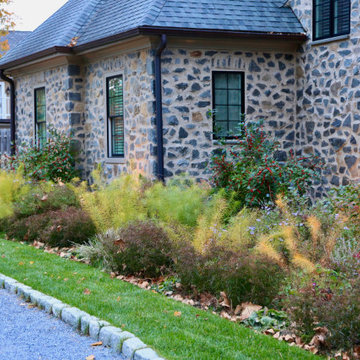
Losing large specimen trees is never desirable. But when the unimaginable happens, we are presented with an opportunity to rethink and refresh, even in traditional residential settings.
We replaced the lawn area beneath the remaining London plane with a fine fescue seed mix. Our design strategy was to hold space and create immediate impact while reducing maintenance needs as the landscape matured. Into this base, we planted evergreen basal foliage, long bloomers and early spring/late fall color to create an immersive all-season groundcover that will slowly intermingle. Annually, this low mow is cut no lower than 4” (thereby safeguarding habitat) while the tidily trimmed perimeter utilizes remnant turf grass as visible cues to care.
Dissecting the rectilinear green space, permeable hardscaping offers a gently curved path towards the front entryway; an invitation to pause and observe the landscape’s diverse textures and activity up close. Within which, a legacy planting of new specimen trees.
Traditional shrub heavy foundation plantings are often static and rigid; this perennial rich redesign is structured yet airy to retain design cohesion with the naturalistic stylized meadow and offer vibrant textural all-season interest.
This project blends different landscape styles to create a biodiverse habitat that is ecologically beneficial, beautiful and resilient. In high summer, a doe finds refuge for her fawn while the family’s children delight in the buzzing activity of smaller inhabitants, native bees and assorted pollinators, that now call this habitat home.
 Himsben Design Studio, LLC
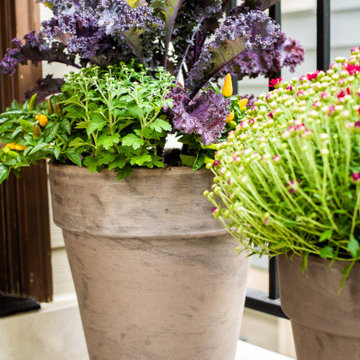
This delightful project was a fun design challenge; to create a meaningful space that harmonized with the existing architecture of the home, in a very small area. The use of rich Walnut Travertine brought warmth to the project, and tied into the existing use of limestone on the facade of the residence. Our clients imported a cast-iron lamp post from England to add sophistication and illumination to this urban garden.
 Refugia Design/Build
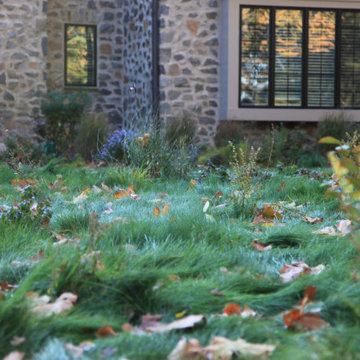
Losing large specimen trees is never desirable. But when the unimaginable happens, we are presented with an opportunity to rethink and refresh, even in traditional residential settings.
We replaced the lawn area beneath the remaining London plane with a fine fescue seed mix. Our design strategy was to hold space and create immediate impact while reducing maintenance needs as the landscape matured. Into this base, we planted evergreen basal foliage, long bloomers and early spring/late fall color to create an immersive all-season groundcover that will slowly intermingle. Annually, this low mow is cut no lower than 4” (thereby safeguarding habitat) while the tidily trimmed perimeter utilizes remnant turf grass as visible cues to care.
Dissecting the rectilinear green space, permeable hardscaping offers a gently curved path towards the front entryway; an invitation to pause and observe the landscape’s diverse textures and activity up close. Within which, a legacy planting of new specimen trees.
Traditional shrub heavy foundation plantings are often static and rigid; this perennial rich redesign is structured yet airy to retain design cohesion with the naturalistic stylized meadow and offer vibrant textural all-season interest.
This project blends different landscape styles to create a biodiverse habitat that is ecologically beneficial, beautiful and resilient. In high summer, a doe finds refuge for her fawn while the family’s children delight in the buzzing activity of smaller inhabitants, native bees and assorted pollinators, that now call this habitat home.
 Refugia Design/Build
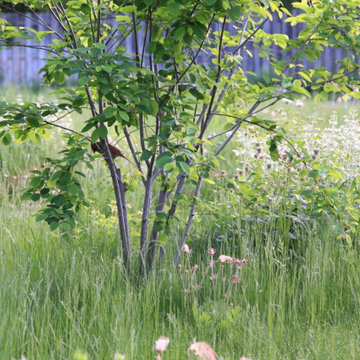
Losing large specimen trees is never desirable. But when the unimaginable happens, we are presented with an opportunity to rethink and refresh, even in traditional residential settings.
We replaced the lawn area beneath the remaining London plane with a fine fescue seed mix. Our design strategy was to hold space and create immediate impact while reducing maintenance needs as the landscape matured. Into this base, we planted evergreen basal foliage, long bloomers and early spring/late fall color to create an immersive all-season groundcover that will slowly intermingle. Annually, this low mow is cut no lower than 4” (thereby safeguarding habitat) while the tidily trimmed perimeter utilizes remnant turf grass as visible cues to care.
Dissecting the rectilinear green space, permeable hardscaping offers a gently curved path towards the front entryway; an invitation to pause and observe the landscape’s diverse textures and activity up close. Within which, a legacy planting of new specimen trees.
Traditional shrub heavy foundation plantings are often static and rigid; this perennial rich redesign is structured yet airy to retain design cohesion with the naturalistic stylized meadow and offer vibrant textural all-season interest.
This project blends different landscape styles to create a biodiverse habitat that is ecologically beneficial, beautiful and resilient. In high summer, a doe finds refuge for her fawn while the family’s children delight in the buzzing activity of smaller inhabitants, native bees and assorted pollinators, that now call this habitat home.
 Refugia Design/Build
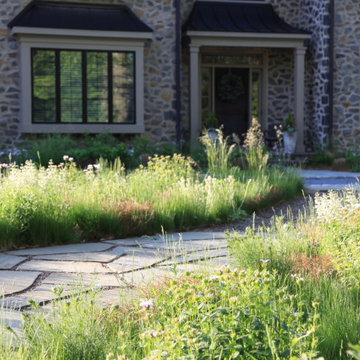
Losing large specimen trees is never desirable. But when the unimaginable happens, we are presented with an opportunity to rethink and refresh, even in traditional residential settings.
We replaced the lawn area beneath the remaining London plane with a fine fescue seed mix. Our design strategy was to hold space and create immediate impact while reducing maintenance needs as the landscape matured. Into this base, we planted evergreen basal foliage, long bloomers and early spring/late fall color to create an immersive all-season groundcover that will slowly intermingle. Annually, this low mow is cut no lower than 4” (thereby safeguarding habitat) while the tidily trimmed perimeter utilizes remnant turf grass as visible cues to care.
Dissecting the rectilinear green space, permeable hardscaping offers a gently curved path towards the front entryway; an invitation to pause and observe the landscape’s diverse textures and activity up close. Within which, a legacy planting of new specimen trees.
Traditional shrub heavy foundation plantings are often static and rigid; this perennial rich redesign is structured yet airy to retain design cohesion with the naturalistic stylized meadow and offer vibrant textural all-season interest.
This project blends different landscape styles to create a biodiverse habitat that is ecologically beneficial, beautiful and resilient. In high summer, a doe finds refuge for her fawn while the family’s children delight in the buzzing activity of smaller inhabitants, native bees and assorted pollinators, that now call this habitat home.
 Lynch Landscape and Tree Service, Inc.
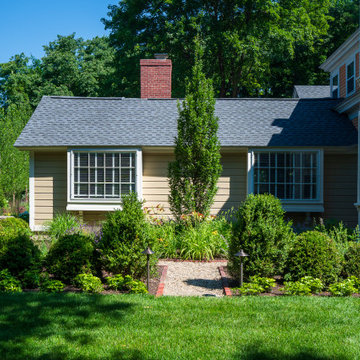
The landscape design for this historic property was carefully crafted to restore the home to its original grandeur. Incorporating Boston City Hall pavers, natural cleft bluestone, and reclaimed granite bridge blocks, the hardscape seamlessly blends timeless materials with the architectural charm of the New England colonial era, honoring its rich heritage with enduring elegance.
 Refugia Design/Build
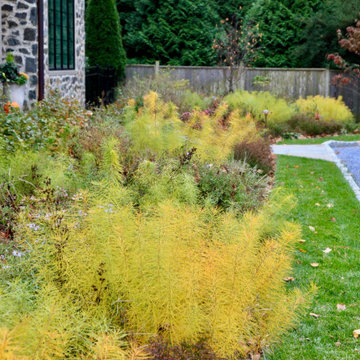
Losing large specimen trees is never desirable. But when the unimaginable happens, we are presented with an opportunity to rethink and refresh, even in traditional residential settings.
We replaced the lawn area beneath the remaining London plane with a fine fescue seed mix. Our design strategy was to hold space and create immediate impact while reducing maintenance needs as the landscape matured. Into this base, we planted evergreen basal foliage, long bloomers and early spring/late fall color to create an immersive all-season groundcover that will slowly intermingle. Annually, this low mow is cut no lower than 4” (thereby safeguarding habitat) while the tidily trimmed perimeter utilizes remnant turf grass as visible cues to care.
Dissecting the rectilinear green space, permeable hardscaping offers a gently curved path towards the front entryway; an invitation to pause and observe the landscape’s diverse textures and activity up close. Within which, a legacy planting of new specimen trees.
Traditional shrub heavy foundation plantings are often static and rigid; this perennial rich redesign is structured yet airy to retain design cohesion with the naturalistic stylized meadow and offer vibrant textural all-season interest.
This project blends different landscape styles to create a biodiverse habitat that is ecologically beneficial, beautiful and resilient. In high summer, a doe finds refuge for her fawn while the family’s children delight in the buzzing activity of smaller inhabitants, native bees and assorted pollinators, that now call this habitat home.
Sponsored
Columbus, OH

Structural Remodeling
Franklin County's Heavy Timber Specialists | Best of Houzz 2020!
 Jenna Bayer Garden Design, Inc.
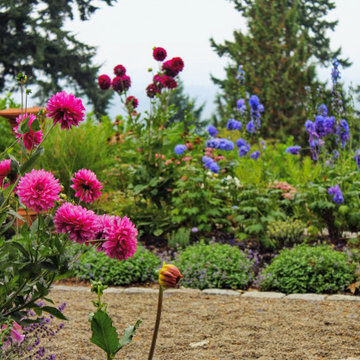
A gravel garden path is bordered by vibrant flowering perennials, offering a sensory-rich moment that highlights color, movement, and seasonal change.
 Natalie DeNormandie
Photograpy by Liz Linder ( http://www.lizlinder.com/)
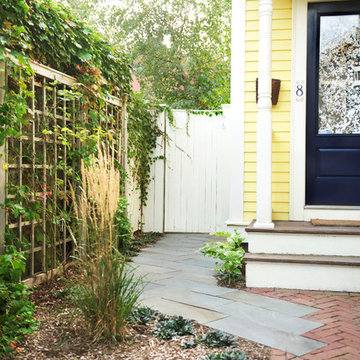
Inspiration for a small transitional front yard brick landscaping in Boston.
Inspiration for a small transitional front yard brick landscaping in Boston.
 Hodgins et Associés - Architectes paysagistes
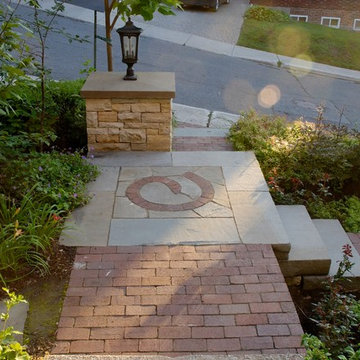
The main landing coming down from the front entrance is detailed with a small curlicue. The stone lamp post lights the intersection of 3 paths. The plants were selected to have seasonal variations from spring, summer and fall. photogragher:Maryse Raymond
8