
Search results for "Tomato plants" in Home Design Ideas
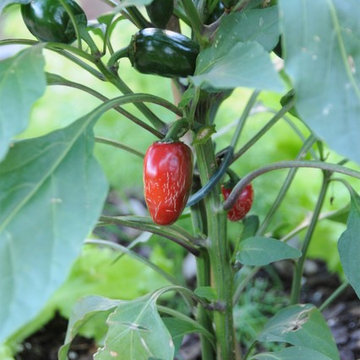
 Knoll Landscape Design Miami
Designer Brent Knoll of Knoll Landscape Design Miami
Raised Bed Garden
Raised Bed Garden jalepeno peppers
Example of an arts and crafts home design design in Miami
Example of an arts and crafts home design design in Miami
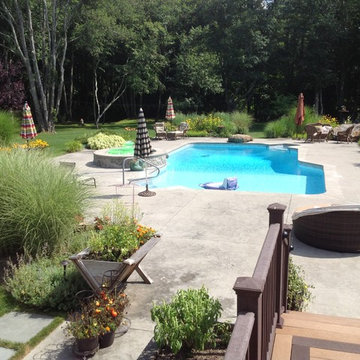
 Green Jay Landscape Design
This one of a kind landscape feature several unique elements including a bluestone stepping stone path/walk in a geometric pattern, a stunning pools scape with a modular pool house as well as a series of pocket gardens which also serve as cutting gardens. To make the garden landscape even more interesting and alive we have a foodscape with raspberries and blueberries. Large sweeps of Ornamental grasses large and small are a unifying theme in the landscape design.
Many fragrant plants grace the gardens. This helps to remind us of the value of healing herbs and medicinal plants in our lives. The clients are health care professionals, their landscape reflects their caring commitment to themselves, their family and the environment.

Find the right local pro for your project
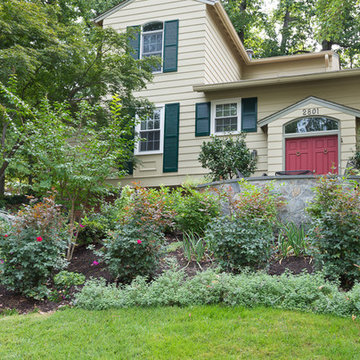
 Tiger Lily Landscapes, LLC
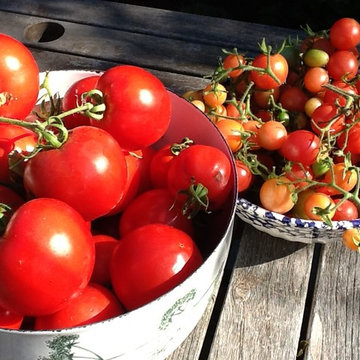
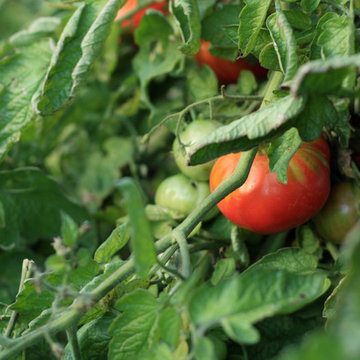
Tomato plants thrive in the sunny southern exposure, as do Knockout roses and other sun-loving perennials and shrubs.
© Melissa Clark Photography. All rights reserved.
 User
UserThis warm, comfortable, and inviting space in Oakland's Dimond district meets the owners’ desire to spend active outdoor time with their dog. They are often outside caring for their garden and harvesting chard, arugula, tomatoes, scarlet runner beans, and more delicious edibles. Our first steps to creating rooms within this sloping space were adding new fencing and a deck, and expertly pruning the existing trees. Random Arizona flagstone patios at two levels and stairways provide comfortable access and space for grilling and outdoor eating. Apple, Fig, and Lemon trees thrive in the sunny microclimate.
 Pennsylvania Landscape & Nursery Association
ThinkGreen LLC http://www.thinkgreenllc.com
2014 PLNA Awards for Landscape Excellence Winner
Category: Residential $30,000-$60,000
Award Level: Gold
Project Description:
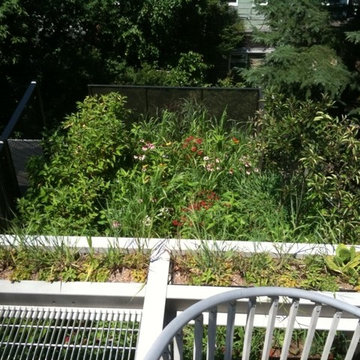
Located in the residential area near the Philadelphia Art Museum, this project was
Philadelphia’s first Platinum LEED rated row home. The available outdoor space in any major
metropolitan area is typically limited. The client was dedicated to increasing the amount of
available outdoor space for entertaining and planting. The sustainable efforts that went into the
interior renovations were continued in the exterior spaces with a series of green roof gardens.
The lower level terrace features two separate spaces it was the largest. Directly out the glass
rear doors of the house is a paved area using local materials that have high albedo. A couple of
stairs down leads to a seating area surrounded by River Birch, ferns, and vines such as Virginia
Creeper and Trumpet Honeysuckle which create a screen from the neighbor’ s yard. The
second level garden is an extensive roof garden with approximately fifteen inches of soils. The
space was planted with a variety of native meadow plants such as Purple Coneflower and
Beardstongue, and Switchgrass. Fruit trees were planted in several corten steel containers. After
a couple of years the client decided he wanted more use of the space so the meadow was
thinned out and a path to the end was installed as well as creeping sedums in between the
steppers. A spiral stair case leads to the upper level garden. When you reach the top of the
stairs in the summer months a vegetable garden full of tomatoes, eggplant, and peppers thrives
in planting boxes. Beyond the garden is another seating area. At the front end of the building a
line of Eastern Red Cedars is planted to create a privacy wall from the neighbors across the
street.
The plant palette is predominately native species that can withstand the tough conditions of the
limited soil depth and the heat of the sun. Plants such as Bee Balm, Prickly Pear, and Wild
Petunia have done exceptionally well on the green roof. When needed they can be irrigated
using the house’s grey water system. In addition the benefits the roof gardens provide for the
heating and cooling systems make this house and it’s landscape intimately linked together.
Photo Credit:
Thinkgreen LLC
 jennifer rhode design
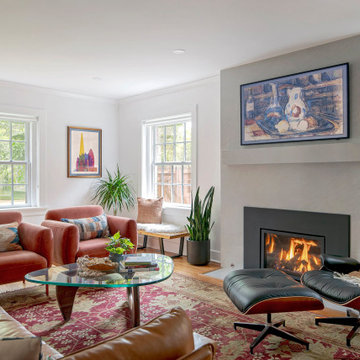
Example of a trendy medium tone wood floor and brown floor living room design in Denver with gray walls, a standard fireplace, a metal fireplace and a wall-mounted tv
Sponsored
Columbus, OH
Free consultation for landscape design!

Peabody Landscape Group
Franklin County's Reliable Landscape Design & Contracting
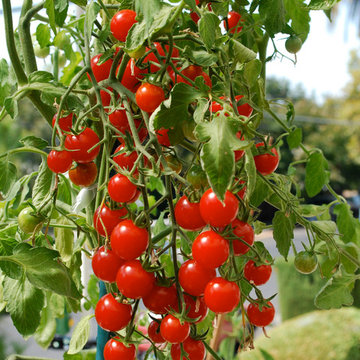
 Steve Masley Consulting and Design
'Sweet 100' cherry tomatoes growing in a 15-gallon terra-cotta pot. Container-grown tomatoes are more susceptible to blossom end rot, but cherry tomatoes like 'Sweet 100', 'Sungold', and 'Black Cherry' rarely have this problem. Photo by Steve Masley
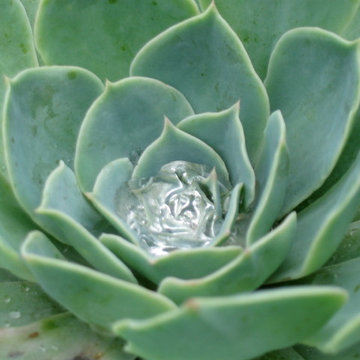
 Jean Brooks Landscapes
This garden takes advantage of the chimney tops and attics spaces of the urban landscape of the Back Bay- we refer to it as "Mary-Poppinsville". Split in to two areas- seating and dinning/cooking. shrubs, perennials, annuals, and edibles including: herbs, tomatoes, The client is a gourmet chef and uses the foods in his cooking. With limited space, the most popular edible plants that clients ask for are tomatoes and herbs because the herbs can be used in daily cooking and theres nothing to compare to the homegrown tomato. Where space is generous, we also plant blueberries strawberries, raspberries, lettuces, peppers.
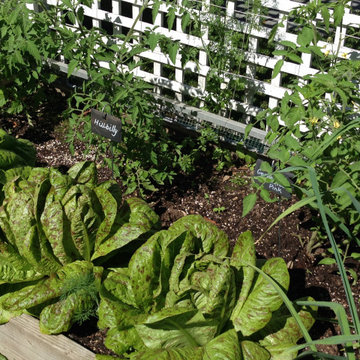
 Bespoke Gardening
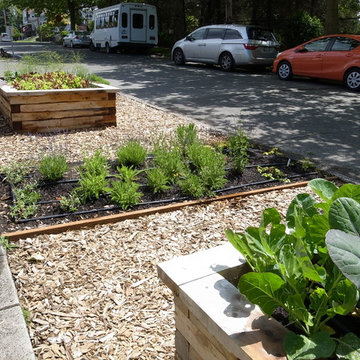
Herbs, lettuces, and young tomato plants in side yard vegetable garden.
Design ideas for a small contemporary full sun backyard raised garden bed in New York for summer.
Design ideas for a small contemporary full sun backyard raised garden bed in New York for summer.
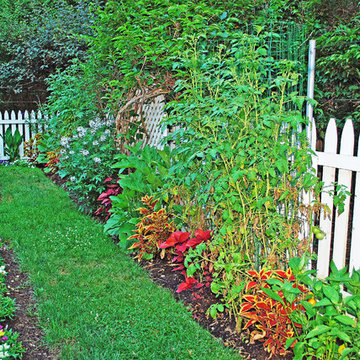
 KEVIN CATALANO GARDENING & DESIGN
Most people think that a garden with various types of vegetables can not be attractive. Here, I have combined large tomato plants with peppers plants and eggplants and added some annuals to compliment the vegetables.



 safe ZOnea
If you’re active on GardenWeb sharing plant photos, asking for advice, tracking seasonal progress you already understand how much detail goes into gardening. Soil pH, rainfall, emerging leaves, bloom counts, fertilizer schedules it adds up fast. But all that rich information often remains buried in posts, lists or memory. What if you could visualize that data and turn it into clear quick insights? That’s where a graph maker becomes a game-changer for your gardening workflow.
1. Why garden data belongs on a graph
On GardenWeb, you’ll find forums for everything from perennial care, vegetable gardening, patios, herbs, even cooking and craft projects. While plant lovers share observations and ask questions, many track progress manually in spreadsheets or memory. A graph maker flips that around:
Instead of a list of numbers (e.g., “Soil test: pH 6.4 in May, 6.1 in October”), you get a line graph showing the decline over time.
Instead of guessing which plant bloomed most, you see a bar chart comparing counts across plants.
Instead of manually calculating average rainfall effect, you plot scatter points of bloom count vs. rainfall.
By turning your data into visuals, you’re not just recording—you’re analysing, learning and improving. For GardenWeb users this means smarter decisions: Which fertilizer actually improves bloom count? Which shady spot recovers slower? A graph maker gives clarity.
2. What is a graph maker and how to use one
A graph maker is a web tool or software that lets you input raw data (numbers, dates, categories) and output visual charts like line graphs, bar charts, scatter plots, etc. It might allow you to import a spreadsheet, select chart type, customize colours, label axes, and export the image for your blog, forum post or personal log.
Here’s how you could apply it for gardening:
Log blooms per week for each rose plant.
Using the graph maker, choose line graph to track changes over weeks.
Label your y-axis “Number of Blooms”, x-axis “Week of Year”.
Add colour lines for each plant for easy comparison.
Export as PNG and embed it in a GardenWeb forum post: “See bloom trend for my ‘Peace’ vs ‘Knock Out’ roses”.
This isn’t just pretty-to-look-at: it makes the trend obvious, invites discussion (“Hey, your ‘Knock Out’ line dips after week 28—what changed?”) and helps you refine your routine.
3. Use these specific scenarios on GardenWeb
A. Soil pH and plant health tracking
After multiple tests you have pH values over time and bloom results. Upload both datasets into the graph maker, produce a dual-axis line graph: soil pH on one axis, bloom count on the other. Post your findings in the “Soil, Fertility & Nutrients” forum and get feedback.
B. Seasonal pest or disease appearance
Record number of aphids spotted each month and whether you used treatment. A bar chart via the graph maker can show pre- and post-treatment figures. Then ask the “Insect & Disease Control” forum for advice based on your visual data.
C. Yield comparison between varieties
You grow two zucchini varieties. You keep weekly yield in pounds. Use the graph maker for a side-by-side bar chart. Share in the “Vegetable Gardening” forum: “Which was better this year? See the chart”.
D. Rainfall vs growth rate
You log weekly rainfall and growth (in cm) of your tomato plants. Use scatter plot in graph maker. If a pattern emerges, you’re ready to post: “Is my growth plateau due to drought? Chart shows a clear correlation.”
4. Why this elevates your GardenWeb contributions
When you post with a chart made by a graph maker, you’re doing more than asking or showing off. You’re investigating. You’re analysing. You invite the community to give feedback on data, not just anecdotes. That elevates the discussion. Instead of “My plant died, any ideas?” you post “See this graph of pH drop and bloom count—what might be the limiting factor?” High-quality visuals raise your post’s value and garner more thoughtful responses.
Plus, your posts become useful references for others: someone else can say, “Cool graphic, can you share your data sheet?” You build credibility and help the forum become a learning hub—not just a Q&A board.
5. Tips for using a graph maker effectively in the GardenWeb context
Keep it simple: One chart, one insight. Don’t overcrowd.
Label clearly: Titles, axis labels, units (e.g., cm/week, mg/L, °F).
Use readable colours: Avoid faint tones that vanish on mobile.
Annotate when needed: Add notes like “Fertiliser switched week 12” or “Shade cloth added”.
Provide context in your post: Don’t leave the chart alone—write a few sentences explaining what it shows and what you’re seeking.
Embed carefully: Make sure your image displays properly in GardenWeb; check mobile view.
Share raw data: If possible link to your spreadsheet so others can replicate or comment.
Be open to feedback: The chart invites questions; embrace them.
6. Possible pitfalls and how to avoid them
Bad data = bad chart: If your measurements aren’t consistent, your graph will mislead. Use standardized data collection.
Too much complexity: Multi-axis charts, too many variables—confusing. Stick to one or two variables.
Overlooking mobile viewers: Many GardenWeb users browse via phones. Use large fonts and simple visuals.
Ignoring the narrative: Chart alone won’t answer. Explain what it means and what you need.
Outdated charts: If you update your data annually, keep your visuals current or label them clearly as “2024 data”.
7. Final thoughts
On GardenWeb you’ll find a vibrant community of gardeners, DIYers, cooks and design lovers.Using a graph maker for your posts and progress turns your experience from casual hobby-logging into smart data-driven gardening. You’ll not only learn more—your peers will learn more, too.
So next time you log your plant growth, record your yield, test your soil or track pests—don’t just note it. Plot it. Use a graph maker. Share it in the forum. Let your garden tell the story, and let the community help you write the next chapter.


 Outdoor Living Today
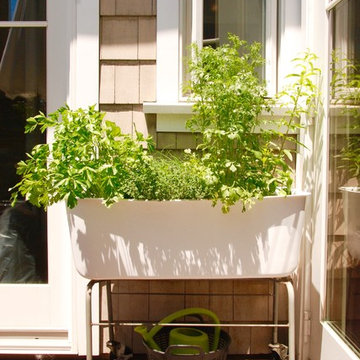
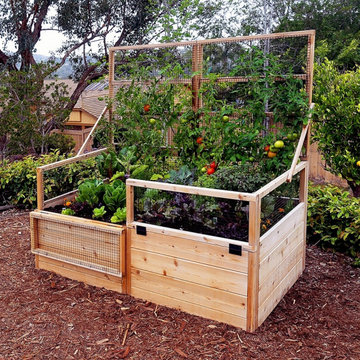
Create the perfect kitchen garden with beautiful tall tomato plants or runner beans for easy picking. We make it easy, get it all in one packaged kit – the Raised Garden Bed 6 x 3 with Trellis / Lid!
https://outdoorlivingtoday.com/product/garden-trellis-raised-gardening-bed-6x3/
Sponsored
Columbus, OH
Free consultation for landscape design!
Peabody Landscape Group
Franklin County's Reliable Landscape Design & Contracting
 Glenna Partridge Garden Design
Copyright 2015 Glenna Partridge
Example of a transitional home design design in Vancouver
Example of a transitional home design design in Vancouver
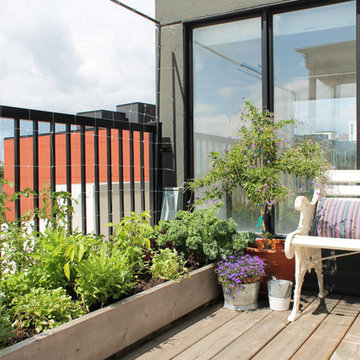
 Laura Garner
Photo: Laura Garner Design & Realty © 2016 Houzz
Deck - mid-sized contemporary rooftop deck idea in Montreal with a pergola
Deck - mid-sized contemporary rooftop deck idea in Montreal with a pergola
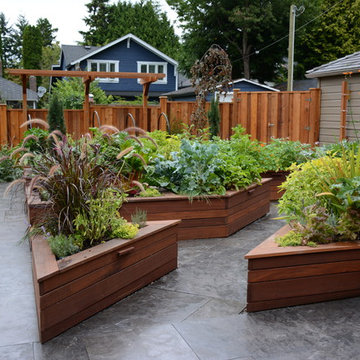 Glenna Partridge Garden Design
Copyright 2015 Glenna Partridge
Design ideas for a transitional landscaping in Vancouver.
Design ideas for a transitional landscaping in Vancouver.
9