Software
Houzz Logo Print
garrai81

Redstart Photinia losing leaves

18 years ago

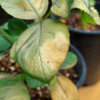
The 5-foot Redstart Photinias that I planted last summer and fall each produced a large crown of new growth and flower buds, but in the last week or so the leaves on the stalk, from last summer, turned red/yellow, and seem to be falling off.

I believe that they had enough water during the recent hot spell.

They are in a mix of full sun and partial shade.

Would anyone have any idea why these evergreen plants are losing their lower leaves now?

Thanks.

Paul

Comments (7)

  • 18 years ago

    In our region, photinia commonly has a leaf spot disease during the spring that causes leaf drop.

    So are the leaves yellow and without spots? Or yellow and with spots?

    If with spots, what size and color are they?

    Also, if you can post a photo, that will help us help you.

  • 18 years ago

    Considering your photinia is a somewhat recent planting, not firmly established (with lots of new root growth), and Portland's recent hot snap (5 days of 85+), I would not worry about last year's leaves turning yellow and falling. This is common among newly planted broad-leaved evergreens, and those 5-footers may be harder to get going than smaller plants.

    This year's new growth will indicate if the shrub is doing well.

  • 18 years ago

    Many broad-leaved evergreens shed their old leaves during the growing season rather than during the fall or winter. Unless it seems excessive your plants may be behaving normally.

  • 18 years ago

    No, there are no spots. I see photinias elsewhere with those spots, and these leaves are just yellowing and falling.

    Thanks for the comments. I appreciate the assistance.

    I just hope that this is not the plants' normal behavior each spring, since I bought them so that they would be evergreen, not dropping their lower leaves each year without replacing them.

  • 18 years ago

    If they're going bare or nearly so, then there is a problem.

  • 18 years ago

    larry gene made comments about the recent planting and the recent heat.

    And even though you might not consider the planting dates of "last summer and fall" as recent, they are.

    In any event, the most common reason for failure of woody plants during the first several years following planting is insufficient water in the original rootball.

    And that can easily occur here even though we have wet winters.

    So check the soil of the rootball. Is it moist dry or wet?

    If dry, drizzle a hose directly on the rootball for 20 minutes or so. Repeat as needed.

  • 18 years ago

    I've found dry potting soil rootballs years after planting. The finer textured natural soil around them had a greater attraction for water, so as long as the original potting soil rootball hadn't decomposed enough to lose its coarse texture it continued to lose water to the surrounding soil. Healthy, vigorous plants survive this and grow when watered frequently enough after planting to compensate, and when planted directly into native soil or topsoil so that as soon as they root into it they are tapping into the moisture the latter contains.

    Liberal amending of planting hole backfill or replacing backfill with potting soil, planting mix or other coarse material (pit planting) creates a larger area prone to drying and which the roots have to cross to get into the soil beyond.

    On a damp, heavy soil a planting hole backfilled with coarser material, including a lighter natural soil or topsoil mix may act as a sump.

    Perhaps the optimum when planting hardy stock, not prone to freezing during winter in the local climate is planting during fall and washing the potting soil or field soil off, spreading the roots out without cutting them. Undamaged roots planted early enough in fall may then elongate considerably and immediately establish the new plant. Most elongation (more than half the annual total) occurs in fall after the overwintering terminal buds are set on the branches.