Software
Houzz Logo Print
theforgottenone1013

How Did We Can?

Earlier today the USDA posted a link to this digital exhibit on their Facebook page so I figured I'd share it here. It doesn't go in-depth with anything but it does have a bunch of interesting little facts.


How Did We Can? The Evolution of Home Canning Practices

Rodney

Comments (17)

  • 9 years ago

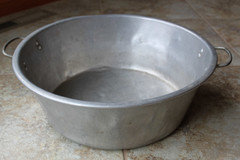
    Back in the 1950s, I can remember visiting my Dad's aunts and uncles in his hometown. The aunts cooked on a wood burning stove, and did their canning in aluminum dishpans. One dishpan was used to hold the water and canning jars, and another was inverted and used as a cover.

    Things have sure changed over the years.

  • 9 years ago

    Turnage, that is interesting. If the fire was hot enough, and the pans were deep enough, they would probably make a safe boiling water processing pot. But wow, what a huge cover!

    I remember my grandparents had a basement with rough walls...maybe rocks... and there were steps and double cellar doors leading up from the basement directly to the back yard. The room closest to the door had an old looking stove in it. I was told that was were my grandma canned in the summer. I don't think she was using it anymore when I was young. We visited a lot and I never saw her down there...not even sure if she could manage stairs anymore by then.

    I remember eating peaches that she canned, probably canned on the modern stove in the main floor kitchen. We would dip white bread in the thick syrup she used for the peaches. I thought that was as good as the peaches. Unlike most people I knew, we always had whole wheat bread at our house. White bread was like a dessert, especially with added syrup.

    My mother canned tomatoes, even ones with added celery and onions, with the long outdated open kettle method. I assume she learned that from grandma. Fortunately, all of them were used as ingredients in soups and sauces that were cooked for a long time after opening. I don't think mom had any idea that method was unsafe. She was quite careful about most things. It seems like she did process pickles, though. I doubt her pickles had the potential for harm without processing that the tomato/veggie mix did.

  • 9 years ago

    Recently I read a collection of stories from Montana homesteaders, and one lady said they "boiled jars of peas for two hours," then used them for creamed peas all winter.

  • 9 years ago

    My MIL taught me to can in 1975 and advised me every time an improved and safe technique came out. One thing I do remember is that she said I should be grateful for having running water in the house. Before that time canning was nearly impossible unless you have 17 kids to fetch.

  • 9 years ago

    Naturegirl, I'm in Northern/Western Michigan, so hello!

    We also used to dip white bread in the peach juice/syrup. Grandma always made white bread, and we had cows, so we always had butter, so a special snack was homemade bread, buttered with freshly churned butter, with sliced home canned peaches. The syrup at the bottom of the bowl was always "sopped up" with the bread.

    Grandma's husband died when my mother was 9 years old, leaving her with three children to raise alone. She lived with us when I was a child, and taught me to can and sew and garden and bake bread. She would carefully figure out how many jars of green beans or tomatoes or whatever we would need, but fruit like those peaches or wild blackberries were special, we didn't grow them.

    She was very careful when canning, fastidious about cleanliness and always had a pressure canner (I was born in 1955). She did use paraffin on jam for a while, but switched to rings and flats and never looked back as she said spoilage was so much less. I don't remember her ever water bath canning vegetables of any type, although she did open kettle process tomatoes and pickles. She also canned venison, salmon, smelt, chicken, but she always used a pressure canner. I still have it, I don't use it but just can't manage to let it go, for some reason.

    Annie

  • 9 years ago

    My MIL showed me how to oven can tomatoes back in the early 70s. Since I'd never seen anything canned, what did I know? By the time I wanted to can tomatoes, I looked up the USDA recommendations and did it differently. That's pretty much how it goes from generation to generation, yes?

    I finally invested in a pressure canner a couple of years ago, but guess what? It doesn't work on the induction stove I put in our renovated kitchen. Plan II: freezer.

  • 9 years ago

    This thread sure takes me back. I was born in 1936 and we did all these things without electricity and running water. I was the one who carried the water for canning and on wash days. By the mid 1940s I believe we had a propane kitchen stove... try to imagine what a big deal that was. No more standing over a wood cook stove. My mother had a recipe, from who knows where, that called for adding enough vinegar to the liquid that was added to green beans to allow for water bath canning. It was poured off and the beans rinsed before cooking. I also, remember the tomato based soup mixes that were canned. Some called it "end of garden" mixes. I have read that the older tomato varieties had more acid, but wouldn't bet on it.

    Also remember different methods of salt curing meat... some dry salt cured and some packed in an oak barrel of salt brine. The way she determined how much salt to use was "until it would float an egg". How's that for science? LOL

  • 9 years ago

    mil, we also salted and smoked meat, Grandpa had a smoke house. We also had a root cellar, and there was always a crock of sauerkraut that never got canned, it just kept "working" and when we used it we went down with a pan and got enough for dinner. We'd also "sneak" a sour pickle out of the crock which also lived in the root cellar, although Grandma warned us that when they were gone there would be no more until next year. Grandma also make a lot of boiled potatoes, they were seldom mashed or baked or scalloped, just peeled, quartered and boiled. She'd make a big pan full and they'd be tonight's supper with enough for tomorrow's breakfast as American Fries. A hungry child often had a cold boiled potato with salt as a snack, but the more snacks, the more trips to that root cellar to haul up potatoes!

    Annie

  • 9 years ago

    Annie, sounds very familiar. Boiled potatoes was what happened on wash days, etc., when time and energy ran out. Yes, sauerkraut was a good way to preserve food and actually make it better for you. I have been reading more and more about "fermented foods". I guess I just took all that for granted, but when I looked into it and found that all of those things we did was not only fermentation, but " Lacto fermentation" (as in yogurt, sour cream butter, etc.) So now we make our own sour cream, yogurt, fermented veggies, etc. by inoculating it with a good wide range L. Acidophulis (sp?). The main one being Bulgaricus. For sauerkraut, it speeds up the process and prevents bad bacteria from taking over. When we were stationed in Germany, during the fifties and sixties, we cold still walk into a German meat market and buy sauerkraut and dill pickles from a barrel. That might have bothered some people, but not me. LOL Been there before. Enjoyed the exchange. By the way, do you remember when you finally got electricity? It was 1947 for us in rural SW Missouri. Millie

  • 9 years ago

    Millie, I remember getting electricity and indoor plumbing, because Dad bought an old schoolhouse and remodeled it into our home. Today is my birthday, I was born in 1955, we moved into the old Hungerford Lake Schoolhouse when I was 2. Remodeling was slow because Dad had just been released from the VA hospital with a leg injury. Anyway, we had an outhouse, a pitcher pump and a wood stove until I was 4, so that was 1959, we got electricity and indoor plumbing at the same time. There were no heat ducts upstairs, though, and just a fuel oil heater downstairs, so it would get so cold here in Northern Michigan that I could see my breath when I woke up in the morning, and we'd scratch pictures in the frost on the inside of the windows. We got out our clothes the night before and either dressed under the blankets or ran downstairs to dress in front of the heater!

    I still make my own sauerkraut, although I can it, I don't consume much of it "raw", although that's when it's healthiest. We still raise grassfed beef, pigs and chickens, and smoke our own bacon and render lard. I make my own yogurt too and my friends joke that in case of emergency they are coming to live in my pantry and cold storage, LOL. Those friends have no doubt that I'd be able to survive on a deserted island and just settle in and start farming! (grin)

    Annie


  • 9 years ago

    Annie, keep doing what you can do and enjoy doing as long as possible. You are one year younger than my son, so believe me time can slip up on you. I take it you are in Northern Michigan not Upper Michigan? My mother married a man from Flint after I was married and gone, so I do sort of understand how cold and how long those winters are. Not sure if we ever made it down to 10 degrees this past winter. One very light dusting of snow. Funny how we always associate high populations of insects to mild winters and then wonder why it doesn't happen every time.

    About 35 years ago my husband and I decided to dump the jobs and just go back to a more relaxed life style.... (read less income, but no bills). We both had enough "country" in our background to give it a try. We found an old homestead not far from where I had grown up. It had been deserted for 40 years. All the children had moved away to "find a better life". There was an old ice house that had the date 1898 scratched into the plaster inside. Back then it was on a hill above the White River, which has since become Table Rock Lake. Anyway, we used it for winter storage of canned goods. It had double rock walls, two feet wide, with rubble in between which I believe came from chiseling the rock to fit. The roof (what was left of it) had been filled with sawdust. They would have cut ice from the river to pack in sawdust so they could store food into the summer. That thing would stay cool into July and warm enough to prevent freezing all winter. Did I mention restoration? LOL We built a house and barn. Started with some baby goats that we bottle fed -- they do stay in the pasture a bit better if hand raised. Notice I said "bit better". Groan! Oh well, the nearest neighbor was two miles away and we were surrounded by National Forrest... they thought we didn't know about their little excursions outside. The goats cleared the underbrush, vines and ate the green off the cedar trees up 7' off the ground. Once we could get in there the real work began.

    The rest of the story was that it was 11 1/2 miles to the nearest paved road, no mail delivery, no school bus, telephones were 4 party lines and on an exchange that was mostly on the other side of the lake. Calling out to anywhere, that we had a road to reach, was all long distance. Well guess what, the worst thing that ever happened was progress. Once the road was paved, we lost our quiet little spot in the woods.

    I am rattling on... better find something useful to do and see what the day brings. Millie

  • 9 years ago

    Millie, I'm in Northern/Western Michigan, on the Lake Michigan side, north of Grand Rapids and about 40 miles inland from The Lake. My farm borders National Forest property, so our neighbors look like this guy, trespassing and fishing without permission in our pond, LOL.

    Well, we have human neighbors too, and are near some state owned horse trails, and only 5 miles from town, so definitely not undeveloped. I know what you mean about progress, though. The area is much changed since I grew up here, with a lot more neighbors that moved here from other, bigger places and then expect that we are going to change to be more like where they are from. Many don't like the smell of farm animals, or the fact that farmers start tractors as soon as the sun comes up, They complain. I tell them, no farms, no food. They still get ticked off and I just keep doing what I do, and I'm teaching my grandkids to do it too!

    Annie

  • 9 years ago

    Sorry for taking so long to respond... busy weekend.

    Your neighbor used to spend the winters with me. ;-) I lived on a lake in Southwestern MO... about 5 miles North of the Arkansas line. Every winter there was a Bald Eagle Day. They (whoever "they" were) took a boat all the way from the Dam as far as they could go and did a count. Some years they counted around 80. Beautiful creatures until you see them eating dead fish and realize they are scavengers. They are quite skillful hunters also. They pair up to catch wild ducks. One swoops down... the duck goes under the water, but when he comes up the second eagle is right there.

    Our area developed into a retirement community. People moved there from St. Louis, Kansas City, Wichita, KS, and one family would drive down for two weeks a year from Chicago. What's the point of finding a place to "get away from it all" and then start changing into what you just left behind?

    One family decided to build a small café... fine, but not downwind of a pig farm. LOL Then they complained to some governmental agency until the farmer was threatened with a $10,000. per day fine if he didn't move the pigs. He finally moved all his pig operation to the back side of the farm, but put in a pig "feed" operation in the barn where the pigs had been. The feed operation smelled 10 times worse than the pigs ever did. I guess you can feed a pig some really nasty smelling stuff.... like rotten eggs from a nearby hatchery and garbage from restaurant leftovers. Gave a whole new meaning to the word "slop the pigs". LOL I guess there was no regulations covering that because the café ended up closed. That farm had been in the family for at least 2 generations and was there 50 years before the café. It wasn't like it was hidden from the prospective café builders, either. There was line of sight, not more than 100 yards.

    I am not thrilled about living in town again, but it was necessary at my time of life. I now live with my son. He was widowed, so keeping up two households was not practical. And asking him to drive 400 miles if/when I got into trouble would have been selfish. I fall and can't get up... very bad back and pinched nerves. So now I instigate to have a garden in back and grow sweet potatoes in front pretending they are ground cover. ;-)

  • 9 years ago

    "instigate to have a garden". (grin) Yes, I have to have my garden, or I might run out of things to can. My husband warns the grandchildren not to stay still too long or Grandma might accidentally can them, LOL.

    Thankfully, Michigan has a Right to Farm act, so the "city folk" who buy property and then want the farm to move are pretty much out of luck, they used to sue but now the farmers are at least somewhat protected.

    Here the eagles often eat roadkill, we have an enormous deer population and cars hit them. My friends used to joke that my weapon of choice was a Buick. The eagles do a nice job of helping us clean that up, and so we're grateful.

    I do think living with your son sounds like a good idea. My brother lives with my Mother, she's 80 and I worried when she was alone. What would happen if she slipped getting her mail and it was 10 below zero? Or shoveling her walk? My brother has his own health issues, and so they take care of each other. He's had three heart attacks and two strokes and he's only 64, and he smokes like crazy, so it gives Mother someone to nag, and that keeps her busy!

    Annie


  • 8 years ago

    This has been such a fun thread to read. Thanks for sharing. I'm a little younger but had similar circumstances as a child. Until age 5 we lived in a place with an outhouse, a hand pump in the kitchen, and a wood burning cooking stove. No furnace, just a big pot belly wood stove. We moved just up the road to a house with running water, indoor plumbing, and a propane stove. I'm pretty sure my mother cried tears of joy for weeks! That was in 1974 so you don't have to go back too far to find a time when plumbing was a luxury. I remember doing the wash on the lawn with an old wringer washer. It was more work than the automatic but you could have all the wash up on the line in an hour if you had a helper. I'm grateful for those experiences. It certainly helps me appreciate what I have and it's a comfort to know these things just in case.