Software
Houzz Logo Print
ilovecucumbers

Tips for first-time garden coordinator

Hello,

I posted this in The Professional Gardener forum, but it appears that it's not often used. Thought I'd try here.

I'm the volunteer coordinator at a homeless shelter and an avid gardener. One of the city's numerous community gardens is directly across the street from the shelter. It's rarely used.

I've received permission to start a pilot initiative for interested clients. This garden contains 56, 4 x 12 plots. I've started small, taking 8 plots for the clients. I plan to grow lettuce, spinach, tomatoes, potatoes, corn, green beans, cukes, and border with pollinator plants.

I have a Plan A and a plan B.

Plan A: several clients (3? 5?) express interest and stick with it. With volunteer help, they grow food for use in our shelter kitchen.

Plan B: clients are uninterested. I attract volunteers; we grow food for the kitchen.

Would love tips from gardeners who've managed volunteers in a community garden, and/or gardened with a homeless population. It's not so much how to grow, but how to manage volunteers and/or clients, what to task them with, especially before the veggies really take off.

Also--does my planting seem too ambitious? How much help would I need to manage 8 4x12 plots?

I've downloaded this: https://www.nationalservice.gov/special-initiatives/days-service/martin-luther-king-jr-day-service/plan-toolkits/create-or-expand#plan and this: https://communitygarden.org/wp-content/uploads/2013/12/CGMgtmtToolkit.pdf and plan to read them cover to cover.

Comments (25)

  • 8 years ago

    Hats off to you for your efforts on this.

    I've never done this kind of thing myself, but having done community gardening, it occurs to me that with the garden directly adjacent to the shelter, the least you could try to recruit are clients who could maintain some security for the garden, and perhaps do small daily management tasks like picking off pests and perhaps at least turning off water. Perhaps even picking ripe produce. If your volunteers come from a long distance, daily tasks will be a disincentive to getting them to volunteer.

    56 4x12 plots would seem to require an army. (Or was that 5 or 6?)

    How much help you need will depend at least in part on what you want to grow.

    ilovecucumbers Zone 6b, NE PA thanked daninthedirt (USDA 9a, HZ9, CentTX, Sunset z30, Cfa)
  • 8 years ago

    I coordinate 3 families, one garden, 21 beds.

    1) do not expect your collaborators to have much gardening sense. be specific when giving instructions and check the garden often.

    2) mulch and install drip, or 80% of your work will be weeding and watering. I still have to water by hand during, say, June, but once the plants are above a certain height it becomes very easy to start the drip and come back in the evening to turn off the water.

    3) for mulch you are better off with cloth.


    ilovecucumbers Zone 6b, NE PA thanked glib
  • 8 years ago

    I'm right on site, so I'll probably spend my 30-minute lunch outside. I'll likely just check the garden and make an announcement in the dayroom that there's weeding/watering to do, cucumber beetles to pick, that kind of thing.


    If this season goes well, I'll likely figure out some way to install drip.


    What kind of cloth works for mulching? I've never even heard of using cloth for that purpose.


  • 8 years ago

    I would suggest trying to get people interested, but be prepared to do everything on your own.

    Is there a place to donate the leftover produce? Are you prepared to make and freeze/can sauces and veges?

    My former garden was 4 4x8, 2 3x7 and 2 3x3 boxes. I had a LOT of work getting things sauced/prepped and frozen!

    I have since moved to a small city lot where I'll have just a couple of plants of each rather than a bunch!

    Homeless are transient, meaning they move around, but you might find some interested! Good luck! Nancy

  • 8 years ago

    Dan, I'm only using 8 plots not the whole 56. I'm not crazy. my plan is attraction not promotion. Once the garden is in full swing I am hoping people will come at least to pick tomatoes. Besides the work, a garden is peaceful and the work promotes mindfulness. I really hope that some will come but I am prepared if they don't.

  • 8 years ago

    Cucumbers, I like the way you think!

    Have you tried contacting your local Penn State Extension office? It might be a long shot, but some county offices offer 'master gardener' classes for interested hobby gardeners; participants must agree to a number of volunteer hours in a community cause. Your organization would be a good fit, I would think.

    Contact your local office for info about the 'master gardener' opportunity you have to offer and you might collect some veggie planting information while you're at it!


    ilovecucumbers Zone 6b, NE PA thanked rhizo_1 (North AL) zone 7
  • 8 years ago

    Thank goodness, two MG's will be on site on Mondays and Thursdays. They're contracted to help another group, but have graciously offered their help on those days, as well.

  • 8 years ago

    GardenofEatin2018 · More Info

  • 8 years ago

    Wow! Who did you get to dig that all up for you? NIce to have friends with tillers/trenchers/bulldozers. To the extent that you get the whole place plumbed, I wonder if it would be helpful to invite people in to do community gardening on some of the beds. The price would be offering some of their produce to the kitchen, or perhaps putting in time as a volunteer for the kitchen-only gardens. However you do it, more beds is going to be more work for you, though.

  • 8 years ago

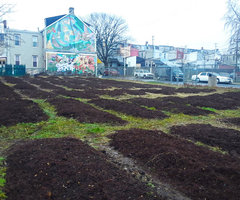
    Our clients have only 8 of these 56 beds; the rest are going to non-profit groups. This is a city-administered garden, but not many individuals choose to garden here. We do have a few groups coming in, but not yet sure who they are .But I'll DEFINITELY be posting on social media for volunteers, and also planning a few season potlucks to get us working as a unit. The compost was donated; it needs to be dug in obviously. but our clients shoveled it all in themselves...25 cubic yards with only two wheelbarrows and crappy shovels. They did an amazing job--men and women alike, and not one complaint. They don't know it yet, but they're getting pizza for lunch on Monday.

  • 8 years ago

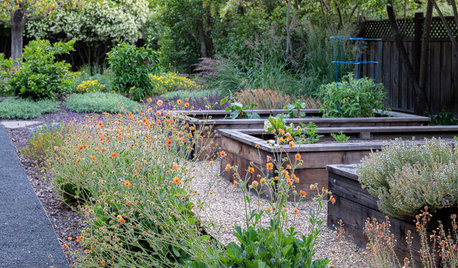
    Eight 4 x 12 plots sounds like a doable amount for a trial. Your veggie selection sounds good...ones most people like to eat. The plots in the photo look great.

    I'll offer a few suggestion having worked with a school garden and community garden. If this is for a shared harvest, limit each bed to one or two crops to make it easier to care for, especially if you have people with little gardening knowledge assisting. Remember that helpers may have no clue what to do or what any plant looks like. Perhaps place a sign post in each plot to ID the main veggie....helpful when the plants are small and no recognizable veggies are there yet. Place the pollinators on the short ends so veggie plants are easy to access and weed and harvest from both long sides. Plus the flowers add beauty to the area.

    Being on site most days and having potential volunteers right there certainly helps.The tomatoes, potatoes and cukes and corn should be relatively quick and easy beds to plant, care for, and harvest. Perhaps plant the tomatoes and cukes through holes in landscape fabric or else mulch well with leaves, straw, or similar material after a few weeks. Mulch potatoes after hilling up and mulch corn after it reaches 6"-12". That should pretty much control weeds in half the plots. A real plus since I've only known a few people who really enjoyed weeding :)

    Early on, helpers can be shown how to weed the young crops by hand or with a hoe. Telling wanted plants from weeds may be hard for them. Be sure to plant in well marked rows and check to make sure they understand what stays and what goes. Emphasis going slowly and carefully and not too near to the plants themselves. Watering and mulching can be early tasks, too. Some succession planting might be good, too.

    Newbies should be shown how to water with good instruction....don't assume they will do it how you think it should be done. Have them water a bit after you give directions and watch them....comment on the correct things you see. "Nice job keeping the water by the base of the tomatoes and not getting the leaves wet." "Good work using a gentle stream of water on the more delicate lettuce." What seems intuitive for long time gardeners is not obvious to many newbies. I've seen the fire hose approach, the lightly mist all the leaves but never wet the soil method, and several others techniques that don't promote the best plant growth. If tall stakes/sticks are stuck near the base of cukes and potatoes when planted, the best place to water will be marked as they grow larger. Water can be put where it is most needed and the rest of the bed won't grow as many weeds...maybe none if it's well mulched.

    Harvesters may need to be told to try not to walk in the beds, and shown how to remove fruits without damaging the plants....maybe even use a clippers or scissors for some. There is a trick to snapping off cukes, beans, and tomatoes without damaging the plants that may take awhile for helpers to master. Take time to show them and then observe them and fine tune if needed. Also, be very specific about what size and ripeness indicates harvest time. Have them point out ones to pick and ones to leave a few days to see if they really understand.

    Lettuce, spinach, and green beans are more time intensive to harvest and prep for eating. Emphasis how to harvest them without getting extra dirt on them. Will you have people to wash greens? Will you have people who can easily bend to harvest bush beans? Maybe plant pole beans if bending down may be a problem. If in doubt, limit the amount you plant so it isn't overwhelming to harvest or clean. That gets discouraging for everyone.

    All in all, remember that people may want to help but will have no idea what they need to do. Patiently show them, watch them as they first do it, and praise and encourage them. Some of us have a hard time remembering when we learned about gardening and forget that it is completely foreign to many people. Many like to learn and find it quite fascinating if they aren't grossed out by the dirt, insects, and bugs. A few can't get past that and may do better helping with kitchen prep of the harvest.

    Best wishes for a successful garden!

    ilovecucumbers Zone 6b, NE PA thanked naturegirl_2007 5B SW Michigan
  • 8 years ago

    I' in the middle of an event now, but wanted to quick say wow! Thank You! I'l read through more carefully later, but thank you so much. Especially about not assuming too much about what people know about gardening. That's extremely important.

  • 8 years ago

    There is a garden that I help at less frequently than I would like, that grows food for the local food bank. The woman in charge who works for sort of the food bank gets groups to come in from companies looking to do community service, or local schools/colleges. There is a group of master gardeners who help the coordinator, and days when groups come in they will be there to help provide guidance for the volunteers. Having the extra people there allows for groups of around twenty people to come in and work the garden. The mgs and coordinator will stop by days when no groups are there to water and check on things, but the majority of the work is done by the volunteers. Planning to have different groups coming jn saves from having people in the communtiy commit early in the season and then lose interest and not coming back to contibhe helping.

    ilovecucumbers Zone 6b, NE PA thanked GroundskeeperSmalley
  • 8 years ago

    Thank you for all your helpful and thoughtful comments.

    Our shelter keeps a cooking calendar to track meals served by volunteer groups. We have at least 10 meals a week served by volunteers, so the calendar is crucial. I've just created a garden calendar, which will serve the same purpose.

    With only 8 plots, there won't be much work. The goal is to find our rhythm--matching garden tasks to client and volunteer interest. It's harder when you're not doing everything yourself.

    I plan to make an announcement in the shelter dayroom each week as to what needs to be done; they can come, or not. If not, I can recruit volunteers, from our cooking groups and elsewhere. I already have six. If I know volunteers are coming in, and their interests, I can make sure they have something to do.

    And if it flops, well, it's only 8 plots.

  • 8 years ago

    Wow, nice plots! It's a shame they're not well-used.

    I haven't managed anything like this, but It looks to me like one big challenge and time-consumer will be to keep things properly watered. I hope it won't have to be watered by hand, carrying gallons of water at a time!

    Are you planning to dedicate one bed to each vegetable? That might be easier for instructing individuals who will help. I'd try to go with vegetables that are high-yield and low maintenance, like zucchini, tomatoes, peppers, onions, garlic, etc. And if you go with quick-growing cool-weather crops like lettuce, I'd either intermix those with larger plants that will shade and keep them cooler, or plan to plant a late crop of something else in those beds. You say you're planting pollinators... I'd consider planting an entire bed as cutting flowers. :)

    If I did this, I'd start out by treating it as a basic gardening 'class' for clients/volunteers who are interested. Someone will need to show and explain how/when to plant, weed/tend/water, harvest, etc., for basically everything you attempt to grow.


    ilovecucumbers Zone 6b, NE PA thanked party_music50
  • 8 years ago

    You're the second person who suggested dedicating a bed to cutting flowers. What a great idea! She also suggested planting flowers in containers, and placing the containers around the plots. (And we are doing simple plants: tomatoes, peppers, onions, green beans, sweet potatoes in containers, white potatoes in the ground, lettuce/spinach/herbs.)

    One more question. I gave up the idea of planting corn--the beds aren't big enough. But do you see any way to plant just one baby watermelon plant? I'd dedicate an entire bed to it. Or any way to grow in a container?

  • 8 years ago
    last modified: 8 years ago

    I fill an entire bed with sugar baby watermelons. I plant them in a 'checkerboard' pattern - start at one end with 2 plants in the corners each about 8" from the end, and the edges. About 1' - 1 1/2' over, plant one right in the center from the edges. Then 2 again, 1' - 1 1/2' away from the previous one... again, about 8" from the edges, and continue that checkerboard pattern down the bed. As the short vines grow, when they seem to be ready to 'escape' the edges, just lift it up and turn it back onto the bed somewhere. Works fine for short vined watermelons.

    ilovecucumbers Zone 6b, NE PA thanked rgreen48
  • 8 years ago

    These aren't raised beds, but plots. Maybe I could plant the melons on a far plot--so there's not another plot next to it--and train the vines towards the ground cover. This plot is in full sun, too. What do you think?

  • 8 years ago
    last modified: 8 years ago

    I have the exact same type of beds in my garden. They were referred to as 'raised beds' long before someone built a wall around one and 'fad' adjusted the nomenclature. Now, to make the distinction, a raised bed without walls is commonly referred to as a mounded bed.

    ilovecucumbers Zone 6b, NE PA thanked rgreen48
  • 8 years ago

    Re not enough room for corn, do you mean because a plot won't produce enough food for your needs? Consider growing popcorn! :) You can grow corn in that space -- it will pollinate better if you plant the corn fairly close in a block that size.

    Re watermelon, I'd look for a bush variety. Same with zucchini, pumpkin, etc. I love Black Beauty zucchini because it just makes one big "bush" for me and produces far more zucchini than I need.

    ilovecucumbers Zone 6b, NE PA thanked party_music50
  • 8 years ago

    Didn't even realize there were bush watermelons! I think I'll learn a lot this year!

  • 8 years ago

    This is great! I'm doing something similar, but with just one Eartbox.

  • 8 years ago
    last modified: 8 years ago

    "...and train the vines towards the ground cover. This plot is in full sun, too. What do you think?"

    Should be perfectly fine, especially if it's empty space. It sounds like a good plan. Depending on how much space, you wouldn't even have to do short vined varieties.

  • 8 years ago

    Hello there! Our folks planted lettuce and onion sets yesterday--and this morning, we discovered a few of the onion sets had been gnawed. I suspect voles. Is there any way to hinder varmints from eating our little onions?